

Key Takeaways
- Great visionaries share one principle: they don’t chase trends – they shape them.
- From empathy to resilience, leadership today is a mindset, not a title.
- Every innovation begins with a human insight that challenges convention.
- Democratizing access – to knowledge, opportunity, or creativity – is the future of business.
- The most valuable lesson of all: success is built on conviction that survives uncertainty.
Across every era of business, a small group of founders, leaders, and innovators have consistently seen the world not as it is, but as it could be. Their stories span garages, boardrooms, research labs, and chance moments of insight – but the lessons they leave behind share a striking timelessness. These aren’t just strategies for scaling companies or navigating disruption; they’re frameworks for thinking, acting, and leading with vision.
In this article, we distill timeless lessons from the people who’ve reshaped industries and rewritten what’s possible, so you can apply their clarity, boldness, and imagination to whatever you build next.
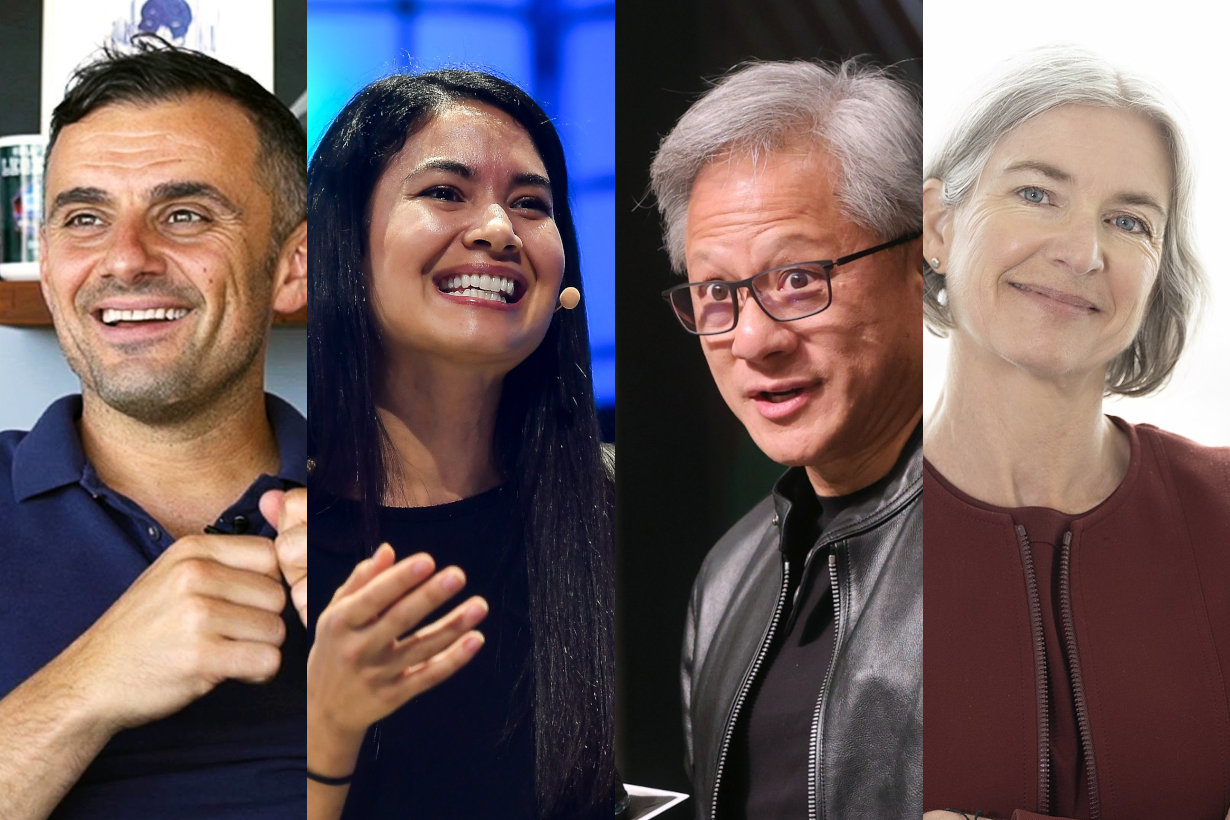
Lesson 1: Lead with Authenticity – Gary Vaynerchuk, CEO of VaynerMedia
Gary Vaynerchuk built an empire on a principle most executives fear: radical transparency. From documenting his life online to speaking bluntly about failures, he turned vulnerability into a strength. In a world of filtered narratives, Vaynerchuk’s honesty built one of the most loyal followings in business.
His message is deceptively simple – authenticity scales. People follow people who are real, not polished. Through VaynerMedia, he built a culture where empathy, hustle, and self-awareness intersect.
But the deeper insight is psychological: authenticity creates emotional efficiency. When leaders stop pretending, they reclaim the energy spent maintaining facades. Vaynerchuk’s lesson is less about social media and more about self-alignment – the courage to build in full view of the world.
Lesson 2: Design for Everyone – Melanie Perkins, Co-Founder & CEO of Canva
Melanie Perkins didn’t start with Silicon Valley capital or industry connections – she started with a classroom problem. As a university student teaching design programs, she saw how complex and intimidating creative tools were for beginners. Her insight was radical in its simplicity: design shouldn’t require training; it should be as easy as drag and drop.
That conviction became the seed for Canva – a platform that would democratize design for the world. When investors rejected her pitch more than a hundred times, she refined her vision rather than dilute it. Today, Canva empowers over 100 million users globally, giving small businesses, teachers, and creators the same tools once reserved for experts.
The deeper lesson lies in her persistence and purpose. Perkins’ journey shows that true innovation begins by removing barriers – not adding features. The success of Canva isn’t just in its software, but in the empathy built into its interface. She built not a product, but a pathway to creative confidence.
Lesson 3: Build for the Long Game – Jensen Huang, Founder & CEO of NVIDIA
Before AI was a buzzword, Jensen Huang was building the hardware to power it. His vision for NVIDIA was rooted in the belief that GPUs could accelerate more than graphics – they could accelerate intelligence itself.
For years, that vision seemed ahead of its time. Yet Huang persisted, investing in architecture, research, and ecosystems others ignored. His reward? NVIDIA became the backbone of the AI revolution, redefining industries from gaming to healthcare to autonomous vehicles.
Huang’s leadership philosophy is patient and compounding. He often says, “We don’t run faster; we run longer.” The lesson is timeless: innovation isn’t about speed – it’s about endurance in the pursuit of clarity.
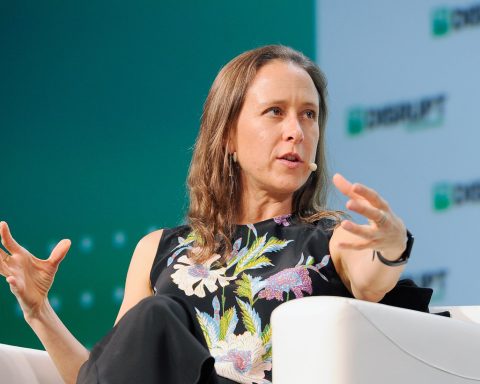
Lesson 4: Democratize Knowledge – Anne Wojcicki, Co-Founder of 23andMe
When Anne Wojcicki launched 23andMe, her mission wasn’t to sell genetic tests – it was to return science to the people. For decades, access to health data was mediated by institutions, doctors, and pharmaceutical companies. Wojcicki envisioned a different model – one where individuals could access, understand, and act upon their own genetic information.
Her idea sparked resistance from regulators who feared the public couldn’t interpret such data responsibly. Yet Wojcicki saw that empowerment, not control, was the path to progress. She rebuilt the company through collaboration with the FDA and made personal genetics both accessible and credible.
Today, 23andMe has millions of users and one of the world’s largest genomic databases. Beyond profit, Wojcicki’s legacy is cultural: she made science personal, turning data into self-knowledge. Her journey shows that innovation often begins not in laboratories, but in the belief that people deserve to understand themselves.
Lesson 5: Empathy as Strategy – Satya Nadella, CEO of Microsoft
When Satya Nadella became CEO of Microsoft in 2014, the company was seen as powerful but stagnant. Internally, its culture was competitive, siloed, and defensive – a legacy of past eras. Nadella’s first move wasn’t to overhaul products; it was to rebuild empathy as a core corporate muscle.
He reframed leadership as a human act, not a managerial one. “Empathy,” he said, “makes you a better innovator.” Under his tenure, Microsoft reconnected with its customers, embraced open source, and found purpose in enabling others to achieve more.
The results speak for themselves – Microsoft’s market value and cultural relevance soared. Nadella’s story is proof that compassion and performance are not opposites. Empathy, when institutionalized, becomes the quiet catalyst of reinvention.
Lesson 6: Innovate with Ethics, Not Ego – Jennifer Doudna, Co-Inventor of CRISPR
Jennifer Doudna didn’t just invent a technology – she unlocked a moral frontier. As co-inventor of CRISPR, she gave humanity the power to rewrite DNA, a discovery that could cure genetic diseases or reshape life itself. Yet her first instinct wasn’t celebration – it was caution. She famously dreamed of Hitler asking her to explain how CRISPR worked, a haunting symbol of scientific responsibility. That moment became her north star: innovation without ethics, she realized, is a race without direction.
Doudna’s leadership model is one of scientific humility – a recognition that progress must evolve alongside principle. Through the Innovative Genomics Institute, she’s championed equitable access, public dialogue, and responsible oversight for gene-editing research. Instead of controlling the narrative, she opened it – inviting policymakers, ethicists, and global partners into the conversation. That decision turned a scientific breakthrough into a shared moral project.
Her story teaches that true innovation demands moral clarity. In the rush to invent, leaders often forget to ask: “Should we?” Doudna reminds us that leadership is not just about creating power, but guiding how it’s used. In a world where technology moves faster than understanding, her voice offers a new kind of authority – one grounded not in dominance, but in discernment.
Lesson 7: Persistence Redefines Scale – Guillaume Pousaz, Founder of Checkout.com
Guillaume Pousaz built one of the world’s fastest-growing fintechs not from a Silicon Valley incubator, but from a deep understanding of how broken online payments were. His journey started when a failed attempt to surf professionally sent him down an entirely new path – one defined by grit rather than glamour.
At a time when digital transactions were still a mess of intermediaries and inefficiencies, Pousaz saw an opportunity to create something simpler, faster, and transparent. He spent years learning the complexities of global payments – often coding at night while managing operations by day.
Checkout.com didn’t explode overnight; it scaled slowly and methodically, focusing on trust, precision, and reliability. Pousaz’s resilience through early funding droughts and regulatory complexity made the company a cornerstone of digital commerce. His story teaches that the difference between speed and endurance defines success – great companies don’t grow fast, they grow strong.
Lesson 8: Reinvention is Strength – Ginni Rometty, Former CEO of IBM
When Ginni Rometty took the helm of IBM, the century-old giant faced an identity crisis. The world had moved toward cloud computing and data analytics, leaving IBM’s legacy business in decline. Rometty’s response wasn’t nostalgia – it was reinvention.
She pivoted IBM toward AI and hybrid cloud long before they became buzzwords. It was a painful transformation, involving layoffs and restructuring, but Rometty led with long-term conviction rather than short-term comfort.
Her tenure is often judged by stock performance, but her deeper legacy lies in cultural renewal. She reframed IBM around “skills, not pedigree,” investing heavily in employee reskilling and inclusive hiring. Rometty’s lesson is universal: reinvention demands courage – and courage is a leader’s greatest currency.
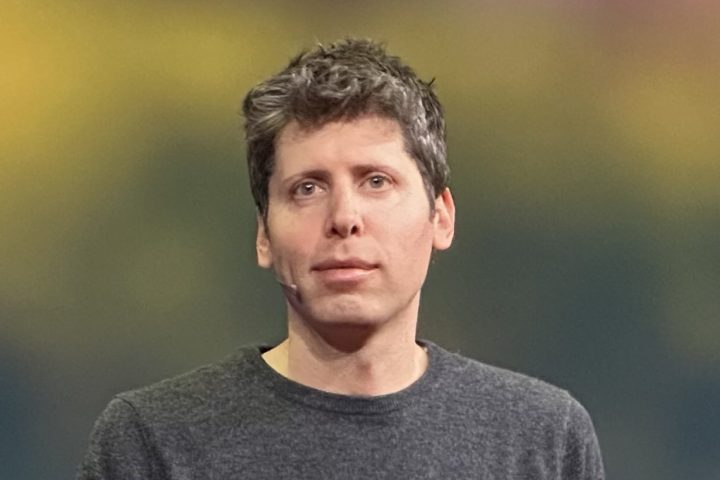
Lesson 9: Balance Innovation and Responsibility – Sam Altman, CEO of OpenAI
Sam Altman embodies the paradox of modern innovation: building technologies that could change the world – and destroy it if unchecked. As the public face of OpenAI, he’s navigating the delicate line between invention and ethics.
Altman’s leadership is rooted in transparency and restraint. He invites public dialogue about regulation and the societal impact of AI, often arguing that openness, not secrecy, will ensure technology benefits humanity.
His approach demonstrates that responsibility is not the opposite of ambition – it’s its highest form. The future will not belong to those who innovate recklessly, but to those who innovate conscientiously. Altman’s legacy will depend not on how fast AI grows, but how wisely it’s guided.
Lesson 10: Reinvention Begins Where Rejection Hurts – from Reshma Saujani, Founder of Girls Who Code
Reshma Saujani‘s story began not with victory, but with loss. In 2010, she ran for Congress in New York – and lost spectacularly. For many, that defeat would have been a quiet end to a political dream. But for Saujani, the experience revealed something deeper. While visiting schools on the campaign trail, she noticed the stark gender gap in computer science classrooms. The girls she met weren’t lacking talent; they were lacking confidence and representation. That observation sparked the idea that would change her carrière – and thousands of others.
From that moment, Girls Who Code was born not out of ambition, but of purpose. Saujani took the raw emotion of failure and transformed it into a movement that has taught millions of girls to code, lead, and redefine what it means to belong in STEM. Her leadership lesson isn’t about bouncing back – it’s about pivoting with meaning. She turned personal rejection into social innovation, showing that our lowest moments often contain the seeds of our greatest contributions.
Saujani reminds leaders that reinvention isn’t about starting over – it’s about starting truer. When life’s plans collapse, they reveal what truly drives you. In a world obsessed with success stories, her journey reframes failure as an act of discovery. What matters is not what you lose, but what you learn to build next.
Lesson 11: Lead for Purpose – Tim Cook, CEO of Apple
Tim Cook inherited not just a company, but a myth. When Steve Jobs passed away in 2011, Cook faced an impossible comparison. Yet, rather than replicate Jobs’ charisma, he redefined leadership through quiet conviction.
Cook’s focus on sustainability, supply chain ethics, and privacy shifted Apple from a design icon to a values-driven global brand. He showed that purpose isn’t a slogan – it’s a compass. Under his watch, Apple became the first $3 trillion company while also leading industry standards in environmental and social responsibility.
His approach reflects a modern truth: leadership today isn’t about commanding attention – it’s about commanding respect. Cook’s success lies in proving that integrity can be as powerful as innovation.
Lesson 12: Lead Through Strategic Innovation – Lisa Su, CEO of AMD
When Lisa Su took over AMD, the company was struggling to stay relevant. Competitors dominated performance benchmarks, and investor confidence was low. Yet Su approached the turnaround with strategic precision.
She focused on deep engineering excellence, investing in research rather than marketing. Her long-term bet on chip architecture and efficiency eventually paid off, transforming AMD into a powerhouse rivaling Intel and NVIDIA.
Su’s leadership exemplifies clarity under pressure. She believes innovation must serve a purpose, not ego. Her story shows that strategy and patience – not hype – create enduring success. In the end, her transformation of AMD wasn’t just about chips; it was about reclaiming belief in what disciplined vision can do.
Lesson 13: Youth is No Excuse – Alexandr Wang, Founder of Scale AI and Chief AI Officer of Meta
At 25, Alexandr Wang became one of the youngest billionaires in tech. But what defines him isn’t his age – it’s his focus. As the son of physicists, Wang grew up around logic and systems thinking. That foundation shaped his approach to building Scale AI, a company that provides the data infrastructure behind artificial intelligence.
While many peers chased the spotlight, Wang chased precision. He knew that the promise of AI depended on something unglamorous: data labeling, accuracy, and scale. Under his leadership, Scale became indispensable to companies training AI models.
Wang’s lesson is simple but vital: mastery isn’t a function of age, but of obsession. By solving problems others overlooked, he proved that youth is not a barrier – it’s a force for clarity. In a noisy world, those who focus on fundamentals win.
Lesson 14: Build Wealth by Thinking in Reverse – from Codie Sanchez, CEO of Contrarian Thinking
Codie Sanchez doesn’t buy into the startup myth of “go big or go broke.” Her empire was built by thinking contrarian – buying small, overlooked businesses while everyone else was chasing the next app. From laundromats to car washes, she saw value where the market saw boredom. In doing so, she built a blueprint for wealth that rejects hype and embraces clarity: cash flow over clout, ownership over optics.
Her leadership philosophy centers on questioning consensus. Sanchez teaches that most people lose not because they’re wrong, but because they never stop to ask why everyone’s running the same race. True contrarian thinking isn’t rebellion for its own sake; it’s about seeing patterns others ignore. It requires curiosity, courage, and comfort with unglamorous work – qualities that modern entrepreneurship often overlooks.
The deeper lesson is this: leadership isn’t about following the spotlight, it’s about building systems that outlast it. Sanchez proves that thinking independently – especially when it’s unpopular – is one of the rarest and most powerful assets in business. Her example reminds leaders that every breakthrough begins with a moment of doubt – the quiet realization that there’s a better way hiding in plain sight.
Lesson 15: Empower Through Simplicity – Tobi Lütke, Founder & CEO of Shopify
Tobi Lütke started Shopify not as a tech mogul, but as a snowboarder frustrated by clunky online stores. His obsession with simplicity birthed one of the most important commerce platforms in the world. Shopify’s rise wasn’t fueled by complexity but by elegance – a user experience so intuitive it allowed millions of entrepreneurs to compete globally.
Lütke’s innovation wasn’t just technical; it was philosophical. He believed the internet should serve entrepreneurs, not gatekeepers. As the e-commerce landscape evolved, Shopify became the digital backbone of small business empowerment.
His story reminds us that simplicity is not the absence of sophistication – it’s the mastery of it. The best tools disappear in the hands of their users, and Lütke’s genius lies in making entrepreneurship feel natural.
Closing Insight
Across all stories, one thread connects them: conviction. Whether democratizing design, reimagining empathy, or redefining innovation, these leaders built not from certainty but from belief.
Their journeys remind us that greatness isn’t accidental – it’s iterative. Behind every breakthrough lies a founder’s persistence, a leader’s empathy, or an innovator’s courage to stay the course when no one else does.
The future of business won’t be written by algorithms or systems alone – it will be written by human insight, multiplied by courage.
FAQs
1. Why were these individuals chosen?
They represent the intersection of innovation, leadership, and human-centered purpose – each shaping global industries in distinctive ways.
2. What’s the main lesson from all their stories combined?
That success is never just technical – it’s deeply personal. The greatest leaders innovate by understanding people first.
3. How can businesses apply these lessons?
By embedding empathy, resilience, and long-term thinking into culture – not just strategy.
4. Are these lessons relevant beyond tech and startups?
Absolutely. Each principle – clarity, inclusion, purpose, reinvention – applies across every industry and scale.
5. What’s the ultimate takeaway for emerging leaders?
Don’t emulate their results; emulate their mindset. Vision matters, but values sustain it.
Photo credits: Gary Vaynerchuk – CC0; Melanie Perkins / Web Summit / Wikimedia Commons – CC by 2.0; Jensen Huang / Wikimedia Commons – CC by 2.0; Jennifer Doudna / Christopher Michel / Wikimedia Commons – CC by 4.0