

Key Takeaways
- Anne Wojcicki’s mission was never just about DNA – it was about democratizing health information.
- 23andMe challenged medical gatekeeping by giving consumers access to their own genetic data.
- Her resilience through regulatory pushback redefined how science reaches the public.
- The company’s evolution from novelty to trusted health partner mirrors society’s changing view of data ownership.
- Wojcicki’s story shows that real innovation happens when science meets empathy.
The Power of Conviction
Making Science Personal
Anne Wojcicki’s background wasn’t in marketing or tech – it was biology. She’d spent years on Wall Street as a healthcare analyst, watching how money flowed through the medical system. What she saw frustrated her: inefficiency, opacity, and a system that often treated patients like spectators rather than participants.
She realized that medicine was reactive, she said; doctors waited until people got sick before doing anything. She wanted to flip that script.
When the Human Genome Project concluded in 2003, sequencing technology was still expensive and obscure. But Wojcicki saw its potential to change everything – from preventive care to drug discovery – if it could just be accessible.
So she partnered with Linda Avey, a biotech veteran, and Paul Cusenza, to found 23andMe, named for the 23 pairs of chromosomes in human DNA. Their mission was audacious: to let anyone, for a few hundred dollars, learn what their DNA could reveal about ancestry, traits, and potential health risks.
The product was as much philosophical as scientific. By letting people spit into a tube and mail it off, 23andMe turned the most complex code on earth into a personal story.
Early adopters were fascinated – but the medical establishment was not amused.
In 2013, the U.S. Food and Drug Administration (FDA) ordered 23andMe to halt health-related reports, citing concerns about accuracy and interpretation. It was a public setback that could have ended the company.
Instead, Wojcicki treated it as a lesson in translation. Indeed, the challenge wasn’t the science; it was communication – how to make science understandable and trustworthy.
She doubled down on regulatory collaboration, built a more rigorous testing pipeline, and refocused the company on ancestry services while the health division worked toward compliance. By 2017, 23andMe became the first direct-to-consumer genetic test authorized by the FDA to provide health risk reports.
Her perseverance paid off – not just for her company, but for an entire industry that followed.
From Curiosity to Global Impact
Today, 23andMe has sold millions of kits in over 50 countries. Its genetic database – one of the largest in the world – has become a cornerstone for both personal discovery and scientific research.
Under Wojcicki’s leadership, the company expanded from consumer kits to partnerships with pharmaceutical giants, contributing to breakthroughs in drug development and precision medicine.
Yet she remains clear that the mission is not just about innovation but also about inclusion. Genetics should not be for the privileged few, she has said; the more diverse the data, the better science serves everyone.
Her approach has redefined how people interact with their health. Instead of being told what’s wrong, they can explore why – and do it on their own terms.
That’s the true shift Anne Wojcicki created: not just a new business model, but a new relationship between humans and their biology.
Science with a Human Face
Wojcicki didn’t just build a company – she built a conversation. Since co-founding 23andMe in 2006, she’s democratized genetics, turning DNA data into personal stories people can act on. She proved science can be personal and powerful.
Success isn’t just market value or a 12-million-strong database. It’s empowerment: millions now see science as for them, not done to them. They uncover ancestry, risks, or carrier status – and consult doctors sooner or adjust lifestyles.
Wojcicki said that moment captured her vision. It’s about empowerment, she explained: understand your data, make better choices.
Innovation isn’t complexity – it’s connection. By translating science and inviting user research contributions, she’s shaping a preventive, inclusive future of medicine.
FAQs
1. What inspired Anne Wojcicki to create 23andMe?
Her background in healthcare finance showed her how inaccessible personal health information was. She wanted to give individuals control over their genetic data.
2. How did 23andMe overcome regulatory challenges?
After the FDA’s 2013 halt, Wojcicki rebuilt the company’s processes, focusing on accuracy, transparency, and regulatory cooperation to regain approval.
3. What makes 23andMe different from other genetic testing companies?
Its focus on consumer empowerment, direct access to genetic data, and user-driven research participation make it both scientific and social innovation.
4. How does 23andMe protect user privacy?
Wojcicki implemented strict consent frameworks and anonymized research protocols, allowing users to control how their data is used.
5. What’s next for Anne Wojcicki and 23andMe?
The company is expanding into drug development, personalized medicine, and AI-driven genomics – bridging health tech with patient ownership of data.
Sources:
- https://en.wikipedia.org/wiki/Anne_Wojcicki
- https://www.forbes.com/sites/heatherwishartsmith/2024/06/25/23andhim-the-untold-story-of-23andmes-third-co-founder/
- https://medium.com/@distillerytech/23andme-and-anne-wojcicki-using-dna-data-to-transform-health-care-f43b37512dc0
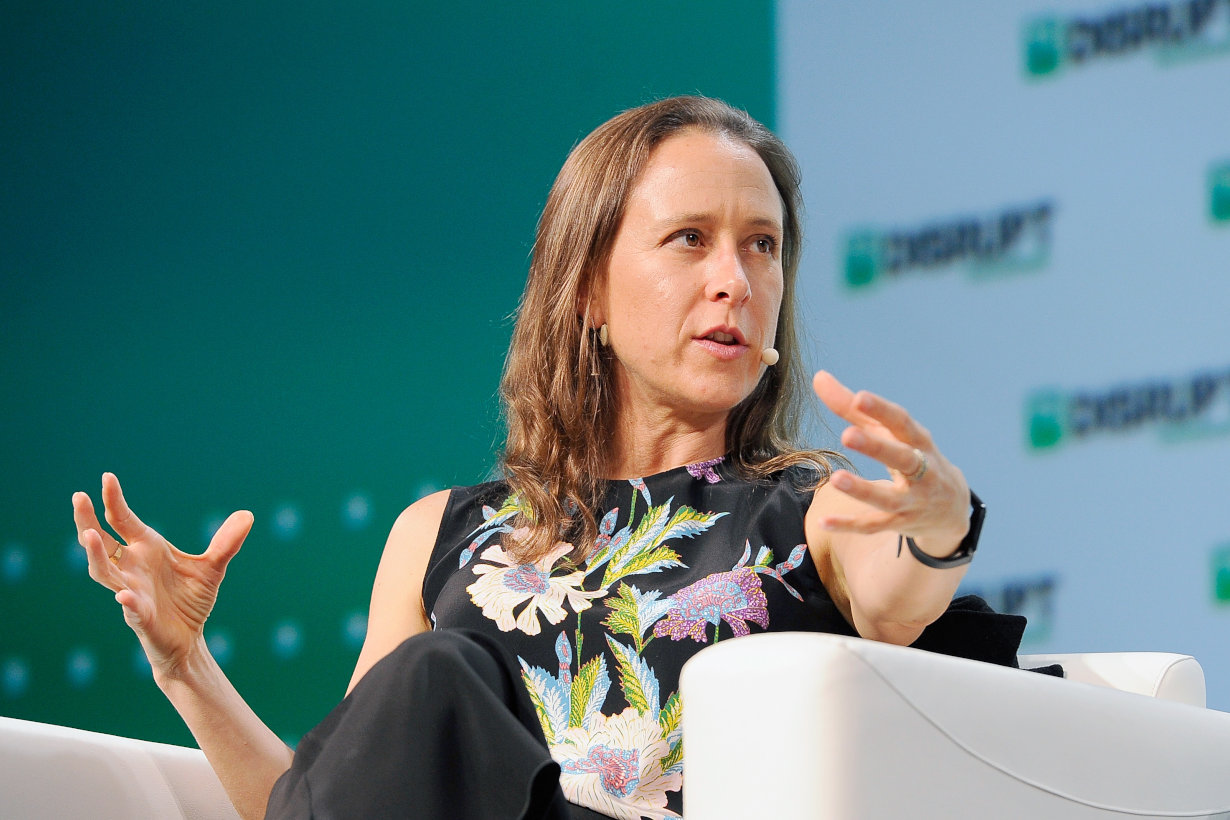
Photo credit: TechCrunch / Wikimedia Commons / CC BY 2.0 (link)