


Key Takeaways
- Failure can be the foundation of your purpose – if you listen to what it’s trying to teach you.
- Reinvention begins when you let go of titles and chase impact instead.
- Empathy and action can turn a personal setback into a social movement.
- Courage means doing what scares you – not waiting until you’re unafraid.
- Success often starts where your original plan ends.
A Personal Loss That Sparked a Movement
In 2010, Reshma Saujani stood on a stage in New York City, conceding defeat in her campaign for Congress. It wasn’t just any loss – it was public, personal, and painful. She had left a stable career in law to run for office, believing politics was her path to change. Instead, she found herself watching months of effort unravel overnight.
But in that defeat, something unexpected happened. While visiting schools during her campaign, Reshma noticed a pattern: classrooms filled with boys learning to code, and girls sitting on the sidelines, uncertain if they belonged. The image stuck with her – not as a policy issue, but as a calling.
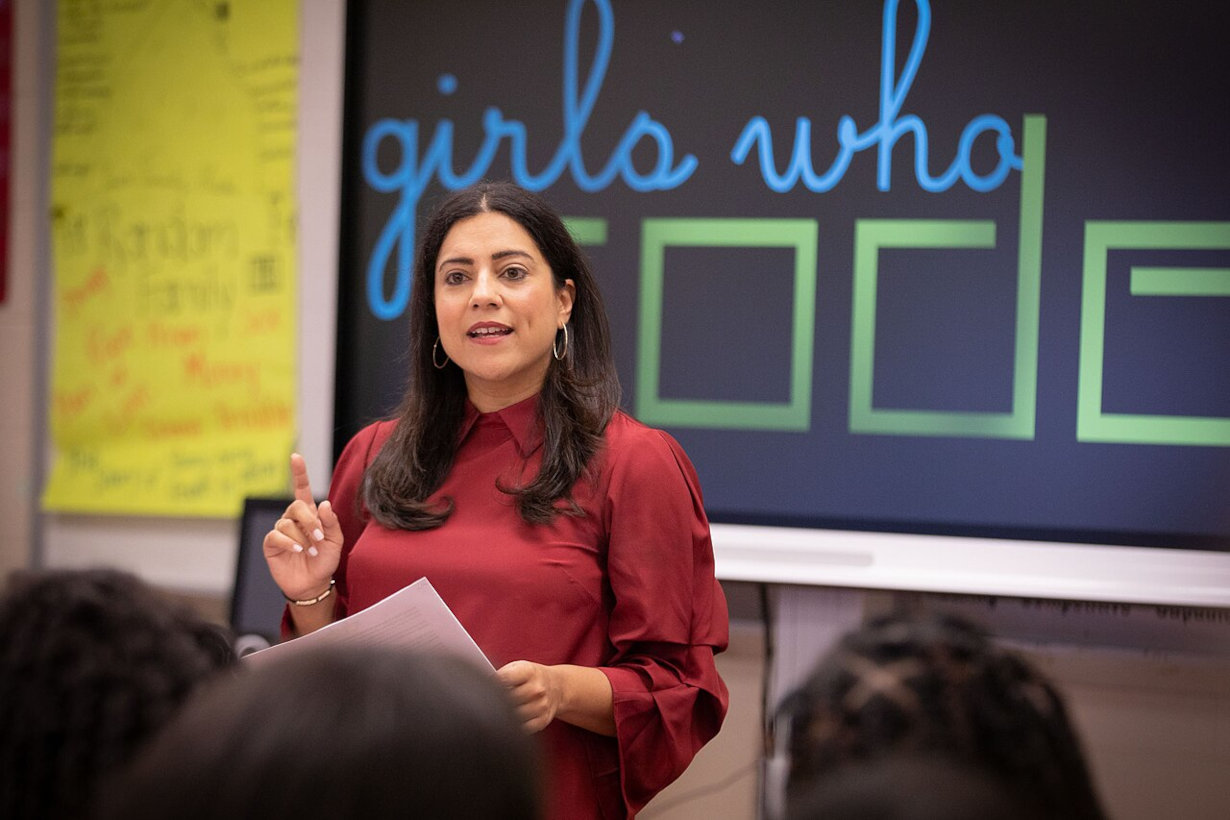
That purpose became Girls Who Code – a nonprofit that has since taught millions of girls the skills, confidence, and courage to enter technology careers. What began as a personal failure became a cultural shift.
From Political Loss to a Mission in Code
Before founding Girls Who Code, Reshma had followed the classic path of achievement: Ivy League education, Wall Street career, and political ambition. She believed hard work and credentials would open doors to influence. But her political loss taught her something every founder eventually learns – no résumé can shield you from failure.
Instead of retreating, she leaned into her discomfort. She began asking hard questions: Why aren’t more girls in tech? Why do women still feel out of place in computer science labs? Why does opportunity look so uneven?
Those questions became the foundation for Girls Who Code, launched in 2012 with a simple but radical mission – close the gender gap in technology. It began with 20 girls in a borrowed conference room and a handful of volunteer instructors. Within a decade, it had grown into a nationwide movement, inspiring many people worldwide through programs, books, and advocacy.
But Reshma’s journey wasn’t linear. Early on, she faced skepticism. Tech investors doubted the idea’s scalability. Educators questioned whether coding alone could change gender dynamics. Yet she persisted – leveraging storytelling as her most powerful tool.
Her message wasn’t just about code; it was about courage. She reframed the narrative around girls and failure. “We raise our boys to be brave and our girls to be perfect,” she wrote. “It’s time to teach girls to be brave.”
That line became a rallying cry, transforming Girls Who Code into more than an organization – it became a philosophy.
Building Courage as a Culture
Today, Girls Who Code operates in all 50 states and across several continents. Thousands of alumnae now work at companies like Google, Meta, and Microsoft – many citing the program as their first exposure to computer science.
But Reshma’s impact extends beyond STEM. She’s become one of the most recognizable voices in leadership, gender equity, and courage culture. Her bestselling books, Brave, Not Perfect and Pay Up, challenge women – and the systems around them – to redefine success and equity.
She also founded the Marshall Plan for Moms during the COVID-19 pandemic, advocating for policies to support working mothers who bore the brunt of the crisis.
In every phase of her career, one pattern endures: transformation through rejection. Where many would see a dead end, Reshma finds a new direction. Her leadership isn’t about resilience as endurance; it’s about resilience as reinvention.
Success Sometimes Begins Where Plans Fall Apart
Reshma Saujani’s story reminds us that leadership doesn’t always start with confidence – sometimes it starts with collapse. The loss that seemed to end her ambitions became the seed of her greatest work.
Her journey illustrates a powerful truth for founders and dreamers alike: your biggest failure may be your greatest redirection.
In her words:
“Bravery isn’t about winning. It’s about showing up – even when you know you might fail.”
For every entrepreneur staring down uncertainty, every professional rethinking success, or every girl wondering if she belongs in the room – Reshma’s story is proof that failure doesn’t disqualify you from your future. It introduces you to it.
FAQs
1. What inspired Reshma Saujani to start Girls Who Code?
She was inspired during her 2010 congressional campaign, when she saw a lack of girls in computer science classrooms. The experience motivated her to create opportunities for young women in tech.
2. How has Girls Who Code impacted the tech industry?
The organization has reached millions of girls globally, with thousands pursuing careers in technology – helping close the gender gap in STEM fields.
3. What is Reshma Saujani’s core philosophy on leadership?
She believes in leading with courage, not perfection – encouraging women to take risks, fail publicly, and learn visibly.
4. How did failure influence her success?
Her political defeat became the catalyst for self-reflection and reinvention. It redirected her from personal ambition toward societal impact.
5. What can aspiring founders learn from her story?
That failure isn’t fatal – it’s feedback. The courage to pivot and repurpose your pain can lead to your most authentic and impactful work.
Sources:
- https://en.wikipedia.org/wiki/Reshma_Saujani
- https://medium.com/@reshmasaujani/teach-girls-bravery-not-perfection-257691d13476
- https://summit.co/news/article/girls-who-code-founder-reshma-saujani-is-starting-a-bravery-revolution-12arQ87NnzOfGbxUK5D9Au
Photo credit: Governor Tom Wolf / Wikimedia Commons / CC by 2.0 (link)