

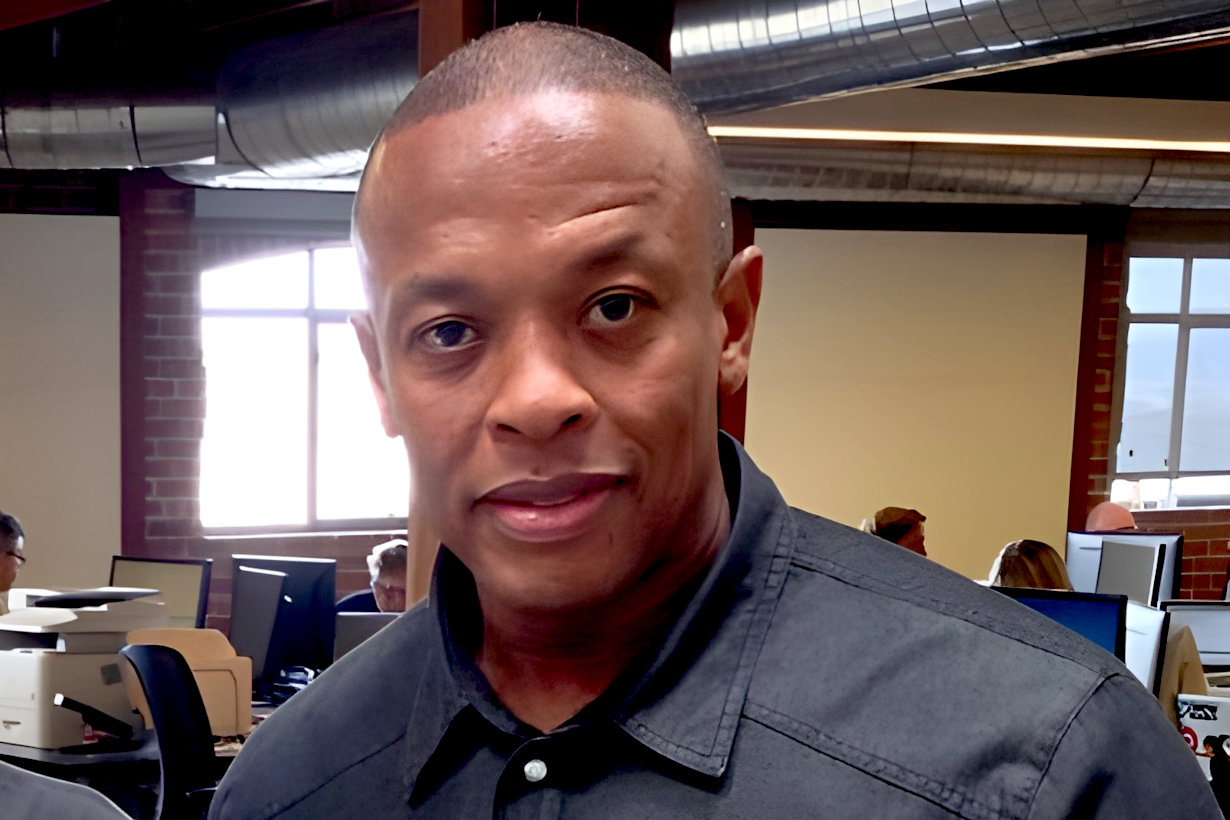
From the streets of Compton to the boardrooms of Silicon Valley, Dr. Dre transformed a simple frustration with cheap earbuds into one of the most successful consumer electronics brands in history. By co-founding Beats Electronics with Jimmy Iovine and selling it to Apple for $3 billion in 2014, the legendary producer became hip-hop’s second billionaire and redefined how the world experiences music. This founder story reveals powerful lessons on spotting everyday problems, building unlikely partnerships, and turning personal irritation into massive innovation.
Key Takeaways
- Solve your own frustration first. Dr. Dre fixed the exact problem he lived with daily – mediocre listening experiences that ruined his life’s work.
- Choose partners who complement your blind spots. Dr. Dre brought cultural credibility; Iovine brought execution – neither could have launched Beats alone.
- Market the feeling, not the specs. Beats won by associating the product with artists and culture creators people already admired.
- Bet on talent the way you bet on yourself. Dr. Dre repeatedly invested in unproven voices when others passed, scaling both his music empire and consumer brand.
- Turn adversity into evolution. Dr. Dre owned past mistakes with a direct apology and kept building stronger and more relatable.
Frustration is The Mother of All Inventions
It was a quiet afternoon in 2006 along the Pacific shoreline. Dr. Dre – born Andre Romell Young in Compton, California – walked beside Jimmy Iovine, the music-industry veteran who had helped shape everyone from Bruce Springsteen to Eminem. Dr. Dre had just turned down a sneaker deal. He wanted something more authentic, something that felt like his world.
Iovine stopped him mid-sentence. “F*ck sneakers,” he said. “Let’s sell speakers.”
Dr. Dre laughed at first. Then he got serious. He pulled out his iPod, plugged in the cheap white earbuds that came in the box, and played one of his own tracks. The bass was thin. The highs were tinny. The feeling – the sweat, the pulse, the life he had engineered in the studio – was gone.
“Man,” Dr. Dre told Iovine, “it’s one thing that people steal my music. It’s another thing to destroy the feeling of what I’ve worked on.”
That single moment of irritation, that lived frustration every producer knows but no one had fixed, became the spark for Beats Electronics. What followed was not just a headphone company. It was the story of a founder who refused to accept “good enough” in an industry that had stopped listening to the artists who actually created the sound.
Straight Outta Compton
Andre Young grew up in Compton during the 1970s and ’80s, a place where survival often meant mastering your environment before it mastered you. Music was his escape and his weapon. By his late teens he was DJing parties, then co-founding N.W.A. with Ice Cube and Eazy-E. Their 1988 album Straight Outta Compton didn’t just go platinum – it detonated the gates of mainstream America and put West Coast hip-hop on the map.
But success brought chaos. Dr. Dre co-founded Death Row Records in 1992, only to watch the label implode under internal pressures. He walked away in 1996, determined never again to build something he didn’t fully control. That same year he launched Aftermath Entertainment under Interscope. The early days were lean. Dr. Dre was still recovering from the split, still proving he could stand alone.
Then came the decision that changed everything: signing a skinny, battle-rap kid from Detroit named Marshall Mathers – Eminem. Industry skeptics called it a gamble. Dr. Dre heard raw talent and cultural timing. He bet on Eminem the way founders bet on unproven products: with conviction, not consensus. The 1999 album The Slim Shady LP exploded. 50 Cent followed. Kendrick Lamar later. Dr. Dre didn’t just produce hits; he built artists and, more importantly, he built systems that let them scale.
The Birth of Beats
By the mid-2000s, Dr. Dre had money, respect, and a catalog that printed royalties. Yet something still gnawed at him. Every time he handed a finished track to a friend or fan, they listened on hardware that flattened the very dynamics he had spent weeks perfecting. Piracy had already gutted album sales. Now the final link – the listening experience itself – was broken too.
He brought the problem to Jimmy Iovine, the only executive he trusted to see around corners. Together they sketched a radical idea: headphones engineered to deliver studio sound to everyday ears. Not audiophile gear for purists. Not cheap plastic for the masses. Something premium, cultural, aspirational.
In 2006 Beats Electronics was born. Dr. Dre and Iovine had zero experience in consumer electronics. They partnered with Monster Cable to manufacture the first models because they needed expertise fast. The debut Beats Studio headphones launched in 2008 at $349. Critics scoffed: overpriced fashion accessories. Dr. Dre and Iovine didn’t argue specs. They marketed feeling. LeBron James wore them courtside. Lady Gaga performed in them. Every celebrity endorsement was chosen because it told the story: this is what the artists hear.
Growth wasn’t linear. In 2011 HTC bought a majority stake for $309 million, giving Beats cash to expand. But by 2012 the Monster partnership ended; Beats took manufacturing in-house and launched the Beats Pill portable speaker and Executive line. Market share in premium headphones climbed past 50 percent in the U.S. The brand became shorthand for cool.
Then came the biggest founder decision of all: the 2014 sale to Apple for $3 billion. Dr. Dre and Iovine had built something bigger than either could have imagined alone. Apple wanted the audio DNA, the brand equity, and the talent. Dr. Dre walked away with an estimated $750 million pre-tax from his stake – enough, over time and with smart investments, to make him hip-hop’s second billionaire by Forbes’ 2026 list. But the real payout wasn’t just the check. It was validation that a music producer with no engineering degree could redefine an entire consumer-electronics category.
Dr. Dre: Not Slowing Down
Today, at 61, Dr. Dre is still D.R.E. – but on his own terms. The 2021 brain aneurysm and strokes that hospitalized him are behind him; he recovered fully and returned quieter, more reflective. His net worth crossed the $1 billion threshold in 2026, placing him among an elite handful of musicians on the Forbes Billionaires list. The Beats sale didn’t just make him rich; it changed how the world consumes audio. Apple integrated Beats technology into its ecosystem, and the brand continues to evolve under the tech giant while retaining its cultural edge.
Dre hasn’t slowed down. In late 2024 he and Snoop Dogg (with Iovine’s involvement) launched Still G.I.N., an ultra-premium gin that quickly won awards and retail partnerships from Applebee’s to high-profile collaborations. He still produces, still mentors, and still sits at his Bösendorfer piano with legal pads full of ideas. The kid from Compton who once fought for every beat now owns the sound itself.
Closing: Never Accept Anything Less
Dr. Dre’s story is a reminder that the best founder ideas rarely arrive in boardrooms. They arrive in moments of personal irritation – when the product you use every day fails to match the standard you demand of yourself.
Leadership isn’t about having all the answers or the perfect résumé. It’s about recognizing the gap between what exists and what should exist, then refusing to accept anything less. Dr. Dre didn’t wait for a tech company to fix audio. He fixed it himself – by building a brand that made millions of people hear music the way artists intended.
That same instinct lives in founders who looks at their industry and thinks, “There has to be a better way.”
FAQs
1. How exactly did Dr. Dre and Jimmy Iovine start Beats?
In 2006, after Dr. Dre rejected a sneaker collaboration, Iovine suggested headphones instead. The core insight came from Dr. Dre’s studio experience: cheap earbuds destroyed the emotional impact of professionally mixed music. They bootstrapped the idea, partnered with Monster Cable for manufacturing know-how, and launched the first Beats Studio headphones in 2008.
2. How much did Dr. Dre personally make from the Apple acquisition?
Dr. Dre owned roughly 25% of Beats. The $3 billion sale delivered him an estimated $750 million pre-tax. Combined with music royalties, investments, and new ventures like Still G.I.N., Forbes valued him at $1 billion on its 2026 Billionaires list.
3. Did Dr. Dre have any business experience before launching Beats?
None in consumer electronics. His expertise was production, artist development, and cultural branding through Aftermath Entertainment. That lack of traditional “tech” credentials became his advantage – he approached hardware like an album, focusing on vibe, storytelling, and artist endorsement rather than engineering specs alone.
4. What is Dr. Dre working on in 2026?
He remains active in music production, co-owns the premium gin brand Still G.I.N. with Snoop Dogg and Jimmy Iovine (launched 2024, already award-winning with retail partnerships including Applebee’s), and continues mentoring emerging artists. He has also recovered fully from his 2021 health challenges and keeps a low public profile while building quietly.
5. What makes Dr. Dre’s founder journey different from typical Silicon Valley stories?
He came from outside tech entirely – Compton, hip-hop, record labels. His leadership was forged in street-level survival, artist mentorship, and relentless self-belief rather than MBAs or venture capital. Beats proved that cultural intuition and lived frustration can disrupt billion-dollar industries faster than any spreadsheet.
Sources:
- https://en.wikipedia.org/wiki/Dr._Dre
- https://www.forbes.com/sites/idonnkanga/2026/03/10/the-worlds-celebrity-billionaires-2026/
- https://www.forbes.com/sites/mattcraig/2026/04/07/dr-dre-is-now-a-billionaire/
- https://www.businessinsider.com/the-story-of-how-beats-by-dr-dre-was-started-2014-10
- https://www.forbes.com/sites/imeekpo/2024/10/15/dr-dre-and-snoop-dogg-launch-ultra-premium-still-gin-nationwide/
- https://en.wikipedia.org/wiki/Aftermath_Entertainment
- https://abcnews.com/GMA/Culture/dr-dre-3-strokes-hospitalized-brain-aneurysm/story?id=108258829
Photo credit: Justin Davis / Wikimedia Commons / CC BY-SA 2.0 – cropped (link)