

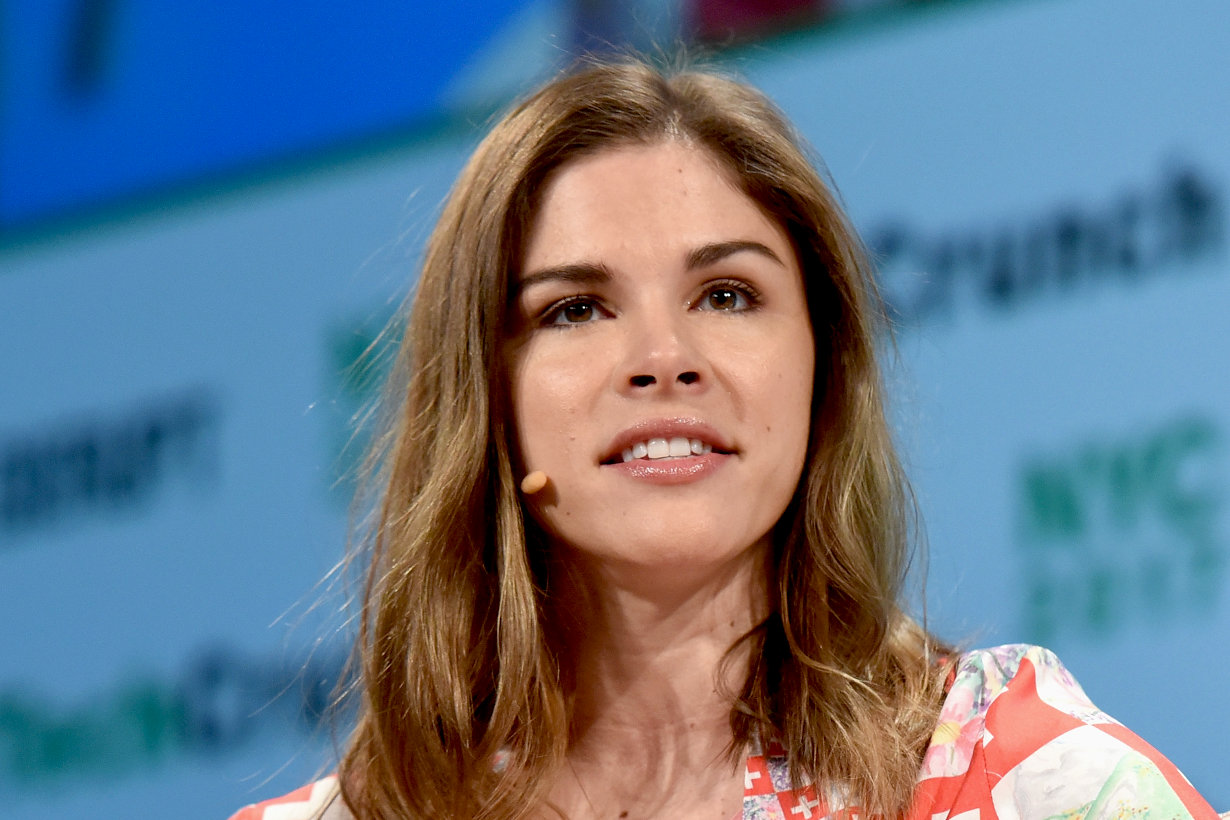
Most consumer brands begin with a product idea and search for an audience. Emily Weiss did the opposite. Long before Glossier existed, she built trust, conversation, and shared language with a community that felt overlooked by the beauty industry. This article explores how Weiss transformed listening into a growth engine – and what her full journey reveals about the power and limits of founder-led, community-first brands.
Key Takeaways
- Emily Weiss proved that community and trust can be a powerful go-to-market strategy before a product even exists.
- Glossier showed how direct relationships with customers can reshape an industry and redefine brand building.
- The same community-driven model that fuels early growth can become harder to operate as a company scales.
- Founder strengths that create momentum are not always the same skills needed to run a mature organization.
- Long-term success depends not just on vision, but on a leader’s ability to evolve with the company’s stage.
The Comment Section That Changed Beauty
Before Emily Weiss ever sold a moisturizer, she was answering comments.
Not press emails. Not influencer pitches. Comments – long, opinionated, sometimes contradictory responses left beneath blog posts on Into The Gloss. Readers debated skincare routines, questioned beauty myths, and admitted insecurities they rarely saw reflected in advertising. Weiss read them obsessively. She noticed something legacy beauty brands had missed: women didn’t want to be instructed – they wanted to be understood.
This wasn’t market research in the traditional sense. It was a conversation unfolding in public, one that revealed how people actually lived with beauty every day. That insight – listening before building – would later define Glossier’s DNA.
From Observer to Connector
Emily Weiss didn’t follow a typical founder path. She studied art history at NYU and interned at Vogue under Anna Wintour, where she observed how aspiration, image, and authority shaped fashion and beauty narratives. But she also noticed the distance between glossy perfection and real life.
In 2010, she launched Into The Gloss as a side project. The blog profiled women not as ideals, but as individuals – asking them what they actually used, what they skipped, and what they questioned. The tone was intimate and curious, not prescriptive.
Over time, the audience grew – not because Weiss positioned herself as an expert, but because she acted as a connector, translating between women’s lived experiences and an industry that often spoke over them.
Crucially, Weiss didn’t rush to monetize. For years, she focused on learning. She studied patterns in the comments, recurring frustrations, and unfulfilled desires. Readers weren’t asking for more products; they were asking for better ones – simpler, gentler, and designed for everyday use.
When Weiss finally launched Glossier in 2014, it didn’t feel like a brand entering the market. It felt like the community taking its next step.
Building by Listening: Product as a Response, Not a Pitch
Glossier’s first product, Milky Jelly Cleanser, was not a disruptive invention. That was the point. It directly reflected what the community had been asking for: a cleanser that was effective, gentle, and compatible with real routines – not a 10-step regimen.
The product sold out quickly, but more importantly, it validated Weiss’s core belief: listening could outperform traditional marketing.
From the beginning, Glossier treated customers as collaborators. Feedback loops were short. Social media wasn’t just a distribution channel – it was a dialogue. Product development was iterative, shaped by community input rather than trend forecasting.
Weiss also made an early, strategic decision to prioritize direct-to-consumer over wholesale. This wasn’t just about margins; it was about maintaining proximity. Glossier didn’t want intermediaries filtering customer insight.
In the 2010s DTC boom, this model became iconic.
Community-Led Growth – and Its Limits
By the late 2010s, Glossier had become one of the most influential consumer startups of its era. It reached unicorn status, raised significant venture capital, and reshaped how brands thought about community, content, and commerce.
But this is where the story becomes more instructive – and more honest.
As Glossier scaled, it faced challenges common to founder-led, culture-driven brands: organizational complexity, operational strain, retail expansion missteps, supply chain and cost pressures, and the tension between community identity and execution discipline.
The same intimacy that powered early growth became harder to maintain at scale.
In 2022, Weiss stepped back as CEO, acknowledging that the company needed a different kind of leadership for its next phase.
This wasn’t a rejection of her model. It was an admission of its limits.
The Real Lesson: Founder Strengths Are Not Company Stages
Emily Weiss’s greatest strength was always connection – to culture, to customers, to emerging sentiment.
But scaling a global consumer company eventually demands process, systems, cost discipline, operational rigor, and organizational structure.
The transition at Glossier reflects a deeper truth many founders learn late:
The skills that create a category-defining company are not the same skills that optimize it.
Stepping aside was not a failure of vision. It was a recognition of stage mismatch – and a rare act of founder self-awareness.
Leadership Before the Product
Emily Weiss’s story isn’t ultimately about skincare. It’s about how brands are born in the internet age – and how they mature.
She proved that audiences can become partners, not targets; trust compounds faster than attention; and listening is not passive – it’s strategic.
But her full journey also shows that culture doesn’t replace operations, community doesn’t replace management, and vision doesn’t replace execution.
The real lesson is not “community solves everything.”
It’s this: Community can get you to scale. But leadership evolution determines whether you survive it.
Why Emily Weiss Still Matters
Even as Glossier navigates a more sober, competitive era, Emily Weiss’s impact remains foundational.
She didn’t just build a brand. She changed how a generation of companies thought about customers, helped define the DTC era, and proved that listening could be a business model.
And just as importantly, her story now teaches the second lesson:
Every business model has a ceiling. Great founders learn when to change themselves – or change roles.
FAQs
Who is Emily Weiss?
Emily Weiss is the founder of Glossier and the creator of Into The Gloss, widely credited with pioneering community-led brand building in modern beauty. Her career represents both the rise of DTC culture and the leadership challenges that come with scaling it.
How did Glossier start?
Glossier launched in 2014 as an extension of Weiss’s beauty blog, using years of audience insight to inform its first products. It was built not around trends, but around recurring, real customer frustrations.
What made Glossier different from other beauty brands?
Its emphasis on listening, transparency, and direct customer relationships rather than aspirational marketing. This turned customers into collaborators and made the brand feel participatory rather than performative.
Why did Emily Weiss step down as CEO?
As Glossier scaled, the company needed stronger operational leadership and execution discipline. Weiss’s decision reflected strategic self-awareness about the company’s stage – not a retreat from its vision.
What can founders learn from Emily Weiss?
That community trust can build extraordinary momentum – but scaling requires different skills than starting. Her journey shows that founder evolution is as important as founder vision.
Sources:
- https://en.wikipedia.org/wiki/Emily_Weiss
- https://intothegloss.com/2015/09/emily-weiss-glossier-into-the-gloss/
- https://medium.com/marketing-in-the-age-of-digital/how-to-win-at-social-media-a-glossier-case-study-51b36040c67f
- https://www.forbes.com/sites/madelinehalpert/2022/05/24/emily-weiss-steps-down-as-glossier-ceo-months-after-company-layoffs/
- https://www.nytimes.com/2022/05/26/style/glossier-emily-weiss.html
Photo credit: TechCrunch / Wikimedia Commons / CC BY 2.0 – cropped (link)