


Key Takeaways
- Trust is a business system, not a slogan – it must be designed into products, processes, and governance.
- Celebrity attention accelerates scrutiny – founders with visibility must operate at a higher standard, not hide behind branding.
- Mission-driven companies face harder accountability, not less – values raise expectations from customers, regulators, and markets.
- Scaling requires re-earning credibility at every stage – what works for a startup must evolve for a public company.
- Founders who stay through adversity build durable legacies – long-term stewardship matters more than early validation.
Jessica Alba: A Founder Motivated by Risk, Not Fame
Before The Honest Company became a household name in consumer goods, Jessica Alba was already a global celebrity. But the origin of her company did not come from branding ambition or celebrity leverage – it came from fear, frustration, and a growing distrust of the products marketed as “safe.”
Alba has publicly and consistently stated that her motivation began after the birth of her first child, when she experienced allergic reactions to baby products she believed were non-toxic. This wasn’t a symbolic moment retrofitted for marketing – it was a documented catalyst that pushed her to question ingredient transparency, labeling practices, and regulatory gaps in the U.S. consumer products industry.
What stood out was not the concern itself – many parents share it – but Alba’s response. Instead of switching brands or accepting uncertainty as inevitable, she began investigating how consumer products were regulated, manufactured, and marketed. What she found was an industry that relied heavily on consumer trust without offering meaningful visibility into formulation decisions or ingredient sourcing.
This early realization reframed her role from concerned parent to system challenger. Alba has since explained that the more she learned, the more she recognized how little power consumers actually had when it came to understanding what they were buying. That imbalance – between brand authority and consumer knowledge – became the emotional and strategic foundation for what would follow.
Rather than lending her name to an existing brand, Alba pursued something far riskier: building a company from scratch in a category dominated by legacy players, opaque supply chains, and minimal consumer education. That choice ensured she would be evaluated not as a spokesperson, but as a founder accountable for outcomes.
From the beginning, her visibility worked both ways. Fame accelerated attention – but it also guaranteed scrutiny. Every product decision would be examined not just as a business move, but as a test of credibility.
From Problem Awareness to Product Reality
Alba began researching consumer safety standards extensively, discovering that U.S. regulations around household and baby products were far less stringent than most consumers assumed. Federal oversight allowed many ingredients to remain undisclosed, and marketing language such as “natural” or “gentle” carried little legal weight.
This research phase lasted years, not months. Alba has stated that she spent time meeting scientists, health advocates, and product developers to better understand the constraints of manufacturing at scale. The goal was not perfection, but improvement – products that were safer, clearer, and easier to trust.
In 2011, she co-founded The Honest Company alongside Christopher Gavigan, Brian Lee, and Sean Kane. Each co-founder brought complementary expertise – consumer advocacy, e-commerce, operations, and brand-building – countering the misconception that Honest was a solo celebrity venture.
The company launched with a direct-to-consumer subscription model, focusing on diapers and wipes. This approach was strategic: recurring products built habitual trust, while e-commerce bypassed retail intermediaries that often diluted brand messaging. Early success validated the thesis that consumers were willing to switch brands when transparency felt genuine.
As the company scaled, Honest expanded into household cleaners and personal care, maintaining its emphasis on ingredient disclosure and design simplicity. Packaging, tone, and education were deliberately accessible – another signal that the brand was built for parents, not insiders.
Venture capital interest followed quickly. By the mid-2010s, Honest was among the most visible examples of a mission-driven consumer startup, frequently cited as proof that values-based branding could drive billion-dollar outcomes.
When Trust Is Tested in Public
Rapid growth introduced complexity. As Honest expanded its product lines, it entered categories with stricter regulatory scrutiny and more chemically complex formulations. That shift increased operational risk – particularly for a brand whose identity rested on safety and transparency.
In 2016, the company faced public criticism and legal challenges related to ingredient labeling and product claims. These moments were pivotal not because Honest was uniquely flawed, but because its brand promise left little room for ambiguity.
Honest disputed allegations that it intentionally misled consumers, but the resulting settlement underscored a deeper issue: trust-based brands are held to standards that evolve faster than regulation. What had once been acceptable language was no longer sufficient for an increasingly informed customer base.
Rather than retreating from its mission, the company responded by tightening internal review processes, adjusting formulations, and refining how it communicated with consumers. This phase marked a shift from idealistic startup to regulated operator – a transition many young consumer companies struggle to survive.
For Alba, this period reshaped her role. She became less visible as a marketer and more present as a governance figure, emphasizing long-term credibility over short-term growth optics.
These challenges ultimately strengthened the company’s internal discipline. Honest emerged with clearer compliance frameworks, stronger scientific oversight, and a more sober understanding of what it meant to scale trust.
From Startup to Public Company
In 2021, The Honest Company went public on NASDAQ (HNST), raising approximately $413 million. The IPO represented both validation and transition – from founder-led startup to publicly accountable enterprise.
By this point, Honest had expanded far beyond its original product set. Its portfolio included baby care, personal care, beauty, and household products distributed across major retailers such as Target, Walmart, and Amazon.
Public markets, however, introduced new pressures. Profitability expectations, supply chain challenges, and shifting consumer behavior tested the business model. Like many DTC-native brands, Honest faced volatility as it balanced growth with operational discipline.
Alba remained involved throughout this transition, retaining a significant ownership stake and board presence. Unlike many celebrity founders who exit after liquidity events, she continued to frame her role as long-term stewardship.
The IPO did not mark the end of the founder story – it marked its most accountable chapter. Honest was no longer measured by narrative alone, but by execution, margins, and governance.
That shift reinforced the central theme of Alba’s journey: trust is not static. It must be re-earned continuously, especially as scale increases.
What Jessica Alba’s Founder Story Actually Teaches
Jessica Alba’s journey challenges the assumption that celebrity founders succeed because of attention alone. In reality, attention amplifies both strengths and weaknesses.
What distinguishes Alba is not that she avoided mistakes – but that she built a company capable of correcting them publicly. That ability is rare, especially in consumer categories where reputation can collapse quickly.
Her story highlights an overlooked founder truth: values are not protective shields. They are commitments that increase accountability. When brands promise more, they must deliver more – or explain clearly why they can’t.
For founders, Honest offers a long-term lesson: trust is operational. It lives in supply chains, labeling decisions, compliance systems, and governance – not slogans.
Jessica Alba didn’t just launch a company around skepticism. She stayed through the hard work of making trust durable.
And that is what elevates her story from celebrity entrepreneurship to founder-level leadership.
FAQs
1. Why did Jessica Alba start The Honest Company?
She was motivated by concerns over product safety and ingredient transparency after experiencing reactions to baby products she believed were non-toxic.
2. Was The Honest Company a solo celebrity venture?
No. Honest was co-founded with experienced partners in consumer advocacy, operations, and e-commerce, forming a complementary founding team.
3. Did The Honest Company face controversies?
Yes. As it scaled, the company encountered labeling and regulatory challenges, which led to internal changes and greater operational rigor.
4. Is Jessica Alba still involved in the company?
Yes. She remains a significant shareholder and board member, continuing to play a long-term stewardship role.
5. What makes The Honest Company different from other consumer brands?
Its core differentiation lies in ingredient transparency, consumer education, and building trust as an operational priority rather than a marketing claim.
Sources:
- https://en.wikipedia.org/wiki/Jessica_Alba
- https://en.wikipedia.org/wiki/The_Honest_Company
- https://www.usmagazine.com/celebrity-news/news/jessica-albas-honest-company-a-history-of-ups-and-downs/
- https://www.forbes.com/sites/denizcam/2021/05/04/inside-jessica-albas-long-and-turbulent-road-to-taking-the-honest-company-public/
- https://www.cnbc.com/2022/02/06/jessica-alba-on-building-honest-company-defying-expectations-therapy.html
- https://news.bloomberglaw.com/litigation/honest-co-investors-get-class-status-in-suit-over-pre-ipo-sales
- https://www.investing.com/analysis/the-honest-company-entering-markets-in-turbulent-times-200578670
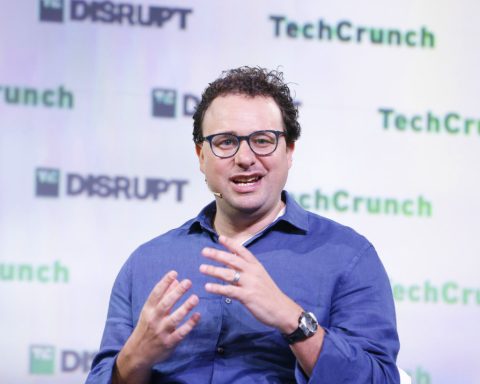
Photo credit: Kevin Paul / Wikimedia Commons / CC BY 4.0 (link) – edited