

Many startups begin with ambitious visions to disrupt entire industries. Others succeed by solving a single, overlooked problem extremely well. Tope Awotona chose the latter approach, building Calendly into a global platform by focusing on one universal frustration: scheduling meetings.
From Lagos to a High-Stakes Bet
The life and business story of Tope Awotona begins far from Silicon Valley. Born in Lagos, Nigeria in 1981, he immigrated to the United States as a teenager, navigating the challenges of adapting to a new country while building his future. His early life was shaped not only by transition, but also by personal tragedy, including the loss of his father at a young age.
These experiences instilled a deep sense of urgency and resilience.
Before Calendly, Awotona launched three startups in areas such as e-commerce and online tools. None of them succeeded. Rather than discouraging him, these failures became a foundation for sharper judgment and a clearer understanding of what makes products work.
Then came a defining decision. Frustrated by the inefficiency of scheduling meetings, Awotona decided to build a solution himself. With limited external support, he invested roughly $200,000 of his own savings – including his 401(k) and credit cards – into the idea.
It was a high-risk bet, with no guarantee of success, and no safety net.
Solving a Universal Problem
The core idea behind Calendly was deceptively simple: eliminate the back-and-forth of scheduling by allowing others to book time based on real-time availability. At a time when many startups were chasing complex platforms, Calendly focused on a single use case – and executed it exceptionally well.
This focus shaped the company’s early growth:
- A clean, intuitive user experience
- Freemium model to encourage adoption
- Viral product-led growth through shared scheduling links
Every Calendly link effectively became a distribution channel, introducing new users to the product organically.
Unlike many venture-backed startups, Awotona chose to bootstrap the company in its early years. This meant slower growth, but also greater control and discipline.
Without large amounts of external capital, the company had to:
- Prioritize profitability early
- Focus on real customer needs
- Avoid unnecessary expansion
This approach created a strong foundation.
As adoption grew, Calendly expanded from individual users to teams and enterprises, embedding itself into workflows across industries. What started as a simple tool evolved into essential infrastructure for modern work.
Quiet Scale, Global Impact
Today, Calendly serves tens of millions of users worldwide and generates hundreds of millions in annual revenue.
The company reached a valuation of approximately $3 billion during its 2021 funding round, officially achieving unicorn status. This milestone came after years of disciplined growth rather than rapid, capital-driven scaling.
Awotona’s personal journey reflects this success.
Tope Awotona is now recognized as one of the few Black tech billionaires, with an estimated net worth of around $1.4 billion as of 2025. His story has been widely covered as an example of immigrant entrepreneurship and long-term resilience.
Despite its scale, Calendly remains a relatively quiet company compared to many high-profile startups. Its growth has been driven less by hype and more by consistent product-market fit. Even moments of public debate – such as discussions around the etiquette of sending Calendly links – ultimately reinforced the product’s ubiquity and usefulness.
Calendly vs Traditional Scheduling Tools
Calendly’s success lies in how it redefined a simple workflow.
| Dimension | Calendly | Traditional Scheduling |
|---|---|---|
| Process | Automated booking | Manual coordination |
| User Experience | Self-serve, real-time | Email back-and-forth |
| Growth Model | Product-led, viral | Organization-driven |
| Accessibility | Individual to enterprise | Often enterprise-focused |
| Value Proposition | Time efficiency | Basic calendar management |
This shift turned scheduling from a minor inconvenience into a solved problem – and created a category-defining product in the process.
Tope Awotona: Discipline Over Hype
Tope Awotona represents a different kind of founder archetype – one defined by discipline, focus, and long-term thinking.
His journey contrasts with the typical narrative of rapid fundraising and aggressive scaling. Instead, he built Calendly through careful iteration, customer focus, and financial restraint.
Importantly, his earlier failures were not liabilities, but assets. They informed his decision-making, helping him avoid common startup pitfalls and maintain clarity on what mattered most: solving a real problem effectively.
This mindset allowed Calendly to grow sustainably, without relying on hype or overextension.
Awotona also demonstrates the power of founder conviction. Choosing to invest his own life savings into Calendly was not just a financial decision – it reflected a level of belief that shaped how the company was built from day one. That constraint forced prioritization, sharpened product decisions, and eliminated distractions that often come with excess capital.
Another defining trait is his commitment to simplicity as a strategy. While many founders expand features to chase growth, Awotona maintained a clear product vision, ensuring that Calendly remained intuitive even as it scaled. This consistency helped the product retain its core value proposition while expanding into broader use cases.
His leadership style also reflects a quieter form of ambition. Rather than positioning himself as a high-profile founder, Awotona focused on building a durable business with real utility. This approach not only strengthened the company’s foundation but also contributed to its credibility among users and enterprises alike.
In many ways, his identity as a founder is shaped less by bold public statements and more by disciplined execution over time. It is this consistency – rather than moments of visibility – that ultimately defined Calendly’s trajectory.
Simplicity, When Executed Well, Scales
The story of Tope Awotona highlights a powerful lesson in entrepreneurship: simplicity can be a competitive advantage. By focusing on a single, universal problem, he built Calendly into a global platform used by millions. The success did not come from complexity, but from clarity and execution.
His journey also underscores the importance of resilience. From early failures to personal risk, Awotona’s path was not linear. Yet each stage contributed to a stronger foundation for success.
For founders, the takeaway is clear: you do not need to solve the biggest problem – only a real one, and solve it exceptionally well.
In a startup ecosystem often driven by noise and scale, Calendly stands as proof that quiet, disciplined execution can still build billion-dollar companies.
FAQs
Who is Tope Awotona?
Tope Awotona is a Nigerian-American entrepreneur and the founder of Calendly. He is known for building a billion-dollar company through bootstrapping and disciplined execution.
What is Calendly?
Calendly is a scheduling platform that allows users to book meetings without back-and-forth emails. It is widely used by individuals, teams, and enterprises around the world.
How did Tope Awotona start Calendly?
He funded the company with approximately $200,000 of his own savings after experiencing repeated frustrations with scheduling. This personal investment allowed him to retain control and focus on building a sustainable product.
Why is Calendly successful?
Calendly succeeds by solving a universal problem with a simple and intuitive solution. Its product-led growth model has enabled it to scale efficiently without heavy marketing spend.
What can founders learn from Tope Awotona?
Founders can learn the value of focus, persistence, and solving real problems. His journey shows that disciplined execution can outperform more complex or heavily funded strategies.
Sources:
- https://en.wikipedia.org/wiki/Tope_Awotona
- https://www.forbes.com/profile/tope-awotona/
- https://saasclub.io/podcast/calendlys-founder-finding-saas-success-after-failed-startups/
- https://www.forbes.com/sites/amyfeldman/2022/04/06/nigeria-born-tope-awotona-poured-his-life-savings-into-calendly-now-hes-one-of-americas-wealthiest-immigrants/
- https://getlatka.com/blog/calendly-tope/
- https://www.linkedin.com/posts/charles-f-v-chitekwe-5a495a45_africagiant-topeawotona-calendly-activity-7414667104890875904-_EDw/
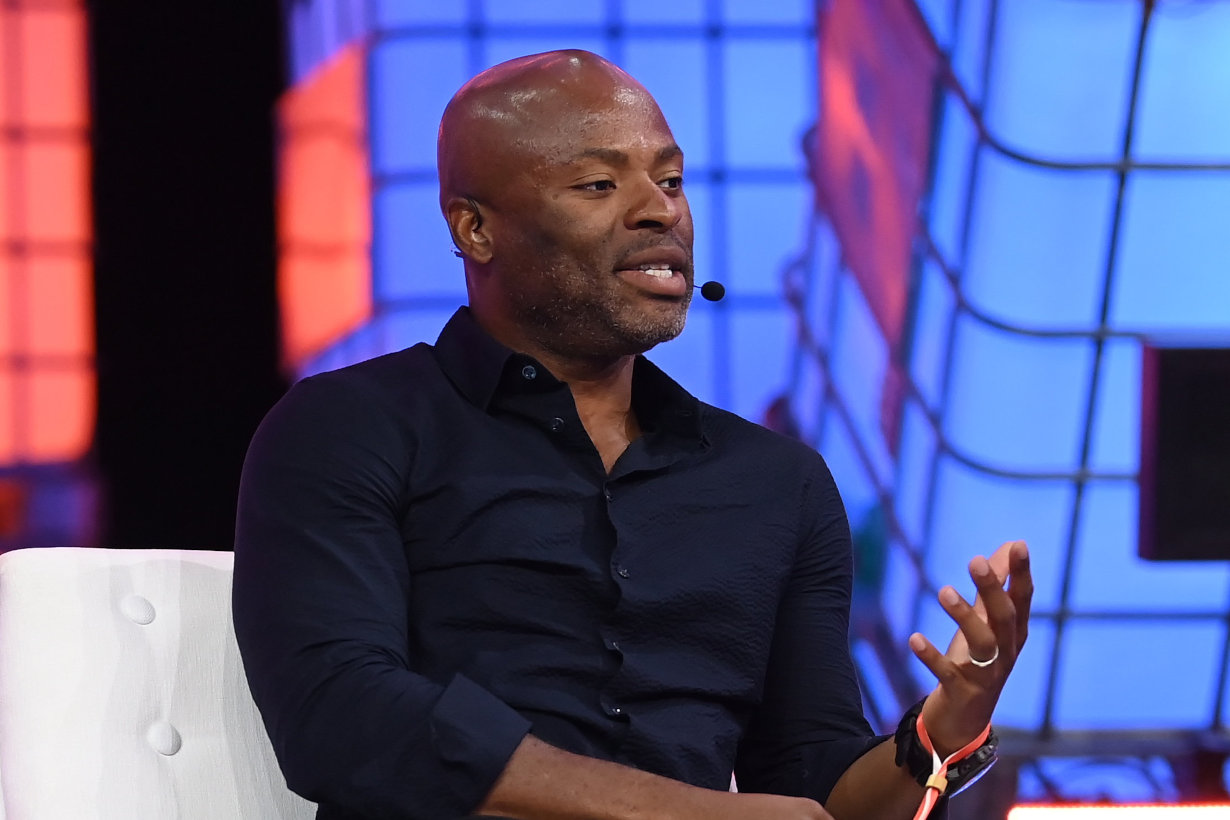
Photo credit: Collision Conf / Wikimedia Commons / CC BY 2.0 – cropped (link)