

As artificial intelligence advances rapidly, ensuring that powerful systems remain aligned with human values has become a critical challenge. Dario Amodei addresses this by prioritizing safety at the core of AI development. Through Anthropic and its flagship product Claude, he is redefining how AI can scale responsibly.
Key Takeaways
- Dario Amodei founded Anthropic to prioritize AI safety and alignment.
- Constitutional AI embeds ethical guidelines directly into model training.
- Claude demonstrates how safety-first AI can still deliver strong performance.
- Anthropic challenges the industry’s speed-first development model.
- The company is helping redefine trust and reliability as core AI metrics.
Dario Amodei: AI Safety First
Much of the AI industry has followed a familiar pattern: build increasingly powerful models first, then apply guardrails later.
Dario Amodei‘s approach reverses this sequence.
Instead of retrofitting safety mechanisms onto existing systems, Anthropic designs AI models where alignment is a foundational principle. This is achieved through techniques like Constitutional AI, where systems are guided by structured rules and values during training.
The underlying belief is clear:
Safer AI is not a constraint – it is a prerequisite for scaling intelligence responsibly.
In this sense, Anthropic is not just building smarter systems, but more predictable, interpretable, and controllable ones. This reframing positions safety as a core competitive advantage rather than a limitation on innovation.
The Speed vs. Safety Tension in AI
The rapid advancement of AI has created a tension between innovation and responsibility.
On one hand:
- Companies are racing to build more capable models
- Performance benchmarks continue to rise
- AI is being integrated into products at scale
On the other hand:
- Risks around misinformation, bias, and misuse are increasing
- Systems can behave unpredictably in complex scenarios
- Regulatory and ethical frameworks are still evolving
Many organizations treat safety as a secondary layer – something to address after achieving performance gains.
Anthropic challenges this paradigm by placing safety at the center of development. This shift reflects a broader industry realization that unchecked acceleration may introduce systemic risks that are difficult to reverse.
The Innovation: Constitutional AI and Claude
Anthropic introduces a different framework for building intelligent systems. This framework is designed to scale alongside increasing model complexity without compromising reliability.
1. Constitutional AI
Anthropic’s models are trained using a structured set of principles – its “constitution” – that guides behavior.
Instead of relying solely on human feedback, the system evaluates its own outputs against predefined guidelines, improving alignment and consistency.
This creates a more scalable and transparent approach to AI safety. It also reduces dependency on continuous human supervision, making alignment more efficient at scale.
2. Claude: A Safety-First AI Assistant
Claude is Anthropic’s flagship AI assistant, designed to be helpful, honest, and harmless.
Unlike traditional models that optimize primarily for performance, Claude emphasizes:
- Clear reasoning
- Reduced harmful outputs
- Better contextual understanding
This makes it particularly suited for enterprise use cases where reliability and trust are critical. As organizations integrate AI into core workflows, these qualities become essential rather than optional.
3. Interpretability and Control
Anthropic invests heavily in understanding how AI models make decisions.
By improving interpretability, the company aims to:
- Diagnose unexpected behaviors
- Increase transparency
- Enable safer deployment at scale
This focus reflects a broader shift from black-box intelligence to explainable systems. Greater visibility into model behavior also supports regulatory compliance and stakeholder confidence.
Comparison: Traditional AI Development vs. Anthropic’s Approach
| Dimension | Traditional AI Approach | Anthropic’s Approach |
|---|---|---|
| Development Priority | Maximize model capability first. | Balance capability with alignment from the start. |
| Safety Integration | Added after training. | Embedded during training (Constitutional AI). |
| Model Behavior | Optimized for performance benchmarks. | Optimized for reliability and predictability. |
| Transparency | Often limited. | Focus on interpretability and understanding. |
| Strategic Philosophy | Move fast and iterate. | Scale responsibly with built-in safeguards. |
What This Shift Means
This comparison underscores a fundamental shift in how AI systems are designed and deployed.
Anthropic is not simply competing on model performance – it is redefining what “progress” in AI actually means. By embedding alignment directly into the training process, the company positions safety as a core capability rather than a limitation.
The result is a new development paradigm where reliability, predictability, and trust become as important as raw intelligence – especially as AI systems move into high-stakes, real-world applications. Over time, this could influence industry standards and reshape how AI success is measured.
Redefining Trust in AI Systems
Anthropic’s approach has implications across multiple levels.
Industry Level
The company is influencing how competitors, regulators, and enterprises think about AI development.
Safety is no longer optional – it is becoming a competitive differentiator. This shift may drive broader adoption of alignment-focused methodologies across the industry.
Product Level
With Claude, Anthropic demonstrates that safety-focused AI can still deliver strong performance while reducing risk.
This opens the door for broader adoption in:
- Enterprise workflows
- Customer support
- Knowledge work
As trust in AI systems increases, organizations are more likely to integrate them into mission-critical operations.
Strategic Level
Anthropic represents a counterpoint to the “move fast and break things” philosophy.
By advocating for measured, responsible scaling, the company introduces a more sustainable model for long-term AI development. This approach may ultimately prove more resilient as regulatory scrutiny and societal expectations increase.
The Founder’s Perspective: From Capability to Responsibility
Before founding Anthropic, Dario Amodei worked at OpenAI, where he was involved in developing advanced AI systems.
His decision to start Anthropic reflects a shift in focus: from building more powerful models to ensuring those models behave safely and predictably.
This perspective is not about slowing innovation. It is about making sure innovation does not outpace control. It also reflects a broader philosophical stance on the responsibility that comes with building transformative technologies.
Alignment as Infrastructure
As AI systems become more integrated into daily life, alignment and safety will become foundational requirements.
Future AI development may depend not only on how powerful systems are, but on how well they can be controlled, understood, and trusted.
Anthropic’s approach positions it at the forefront of this transition.
If successful, the company could help define a new standard: where intelligence is not just measured by capability – but by reliability and alignment with human values. In this future, alignment may function as a core layer of AI infrastructure rather than an optional feature.
FAQs
1. Who is Dario Amodei?
Dario Amodei is the co-founder and CEO of Anthropic. He is known for his work in AI safety and his efforts to build more aligned and responsible artificial intelligence systems. Before founding Anthropic, he played a key role in developing advanced AI models at OpenAI, shaping his perspective on the importance of alignment.
2. What is Anthropic?
Anthropic is an AI research and development company focused on building safe, reliable, and interpretable AI systems. It aims to balance technological advancement with responsible deployment. The company has positioned itself as a leading voice in the movement toward safety-first AI development.
3. What is Claude?
Claude is Anthropic’s flagship AI assistant designed to be helpful, honest, and safe. It is used for tasks such as writing, analysis, and enterprise applications. Its design prioritizes reliability and clarity, making it suitable for professional and high-stakes use cases.
4. What is Constitutional AI?
Constitutional AI is a method of training AI systems using a set of guiding principles or rules. It allows models to evaluate and improve their own behavior in alignment with predefined values. This approach reduces reliance on human feedback alone and enables more scalable alignment as models grow more complex.
5. Why is Anthropic considered different from other AI companies?
Anthropic places safety and alignment at the core of its development process rather than treating them as secondary concerns. This results in AI systems that are designed to be more predictable, interpretable, and trustworthy. By embedding these principles into its models from the start, the company is helping redefine industry standards for responsible AI.
Sources:
- https://en.wikipedia.org/wiki/Dario_Amodei
- https://resources.anthropic.com/hubfs/2026%20Agentic%20Coding%20Trends%20Report.pdf?hsLang=en
- https://medium.com/@vvrr.17.4/anthropic-the-company-redefining-ai-with-safety-at-its-core-1874f89a8c48
- https://fortune.com/article/why-is-anthropic-ceo-dario-amodei-deeply-uncomfortable-companies-in-charge-ai-regulating-themselves/
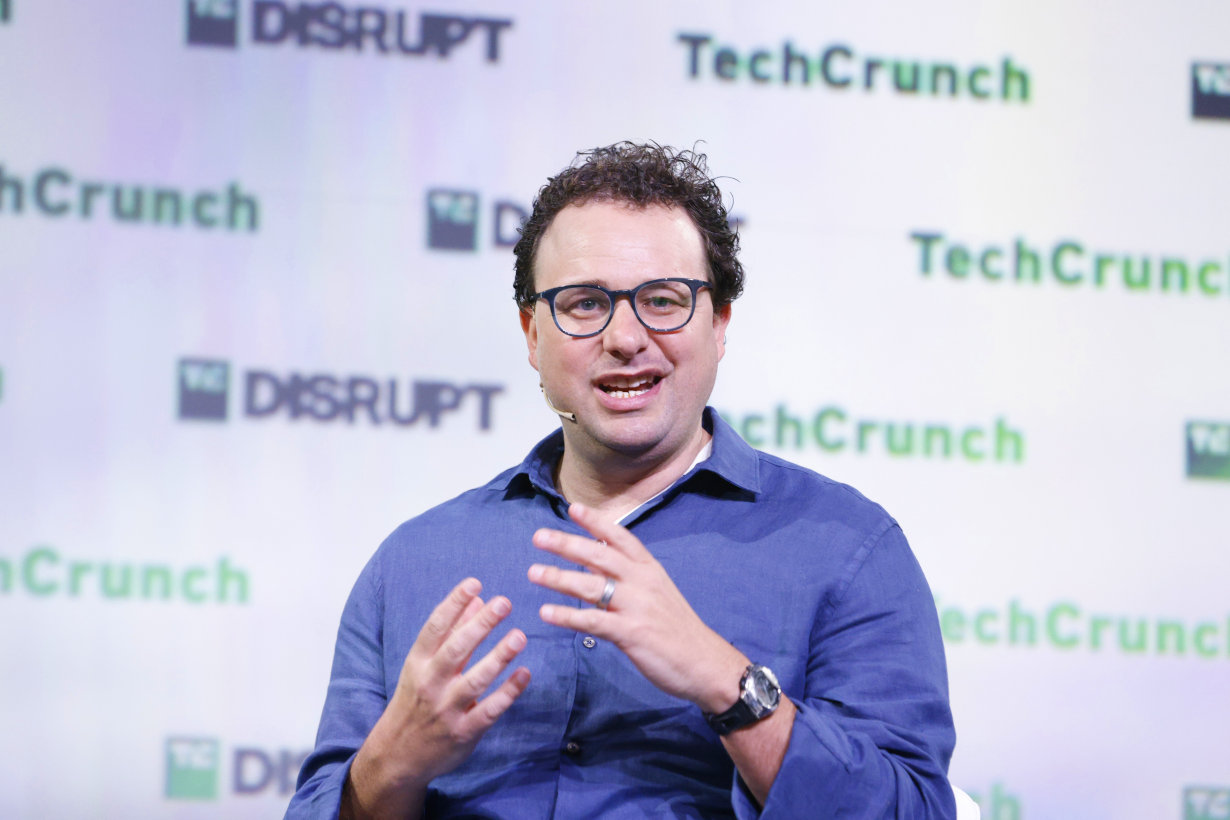
Photo credit: TechCrunch / Wikimedia Commons / CC BY 2.0 – enhanced (link)