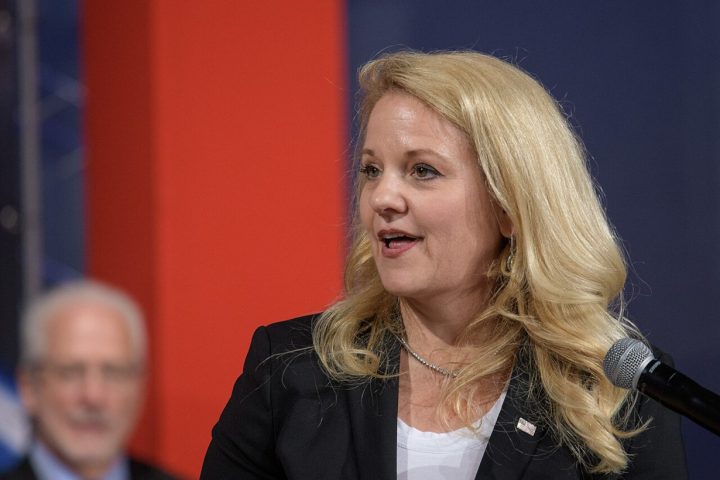


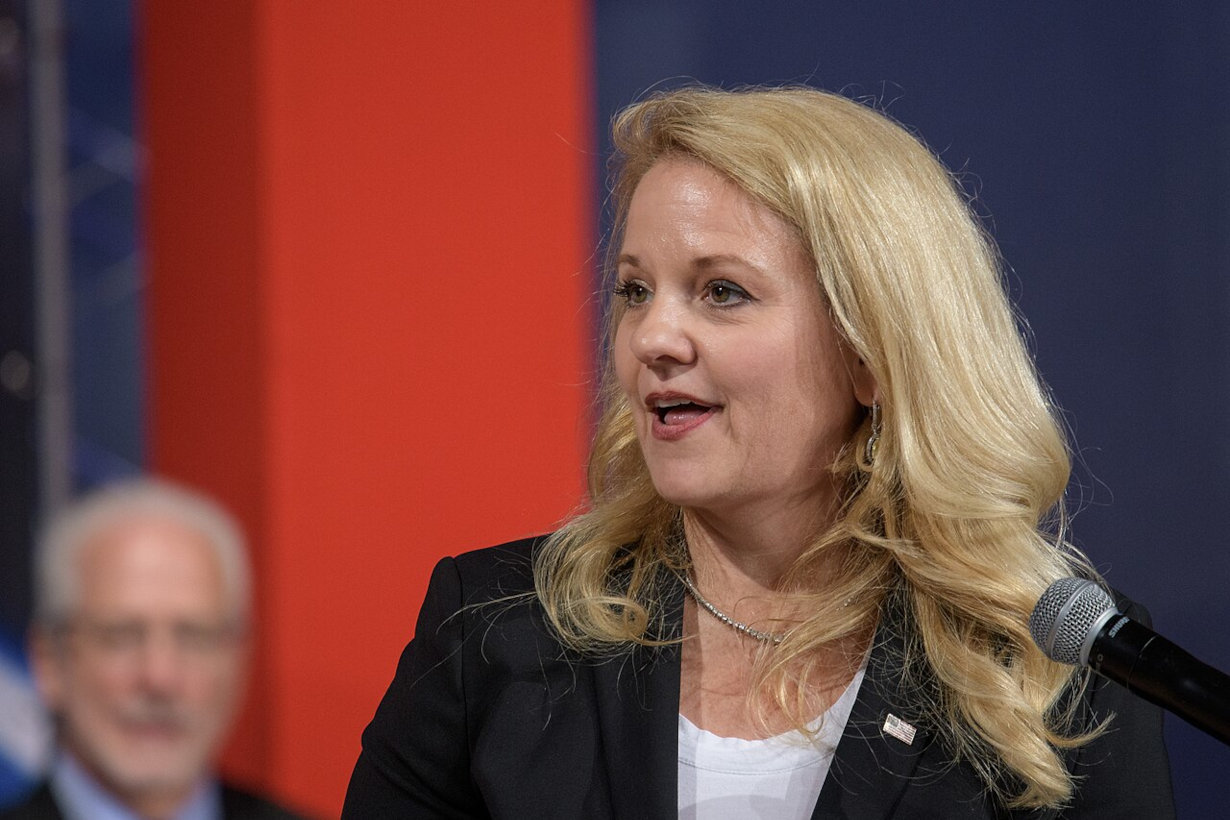
For most of history, space exploration has been driven by visionaries, politicians, and engineers chasing breakthroughs. What it has rarely been driven by is operational discipline. Gwynne Shotwell, President and COO of SpaceX, changed that. This is the story of how innovation moved from invention to industrialization – and why making space work turned out to be more radical than dreaming about it.
Key Takeaways
- Innovation doesn’t end at invention; it begins when systems scale reliably.
- Operational discipline can be more disruptive than technological novelty.
- Reusability only matters when it becomes routine, not remarkable.
- Trust is built through execution, not storytelling.
- The future of space belongs to organizations that can operate continuously, not occasionally.
The Real Innovation at SpaceX Wasn’t Rockets
When SpaceX was founded in 2002, the aerospace industry was defined by long timelines, bespoke hardware, and astronomical costs. Rockets were treated like one-off projects, not products. Failure was tolerated because launches were rare, complex, and politically insulated.
SpaceX disrupted that model not just by building better rockets, but by rejecting the idea that spaceflight had to remain artisanal. And while Elon Musk articulated the ambition, it was Gwynne Shotwell who translated that ambition into an organization capable of delivering on it – again and again.
SpaceX: Founded by Elon Musk, Scaled by Gwynne Shotwell
SpaceX is widely perceived as Elon Musk’s company – his vision, his risk tolerance, his obsession with Mars. That perception is not wrong, but it is incomplete.
While Musk set the destination, it was Shotwell who turned vision into an operating organization – hiring teams, negotiating contracts, building customer trust, and enforcing execution discipline. She transformed SpaceX from a founder-led experiment into a repeatable launch business that could deliver, recover, and relaunch at industrial scale.
In practice, SpaceX does not run on charisma or audacity. It runs on process, cadence, and accountability – the domains Shotwell has led for more than two decades.
The rockets may carry Musk’s dreams, but the company itself runs on Shotwell’s management.
Why Space Was Broken Before SpaceX
Before SpaceX, the space industry operated under assumptions that limited innovation:
- Rockets were custom-built, not mass-produced
- Launch cadence was low, sometimes only a few times per year
- Cost overruns were normalized
- Reliability was achieved through caution, not iteration
Government agencies and legacy contractors optimized for compliance and risk avoidance rather than speed or learning. Innovation happened slowly, if at all.
The problem wasn’t imagination. It was execution under constraints.
Enter Gwynne Shotwell: Innovation Without Theater
Gwynne Shotwell joined SpaceX in 2002, early enough that survival – not dominance – was the goal. Trained as an engineer and experienced in space systems and satellite integration, she quickly became the bridge between SpaceX’s technical teams and the outside world.
Her role evolved into something rare: President and Chief Operating Officer of ambition.
Shotwell’s innovation wasn’t about new physics. It was about asking uncomfortable questions:
- How do you make rockets reliable enough to reuse?
- How do you sell launches before the system is proven?
- How do you convince governments to trust a startup with national assets?
- How do you build cadence without sacrificing safety?
These are not headline-grabbing problems. They are system problems. And solving them changed the economics of space.
The Innovation: Turning Rockets Into Infrastructure
1. Reusability as an operational system
Reusability is often described as a technical breakthrough. In reality, it’s an operational nightmare. Recovering rockets is useless unless they can be refurbished quickly, certified reliably, and redeployed economically.
Shotwell pushed SpaceX toward treating reusability as a process, not a stunt. The innovation wasn’t landing rockets – it was building the workflows, inspection regimes, and confidence models that made reuse routine.
Today, booster reuse is not exceptional at SpaceX. It’s expected.
2. Cadence over perfection
Traditional aerospace optimized for perfection because launches were rare. SpaceX, under Shotwell’s operational leadership, optimized for learning through repetition.
High launch cadence allowed:
- Faster iteration
- Better reliability data
- Lower marginal costs
- Institutional learning at scale
Innovation here wasn’t speed for its own sake – it was feedback loops.
3. Selling trust before proof
One of Shotwell’s most underrated innovations was commercial credibility. She convinced satellite operators, NASA, and defense agencies to commit to SpaceX before it had a long track record.
This required:
- Technical fluency
- Risk framing instead of hype
- Contract structures aligned with execution
She didn’t sell vision. She sold confidence in process.
How Space Became an Industry Again
Because SpaceX could execute reliably and cheaply, entire markets reopened.
- Commercial satellite launches became economically viable
- Governments diversified away from legacy providers
- Launch frequency increased globally
- Space infrastructure became something companies could plan around
Space stopped being episodic and became continuous.
Shotwell’s influence is visible not just in SpaceX’s dominance, but in how competitors now talk about cadence, cost curves, and reusability as table stakes rather than moonshots.
…then, enter Starlink.
Why Starlink Matters to SpaceX
Starlink is often treated as a separate SpaceX ambition. In reality, it is an operational solution.
Starlink is SpaceX’s satellite internet division and primary revenue-generating project, operating a low-Earth orbit (LEO) broadband constellation that SpaceX designs, manufactures, launches, and maintains using its own Falcon 9 rockets. The service provides steady demand for launches, funds ongoing spacecraft development, and underwrites SpaceX’s broader goals, including Mars exploration.
For years, SpaceX relied on launch contracts that were lucrative but irregular. Revenue arrived in bursts, while the costs of building and flying rockets were constant. Starlink changed that equation by giving SpaceX its own demand engine – a system that required frequent launches, continuous upgrades, and long-term infrastructure planning.
By operating its own satellite constellation, SpaceX turned launches from a sales-dependent activity into a repeatable internal necessity. Higher launch cadence lowered costs, improved reliability, and justified rapid iteration. The business model reinforced the engineering model.
This is where Gwynne Shotwell’s leadership is most visible. Starlink is not a vision product; it is an execution product. Its success depends on regulation, partnerships, uptime, and scale – the operational domains Shotwell has overseen while turning SpaceX into a dependable enterprise.
Starlink didn’t change what SpaceX builds. It changed how SpaceX sustains itself. That shift – from proving rockets work to running a global system – marks the company’s most consequential operational evolution.
Why This Innovation Model Is Easy to Miss
Shotwell doesn’t fit the cultural stereotype of innovation. She doesn’t evangelize. She doesn’t posture. She doesn’t narrate the future in grand metaphors.
Her innovation is quiet:
- Systems over speeches
- Reliability over attention
- Scale over symbolism
But this is precisely why it matters. Many ambitious technologies fail not because they’re impossible, but because no one builds the organizational muscle to sustain them.
Future Outlook: The Era of Execution-Led Innovation
As space becomes more crowded – with lunar missions, private stations, defense applications, and commercial platforms – innovation will matter less than dependability.
Shotwell’s legacy points toward a future where:
- Space companies win by operating well, not promising loudly
- Infrastructure matters more than novelty
- Innovation is measured in uptime, not headlines
In that future, the most important innovators won’t always be the ones who imagine the breakthrough – but the ones who make it work at scale.
FAQs
Who is Gwynne Shotwell?
Gwynne Shotwell is the President and Chief Operating Officer of SpaceX and one of the key leaders responsible for turning the company into the world’s most reliable launch provider. Her background in engineering and satellite systems positioned her to translate SpaceX’s ambition into executable systems.
What is her role at SpaceX?
Shotwell oversees daily operations, commercial strategy, government relationships, and execution across SpaceX’s programs. She acts as the connective tissue between engineering, customers, and institutional partners.
How is her innovation different from Elon Musk’s?
While Musk focuses on vision and technical ambition, Shotwell focuses on operational scalability and reliability. Her contribution lies in making bold ideas executable at industrial scale.
Why is reusability considered an innovation?
Reusability changes the cost structure of spaceflight, but only when supported by repeatable processes and reliability standards. Shotwell helped turn reusability into an operational norm rather than a technical novelty.
Why does her leadership matter beyond SpaceX?
Shotwell’s approach demonstrates that innovation at scale requires systems thinking, discipline, and trust-building. Her model applies not just to space, but to any industry trying to turn breakthroughs into infrastructure.
Sources:
- https://www.forbes.com/profile/gwynne-shotwell/
- https://www.cnbc.com/2018/08/02/spacex-president-gwynne-shotwell-you-dont-learn-anything-from-success.html
- https://www.wsj.com/business/gwynne-shotwell-spacex-5a2a0755
- https://en.wikipedia.org/wiki/Starlink
- https://news.ycombinator.com/item?id=42230510
- https://www.cnbc.com/2019/05/15/musk-on-starlink-internet-satellites-spacex-has-sufficient-capital.html
Photo credit: CC0