

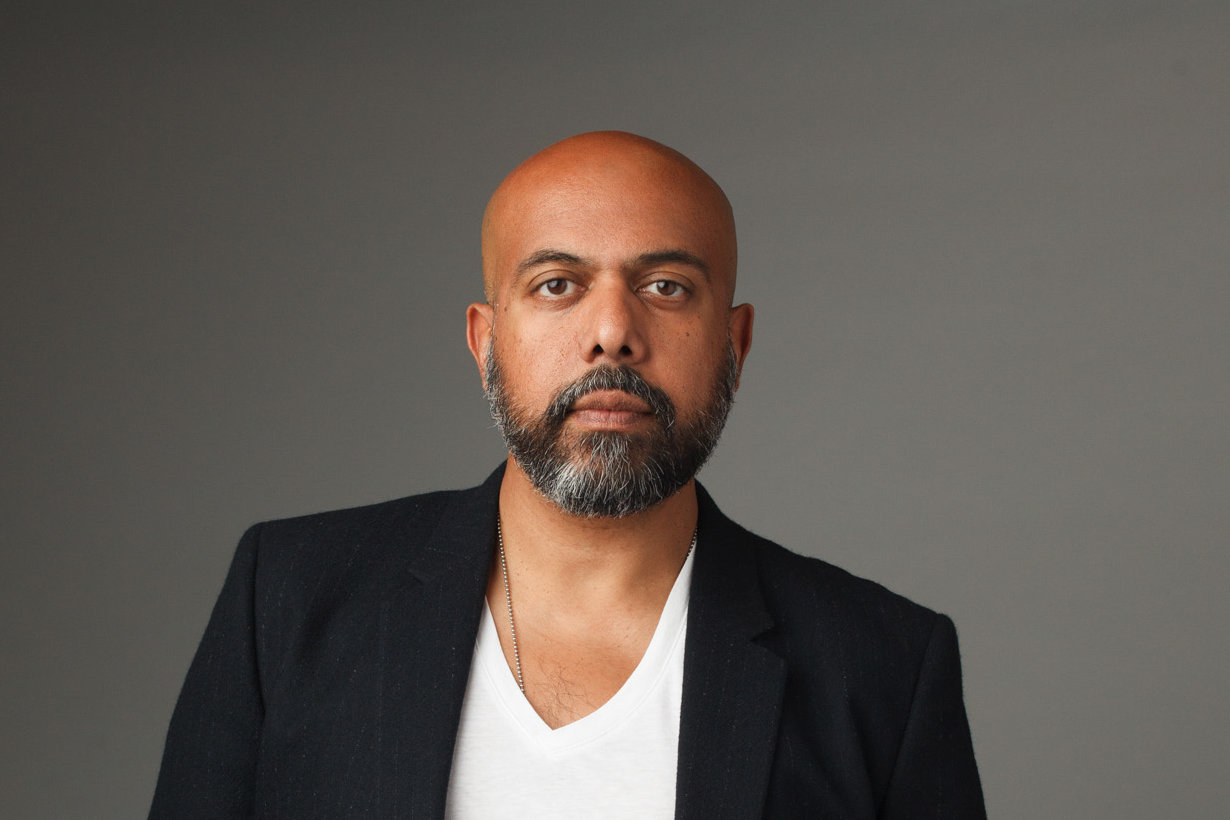
For decades, progress in personal computing has meant more powerful screens, more apps, and more time spent looking down. Imran Chaudhri, one of the designers behind the modern smartphone interface at Apple, helped build that world. Now he believes the next real leap forward requires something more radical: making the computer disappear. This is the story of how he’s trying to undo the interface he helped invent – and redefine what computing looks like in an AI-first world.
Key Takeaways
- The next computing revolution will be driven more by how humans interact with machines than by raw hardware improvements.
- Some of the most important innovators eventually question and attempt to outgrow their own greatest creations.
- Even ambitious, well-funded products can fail commercially while still reshaping long-term technological direction.
- AI is increasingly becoming the new operating layer across devices, not merely a feature inside applications.
- Human-centered design remains a durable strategic advantage, even when first-generation products fall short.
The Next Computing Revolution Won’t Look Like a Screen
For most of the last 40 years, progress in personal computing has looked the same: faster chips, sharper screens, thinner devices. But Imran Chaudhri has long believed that the next real leap forward wouldn’t come from better screens at all. It would come from questioning whether screens should remain the center of computing in the first place.
As the former Apple designer behind the iPhone interface, iPad interaction models, and Apple Watch UX, Chaudhri helped define the very paradigm he later set out to challenge. In 2018, he co-founded Humane to pursue a radical idea: that the future of computing should be ambient, wearable, and invisible – not another device you stare at, but something that fades into the background of life itself.
The first attempt at this vision, the Humane AI Pin, failed to achieve market adoption and was ultimately discontinued. But the idea did not die with the product. In 2025, HP acquired Humane’s core technology, patents, and team, and Chaudhri went on to lead HP IQ, a new AI innovation group focused on embedding intelligent, context-aware computing into everyday devices.
If he’s right, the smartphone era may still prove to be what the desktop PC era was before it: not the end state of personal computing, but a powerful – and temporary – phase.
How Screens Took Over Our Lives
The smartphone is arguably the most successful consumer technology product in history. It put the internet in every pocket, turned billions of people into creators, and rewired how we work, socialize, and think. It also did something else: it captured our attention almost completely.
Today, the average person checks their phone hundreds of times per day. Work, entertainment, navigation, memory, communication, and even identity have collapsed into a single glowing rectangle. The interface is powerful – and exhausting.
For years, the tech industry tried to fix this with software: screen time limits, focus modes, notification batching, digital well-being dashboards. But all of these assume the same core premise: that the screen remains the center of computing.
Imran Chaudhri is one of the few people in Silicon Valley with both the credibility and the lived experience to challenge that assumption.
Imran Chaudhri: The Designer Who Is Now Trying to Make Interfaces Disappear
Before Humane, before the idea of ambient computing entered the mainstream conversation, Imran Chaudhri spent more than two decades at Apple shaping the very interfaces that define modern life. He was part of the original iPhone interface team, helped establish the touch-first interaction model that replaced keyboards and styluses, and later worked on the user experience of the iPad and Apple Watch.
In other words: he helped design the screen-centered world we now live in.
That is what makes the next chapter of his career so unusual. Chaudhri is not a critic attacking the smartphone era from the outside. He is one of the people who built it – and who now sees its limits more clearly than most.
Over time, he began to notice a pattern. Every improvement made devices more capable, but also more demanding. More features required more attention. More apps required more time. More power required more cognitive load. The interface, which once existed to serve people, slowly became something people served instead.
The problem, as he came to see it, was not any single product. It was the assumption that screens should remain the center of computing itself.
From Devices to Intelligence: The Shift Toward Ambient Computing
Humane was founded around a deceptively simple idea: computing should adapt to humans, not the other way around.
Instead of forcing people to look, tap, scroll, and manage interfaces, Chaudhri and his team envisioned systems that could understand intent through voice, context, and environment – and only surface information when it was actually needed. The Humane AI Pin was an early attempt to embody that philosophy: a wearable, AI-first device designed to minimize screens and maximize presence.
That specific product failed. But the idea behind it did not.
In 2025, after Humane’s consumer experiment came to an end, HP acquired the company’s core technology, intellectual property, and engineering team. Chaudhri and his co-founder Bethany Bongiorno now lead HP IQ, a new AI innovation group inside HP focused on embedding intelligence across PCs, work tools, and everyday devices.
This shift is more than a corporate landing spot. It represents a strategic evolution of the same vision: instead of trying to replace the smartphone with a single radical device, Chaudhri is now working to dissolve the interface across many devices at once.
The goal is no longer to build one new object. It is to make intelligence itself the interface layer.
In this model, you don’t open apps. You express intent. You don’t manage software. You delegate to systems. The best interface is not the one you admire – it is the one you barely notice.
Why This Is Still So Hard
Moving beyond screens is not a product problem. It is a behavioral, infrastructural, and psychological one.
Screen-based computing works because:
- Developers know how to build for it
- Users know how to use it
- Social norms support it
- Entire industries depend on it
Changing that does not happen through a single device or a single breakthrough. It requires AI that can reliably understand context, language, and intent. It requires extremely low-friction interaction. It requires deep trust around privacy. And it requires intelligence that is dependable, not just impressive in demos.
This is why Chaudhri’s work has increasingly shifted away from “hardware” as the center of the story. The interface is not the product. The intelligence is.
If This Works, Computing Quietly Changes Shape
If ambient, intent-driven computing succeeds at scale, the implications are profound:
- The app-centric model weakens, replaced by intent-based systems
- Screens become optional instead of dominant
- AI becomes the primary operating layer
- Hardware becomes background infrastructure
- Human attention reclaims priority over digital attention
Instead of asking, “What app should I open?” people ask, “What do I want to do?”
Instead of managing devices, they collaborate with systems.
This is not an incremental evolution. It is a slow, structural reconfiguration of how humans and machines relate to each other.
Technology That Respects Human Presence
One of the most consistent themes in Chaudhri’s thinking is dignity – not as a slogan, but as a design constraint.
He is not anti-technology. He is anti-technology that insists on being the center of your life.
At both Humane and now HP IQ, privacy is positioned as a default, not a feature. The goal is to reduce cognitive load, not increase it. To support human presence, not compete with it.
In an industry that has spent the last two decades optimizing for engagement, this is a quietly radical stance: that the highest achievement of computing might be to demand less of us, not more.
The Post-Smartphone Era
The end of the smartphone era, if it comes, will not arrive as a single dramatic replacement. It will emerge gradually, through layers of new interfaces, behaviors, and embedded intelligence – most of them invisible at first.
Humane’s AI Pin showed just how difficult it is to leap directly from a screen-centric world to a screenless one. The product was too early, too constrained by current AI limitations, and too much of a behavioral shift to succeed as a standalone consumer device. Its failure was not just a product miss – it was evidence of how deep the smartphone paradigm still runs.
But paradigm shifts rarely succeed in one leap. They tend to arrive in fragments.
That is what makes Chaudhri’s transition to HP IQ more significant than it might appear at first glance. Instead of trying to replace the smartphone outright, his work is now focused on embedding AI-driven, context-aware computing into a wide range of existing devices and workflows – where new interaction models can evolve more naturally, and with less friction.
In this model, ambient computing doesn’t arrive as a single hero device. It arrives as a gradual reconfiguration of how software, hardware, and intelligence relate to human intent.
Just as touch interfaces existed years before the iPhone made them mainstream, and just as voice assistants preceded meaningful conversational AI, the ideas behind Humane may find their real impact not as a product category – but as an invisible layer across many of them.
The post-smartphone era, if it comes, will not look like a clean break. It will look like a slow disappearance.
What Happened to Humane: HP Acquisition and the Future of the Vision
Humane’s bold attempt to redefine personal computing hit a major inflection point in early 2025. After raising more than $230 million and launching the AI Pin in April 2024 – a wearable marketed as a potential smartphone alternative – the product struggled to win broad adoption. Early reviews were mixed to negative, users reported functional issues, and reported returns at times outpaced sales, leading Humane to reduce the device’s price before ultimately halting further sales altogether.
By February 2025, Humane announced that it would discontinue the AI Pin entirely. All devices were scheduled to lose core functionality – including calling, messaging, and cloud-based AI queries – after February 28, 2025, as part of the shutdown of support services. Refunds were offered only within limited eligibility windows.
But the company’s story didn’t end in a quiet liquidation. In a strategic pivot, HP Inc. acquired most of Humane’s assets, including its AI software platform (CosmOS), intellectual property (over 300 patents and applications), and the founders’ engineering team for approximately $116 million.
Imran Chaudhri and his co-founder Bethany Bongiorno now lead a new division within HP known as HP IQ – a specialized AI innovation lab focused on integrating the acquired technology into HP’s broader product ecosystem, including PCs, printers, and hybrid work solutions. HP’s leadership has positioned this move as part of its strategy to accelerate AI-driven experiences across devices and services.
For Chaudhri’s vision, this transition suggests a shift from standalone consumer hardware toward embedded, context-aware AI systems integrated into everyday devices and work ecosystems. While the AI Pin itself failed to capture sustained market traction, elements of Humane’s platform and design philosophy will live on within HP IQ’s broader AI strategy – a testament to how ambitious innovation can evolve, even when singular products don’t succeed commercially.
FAQs
Who is Imran Chaudhri?
Imran Chaudhri is a designer and inventor known for shaping the user interfaces of key Apple products like the iPhone and iPad before co-founding Humane Inc. in 2018 with his partner Bethany Bongiorno. In 2025, he and his team joined HP to lead a new AI innovation group after Humane’s assets were acquired.
What was the Humane AI Pin?
The AI Pin was a wearable voice-activated device launched in April 2024, marketed as a potential screenless alternative to the smartphone. It faced poor reviews and adoption challenges that ultimately led Humane to discontinue its sale and support in early 2025.
Why did Humane sell its technology to HP?
After struggling with product execution and market traction, Humane sold key assets – including its software platform, patents, and technical talent – to HP for around $116 million. HP integrated the founders and staff into a new AI innovation lab called HP IQ to advance intelligent computing ecosystems.
Does the HP IQ acquisition mean Chaudhri’s vision is dead?
Not necessarily – the acquisition shifts the focus from standalone consumer hardware toward embedding intelligent, context-aware AI into a wider range of devices and work systems. The philosophy of ambient computing may persist and evolve within HP’s broader ecosystem.
What will happen to Humane’s existing AI Pins?
Humane’s AI Pin devices will stop connecting to servers and lose core functionality – such as AI queries, messaging, and calling – after February 28, 2025, and customer support for the product has been discontinued, with limited refund eligibility.
Sources:
- https://www.linkedin.com/in/imran-chaudhri
- https://en.wikipedia.org/wiki/Imran_Chaudhri
- https://en.wikipedia.org/wiki/Humane_Inc.
- https://medium.com/fast-company/the-iphones-original-ui-designer-on-apple-s-greatest-flaws-756f92d8a0da
- https://www.nytimes.com/2024/06/06/technology/humane-ai-pin.html
- https://investor.hp.com/news-events/news/news-details/2025/HP-Accelerates-AI-Software-Investments-to-Transform-the-Future-of-Work/default.aspx
Photo credit: Rajat Bhardwaj / Wikimedia Commons / CC BY-SA 2.0 – cropped (link)