

Key Takeaways
- Lisa Su rescued AMD from near bankruptcy by refocusing on core strengths: performance and innovation.
- Her “focus and execute ” mantra rebuilt AMD’s engineering culture and credibility with investors.
- Strategic partnerships and modular chip design gave AMD a structural edge over Intel.
- Innovation was treated not as invention, but as direction – applied to clear business outcomes.
- Su’s leadership shows that strategic clarity can be more powerful than unlimited resources.
The Savior
Lisa Su didn’t just save AMD – she rewrote what comeback innovation looks like in a cutthroat industry.
When she became CEO in 2014, Advanced Micro Devices was on life support. Revenues had plummeted, losses were mounting, and Intel’s dominance seemed unshakable. Analysts called AMD “irrelevant.”
A decade later, AMD isn’t just surviving. It’s thriving, leading the world in high-performance chips for gaming, data centers, and AI infrastructure – and outpacing Intel’s market value for the first time in history.
The secret? Lisa Su’s philosophy of strategic innovation; innovation with a direction, grounded in execution and organizational discipline.
From Crisis to Clarity
When Su joined AMD in 2012 as Senior Vice President and General Manager, the company had lost its technical edge. Intel dominated CPUs, NVIDIA controlled GPUs, and AMD was struggling to find its identity.
Su had already built a reputation as a turnaround expert – she helped IBM transition from hardware to semiconductor leadership, and later guided Freescale Semiconductor through an IPO. But AMD’s situation was more dire.
In her first months as CEO, she inherited an organization demoralized by years of layoffs and strategic drift.
Her first move wasn’t to launch a product. It was to define a philosophy:
- Focus on high-performance computing.
- Invest in areas where AMD could lead, not follow.
- Align every team around execution excellence.
It was a sharp contrast to Silicon Valley’s obsession with disruption for its own sake. Su’s version of innovation wasn’t about chasing trends – it was about building long-term architectural advantage.
Turning Focus into a Competitive Engine
1. The Zen Architecture: A Decade in The Making
Su bet AMD’s future on a single idea: rebuilding the CPU from the ground up.
That became the Zen architecture, led by legendary engineer Jim Keller. Instead of chasing Intel’s size, AMD would compete on design efficiency – achieving more performance per watt, per dollar.
The gamble worked.
When the first Ryzen chips launched in 2017, they delivered 52% more instructions per cycle than the previous generation – an almost unheard-of leap.
Zen wasn’t just an engineering success. It was a proof of discipline: AMD stayed the course for five years, despite financial pressure, until the design was ready.
By 2020, Zen 3 chips were winning benchmark after benchmark – a clear sign that AMD had restored its innovation credibility. It was a big bet, but a calculated one.
2. Modular Design and Chiplets
One of Su’s boldest innovations was the adoption of chiplet architecture – breaking a processor into smaller modules rather than a single monolithic chip.
This design gave AMD flexibility, scalability, and cost efficiency – allowing the company to outmaneuver Intel’s slower manufacturing cycles.
It was innovation by necessity – and it worked.
AMD could now deliver faster time-to-market while leveraging third-party foundries like TSMC for advanced manufacturing nodes.
That modular approach became the backbone of AMD’s success in Ryzen, EPYC (server processors), and Threadripper (workstation chips).
3. The Art of Strategic Partnerships
While Intel built its chips in-house, Su saw value in collaboration. She deepened AMD’s relationship with TSMC, the world’s leading semiconductor manufacturer.
By outsourcing fabrication, AMD could focus on architecture and performance, avoiding the billions Intel was sinking into fab expansions.
This strategy gave AMD a paradoxical advantage: a smaller company acting with the agility of a startup, and the output of a global powerhouse.
4. Cultural Reengineering
Innovation didn’t stop at the lab. Su rebuilt AMD’s internal culture around clarity and accountability.
She championed transparency – weekly reviews, open discussions of setbacks, and data-driven decisions. Employees describe her leadership as “calm under pressure ” and “relentlessly consistent. ”
Su turned AMD into an engineering-first culture again – where technical truth guided business decisions, not quarterly panic.
How It Affects Businesses and Society
1. Competitive Resurgence
By October 2025, AMD’s market capitalization exceeded $400 billion, up from under $2 billion a decade earlier.
Its EPYC processors now power data centers for Amazon, Google, and Microsoft, while its Radeon GPUs compete in AI and gaming.
AMD became a case study in focus-driven innovation, proving that scale isn’t the only route to market dominance.
2. The Industry Ripple Effect
Su’s strategy forced competitors to evolve.
Intel began restructuring its manufacturing model, while NVIDIA accelerated its own CPU development. The message was clear: discipline could disrupt.
AMD’s chiplet model also changed semiconductor economics, making high-performance computing more accessible to smaller companies and researchers.
3. Symbol of Representation and Leadership
As one of the few female CEOs in semiconductor history – and a woman of color leading a Fortune 500 company – Lisa Su’s rise became a powerful symbol of representation.
Her leadership wasn’t performative; it was proven. In 2022, she was named one of Fortune’s “World’s Greatest Leaders, ” and in 2023, she joined the President’s Council of Advisors on Science and Technology.
The Next Phase of AMD Innovation
1. AI and Accelerated Computing
AMD’s next horizon is AI acceleration – challenging NVIDIA’s dominance in GPUs. The company’s MI300 AI accelerator, launched in 2024, combines CPU, GPU, and memory in a unified architecture – a natural evolution of Su’s modular philosophy.
2. Expanding into Data and Cloud
Under Su, AMD isn’t chasing every market – it’s targeting scalable infrastructure: data centers, AI training, and enterprise-grade workloads. The focus remains on high-performance computing, the company’s anchor for sustainable growth.
3. Sustainable Manufacturing
Su has also tied AMD’s innovation goals to environmental sustainability. AMD has pledged to deliver a 30× energy efficiency improvement in its processors by 2025 – an essential move as AI workloads grow exponentially.
4. The Su Doctrine
At its core, Su’s doctrine remains simple: Focus on what matters most, execute with excellence, and innovate with purpose.
It’s not a slogan. It’s a strategy – one that rebuilt an entire company from the ground up.
FAQs
1. How did Lisa Su transform AMD?
By focusing on high-performance computing, rebuilding the CPU architecture (Zen), and instilling a culture of disciplined innovation.
2. What’s the key difference between AMD and Intel under Su’s leadership?
AMD uses modular chiplet design and external foundries (TSMC), enabling agility and cost efficiency, while Intel manages both design and manufacturing.
3. How does AMD compete in AI hardware?
Through its MI300 accelerator and optimized GPU platforms for AI and HPC workloads.
4. What leadership style defines Lisa Su?
Analytical, calm, and focused. She emphasizes clarity of goals and data-driven decision-making.
5. What’s next for AMD under her leadership?
Continued expansion in data centers, AI chips, and sustainable semiconductor technology.
Final Thought
Lisa Su’s story isn’t about a dramatic invention – it’s about strategic resurrection. She proved that innovation isn’t chaos – it’s concentration. By narrowing AMD’s focus, she expanded its potential.
In a world that glorifies disruption, Su showed that true innovation is often discipline in disguise.
Sources:
- https://en.wikipedia.org/wiki/Lisa_Su
- https://www.marketwatch.com/story/jmp-cuts-amd-says-role-becoming-irrelevant-2011-07-11
- https://thesisrationale.substack.com/p/super-ceo-series-1-lisa-su-brings
- https://www.morningstar.com/news/marketwatch/20251024349/the-blistering-amd-stock-rally-just-culminated-in-a-milestone
- https://www.leadersthepodcast.com/blog/lisa-sus-leadership-blueprint-transforming-amd-into-a-tech-powerhouse/
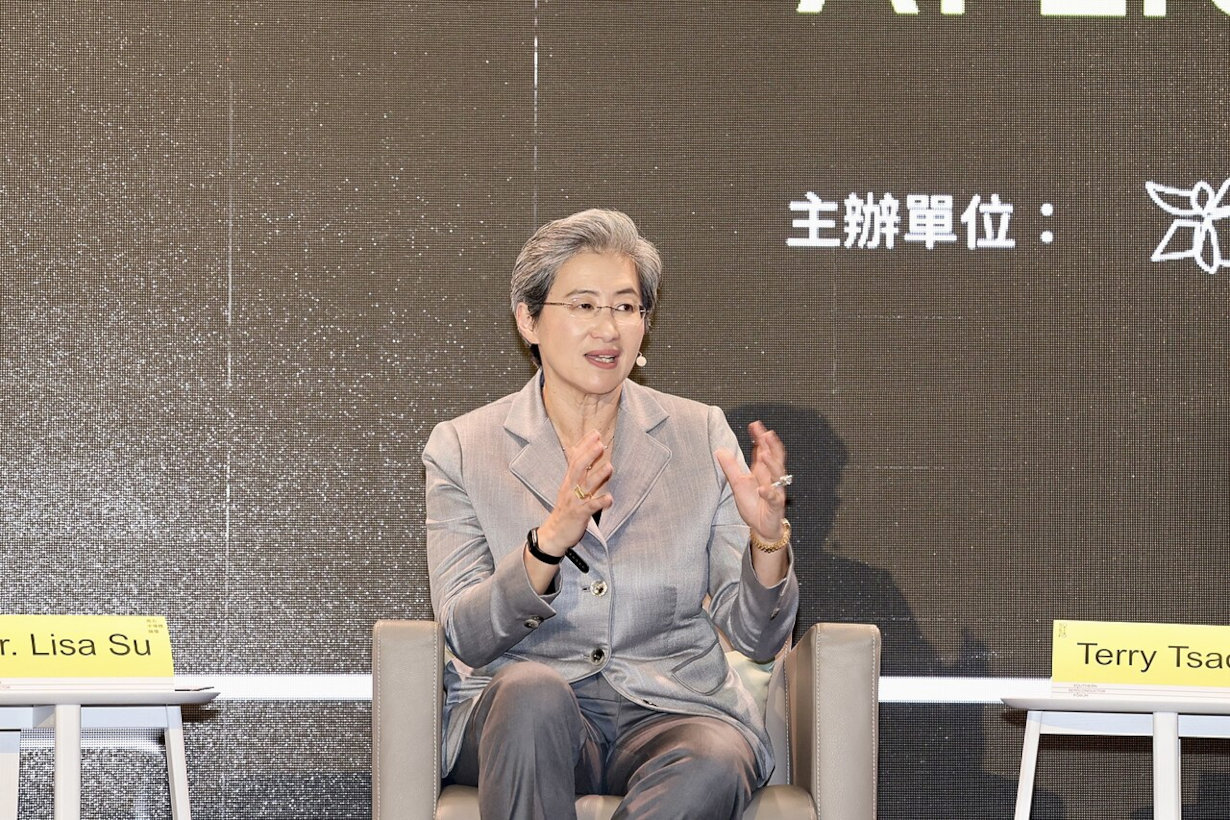
Photo credit: Tainan City Government / Wikimedia Commons / licensed under the Government Website Open Information Announcement (link)