

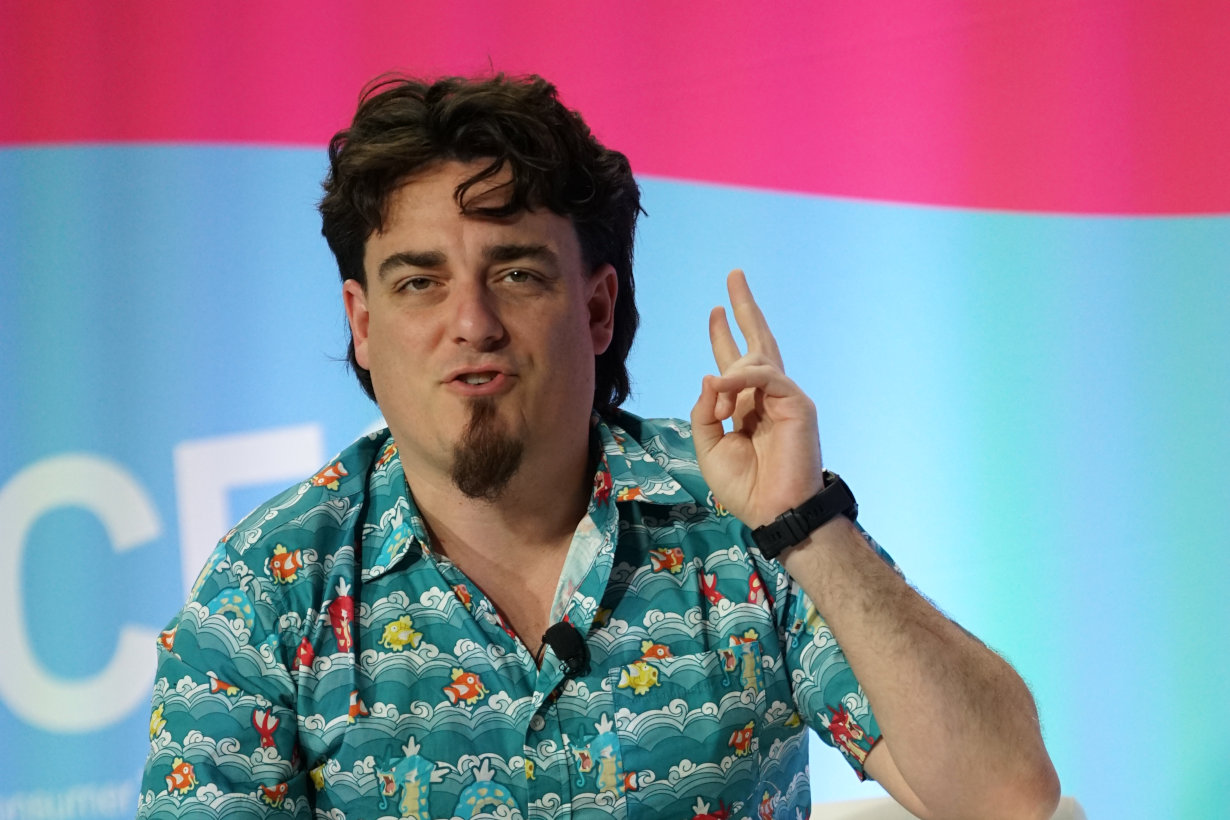
For decades, defense technology has been dominated by large contractors, slow procurement cycles, and legacy systems. Innovation often lagged behind the pace of modern software development. Palmer Luckey, Founder of Anduril Industries, saw an opportunity to change that by applying startup speed and software-driven thinking to national security. Through Anduril, he is building a new model for defense – one based on autonomy, artificial intelligence, and rapid iteration.
Key Takeaways
- Palmer Luckey founded Anduril Industries to bring startup innovation to defense.
- Anduril’s core innovation is a software-first approach to autonomous systems.
- The company replaces slow procurement cycles with rapid iteration and deployment.
- Its platform integrates hardware and software into unified, adaptable systems.
- Luckey’s work is reshaping both defense technology and Silicon Valley’s relationship with the sector.
Defense Tech: From Hardware-Centric to Software-Centric
Traditional defense systems are often built as standalone hardware products – expensive, slow to deploy, and difficult to upgrade. This model creates long development cycles and limits adaptability in rapidly changing environments.
Palmer Luckey‘s approach flips that model.
Instead of treating hardware as the primary product, Anduril builds integrated systems powered by software, where autonomy and AI drive decision-making and performance. This allows continuous updates, faster deployment, and systems that improve over time rather than becoming obsolete.
At its core, the thesis is simple: Software iteration outpaces hardware stagnation.
And in defense, speed and adaptability can be as critical as raw capability.
The Limits of Traditional Defense Innovation
The global defense industry has historically been shaped by a small group of large contractors. This model has several characteristics:
- Long procurement cycles spanning years or decades
- High costs with limited flexibility
- Systems designed for specific missions rather than adaptability
While effective in certain contexts, this approach struggles to keep up with modern threats, which evolve rapidly and increasingly rely on software, data, and autonomous systems.
At the same time, Silicon Valley largely avoided defense work for cultural and ethical reasons, creating a gap between cutting-edge technology and national security applications.
The Innovation: Software-Defined Defense Systems
Anduril Industries introduces a fundamentally different model.
1. Lattice OS: The Core Software Layer
At the center of Anduril’s ecosystem is Lattice, a software platform that integrates data from sensors, drones, and surveillance systems into a unified interface. This enables real-time situational awareness and autonomous decision-making.
Rather than managing disconnected systems, operators interact with a single, cohesive platform.
2. Autonomous Hardware Systems
Anduril builds hardware – such as drones, sensors, and surveillance towers – but these are designed as extensions of the software platform, not standalone products.
Examples include:
- Autonomous surveillance systems
- Unmanned aerial vehicles
- Border monitoring technologies
The key innovation is that these systems can operate with minimal human intervention while still being supervised and controlled through software.
3. Continuous Iteration and Deployment
Unlike traditional defense contractors, Anduril adopts a startup-style development cycle:
- Rapid prototyping
- Frequent software updates
- Continuous improvement post-deployment
This allows systems to evolve in real time, adapting to new threats and operational needs.
Traditional Defense Contractors vs Anduril’s Model
| Dimension | Traditional Defense Model | Anduril’s Approach |
|---|---|---|
| Core Focus | Hardware-centric systems. | Software-defined autonomous systems. |
| Development Cycle | Multi-year procurement and deployment. | Rapid iteration and continuous updates. |
| System Integration | Fragmented and siloed. | Unified through a central software platform. |
| Adaptability | Limited after deployment. | High adaptability via software updates. |
| Strategic Philosophy | Build once, deploy long-term. | Build, deploy, and continuously evolve. |
This comparison highlights how Anduril Industries shifts defense innovation from static, hardware-driven systems to dynamic, software-defined platforms. While traditional contractors prioritize long-term deployment of fixed capabilities, Anduril’s model emphasizes continuous iteration, integration, and adaptability through software.
The result is a fundamentally different approach: instead of building systems that remain unchanged for years, Anduril creates evolving capabilities that can respond in real time to new threats and operational needs.
What This Shift Means
This comparison illustrates a deeper shift in how defense systems are conceptualized.
Anduril Industries is not simply improving existing tools – it is redefining the architecture of defense technology itself. By placing software at the center, the company enables systems that can learn, adapt, and scale more efficiently than traditional hardware-first approaches.
The result is a model where defense capabilities are no longer static assets, but dynamic systems that evolve alongside the threats they are designed to address.
Redefining the Defense Technology Landscape
Anduril’s approach is already influencing how governments and defense organizations think about procurement and innovation.
Industry Level
The company challenges the dominance of legacy contractors by demonstrating that startups can build and deploy advanced defense systems more quickly and efficiently.
This has opened the door for a new generation of defense-focused startups.
Technological Level
By integrating AI and autonomy into core systems, Anduril accelerates the shift toward machine-assisted and autonomous operations.
This has implications not only for defense, but also for:
- Border security
- Disaster response
- Infrastructure monitoring
Strategic Level
Luckey’s work has helped reintroduce defense as a legitimate and necessary area for technological innovation within Silicon Valley.
This cultural shift may prove as significant as the technology itself, bringing more talent and resources into the sector.
Palmer Luckey Challenges Silicon Valley Norms
Palmer Luckey is no stranger to unconventional decisions. After co-founding Oculus and selling it to Facebook, he could have remained within consumer technology. Instead, he chose to focus on defense – a space many in Silicon Valley had avoided.
This decision sparked debate. But it also highlighted a key belief that technological innovation should address critical national and global challenges, even when those challenges are complex or controversial.
Luckey’s willingness to challenge industry norms is central to Anduril’s identity.
Future Outlook: Autonomous Systems as Infrastructure
As global security challenges evolve, the role of autonomous systems is likely to expand. Future defense capabilities may depend less on individual platforms and more on integrated networks of intelligent systems.
Anduril’s model positions it at the center of this shift.
If successful, the company could help define a new era of defense technology – one where software, data, and autonomy form the foundation of national security infrastructure.
FAQs
Who is Palmer Luckey?
Palmer Luckey is an entrepreneur best known for founding Oculus VR and later Anduril Industries. He is focused on applying advanced technology to national security and defense innovation.
What does Anduril Industries do?
Anduril Industries develops autonomous systems and software platforms for defense and security applications. Its products include drones, surveillance systems, and AI-powered command platforms.
What is Lattice?
Lattice is Anduril’s core software platform that integrates data from various sensors and systems into a unified interface. It enables real-time monitoring, analysis, and autonomous decision-making.
Why is Anduril considered innovative?
Anduril introduces a software-first approach to defense, allowing systems to be updated and improved continuously. This contrasts with traditional models that rely on static hardware and long development cycles.
Is Anduril controversial?
Anduril operates in the defense sector, which often raises ethical and political debates. However, its focus on innovation and national security positions it as a key player in modernizing defense technology.
Sources:
- https://en.wikipedia.org/wiki/Palmer_Luckey
- https://palmerluckey.com/
- https://research.contrary.com/report/anduril
- https://forgeglobal.com/insights/anduril-vs-government-contractors/
Photo credit: Xuthoria / Wikimedia Commons / CC BY-SA 4.0 – cropped (link)