


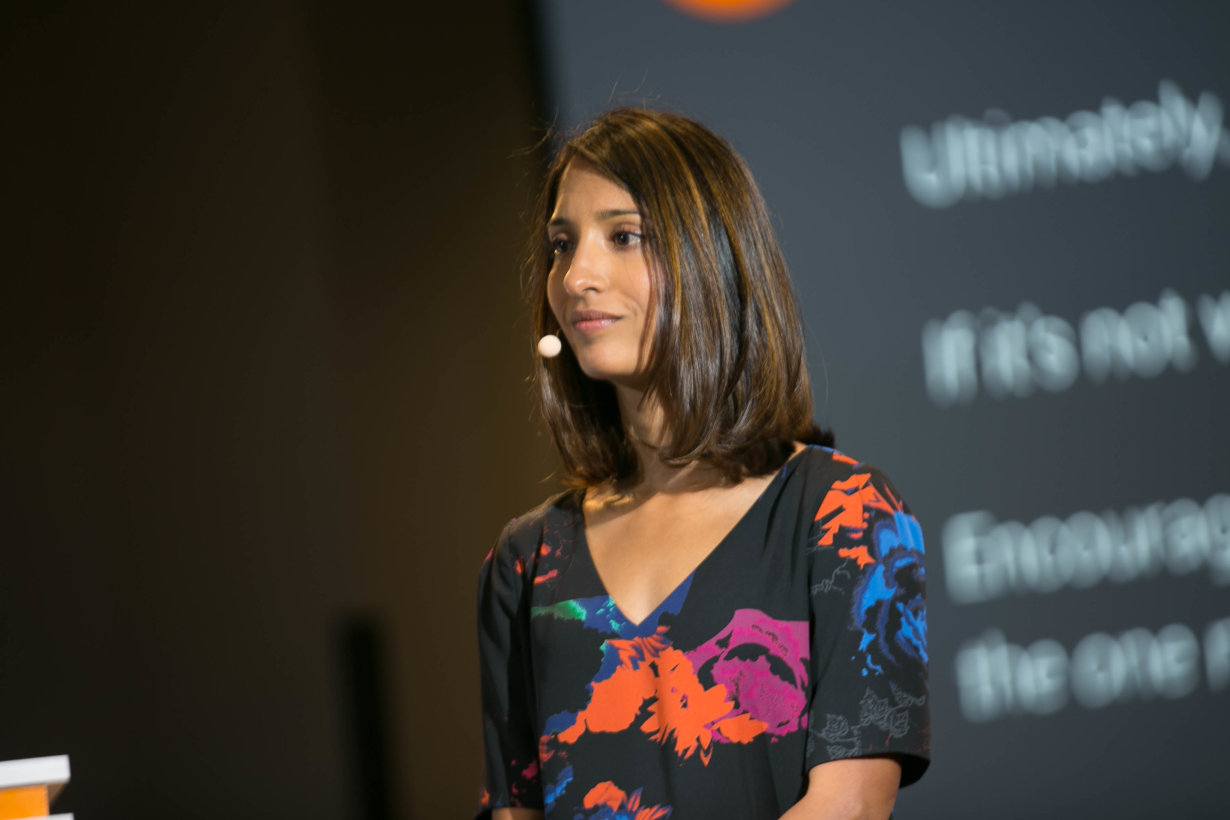
For billions of people, the global financial system doesn’t feel broken – it feels absent. No credit history, no bank relationship, no formal pathway to borrow and build. Shivani Siroya saw this not as a charitable problem to be solved, but as a structural data failure waiting to be redesigned.
Key Takeaways
- Credit innovation is fundamentally about redesigning underwriting models, not simply expanding distribution channels.
- Alternative data can unlock financial access for billions excluded by traditional credit systems.
- Building for emerging markets first can produce scalable, globally relevant financial infrastructure.
- Algorithmic lending must balance precision with ethical data practices and regulatory trust.
- The smartphone has become a foundational layer of financial identity in the digital economy.
Credit Isn’t Broken – The Data Model Is
When we talk about financial inclusion, the conversation often centers on access: more banks, more branches, more capital. But Shivani Siroya approached the problem differently. What if the issue isn’t access to money – but access to a system that recognizes your financial behavior in the first place?
Through Tala, Siroya reimagined underwriting from the ground up. Instead of relying on traditional credit scores – which exclude billions – Tala built a model that treats the smartphone as financial infrastructure. In doing so, it reframed credit not as a privilege granted by legacy institutions, but as a data problem that can be reengineered.
This is not innovation at the surface level of pricing or app design. It is structural innovation: redefining what counts as creditworthiness in the digital age.
The Invisible Majority in Global Finance
Traditional credit systems depend on documented financial histories – bank accounts, loans, credit cards, collateral. In developed markets, this feels normal. In emerging markets, it excludes vast populations who operate largely in cash economies or informal sectors.
Globally, more than a billion adults remain unbanked. Many more are underbanked, with thin or nonexistent credit files. Yet these individuals are economically active: they run small businesses, support families, and participate in local commerce. The disconnect lies not in their productivity, but in the data infrastructure that fails to capture it.
For decades, banks have treated lack of documentation as equivalent to lack of reliability. The result is systemic exclusion reinforced by outdated models. Expanding branch networks or launching digital wallets does little if underwriting still depends on traditional credit bureaus.
Siroya recognized that the spread of smartphones changed the equation. Even in regions without formal banking penetration, mobile adoption was accelerating. Devices became proxies for identity, behavior, and economic participation. The question was no longer whether data existed – but whether institutions were willing to use new kinds of data responsibly.
Innovation: The Smartphone as Financial Infrastructure
Tala’s core innovation lies in its alternative underwriting model. Instead of relying solely on credit bureau data, Tala analyzes smartphone-derived signals – behavioral patterns, device data, transaction consistency, and other digital footprints – to assess risk.
The insight is simple but powerful: digital behavior can reveal financial reliability. Patterns such as bill payment consistency, network stability, and device usage habits can help build a dynamic risk profile. This allows Tala to extend small, short-term loans to individuals who would otherwise be invisible to banks.
But the innovation is not just technical – it is architectural. Tala built a full-stack lending platform optimized for markets without legacy infrastructure. From onboarding to risk assessment to disbursement and repayment, the system is designed for mobile-first environments.
Importantly, the model improves over time. As users repay loans, their profiles strengthen, enabling larger credit lines and more favorable terms. This creates a feedback loop where responsible behavior is rewarded with expanded access – effectively building a credit history from scratch.
Unlike traditional microfinance, which often relies on group guarantees or manual assessments, Tala’s system operates algorithmically at scale. That scalability transforms financial inclusion from a localized initiative into a global platform model.
From Emerging Markets to Scalable Systems Thinking
Siroya’s background working in international development exposed her to the lived realities of informal economies. Rather than designing from a Silicon Valley abstraction, she built Tala around real-world constraints: inconsistent connectivity, fragmented identification systems, and fluctuating incomes.
This grounded perspective shaped Tala’s product decisions. Here’s a comparison between Tala and traditional lending platforms:
| Dimension | Tala | Typical Traditional Lending Platforms |
|---|---|---|
| Loan Structuring | Loans aligned with local income cycles and irregular cash flow patterns. | Fixed repayment schedules based on predictable monthly salaries. |
| User Interface Design | Simplified, mobile-first interfaces designed for accessibility in low-bandwidth environments. | Often desktop-optimized or adapted from legacy banking systems. |
| Risk Modeling | Accounts for non-linear earnings common in gig and informal sectors using alternative data signals. | Relies heavily on formal employment records and traditional credit scores. |
| Target Market Strategy | Designed primarily for emerging markets with structural financial gaps. | Designed primarily for established banking markets, later expanded outward. |
| Infrastructure Philosophy | Built as a parallel, mobile-native financial system suited to modern digital behavior. | Digitizes existing banking models without fundamentally rethinking architecture. |
| Scalability Model | Scales across regions with similar informal economies and mobile penetration patterns. | Scales where traditional credit bureaus and banking infrastructure already exist. |
| Approach to Complexity | Builds for economic complexity and informal income realities from the outset. | Optimizes for convenience within formal, documented financial systems. |
Redefining Access, Risk, and Opportunity
The impact of Tala’s model extends beyond loan disbursement. At the individual level, access to small, timely credit can stabilize income shocks, support microenterprise growth, and build financial confidence. For many users, Tala represents their first formal financial relationship.
At the systemic level, alternative data underwriting challenges entrenched assumptions about risk. It demonstrates that default rates and repayment behavior can be managed effectively outside traditional scoring frameworks. This opens the door for broader adoption of alternative credit models across the industry.
There is also a macroeconomic dimension. Expanding credit access fuels entrepreneurship and consumption in underserved markets, contributing to economic growth. As more individuals enter formal financial systems, the overall transparency and resilience of those economies improve.
However, impact must be balanced with responsibility. Data-driven lending raises legitimate concerns around privacy, consent, and algorithmic bias. Siroya’s approach emphasizes ethical data use and regulatory engagement, acknowledging that innovation in finance requires trust as much as technology.
Future Outlook: Data, AI, and the Next Credit Layer
As artificial intelligence advances, alternative underwriting models will become even more sophisticated. Machine learning can detect patterns invisible to human analysts, refining risk predictions in real time. For companies like Tala, this represents both opportunity and responsibility.
The next phase of fintech innovation may revolve around embedded finance – where credit is seamlessly integrated into platforms people already use. In emerging markets, this could mean partnerships with marketplaces, telecom providers, or gig platforms, embedding financial services directly into economic activity.
At the same time, regulators worldwide are paying closer attention to data governance and consumer protection. Companies that combine algorithmic precision with transparency will likely define the next generation of financial infrastructure.
Siroya’s work suggests a broader lesson: the future of finance may not belong to those who control the most capital, but to those who build the most adaptive data systems. Credit, in this view, becomes less about historical paperwork and more about dynamic digital identity.
FAQs
Who is Shivani Siroya?
Shivani Siroya is the founder and CEO of Tala, a fintech company focused on expanding credit access in emerging markets. She is known for pioneering alternative data underwriting models that use smartphone-based insights to assess creditworthiness.
What makes Tala different from traditional banks?
Tala does not rely solely on conventional credit scores or collateral to approve loans. Instead, it uses alternative digital signals from smartphones to evaluate risk and extend credit to individuals with little or no formal credit history.
How does alternative data underwriting work?
Alternative underwriting analyzes behavioral and digital patterns rather than traditional financial records alone. By evaluating smartphone usage and repayment behavior, Tala can create dynamic credit profiles for users who would otherwise be invisible to banks.
Is smartphone-based lending safe and ethical?
Responsible alternative lending requires clear user consent, transparent data policies, and regulatory compliance. Companies like Tala emphasize ethical data use and risk monitoring to ensure technology enhances access without exploiting vulnerable populations.
Why is fintech innovation important in emerging markets?
Emerging markets often lack legacy financial infrastructure but have high mobile adoption rates. This creates an opportunity to leapfrog traditional systems and build digital-first financial services tailored to local realities.
Sources:
- https://en.wikipedia.org/wiki/Shivani_Siroya
- https://www.cnbc.com/2019/08/22/tala-aims-to-help-anyone-with-an-android-phone-have-access-to-loans.html
- https://ideas.ted.com/how-can-you-trust-if-someone-will-repay-a-loan-look-at-their-smartphone/
- https://www.forbes.com/sites/forbestreptalks/2016/08/29/how-tala-mobile-is-using-phone-data-to-revolutionize-microfinance/
Photo credit: JD Lasica / Wikimedia Commons / CC BY 2.0 (link)