


Key Takeaways
- Shopify began as a failed snowboard shop – and became a revolution in digital retail.
- Lütke’s innovation lies in removing friction, not just building features.
- By empowering small sellers, Shopify reshaped global commerce and lowered barriers to entry.
- The company’s culture of continuous iteration keeps it adaptive amid tech shifts.
- Lütke’s long-term vision: commerce that’s human, decentralized, and fair.
What’s New / Changing
E-commerce used to be a privilege of big brands with tech teams, ad budgets, and logistics power. Tobias Lütke (Tobi Lütke) changed that.
By turning Shopify from a side project into a global commerce infrastructure, he transformed how millions of entrepreneurs reach customers – from bedroom startups to billion-dollar brands.
In 2024, Shopify holds approximately 12% of all U.S. e-commerce sales and has a market share of around 30% by count of e-commerce websites in the U.S. Yet its most profound impact is not scale – it’s accessibility.
Lütke didn’t just build a platform; he built an ecosystem that democratized entrepreneurship itself.
The Industry Before Shopify
Before the late 2000s, online selling was an uphill climb. Retailers had two options: hire expensive developers to code custom stores, or list products on marketplaces like eBay and Amazon that controlled pricing, visibility, and data.
E-commerce software existed, but it was complex, fragmented, and costly – an obstacle that shut out the very people who had ideas to sell.
When Lütke, a German-born programmer living in Canada, tried to launch his own snowboard shop online in 2004, he faced the same frustration. The software options were clunky and restrictive. So he built his own storefront engine using Ruby on Rails, then a new framework known for speed and simplicity.
That DIY experiment became Shopify, launched publicly in 2006.
The timing was uncanny. The iPhone was around the corner. Cloud computing was emerging. And a new generation of founders wanted independence from traditional retail systems.
Shopify offered them the missing piece: a plug-and-play business infrastructure that let anyone sell online, no coding or corporate power required.
The Idea, Product, and Method
Lütke’s innovation was not in inventing e-commerce – but in re-architecting its accessibility.
He stripped away technical complexity and turned commerce into a service:
- Hosting, payment processing, and inventory tools under one subscription.
- A visual editor for storefronts that required no programming.
- A scalable backend that could grow from a single product to global distribution.
But the real breakthrough was the Shopify App Store, launched in 2009. This opened the platform to third-party developers, creating a modular innovation ecosystem.
Suddenly, Shopify became not just a tool – but a foundation for other innovators. Payment gateways, marketing integrations, fulfillment solutions, and analytics tools all grew around it.
By 2025, Shopify’s app store houses over 8,000 extensions, enabling merchants to customize everything from AI-driven recommendations to NFT-linked products.
Lütke also introduced Shopify Capital, an alternative funding model that uses sales data instead of credit scores, injecting more than $5 billion into small businesses.
This blend of product design, developer collaboration, and financial empowerment defines the “Shopify Effect”: an innovation that spreads opportunity through infrastructure.
How it Affects Businesses and People
Shopify’s 2024 economic impact was significant, marked by $9 billion in revenue (up 26%) and $300 billion in gross merchandise volume (GMV) (up 24%). The platform saw 875 million consumers make purchases, representing 12% of U.S. e-commerce and a 18% annual free cash flow margin.
Beyond the numbers, the qualitative shift is even more profound:
- Small businesses gained autonomy over their brands, no longer dependent on Amazon’s algorithms.
- Local artisans and creators found global audiences.
- Retail resilience improved during crises – notably the COVID-19 pandemic, when Shopify became a lifeline for brick-and-mortar stores going digital overnight.
Shopify’s approach also influenced competitors. WooCommerce, BigCommerce, and even Amazon’s “Buy with Prime” now reflect Shopify’s user-first, friction-free philosophy.
By simplifying digital entrepreneurship, Lütke helped turn commerce into a more human-scale activity – personal, direct, and creative.
His philosophy, often expressed in interviews, reflects a quiet belief: Entrepreneurship is the highest form of self-expression. People should be free to build things they care about.
Where Innovation Goes Next
Lütke sees the next phase of commerce not as bigger, but as smarter and fairer. Shopify’s roadmap increasingly emphasizes AI-powered merchant tools, carbon-neutral logistics, and blockchain-enabled transparency in transactions.
In 2024, Shopify introduced its “Sidekick” AI assistant, an embedded digital co-founder that helps merchants generate product descriptions, analyze trends, and even forecast demand – marking another leap in lowering the barrier to entrepreneurship.
Meanwhile, Lütke’s advocacy for decentralized commerce suggests a future where small businesses own their relationships, data, and creative assets. If commerce on the internet becomes centralized, it fails – the world needs millions of entrepreneurs, not one Amazon.
Industry analysts predict Shopify’s influence will keep expanding into financial tech, logistics, and sustainability infrastructure, turning it from a storefront provider into a backbone of global business enablement.
What began as one man’s frustration with bad software evolved into one of the most transformative innovation stories in modern capitalism – a platform that gave power back to the makers.
FAQs
1. What makes Tobias Lütke’s innovation unique?
He didn’t invent online retail – he made it accessible. His focus on simplicity, developer ecosystems, and merchant empowerment changed the industry’s DNA.
2. How does Shopify support small businesses financially?
Through Shopify Capital, offering revenue-based funding that bypasses traditional credit barriers, helping over 100,000 merchants access capital.
3. How big is Shopify’s revenue and market share?
In 2024, Shopify’s Gross Merchandise Volume (GMV) hit $292.3 billion, reflecting a 24% rise from the prior year, while overall revenue climbed 26% to $8.88 billion. The platform captures roughly 12% of total U.S. e-commerce transactions.
4. What’s next for Shopify innovation?
AI-driven merchant tools, decentralized data ownership, and sustainability-focused logistics partnerships.
5. What’s the broader legacy of Tobias Lütke?
He transformed entrepreneurship from a privilege into a possibility – proving that innovation can scale without losing its humanity.
Sources:
- https://en.wikipedia.org/wiki/Tobias_L%C3%BCtke
- https://thunderbit.com/blog/shopify-stats
- https://www.storelab.app/blog/shopify-app-store-2024-a-comprehensive-guide
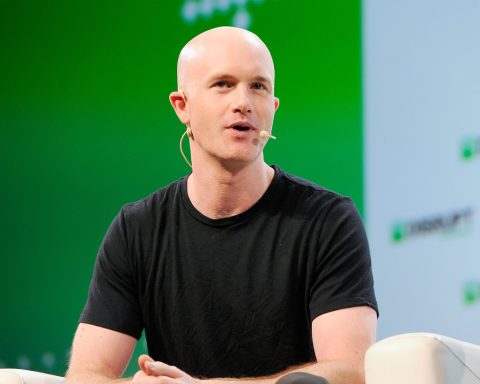
Photo credit: Union Eleven / Wikimedia Commons / CC by 3.0 (link)