


Key Takeaways
- Great visionaries share one principle: they don’t chase trends – they shape them.
- From empathy to resilience, leadership today is a mindset, not a title.
- Every innovation begins with a human insight that challenges convention.
- Democratizing access – to knowledge, opportunity, or creativity – is the future of business.
- The most valuable lesson of all: success is built on conviction that survives uncertainty.
Across every era of business, a small group of founders, leaders, and innovators have consistently seen the world not as it is, but as it could be. Their stories span garages, boardrooms, research labs, and chance moments of insight – but the lessons they leave behind share a striking timelessness. These aren’t just strategies for scaling companies or navigating disruption; they’re frameworks for thinking, acting, and leading with vision.
In this article, we distill timeless lessons from the people who’ve reshaped industries and rewritten what’s possible, so you can apply their clarity, boldness, and imagination to whatever you build next.
Lesson 1: Lead with authenticity – Gary Vaynerchuk, CEO of VaynerMedia
Gary Vaynerchuk built an empire on a principle most executives fear: radical transparency. From documenting his life online to speaking bluntly about failures, he turned vulnerability into a strength. In a world of filtered narratives, Vaynerchuk’s honesty built one of the most loyal followings in business.
His message is deceptively simple – authenticity scales. People follow people who are real, not polished. Through VaynerMedia, he built a culture where empathy, hustle, and self-awareness intersect.
But the deeper insight is psychological: authenticity creates emotional efficiency. When leaders stop pretending, they reclaim the energy spent maintaining facades. Vaynerchuk’s lesson is less about social media and more about self-alignment – the courage to build in full view of the world.
Lesson 2: Design for everyone – Melanie Perkins, Co-Founder & CEO of Canva
Melanie Perkins didn’t start with Silicon Valley capital or industry connections – she started with a classroom problem. As a university student teaching design programs, she saw how complex and intimidating creative tools were for beginners. Her insight was radical in its simplicity: design shouldn’t require training; it should be as easy as drag and drop.
That conviction became the seed for Canva – a platform that would democratize design for the world. When investors rejected her pitch more than a hundred times, she refined her vision rather than dilute it. Today, Canva empowers over 100 million users globally, giving small businesses, teachers, and creators the same tools once reserved for experts.
The deeper lesson lies in her persistence and purpose. Perkins’ journey shows that true innovation begins by removing barriers – not adding features. The success of Canva isn’t just in its software, but in the empathy built into its interface. She built not a product, but a pathway to creative confidence.
Lesson 3: Build for the long game – Jensen Huang, Founder & CEO of NVIDIA
Before AI was a buzzword, Jensen Huang was building the hardware to power it. His vision for NVIDIA was rooted in the belief that GPUs could accelerate more than graphics – they could accelerate intelligence itself.
For years, that vision seemed ahead of its time. Yet Huang persisted, investing in architecture, research, and ecosystems others ignored. His reward? NVIDIA became the backbone of the AI revolution, redefining industries from gaming to healthcare to autonomous vehicles.
Huang’s leadership philosophy is patient and compounding. He often says, “We don’t run faster; we run longer.” The lesson is timeless: innovation isn’t about speed – it’s about endurance in the pursuit of clarity.
Lesson 4: Democratize knowledge – Anne Wojcicki, Co-Founder of 23andMe
When Anne Wojcicki launched 23andMe, her mission wasn’t to sell genetic tests – it was to return science to the people. For decades, access to health data was mediated by institutions, doctors, and pharmaceutical companies. Wojcicki envisioned a different model – one where individuals could access, understand, and act upon their own genetic information.
Her idea sparked resistance from regulators who feared the public couldn’t interpret such data responsibly. Yet Wojcicki saw that empowerment, not control, was the path to progress. She rebuilt the company through collaboration with the FDA and made personal genetics both accessible and credible.
Today, 23andMe has millions of users and one of the world’s largest genomic databases. Beyond profit, Wojcicki’s legacy is cultural: she made science personal, turning data into self-knowledge. Her journey shows that innovation often begins not in laboratories, but in the belief that people deserve to understand themselves.
Lesson 5: Empathy as strategy – Satya Nadella, CEO of Microsoft
When Satya Nadella became CEO of Microsoft in 2014, the company was seen as powerful but stagnant. Internally, its culture was competitive, siloed, and defensive – a legacy of past eras. Nadella’s first move wasn’t to overhaul products; it was to rebuild empathy as a core corporate muscle.
He reframed leadership as a human act, not a managerial one. “Empathy,” he said, “makes you a better innovator.” Under his tenure, Microsoft reconnected with its customers, embraced open source, and found purpose in enabling others to achieve more.
The results speak for themselves – Microsoft’s market value and cultural relevance soared. Nadella’s story is proof that compassion and performance are not opposites. Empathy, when institutionalized, becomes the quiet catalyst of reinvention.
Lesson 6: Innovate with ethics, not ego – Jennifer Doudna, Co-Inventor of CRISPR
Jennifer Doudna didn’t just invent a technology – she unlocked a moral frontier. As co-inventor of CRISPR, she gave humanity the power to rewrite DNA, a discovery that could cure genetic diseases or reshape life itself. Yet her first instinct wasn’t celebration – it was caution. She famously dreamed of Hitler asking her to explain how CRISPR worked, a haunting symbol of scientific responsibility. That moment became her north star: innovation without ethics, she realized, is a race without direction.
Doudna’s leadership model is one of scientific humility – a recognition that progress must evolve alongside principle. Through the Innovative Genomics Institute, she’s championed equitable access, public dialogue, and responsible oversight for gene-editing research. Instead of controlling the narrative, she opened it – inviting policymakers, ethicists, and global partners into the conversation. That decision turned a scientific breakthrough into a shared moral project.
Her story teaches that true innovation demands moral clarity. In the rush to invent, leaders often forget to ask: “Should we?” Doudna reminds us that leadership is not just about creating power, but guiding how it’s used. In a world where technology moves faster than understanding, her voice offers a new kind of authority – one grounded not in dominance, but in discernment.
Lesson 7: Persistence redefines scale – Guillaume Pousaz, Founder of Checkout.com
Guillaume Pousaz built one of the world’s fastest-growing fintechs not from a Silicon Valley incubator, but from a deep understanding of how broken online payments were. His journey started when a failed attempt to surf professionally sent him down an entirely new path – one defined by grit rather than glamour.
At a time when digital transactions were still a mess of intermediaries and inefficiencies, Pousaz saw an opportunity to create something simpler, faster, and transparent. He spent years learning the complexities of global payments – often coding at night while managing operations by day.
Checkout.com didn’t explode overnight; it scaled slowly and methodically, focusing on trust, precision, and reliability. Pousaz’s resilience through early funding droughts and regulatory complexity made the company a cornerstone of digital commerce. His story teaches that the difference between speed and endurance defines success – great companies don’t grow fast, they grow strong.
Lesson 8: Reinvention is strength – Ginni Rometty, Former CEO of IBM
When Ginni Rometty took the helm of IBM, the century-old giant faced an identity crisis. The world had moved toward cloud computing and data analytics, leaving IBM’s legacy business in decline. Rometty’s response wasn’t nostalgia – it was reinvention.
She pivoted IBM toward AI and hybrid cloud long before they became buzzwords. It was a painful transformation, involving layoffs and restructuring, but Rometty led with long-term conviction rather than short-term comfort.
Her tenure is often judged by stock performance, but her deeper legacy lies in cultural renewal. She reframed IBM around “skills, not pedigree,” investing heavily in employee reskilling and inclusive hiring. Rometty’s lesson is universal: reinvention demands courage – and courage is a leader’s greatest currency.
Lesson 9: Balance innovation and responsibility – Sam Altman, CEO of OpenAI
Sam Altman embodies the paradox of modern innovation: building technologies that could change the world – and destroy it if unchecked. As the public face of OpenAI, he’s navigating the delicate line between invention and ethics.
Altman’s leadership is rooted in transparency and restraint. He invites public dialogue about regulation and the societal impact of AI, often arguing that openness, not secrecy, will ensure technology benefits humanity.
His approach demonstrates that responsibility is not the opposite of ambition – it’s its highest form. The future will not belong to those who innovate recklessly, but to those who innovate conscientiously. Altman’s legacy will depend not on how fast AI grows, but how wisely it’s guided.
Lesson 10: Reinvention begins where rejection hurts – from Reshma Saujani, Founder of Girls Who Code
Reshma Saujani‘s story began not with victory, but with loss. In 2010, she ran for Congress in New York – and lost spectacularly. For many, that defeat would have been a quiet end to a political dream. But for Saujani, the experience revealed something deeper. While visiting schools on the campaign trail, she noticed the stark gender gap in computer science classrooms. The girls she met weren’t lacking talent; they were lacking confidence and representation. That observation sparked the idea that would change her carrière – and thousands of others.
From that moment, Girls Who Code was born not out of ambition, but of purpose. Saujani took the raw emotion of failure and transformed it into a movement that has taught millions of girls to code, lead, and redefine what it means to belong in STEM. Her leadership lesson isn’t about bouncing back – it’s about pivoting with meaning. She turned personal rejection into social innovation, showing that our lowest moments often contain the seeds of our greatest contributions.
Saujani reminds leaders that reinvention isn’t about starting over – it’s about starting truer. When life’s plans collapse, they reveal what truly drives you. In a world obsessed with success stories, her journey reframes failure as an act of discovery. What matters is not what you lose, but what you learn to build next.
Lesson 11: Lead for purpose – Tim Cook, CEO of Apple
Tim Cook inherited not just a company, but a myth. When Steve Jobs passed away in 2011, Cook faced an impossible comparison. Yet, rather than replicate Jobs’ charisma, he redefined leadership through quiet conviction.
Cook’s focus on sustainability, supply chain ethics, and privacy shifted Apple from a design icon to a values-driven global brand. He showed that purpose isn’t a slogan – it’s a compass. Under his watch, Apple became the first $3 trillion company while also leading industry standards in environmental and social responsibility.
His approach reflects a modern truth: leadership today isn’t about commanding attention – it’s about commanding respect. Cook’s success lies in proving that integrity can be as powerful as innovation.
Lesson 12: Lead through strategic innovation – Lisa Su, CEO of AMD
When Lisa Su took over AMD, the company was struggling to stay relevant. Competitors dominated performance benchmarks, and investor confidence was low. Yet Su approached the turnaround with strategic precision.
She focused on deep engineering excellence, investing in research rather than marketing. Her long-term bet on chip architecture and efficiency eventually paid off, transforming AMD into a powerhouse rivaling Intel and NVIDIA.
Su’s leadership exemplifies clarity under pressure. She believes innovation must serve a purpose, not ego. Her story shows that strategy and patience – not hype – create enduring success. In the end, her transformation of AMD wasn’t just about chips; it was about reclaiming belief in what disciplined vision can do.
Lesson 13: Youth is no excuse – Alexandr Wang, Founder of Scale AI & Chief AI Officer of Meta
At 25, Alexandr Wang became one of the youngest billionaires in tech. But what defines him isn’t his age – it’s his focus. As the son of physicists, Wang grew up around logic and systems thinking. That foundation shaped his approach to building Scale AI, a company that provides the data infrastructure behind artificial intelligence.
While many peers chased the spotlight, Wang chased precision. He knew that the promise of AI depended on something unglamorous: data labeling, accuracy, and scale. Under his leadership, Scale became indispensable to companies training AI models.
Wang’s lesson is simple but vital: mastery isn’t a function of age, but of obsession. By solving problems others overlooked, he proved that youth is not a barrier – it’s a force for clarity. In a noisy world, those who focus on fundamentals win.
Lesson 14: Build wealth by thinking in reverse – from Codie Sanchez, CEO of Contrarian Thinking
Codie Sanchez doesn’t buy into the startup myth of “go big or go broke.” Her empire was built by thinking contrarian – buying small, overlooked businesses while everyone else was chasing the next app. From laundromats to car washes, she saw value where the market saw boredom. In doing so, she built a blueprint for wealth that rejects hype and embraces clarity: cash flow over clout, ownership over optics.
Her leadership philosophy centers on questioning consensus. Sanchez teaches that most people lose not because they’re wrong, but because they never stop to ask why everyone’s running the same race. True contrarian thinking isn’t rebellion for its own sake; it’s about seeing patterns others ignore. It requires curiosity, courage, and comfort with unglamorous work – qualities that modern entrepreneurship often overlooks.
The deeper lesson is this: leadership isn’t about following the spotlight, it’s about building systems that outlast it. Sanchez proves that thinking independently – especially when it’s unpopular – is one of the rarest and most powerful assets in business. Her example reminds leaders that every breakthrough begins with a moment of doubt – the quiet realization that there’s a better way hiding in plain sight.
Lesson 15: Empower through simplicity – Tobi Lütke, Founder & CEO of Shopify
Tobi Lütke started Shopify not as a tech mogul, but as a snowboarder frustrated by clunky online stores. His obsession with simplicity birthed one of the most important commerce platforms in the world. Shopify’s rise wasn’t fueled by complexity but by elegance – a user experience so intuitive it allowed millions of entrepreneurs to compete globally.
Lütke’s innovation wasn’t just technical; it was philosophical. He believed the internet should serve entrepreneurs, not gatekeepers. As the e-commerce landscape evolved, Shopify became the digital backbone of small business empowerment.
His story reminds us that simplicity is not the absence of sophistication – it’s the mastery of it. The best tools disappear in the hands of their users, and Lütke’s genius lies in making entrepreneurship feel natural.
Lesson 16: Build infrastructure, not just products – Henrique Dubugras & Pedro Franceschi, Co-Founders of Brex
Henrique Dubugras and Pedro Franceschi didn’t approach startup finance as a surface-level problem. Instead of optimizing credit cards or expense tools in isolation, they rebuilt the financial infrastructure startups actually run on. Brex was born from firsthand frustration – not as customers, but as founders navigating broken systems designed for corporations, not builders.
Their lesson is subtle but powerful: durable companies don’t just ship features; they redesign foundations. By understanding the operational realities of their peers, they created a financial platform that scaled alongside modern startups rather than lagging behind them.
True innovation often comes not from disruption for its own sake, but from rebuilding what others accepted as “good enough.”
Lesson 17: Culture is a strategic weapon – Reed Hastings, Co-Founder & Chairman of Netflix
Reed Hastings understood early that strategy alone wouldn’t sustain Netflix through constant reinvention. As the company pivoted from DVDs to streaming to original content, its competitive advantage wasn’t technology – it was culture.
Netflix’s emphasis on trust, accountability, and radical candor allowed it to move faster than competitors burdened by hierarchy and risk aversion. Hastings showed that culture isn’t a soft value; it’s an operating system.
In fast-changing environments, the companies that win aren’t just the most innovative – they’re the most adaptable from the inside out.
Lesson 18: Relentless reinvention is a feature, not a flaw – Elon Musk, Tesla, SpaceX, X & xAI
Elon Musk‘s career defies linear narratives. He builds companies that overlap, collide, and evolve in public view – often at uncomfortable speed. From electric vehicles to space systems to AI infrastructure, his approach isn’t refinement; it’s reinvention.
The enduring lesson isn’t about scale or ambition. It’s about refusing to lock identity – personal or organizational – too early. Musk treats companies as living systems, constantly stress-tested against first principles.
In a world obsessed with focus, he demonstrates that coherence can come from mission, not minimalism.
Lesson 19: Design power into the system – Whitney Wolfe Herd, Founder, Executive Chair & CEO of Bumble
Whitney Wolfe Herd didn’t just launch a dating app; she redesigned the rules of engagement. By requiring women to initiate conversations, Bumble embedded values directly into product architecture.
This lesson extends beyond social platforms. True leadership shows up when values aren’t enforced through policy, but through structure. Wolfe Herd proved that design choices shape behavior at scale.
When leaders want culture to change, the most effective lever is often the system itself.
Lesson 20: Failure is data, if you’re willing to learn – Adam Neumann, Founder of Flow
Adam Neumann‘s story is often framed as excess followed by consequence. But innovation history rarely rewards only first drafts. With Flow, Neumann applies lessons from WeWork – slower growth, clearer ownership structures, and a sharper focus on long-term living experiences.
The deeper insight isn’t redemption; it’s iteration. Some founders don’t retreat after collapse – they recalibrate.
Progress belongs not to those who avoid failure, but to those who extract signal from it.
Lesson 21: Lived experience is strategic insight – Rihanna, Founder of Fenty Beauty & Savage X Fenty
Rihanna didn’t enter business as a trend follower. She entered as a customer who felt ignored. Fenty Beauty and Savage X Fenty were built from firsthand experience with exclusion – in shade ranges, sizing, and representation.
Her lesson is timeless: proximity to the problem creates clarity competitors can’t fake. Innovation grounded in lived reality resonates deeper and lasts longer.
Markets reward authenticity when it’s translated into execution.
Lesson 22: Accountability scales trust – Mary Barra, CEO of General Motors
Mary Barra leads one of the world’s largest industrial companies, yet her defining trait isn’t authority – it’s accountability. She confronted legacy failures directly, even when they predated her tenure.
In doing so, she reframed leadership not as control, but responsibility. Under Barra, GM’s transformation toward electrification and safety has been anchored in trust earned, not assumed.
The most credible leaders don’t inherit trust – they rebuild it.
Lesson 23: Learn the business, not just the spotlight – Shaquille O’Neal, NBA Hall-of-Famer & Serial Entrepreneur
Shaquille O’Neal‘s transition from athlete to investor wasn’t accidental. He treated business like a second career, prioritizing education, mentorship, and ownership over endorsements.
His rule – invest only in what you understand and use – is deceptively simple. It protected him from hype and anchored decisions in discipline.
Wealth grows fastest when curiosity outpaces ego.
Lesson 24: Automation should empower, not replace – Joshua Browder, Founder & CEO of DoNotPay
Joshua Browder‘s work with DoNotPay isn’t about eliminating lawyers – it’s about reducing friction. By automating routine legal tasks, he targeted the silent inequality embedded in bureaucracy.
The lesson here is restraint. Not all innovation is about dominance; some is about access. Browder’s approach highlights a future where AI expands agency rather than concentrating power.
The best technologies make systems more navigable, not more intimidating.
Lesson 25: Trust is built in public – Robert Herjavec, Investor & Entrepreneur
Robert Herjavec‘s career spans cybersecurity, entrepreneurship, and public investing – but his defining principle is consistency. Whether building companies or evaluating founders, he emphasizes transparency, preparation, and long-term thinking.
His lesson underscores a truth many overlook: reputation compounds. Leaders who operate with clarity and fairness build credibility that outlasts individual deals.
Lesson 26: Build for the long term, not the headline – Jeff Bezos, Founder of Amazon
Jeff Bezos built Amazon by resisting the temptation to optimize for short-term praise. For years, the company appeared unprofitable, misunderstood, and even reckless to outside observers. Bezos stayed focused on compounding advantages – customer trust, logistics infrastructure, and scale – long before they paid off.
His leadership reframed patience as a competitive weapon. While others chased quarterly results, Bezos invested in systems that would matter a decade later. The lesson is simple but uncomfortable: enduring companies are built by leaders willing to look wrong for a long time.
Lesson 27: Start with the problem, not the prestige – Boyan Slat, Founder of The Ocean Cleanup
Boyan Slat didn’t wait for credentials or consensus before tackling ocean plastic. As a teenager, he identified a problem others had declared unsolvable and worked backward from physics, not politics. His early designs were imperfect, but his clarity of purpose attracted global support.
The deeper lesson is about mission gravity. When a problem truly matters, it pulls talent, capital, and momentum toward it. Slat shows that credibility often follows commitment – not the other way around.
Lesson 28: Design is a leadership decision – Dylan Field, Co-Founder & CEO of Figma
Dylan Field understood early that tools shape behavior. With Figma, he didn’t just improve design software – he reimagined how teams collaborate. Real-time, browser-based design removed friction and changed creative workflows entirely.
Field’s leadership insight is subtle but powerful: product design is culture design. The choices leaders make about usability, openness, and collaboration quietly define how people work together.
Lesson 29: Scale trust before you scale systems – Brian Chesky, Co-Founder & CEO of Airbnb
Airbnb’s biggest challenge wasn’t technology – it was trust. Convincing strangers to sleep in other strangers’ homes required emotional assurance, not just efficient software. Brian Chesky obsessed over community standards, safety, and belonging before aggressive expansion.
His lesson is human-first scaling. When trust is established early, systems grow stronger. When it’s ignored, growth magnifies fragility.
In business, trust isn’t branding – it’s behavior, repeated.
Lesson 30: Calm leadership compounds in chaos – Sundar Pichai, CEO of Google
Sundar Pichai rose through Google not by dominating rooms, but by listening deeply. Known for his composure, he led the company through intense scrutiny and rapid technological shifts with steadiness rather than spectacle.
The insight here is counterintuitive: calm is not passive. In volatile environments, measured leadership creates clarity, allowing teams to focus instead of react. Over time, that emotional stability compounds into trust, especially during moments when certainty is scarce.
Lesson 31: Curiosity scales further than certainty – Fei-Fei Li, AI Pioneer & Professor
Fei-Fei Li helped shape modern artificial intelligence by asking better questions, not claiming all the answers. Her work on ImageNet transformed computer vision, but her leadership consistently emphasized ethics, humanity, and responsibility.
Her lesson is foundational: progress accelerates when leaders remain curious. Certainty closes doors; curiosity keeps systems – and people – learning. In fast-moving fields like AI, curiosity is what prevents early success from becoming long-term stagnation.
Lesson 32: Empower builders, then get out of their way – Stewart Butterfield, Co-Founder of Slack
Stewart Butterfield didn’t set out to build a messaging app. Slack emerged from a failed game project, shaped by careful observation of how teams actually communicated. Butterfield trusted his team’s instincts and refined what worked.
The takeaway is adaptive leadership. Great leaders don’t cling to original plans – they create environments where better ones can emerge. Letting teams experiment freely often produces outcomes no top-down strategy could predict.
Lesson 33: Use constraints as creative leverage – Sara Blakely, Founder of Spanx
Sara Blakely built Spanx without outside funding, formal training, or industry connections. Those constraints forced her to be resourceful, customer-focused, and relentlessly practical.
Her story reframes limitation as advantage. When leaders stop waiting for perfect conditions, momentum replaces hesitation. Constraints sharpen judgment by forcing clarity about what truly matters.
Lesson 34: Make complexity feel human – Demis Hassabis, Co-Founder & CEO of DeepMind
Demis Hassabis leads one of the most advanced AI labs in the world, yet consistently grounds his work in human impact. From AlphaGo to scientific discovery, DeepMind’s ambition is paired with responsibility.
The deeper lesson is translation. Visionary leaders don’t just build powerful systems – they explain why they matter in terms people can understand and trust. Without that bridge, even transformative technology struggles to earn public legitimacy.
Hassabis’ leadership suggests that the future belongs to those who can synthesize ideas across domains—and who recognize that intelligence, artificial or human, is as much about context and judgment as raw computation.
Lesson 35: Culture is built in the small moments – Michelle Zatlyn, Co-Founder of Cloudflare
Michelle Zatlyn helped scale Cloudflare by focusing on how teams communicate under pressure. From hiring decisions to crisis responses, she emphasized clarity, empathy, and shared ownership.
Her leadership insight is quiet but durable: culture isn’t defined by slogans – it’s defined by behavior when things go wrong. Small, consistent actions shape norms far more than mission statements ever will.
Lesson 36: Choose progress over perfection – Jack Ma, Founder of Alibaba
Jack Ma built Alibaba without technical expertise, relying instead on vision, storytelling, and resilience. Rejected repeatedly early in his career, he learned to move forward without waiting for approval.
His lesson is momentum-based leadership. Progress beats perfection when speed of learning matters more than flawless execution. Forward motion creates feedback, and feedback fuels improvement.
Lesson 37: Sleep is a strategy, not a luxury – Arianna Huffington, Founder of Thrive Global
After collapsing from exhaustion, Arianna Huffington redefined success to include well-being. She challenged the myth that burnout is the price of ambition.
The insight is structural: sustainable performance requires recovery. Leaders who ignore this build fragile organizations that collapse under prolonged stress. Energy management, not time management, becomes the real competitive advantage.
Lesson 38: Build financial systems people trust – Cristina Junqueira, Co-Founder of Nubank
Cristina Junqueira helped disrupt Latin American banking by prioritizing transparency and user respect. Nubank’s success came from simplifying complexity and removing fear from finance.
Her lesson is about dignity. When systems treat people fairly, loyalty follows naturally. Trust, once earned, becomes a growth engine that advertising alone can’t replicate.
Lesson 39: Learn from customers, not competitors – Patrick Collison, Co-Founder & CEO of Stripe
Patrick Collison built Stripe by obsessing over developer experience. Rather than copying rivals, Stripe listened deeply to users and removed friction wherever possible.
The insight is directional focus. Customers reveal truth faster than competitors ever will. By solving real pain points, companies often outpace rivals without watching them closely.
Lesson 40: Leadership is a service role – Tony Robbins, Entrepreneur & Author
Tony Robbins built influence by helping others unlock their potential. His work emphasizes energy management, mindset, and personal responsibility.
The lesson transcends motivation: leadership scales when it’s rooted in service, not authority. People commit more deeply when they feel supported rather than controlled.
Lesson 41: Transparency builds resilience – Brian Armstrong, CEO of Coinbase
Brian Armstrong led Coinbase through regulatory uncertainty by advocating openly for clear rules and internal transparency. Rather than avoiding controversy, he confronted it directly.
His insight is structural honesty. Transparency doesn’t eliminate risk – it prepares organizations to survive it. When teams understand reality, they respond with resilience instead of fear.
Armstrong’s approach also highlights the cost of ambiguity in leadership. By clearly articulating Coinbase’s principles internally and externally – he reduced confusion during periods of intense scrutiny and market volatility.
Lesson 42: Purpose can coexist with profit – Jessica Alba, Co-Founder of The Honest Company
Jessica Alba founded The Honest Company to solve problems she personally faced as a parent. Safety, trust, and ethics were embedded into the brand from day one.
Her story challenges false trade-offs. Purpose-driven companies can scale without abandoning values. In fact, values often become the differentiator that sustains growth.
Lesson 43: Build platforms, not silos – Daphne Koller, Co-Founder of Coursera
Daphne Koller expanded access to education by turning elite knowledge into global infrastructure. Coursera wasn’t just content – it was a platform for lifelong learning.
The leadership insight is multiplicative impact. Platforms empower others to create value at scale. By enabling participation, leaders extend influence far beyond their own output.
Lesson 44: Operational excellence turns vision into reality – Gwynne Shotwell, President & COO of SpaceX
Gwynne Shotwell is the force that turns SpaceX’s bold vision into consistent execution. While innovation grabs headlines, her leadership ensures rockets are built, launched, and delivered reliably.
The lesson is execution discipline. Vision without operations remains theoretical, but operational excellence converts ambition into repeatable success. Great leaders know when to inspire – and when to systematize.
Lesson 45: Community is the real moat – Shan-Lyn Ma, Co-Founder & CEO of Zola
Shan-Lyn Ma built Zola by understanding life’s emotional milestones. Rather than treating weddings as transactions, Zola positioned itself as a trusted companion.
Her insight is relational strategy. Communities protect businesses better than features ever can. When users feel emotionally understood, loyalty becomes instinctive rather than transactional.
Ma’s leadership also reflects a deep understanding of timing and life stages. By anchoring Zola around moments of transition, she positioned the company not just as a service provider, but as a long-term relationship that evolves with its users. This shows how emotional relevance can extend customer lifetime value far beyond traditional product cycles, turning one-time users into lifelong advocates.
Lesson 46: Data should empower human judgment – Katrina Lake, Founder of Stitch Fix
Katrina Lake built Stitch Fix by challenging a false choice: data versus human intuition. Instead of replacing stylists with algorithms, she combined machine learning with personal styling expertise to deliver curated fashion at scale. Her model demonstrated that analytics are most powerful when they enhance human decision-making rather than eliminate it.
In a retail industry long dominated by trend forecasters and instinct-driven merchandising, Lake introduced disciplined experimentation and predictive analytics. Yet she never lost sight of the emotional dimension of shopping. Customers weren’t just buying clothing – they were seeking confidence and identity. Data helped personalize the experience, but people completed it.
For business leaders, the lesson is clear: automation should amplify your team’s capabilities, not marginalize them. Sustainable advantage often lies in thoughtful integration – blending technological precision with human empathy.
Lesson 47: Build the bottleneck, not the buzz – JB Straubel, Co-founder of Tesla and Founder of Redwood Materials
While headlines around Tesla often focused on bold promises and production milestones, JB Straubel concentrated on batteries – the true constraint of electric vehicle adoption. By addressing energy density, supply chains, and recycling, he focused on the foundational infrastructure required to scale the industry.
His later venture, Redwood Materials, reflects the same philosophy. Rather than chasing surface-level innovation, Straubel targeted the structural weaknesses in battery supply. Recycling and material recovery are not glamorous problems, but they are critical to long-term industry viability.
Entrepreneurs frequently pursue visible innovation. Straubel’s example suggests the opposite: identify the system’s limiting factor and solve that. The most valuable opportunities often sit quietly inside the bottleneck.
Lesson 48: Long-term strategy requires courage – Indra Nooyi, Former CEO of PepsiCo
Indra Nooyi reshaped PepsiCo with her “Performance with Purpose” strategy, emphasizing healthier products and sustainable practices well before such priorities became mainstream expectations. The pivot required patience, conviction, and resilience in the face of short-term investor pressure.
Strategic transformation at a global corporation rarely delivers instant rewards. Reformulating products, adjusting supply chains, and repositioning brands demand capital and cultural change. Nooyi’s leadership proved that long-term thinking is not passive – it requires active, disciplined commitment.
Leaders today face similar tensions between quarterly expectations and structural shifts. The lesson from Nooyi is straightforward: when long-term trends are clear, hesitation becomes riskier than decisive adaptation.
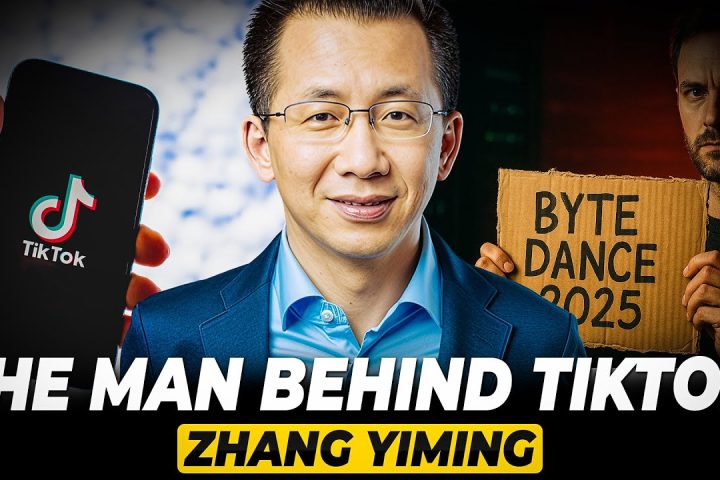
Lesson 49: Control distribution to control growth – Zhang Yiming, Founder of ByteDance
Zhang Yiming built ByteDance on a powerful premise: distribution algorithms determine influence in the digital age. Instead of relying on social graphs or follower networks, his platforms used artificial intelligence to recommend content based on user behavior.
This shift redefined media consumption. Content creators no longer needed pre-existing audiences to gain visibility. If the algorithm determined relevance, reach followed. By controlling the recommendation engine, ByteDance reshaped global attention flows.
For founders, the strategic takeaway is profound. Whether in media, commerce, or software, the mechanism of distribution often matters more than the product itself. Owning the channel creates exponential leverage.
Lesson 50: Persistence turns failure into Intellectual Property – James Dyson, Founder of Dyson
James Dyson famously built more than 5,000 prototypes before perfecting his bagless vacuum cleaner. What many viewed as repeated failure, he treated as iterative learning. Each flawed prototype reduced uncertainty and brought him closer to a defensible breakthrough.
Innovation is frequently romanticized as a single moment of insight. In practice, it is sustained experimentation combined with stubborn belief in better engineering. Dyson invested heavily in research and design long before his products commanded premium pricing.
The broader business lesson is that persistence, when paired with technical rigor, compounds into competitive advantage. True differentiation is rarely immediate – it is engineered over time.
Lesson 51: Speed is an unfair advantage – Mark Cuban, Entrepreneur and Investor
Mark Cuban‘s career has been defined by rapid execution. From building Broadcast.com during the early internet era to investing decisively on Shark Tank, he has consistently emphasized learning quickly and acting faster than competitors.
In volatile markets, hesitation carries significant cost. Cuban advocates for deep preparation paired with swift decision-making. His approach demonstrates that while perfection is elusive, momentum creates opportunities unavailable to slower rivals.
For leaders navigating fast-moving industries, speed is not recklessness. It is disciplined urgency – the willingness to move when the data is sufficient, not complete.
Lesson 52: Community is a strategic asset – Ben Francis, Founder of Gymshark
Ben Francis grew Gymshark from a small startup into a global fitness apparel brand by prioritizing community engagement over traditional advertising. Influencers were not merely marketing channels; they were collaborators in shaping the brand’s identity.
By leveraging social media and direct-to-consumer distribution, Gymshark created a sense of belonging among customers. The brand evolved alongside its audience rather than dictating trends from above.
The enduring insight is that modern brands are built with their communities, not simply for them. Engagement fosters loyalty, and loyalty compounds into sustainable growth.
Lesson 53: Platform leadership requires balance – Daniel Ek, Founder of Spotify
Daniel Ek built Spotify by navigating complex relationships between users, artists, and record labels. Platform businesses must align incentives across multiple stakeholders, often with competing priorities.
As Spotify scaled globally, governance and capital allocation became increasingly sophisticated. Ek’s transition from CEO to Executive Chairman in 2026 reflects the natural evolution of founder leadership within a maturing public company.
The lesson is that platforms thrive when leaders maintain equilibrium. Sustainable ecosystems depend on fairness, transparency, and long-term trust.
Lesson 54: Build capital ecosystems that serve real communities – Kathryn Finney, Founder of Genius Guild
Kathryn Finney directs Genius Guild with a mission that transcends traditional venture capital – investing in founders, products, and business models that expand access, improve community well-being, and address systemic inequalities. Based in Chicago, Genius Guild uses a hybrid venture model combining investment capital, studio ideation, and community-building to support companies that innovate around healthy people, environments, and underserved markets.
Under Finney’s leadership, Genius Guild tackles the economic consequences of systemic exclusion with both capital and strategy, deploying multi-stage investment tools like the Greenhouse Fund and Labs to incubate and scale Black-led companies that serve their communities at scale. The firm actively reframes venture capital from a reactive funding source into a proactive ecosystem builder – reshaping how business value and community impact can coexist.
For founders and leaders, the lesson here is that capital must be married to purpose: invest not just in financial returns, but in the long-term health of the markets you serve. Genius Guild demonstrates that supporting founders closest to the problems they solve can create both market value and systemic change in historically overlooked communities.
Lesson 55: Ownership is leverage – Lucy Guo, Co-founder of Scale AI and Founder of Passes.
Lucy Guo helped build Scale AI into foundational infrastructure for artificial intelligence development. Rather than chasing consumer visibility, she focused on enabling the systems powering modern AI applications.
Her later venture, Passes, reflects a similar emphasis on ownership and monetization control for digital creators. In both cases, Guo targeted structural leverage rather than surface-level visibility.
The strategic lesson is that ownership creates power. Whether in infrastructure or creator economies, controlling core assets provides negotiating strength and long-term upside.
Closing Insight
Across all stories and insights, one thread connects them: conviction. Whether democratizing design, reimagining empathy, or redefining innovation, these leaders built not from certainty but from belief.
Their journeys remind us that greatness isn’t accidental – it’s iterative. Behind every breakthrough lies a founder’s persistence, a leader’s empathy, or an innovator’s courage to stay the course when no one else does.
The future of business won’t be written by algorithms or systems alone – it will be written by human insight, multiplied by courage.
FAQs
1. Why were these individuals chosen?
They represent the intersection of innovation, leadership, and human-centered purpose – each shaping global industries in distinctive ways.
2. What’s the main lesson from all their stories combined?
That success is never just technical – it’s deeply personal. The greatest leaders innovate by understanding people first.
3. How can businesses apply these lessons?
By embedding empathy, resilience, and long-term thinking into culture – not just strategy.
4. Are these lessons relevant beyond tech and startups?
Absolutely. Each principle – clarity, inclusion, purpose, reinvention – applies across every industry and scale.
5. What’s the ultimate takeaway for emerging leaders?
Don’t emulate their results; emulate their mindset. Vision matters, but values sustain it.
Further Reading:
- https://www.forbes.com/sites/allbusiness/2019/11/30/important-startup-lessons-founders-ceos/
- https://www.fastcompany.com/90898023/20-life-lessons-that-have-built-stronger-business-leaders
- https://www.entrepreneur.com/leadership/32-founders-share-the-biggest-lessons-they-are-learning/297103
- https://knowledge.wharton.upenn.edu/article/lasting-leadership-lessons-from-the-25-most-influential-business-people-of-our-times/
- https://hbr.org/2015/12/leadership-lessons-from-10-wildly-successful-people
Photo credits: Ben Francis – JamesDPerrett / Wikimedia Commons / CC BY-SA 4.0 – cropped (link); Jessica Alba – Kevin Paul / Wikimedia Commons / CC BY 4.0 – cropped and edited (link); Gary Vaynerchuk – CC0; Indra Nooyi – World Economic Forum / Wikimedia Commons / CC BY-SA 2.0 – cropped (link)