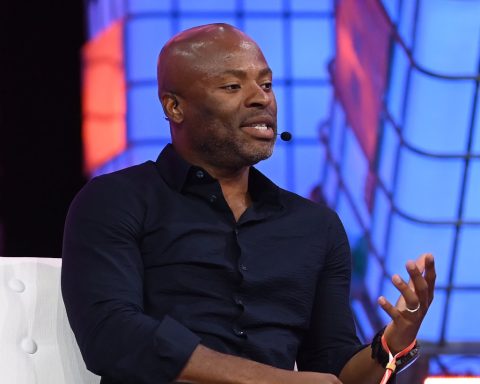



Leadership is often framed as vision or charisma, but in complex organizations, alignment is what determines outcomes. Throughout his career, Alan Mulally demonstrates that leadership effectiveness is less about individual brilliance and more about creating systems where teams can operate with clarity and trust. His work at Ford Motor Company remains one of the most studied examples of operational and cultural transformation in modern business.
Key Takeaways
- Alan Mulally demonstrates that organizational alignment, supported by clear systems and shared visibility, is the foundation of consistent execution.
- Structured transparency enables faster and more effective problem-solving by making operational issues visible across teams.
- Psychological safety strengthens accountability by encouraging early problem identification without fear of blame.
- Simplifying strategy and operations allows large organizations to reduce friction and scale execution more effectively.
- Leadership can be systematized through repeatable processes that align teams, reinforce behavior, and sustain performance over time.
Alignment Is the Core of Execution
Organizations rarely fail due to lack of strategy. More often, they fail because teams are misaligned – working toward different priorities, withholding information, or operating without shared visibility.
Alan Mulally built his leadership philosophy around solving this problem. His “Working Together” system emphasized a compelling vision, a comprehensive plan, and disciplined execution supported by transparent communication.
At its core, his approach reframed leadership as a coordination challenge rather than a directive one. The premise is clear:
When alignment is achieved, execution becomes predictable.
This perspective shifts the leader’s role from decision-maker to system designer. Instead of intervening in every issue, leaders create environments where problems surface early and are addressed collectively. Alignment, therefore, is not a byproduct of leadership – it is the primary mechanism through which leadership operates.
From Boeing to Ford’s Crisis
Before joining Ford Motor Company in 2006, Mulally spent 37 years at Boeing, where he rose to lead Boeing Commercial Airplanes and played a key role in major programs such as the 777 and 787. His experience managing large, complex engineering systems informed his structured approach to leadership.
When he arrived at Ford, the situation was critical. The company faced multi-billion-dollar losses (approximately $12.7 billion in 2006), declining market share, quality concerns, and a deeply fragmented culture marked by silos and internal competition. Executives often concealed problems rather than surface them, creating a disconnect between reported performance and operational reality.
Mulally responded with a combination of strategic and cultural actions. He secured a $23.6 billion loan by mortgaging Ford’s assets – providing liquidity before the financial crisis intensified. He streamlined the business under the “One Ford” strategy, divesting non-core brands such as Jaguar, Land Rover, Volvo, and Aston Martin, while simplifying the product portfolio and restructuring operations.
Central to this transformation was the introduction of weekly Business Plan Review (BPR) meetings. Executives were required to present progress using color-coded metrics, where “red” indicated problems. Initially, all reports were “green,” despite clear performance issues. When one executive finally reported a “red” status, Mulally publicly praised the transparency – signaling a shift from blame to accountability.
The results were measurable. Ford returned to profitability by 2009, avoided bankruptcy during the financial crisis (unlike several competitors), and achieved strong financial performance in the years that followed, including multi-billion-dollar profits by 2013. Just as importantly, the company’s culture shifted toward collaboration, openness, and shared responsibility.
Insight 1: Transparency Enables Problem Solving
In many organizations, information is filtered as it moves upward. Problems are softened, delayed, or hidden entirely, limiting a leader’s ability to respond effectively. Mulally addressed this through structured transparency.
The BPR system required clear, standardized reporting, making issues visible across the organization. This created a shared understanding of reality. Instead of isolated problem-solving, teams could coordinate responses.
Transparency, in this context, is not about openness alone – it is about operational visibility.
The cultural shift required to achieve this is significant. In environments where failure is penalized, employees default to risk avoidance and information control. Mulally reversed this dynamic by rewarding honesty, even when performance was lacking. Over time, this reconditioned behavior across leadership teams, making transparency a norm rather than an exception.
Insight 2: Psychological Safety Drives Accountability
Accountability is often misunderstood as pressure. In practice, it depends on psychological safety – the ability to report issues without fear of blame.
Mulally’s response to the first “red” report in a BPR meeting became a defining moment. By praising the executive instead of criticizing the result, he signaled that identifying problems was a contribution, not a failure. This shifted accountability from individual defense to collective responsibility.
When teams feel safe to report issues, they can address them earlier and more effectively.
Psychological safety does not eliminate performance standards; it strengthens them. By separating problem identification from personal judgment, organizations can maintain high expectations while improving responsiveness. This balance allows teams to focus on solutions rather than self-protection.
Insight 3: Simplicity Scales Across Complexity
Large organizations often accumulate complexity over time – multiple brands, overlapping processes, and fragmented strategies. Mulally countered this with simplification.
The “One Ford” strategy aligned the company around a unified vision, reducing duplication and focusing resources. He reinforced this simplicity through practical tools, including concise strategy statements and even wallet-sized cards summarizing key priorities.
Simplicity, in this context, is not reduction – it is alignment. By narrowing focus, organizations can deploy resources more effectively and reduce internal friction. This clarity also improves decision-making speed, as teams operate within a shared framework rather than competing priorities.
In complex environments, simplicity becomes a multiplier of execution rather than a constraint on ambition.
Insight 4: Leadership Is a Repeatable System
Mulally’s leadership approach is notable for its consistency. The same principles – clear goals, structured reviews, transparent communication, and team alignment – were applied across different organizations and contexts. This reflects a broader insight: effective leadership can be systematized.
Rather than relying on personality or intuition, Mulally built repeatable processes that guided behavior across teams. This made leadership scalable.
A system-based approach also improves continuity. Organizations can sustain performance even as individuals change roles or exit. By embedding leadership into processes, companies reduce reliance on singular figures and increase long-term stability. This is particularly critical in large enterprises, where consistency across teams determines overall performance.
The Alan Mulally Way: Leadership as Coordination
Alan Mulally’s career reframes leadership as a coordination problem.
In complex organizations, success depends on how effectively people work together – not just what they are asked to do. By prioritizing alignment, transparency, and shared accountability, he created conditions where execution could scale.
His model is both simple and demanding. It requires discipline, consistency, and a willingness to confront reality directly. But when applied effectively, it transforms organizations.
Not through dramatic interventions, but through systems that enable people to perform at their best – together.
FAQs
1. Who is Alan Mulally?
Alan Mulally is a business executive best known for leading the turnaround of Ford Motor Company during the 2008 financial crisis. He previously spent decades at Boeing, where he led its commercial airplanes division. His leadership is widely studied for its emphasis on alignment, transparency, and disciplined execution.
2. What is the “Working Together” system?
The “Working Together” system is Mulally’s leadership framework focused on aligning teams around a clear vision, structured plans, and disciplined execution. It emphasizes transparency, collaboration, accountability, and consistent communication across the organization. The system is designed to ensure that all employees operate with shared goals and a unified understanding of priorities.
3. What were Alan Mulally’s key actions at Ford?
Mulally secured a $23.6 billion loan to stabilize finances, streamlined operations under the “One Ford” strategy, divested non-core brands, and implemented weekly Business Plan Review meetings. These actions addressed both financial and cultural challenges simultaneously, enabling Ford to recover and grow.
4. Why were the Business Plan Review (BPR) meetings important?
The BPR meetings created a structured environment where executives reported progress using clear metrics and openly discussed problems. This shifted the culture from hiding issues to solving them collaboratively, improving both speed and quality of decision-making. Over time, these meetings became a central mechanism for maintaining alignment and accountability across the organization.
5. What can leaders learn from Alan Mulally?
Leaders can learn the importance of alignment, transparency, and system-driven execution in managing complex organizations. His approach shows how disciplined processes and cultural shifts can work together to drive sustained performance.
Sources:
- https://en.wikipedia.org/wiki/Alan_Mulally
- https://fi.edu/en/awards/laureates/alan-mulally
- https://www.inc.com/moshe-engelberg/alan-mulallys-secret-to-working-together-success-transparency-trust.html
- https://www.linkedin.com/posts/markawoodland_in-2006-ford-was-facing-bankruptcy-with-activity-7386404671428677632-cdef/
- https://www.linkedin.com/pulse/how-ford-business-strategy-planning-won-day-danny-diamond-tfywc/
- https://chiefexecutive.net/leading-with-love-alan-mulallys-dedication-to-service-and-success/
- https://hartfordbusiness.com/article/fords-alan-mulally-will-leave-with-nearly-300-million-nest-egg-0/
Photo credit: Renato Araujo / ABr / Wikimedia Commons / CC BY 3.0 BR – cropped (link)