

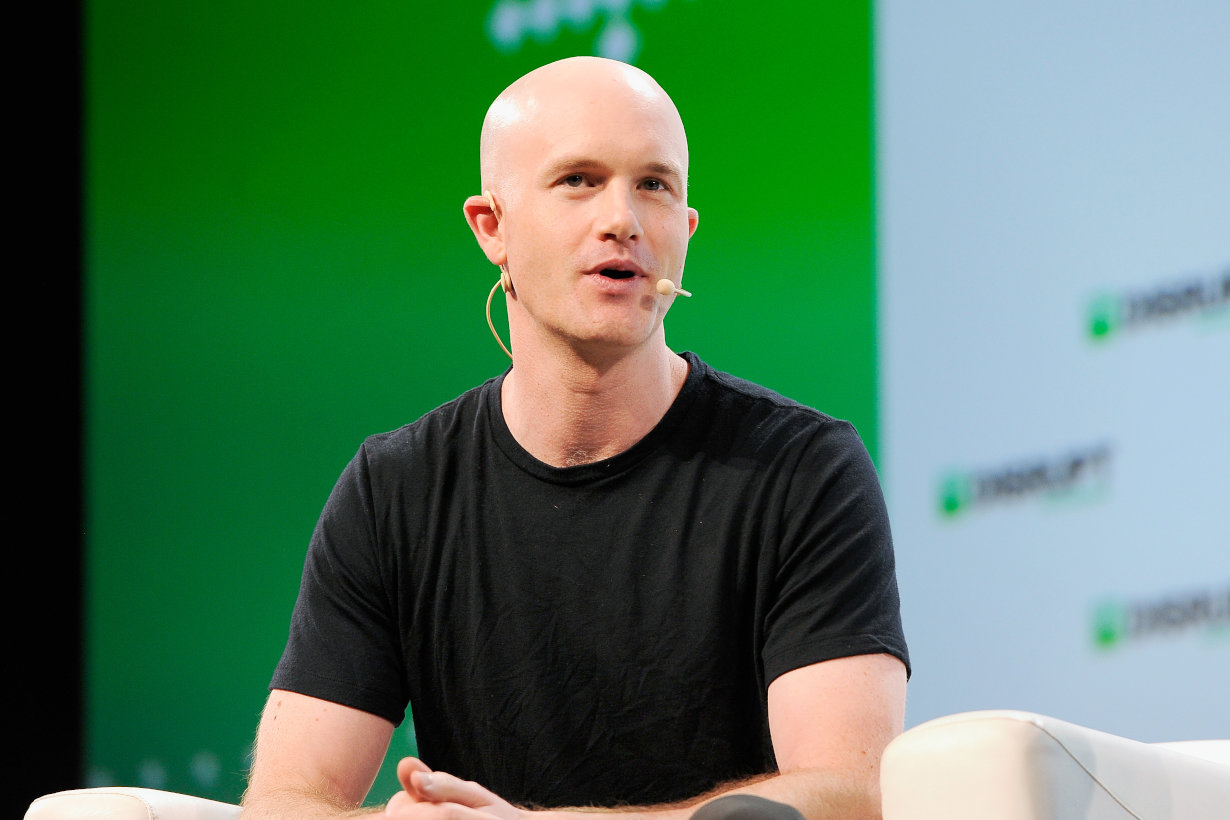
The modern companies are no longer judged only by what they build, but by what they signal. Brian Armstrong, the Co-Founder and CEO of Coinbase, chose a different path. He refused to turn his company into a battlefield for the culture war – and accepted the consequences.
Key Takeaways
- Leadership is not about representing every value, but about protecting one coherent mission.
- Organizational focus is a strategic choice, not a cultural accident.
- Clarity always creates disagreement, but ambiguity always creates drift.
- Companies that try to become moral forums often lose their ability to execute.
- The hardest leadership decisions are not about what to support, but what to refuse.
Brian Armstrong Stayed Silence – and it’s Deafening
Somewhere along the way, the role of a CEO quietly expanded.
It used to be enough to build a good product, run a healthy business, and create value for customers and employees. But in the last decade, especially in technology, leaders have been pulled into a different expectation: to become moral narrators, cultural commentators, and institutional voices on every major social and political issue of the moment.
Employees expect statements. The public expects positioning. Media expects alignment. Silence is no longer neutral – it is interpreted.
Brian Armstrong, the co-founder and CEO of Coinbase, looked at this new reality and made a decision that almost no modern tech leader was willing to make: he opted out.
Not quietly. Not ambiguously. He did it in writing, in public, and inside his own company.
What followed was not applause – but one of the clearest case studies in modern leadership about focus, coherence, and the price of clarity.
When Tech Companies Became Cultural Actors
By 2020, tech companies had become cultural institutions as much as commercial ones.
Internal Slack channels increasingly looked like political forums. Employees organized petitions, walkouts, and internal campaigns. Product decisions were debated not just on business or technical grounds, but on moral and social ones. Leadership teams were expected to take positions not only on what the company was building, but on what the company stood for in the broader culture.
This didn’t come from nowhere. Tech had grown powerful. Platforms shaped speech, commerce, and social life. It was inevitable that political and social questions would follow.
But something else happened too: the center of gravity inside companies shifted. More and more internal energy went into debates that had little to do with the company’s actual mission.
Coinbase was not immune to this. As one of the most visible companies in crypto – itself already politically charged – it sat at the intersection of finance, regulation, ideology, and technology. Internal discussions increasingly mirrored the broader culture war outside.
To Armstrong, this posed a fundamental question:
Is a company a vehicle for collective moral expression – or a machine for executing a specific mission?
In 2020, he chose his answer.
The Decision: A Company That Would Stay Mission-Focused
In September 2020, Armstrong published an internal memo that would soon become public.
Its core message was simple and radical by modern standards:
Coinbase would be a “mission-focused” company.
It would not engage in broader political or social activism unrelated to its core mission.
Employees who wanted that kind of environment should consider whether Coinbase was still the right place for them.
He didn’t argue that social issues were unimportant. He argued something more uncomfortable:
That trying to turn a company into a platform for every cultural debate destroys focus, cohesion, and execution.
Coinbase’s mission, he said, was to build an open financial system. That was already ambitious, political, and difficult enough. Adding every social cause to the company’s internal agenda would not make it more ethical – it would make it less effective.
This was not a hedge. It was not carefully messaged. It was a line in the sand.
And it immediately triggered a firestorm.
The Dire Consequences
Public backlash
The memo was widely criticized in tech and media circles – obviously. Many framed it as avoidance, cowardice, or an attempt to suppress employee voices.
Employees leaving
Brian Armstrong offered severance packages to employees who disagreed with the direction. Around 5% of the company chose to leave. In Silicon Valley, that was treated not as a footnote – but as an indictment.
Media criticism
Coinbase was portrayed as out of step with the times. Other CEOs were praised for “taking stands.” Armstrong was criticized for refusing to.
Short-term reputational damage
For a period, Coinbase became a symbol – not of crypto, but of a broader debate about whether companies should be neutral at all.
From a PR perspective, this was not a win.
From a leadership perspective, something else was happening.
The Deeper Philosophy
Focus as a moral choice
Armstrong’s position was not “we don’t care.” It was: we care about doing one thing extremely well.
In a world of infinite problems, focus is not a lack of values. It is a prioritization of responsibility.
Organizational clarity
Every organization is a coordination system. The more agendas you add, the more energy leaks out as internal friction.
Armstrong was optimizing not for cultural applause – but for execution speed and internal coherence.
The cost of coherence
Clarity always expels ambiguity. And ambiguity is where many people prefer to live.
By defining what Coinbase was, Armstrong also defined what it was not. That inevitably made some people unhappy.
Why most leaders avoid this path
Because it is easier to be vague. Because it is safer to signal than to decide. Because it is more comfortable to manage coalitions than to draw boundaries.
Most leaders today are not lacking opinions. They are lacking the willingness to accept the consequences of having them.
The Leadership Lesson
The biggest lesson of all: Clarity beats consensus. But clarity always has a price.
Armstrong’s real leadership move was not political. It was structural. He decided that:
- A company should not try to be a miniature society
- Not every internal disagreement needs to become a company-wide identity question
- Not every external issue needs to be internalized
He chose alignment over appeasement. And alignment is always exclusionary. By definition, it means some people will opt out.
But here is the uncomfortable truth of scaling organizations:
You cannot build high-performance systems on permanent moral negotiation.
You either optimize for mission, or you optimize for discourse. You rarely get both.
Silence is Also a Strategy – The Bravest one, at Times
Brian Armstrong did not win a culture war. He refused to fight one.
And in doing so, he exposed something many modern leaders would rather avoid admitting: that leadership is not about absorbing every pressure – it is about deciding which pressures matter.
Coinbase did not become less political by his choice. It became more directed.
In an era where companies are increasingly expected to be everything at once – platform, movement, moral actor, and employer – Armstrong made a narrower, more uncomfortable bet:
That a company with a clear mission, relentlessly executed, is not a retreat from responsibility – but a different way of exercising it.
Most leaders today are trying to survive the noise. Brian Armstrong chose to reduce it.
And that, more than any statement, may be the most contrarian leadership move of all.
FAQs
Who is Brian Armstrong?
Brian Armstrong is the co-founder and CEO of Coinbase, one of the world’s largest cryptocurrency companies and a key figure in bringing crypto into the mainstream. Before Coinbase, he worked as an engineer at Airbnb and originally built Coinbase to make crypto easier for everyday people to use.
Beyond crypto, Armstrong is known for his views on organizational focus, company culture, and long-term thinking. In recent years, he has become a case study in modern leadership controversy – not because of what he promoted, but because of what he refused to turn his company into.
What was the Coinbase “political neutrality” memo?
In 2020, Armstrong published an internal memo stating that Coinbase would remain a mission-focused company and would not engage in broader political or social activism unrelated to its core purpose. He argued that turning the company into a platform for social debates would reduce focus, increase internal conflict, and hurt execution.
The memo was not a denial of social issues, but a clear boundary-setting document about what Coinbase existed to do. He also offered severance packages to employees who felt this approach was incompatible with their values, which quickly turned the memo into an industry-wide debate.
Why did this decision cause so much backlash?
By 2020, many tech companies had already embraced internal activism and public positioning as part of their corporate identity. Employees and the public increasingly expected CEOs to take visible stances on social and political issues.
Armstrong’s refusal was interpreted by some as avoidance or indifference, and by others as an attempt to limit employee expression. More deeply, the backlash exposed a fundamental disagreement about whether companies should be mission-driven organizations or miniature political communities.
Did this decision hurt Coinbase as a company?
In the short term, Coinbase faced negative press, internal tension, and employee departures, with about 5% of staff choosing to leave. The company also took reputational hits in Silicon Valley cultural circles.
At the same time, the organization became more internally aligned and more focused on execution. Armstrong clearly chose long-term coherence over short-term approval, a tradeoff that few modern executives are willing to make so explicitly.
What is the broader leadership lesson from this situation?
The core lesson is that leadership is not about absorbing every pressure – it is about deciding which pressures matter. Clarity always creates disagreement, but sustained ambiguity slowly erodes organizations from the inside.
Armstrong’s decision shows that mission focus is not passive or neutral – it is an active and often costly choice. In an age of constant signaling, his approach represents a leadership model that prioritizes coherence and execution over consensus.
Sources:
- https://en.wikipedia.org/wiki/Brian_Armstrong_(businessman)
- https://www.nytimes.com/2020/09/29/business/dealbook/coinbase-social-activism.html
- https://www.coinbase.com/blog/coinbase-is-a-mission-focused-company
- https://www.businessinsider.com/how-a-ceo-memo-made-coinbase-political-2020-10
- https://www.businessofbusiness.com/articles/coinbase-ceo-brian-armstrong-controversy-apolitical-memo/
Photo credit: TechCrunch / Wikimedia Commons / CC BY 2.0 (link)