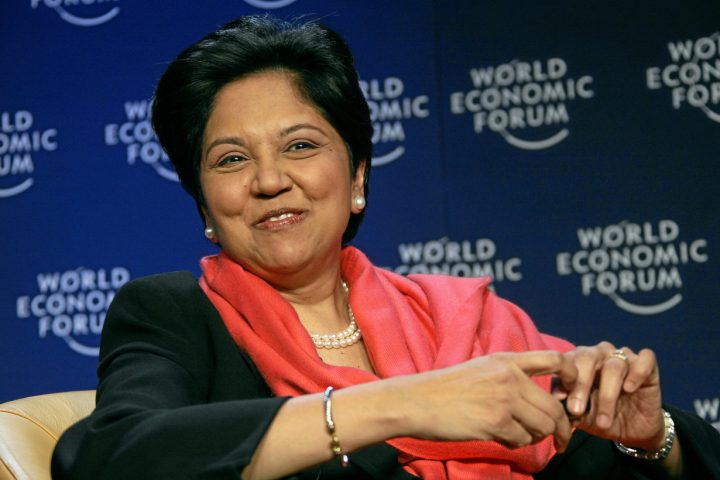



Entrepreneurship is often associated with youth, speed, and early risk-taking. Falguni Nayar’s leadership story challenges that narrative. After a long career in investment banking, she founded Nykaa at the age of fifty and built it into one of India’s most successful digital consumer platforms.
Her trajectory highlights a different leadership principle: experience, when paired with conviction, can become a powerful launchpad for entrepreneurship.
Key Takeaways
- Falguni Nayar demonstrates that entrepreneurial success can emerge from accumulated professional experience rather than early-career disruption.
- Building consumer trust can be a more durable competitive advantage than relying solely on pricing or promotional tactics.
- Combining digital platforms with physical retail can strengthen brand engagement and customer experience in certain industries.
- Strategic discipline developed in earlier careers can provide a strong foundation for later entrepreneurial ventures.
- Leadership opportunities can emerge at any stage of a professional journey when conviction and experience align.
Entrepreneurship Is Not Limited by Career Stage
Startup mythology frequently centers on young founders disrupting industries with fresh ideas. While that model has produced many successes, it can obscure another pathway to leadership: entrepreneurship grounded in deep industry knowledge.
Falguni Nayar spent nearly two decades in investment banking before launching Nykaa. Her background at Kotak Mahindra Capital provided insight into capital markets, consumer businesses, and the structural requirements of scaling companies.
When she founded Nykaa in 2012, she did not approach the venture as a speculative experiment. Instead, she applied disciplined strategic thinking shaped by years of observing successful companies from the investor side.
The premise behind her leadership approach is clear: Entrepreneurial success can emerge from accumulated expertise as much as from early disruption.
Building a Trusted Consumer Platform
India’s beauty and personal care market historically relied on fragmented offline retail channels. Product authenticity, assortment depth, and brand education were inconsistent across regions.
Nykaa positioned itself as a curated digital marketplace that emphasized authenticity, premium brand partnerships, and customer trust. Rather than pursuing hypergrowth through aggressive discounting alone, the company focused on building credibility with consumers and global brands.
Nayar also adopted a hybrid strategy combining e-commerce with physical retail expansion. By integrating online discovery with offline experience stores, Nykaa strengthened brand visibility while maintaining digital scalability.
This approach allowed the company to differentiate itself in an increasingly competitive Indian e-commerce landscape.
In 2021, Nykaa went public, becoming one of India’s most closely watched consumer-tech IPOs and reinforcing Nayar’s reputation as one of the country’s most successful self-made female entrepreneurs.
Lesson #1: Experience Can Be an Entrepreneurial Advantage
Many founders rely on intuition developed through rapid experimentation. Nayar entered entrepreneurship with something different: pattern recognition built over decades of financial analysis and corporate observation.
Her banking career exposed her to business models, capital structures, and growth strategies across industries. That perspective enabled her to approach Nykaa with a long-term structural view rather than a short-term startup mentality.
For executives considering entrepreneurship later in their careers, her example illustrates how accumulated professional insight can become a strategic asset.
Lesson #2: Trust Is a Strategic Asset in Consumer Markets
Beauty retail depends heavily on credibility. Customers must believe that products are authentic, recommendations are reliable, and the platform prioritizes quality.
Nykaa’s leadership strategy centered on building trust through verified brand partnerships, curated product selections, and content-driven education for consumers.
Rather than positioning itself purely as a transactional marketplace, Nykaa emphasized brand authority and customer confidence. Over time, this positioning strengthened loyalty and differentiated the company from discount-driven competitors.
For consumer businesses, trust compounds over time and becomes a defensible competitive advantage.
Lesson #3: Hybrid Models Can Strengthen Digital Businesses
Many digital companies prioritize pure online scale. Nayar adopted a more nuanced approach by integrating e-commerce with physical retail stores.
This hybrid model allowed Nykaa to combine digital convenience with experiential discovery – an important factor in beauty purchasing behavior.
The strategy also reinforced brand visibility across major Indian cities while supporting omnichannel customer engagement.
Leadership at scale often requires balancing digital efficiency with real-world touchpoints.
Lesson #4: Leadership Evolves Across Career Phases
Nayar’s journey highlights how leadership roles can evolve across different stages of professional life. Her early career focused on financial advisory and capital markets; her entrepreneurial phase required operational execution, brand building, and organizational leadership.
The transition illustrates a broader lesson: professional experience does not limit future leadership paths – it can expand them.
In many cases, the credibility, networks, and strategic discipline developed in earlier careers become the foundation for later entrepreneurial success.
Expanding the Timeline of Leadership
Falguni Nayar’s leadership challenges a common assumption about entrepreneurship – that transformative ventures must begin early in one’s career.
Her experience suggests a broader timeline. Leadership can emerge from accumulated insight, disciplined execution, and the willingness to pursue new opportunities at unexpected moments.
By building Nykaa into a major consumer platform, she demonstrated that entrepreneurial impact does not depend solely on youth or disruption.
It can also emerge from experience, perspective, and strategic patience.
FAQs
1. Who is Falguni Nayar?
Falguni Nayar is the founder of Nykaa and a former investment banker who launched the company after a long career in finance. She is widely recognized for building one of India’s most successful consumer-focused digital platforms.
2. What is Nykaa?
Nykaa is an Indian beauty, personal care, and fashion retail platform that combines e-commerce with physical retail stores. The company focuses on authentic brand partnerships, curated product selections, and content-driven customer engagement.
3. Why is Falguni Nayar’s entrepreneurial journey considered unusual?
Nayar founded Nykaa at the age of fifty after spending nearly two decades in investment banking. Her story challenges the common perception that successful startup founders must begin their entrepreneurial careers at a young age.
4. What leadership strategies helped Nykaa succeed?
Nykaa prioritized brand credibility, curated partnerships, and customer trust rather than relying solely on heavy discounting. This approach allowed the company to differentiate itself in India’s competitive e-commerce landscape.
5. What can executives learn from Falguni Nayar?
Business leaders can learn the value of leveraging accumulated experience, building trust as a strategic asset, and recognizing that entrepreneurial opportunities can emerge at multiple stages of a career.
Sources:
- https://en.wikipedia.org/wiki/Falguni_Nayar
- https://en.wikipedia.org/wiki/Nykaa
- https://thebetterindia.com/startup/falguni-nayar-success-story-built-nykaa-after-50-11158496
- https://beautymatter.com/articles/indias-nykaa-raises-heavily-oversubscribed-722-million-ipo
Photo credit: WikiFlux / CC0