

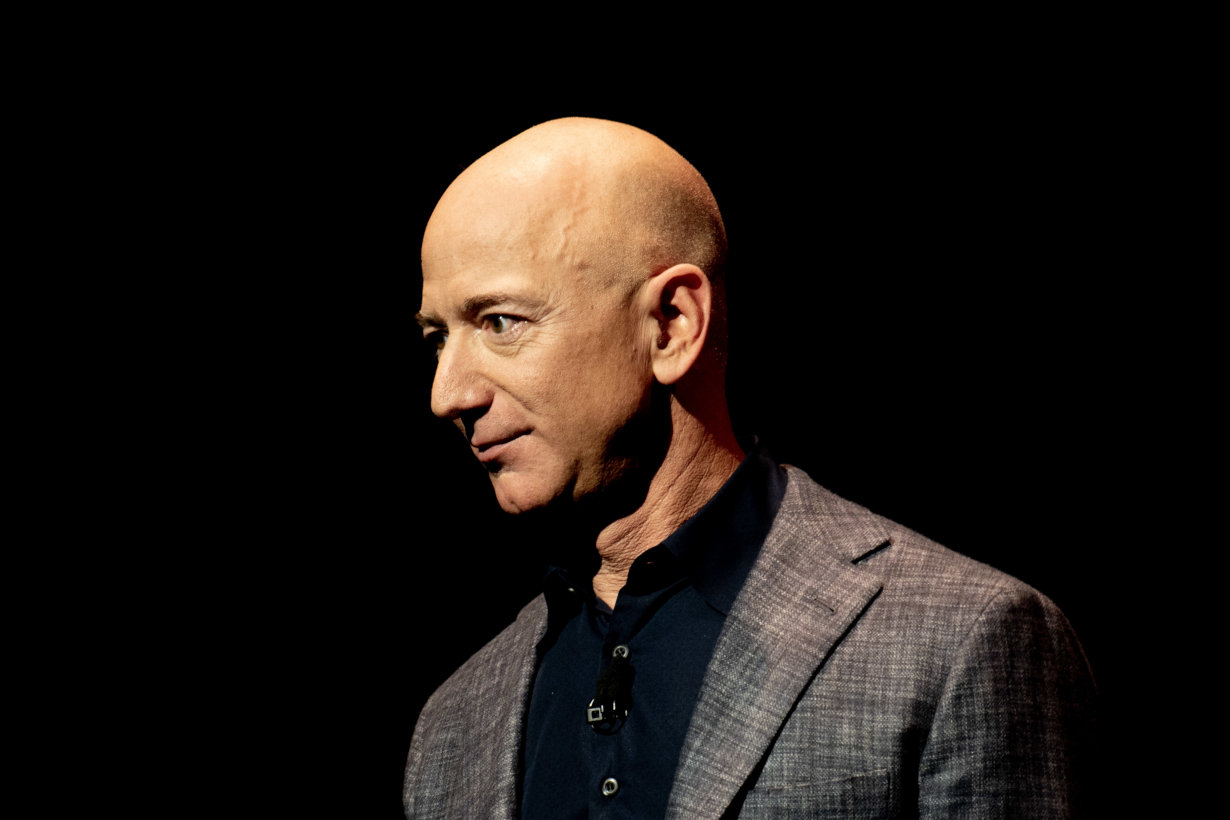
Most great CEOs are remembered for the companies they build. Jeff Bezos will be remembered for something more unusual: the system he designed to keep building companies long after the original one should have peaked. Amazon is not just a retailer, a cloud provider, or a logistics giant. It is a machine for turning long-term ideas into dominant businesses – again and again. The real story of Bezos’ leadership is not how he started Amazon, but how he engineered an organization that can continuously reinvent itself at scale.
Key Takeaways
- Jeff Bezos’ real innovation was building a leadership system that can repeatedly create new businesses, not just one great company.
- Long-term thinking, when embedded into structure and incentives, becomes a durable competitive advantage.
- Customer obsession works because it simplifies decisions across massive organizations.
- Speed in decision-making is a strategic asset when paired with mechanisms for correction.
- The best leaders design organizations that keep working even when they are not in the room.
Leadership at Civilization Scale
Jeff Bezos has never thought in quarters. He thinks in decades. From the earliest days, he framed Amazon not as a store, but as infrastructure – a platform that could evolve into whatever customers needed next. While most executives optimize for predictability, Bezos optimized for optionality. He was willing to look wrong, lose money, and absorb criticism for years if it meant building something that would compound over time.
This is the central difference between managing a business and designing a system. Managers protect what exists. Bezos built mechanisms that constantly challenge what exists. That is why Amazon could move from books to everything, from retail to cloud computing, from logistics to media, and from commerce to AI.
The company is not a portfolio of products. It is a factory for new businesses.
From Bookstore to the Backbone of the Internet
It is tempting to tell Amazon’s story as a sequence of bold bets: books, Marketplace, Prime, AWS, Kindle, logistics, Prime Video. But that framing misses the deeper pattern. These were not random strokes of genius. They were outputs of a repeatable process.
AWS did not come from a desire to enter cloud computing. It came from an internal need to make Amazon’s own infrastructure more modular and scalable. Prime did not start as a loyalty program. It started as a way to remove friction from the customer experience. The Kindle did not exist because Amazon wanted to make hardware. It existed because Bezos believed that controlling the reading experience mattered more than selling physical books.
In each case, the company did not ask, “What business should we be in?” It asked, “What problem should we solve for customers?” The business followed the problem, not the other way around.
Beyond Amazon: Blue Origin and the Long Arc of Institutional Thinking
Bezos’s system-building instinct does not stop at Amazon. In 2000, he quietly founded Blue Origin with a goal that sounded more like science fiction than business strategy: make space travel cheap enough and reliable enough that humanity could build beyond Earth.
For more than two decades, Blue Origin moved slowly, deliberately, and mostly out of the spotlight – exactly the way Amazon did in its early years. While competitors focused on spectacle and speed, Bezos emphasized infrastructure, reusability, and long-term systems. His guiding principle was the same: build the foundation first, and let the ecosystem come later.
In 2023, Blue Origin was selected by NASA to build a lunar lander for the Artemis V mission, placing the company at the center of the United States’ long-term return to the Moon. The lander is designed not as a one-off mission vehicle, but as part of a sustained lunar logistics system – precisely the kind of platform thinking that defines Bezos’s approach to building organizations.
The pattern is unmistakable. Amazon is infrastructure for commerce. AWS is infrastructure for the internet. Blue Origin is infrastructure for space. Bezos does not build products. He builds long-duration systems that other products, companies, and industries can grow on top of.
The Leadership System
1. Long-Term Thinking as a Structural Advantage
Bezos institutionalized patience. Amazon was designed to make decisions that would look smart in ten years, not ten months. This is why the company could tolerate years of thin margins and public skepticism. Long-term thinking is not a slogan at Amazon. It is a competitive moat. When you are willing to wait longer than others can, entire categories become available to you.
2. Customer Obsession as a Decision Filter
Many companies claim to be customer-centric. Amazon is customer-structured. The customer is not a department. The customer is the organizing principle of the company. When internal debates arise, the question is not what helps the quarter or the org chart. It is what improves the customer experience. This simplifies complex decisions and aligns thousands of teams around a single north star.
3. High-Velocity Decision-Making
Bezos famously divided decisions into Type 1 and Type 2. Type 1 decisions are irreversible and must be made carefully. Type 2 decisions are reversible and should be made quickly. Most companies treat all decisions like Type 1, and they die of slowness. Amazon learned to move fast without being reckless by building mechanisms for rapid experimentation and correction.
4. Writing as a Leadership Tool
PowerPoint is banned in serious Amazon meetings. Instead, leaders write narrative memos. The reason is simple: writing forces clarity. You cannot hide fuzzy thinking in bullet points. This practice has shaped Amazon’s culture into one that values precision, logic, and depth over performance and politics.
The Culture Engine
The visible practices – two-pizza teams, single-threaded leaders, ownership metrics, and “disagree and commit” – are not management quirks. They are load-bearing parts of the system.
Two-pizza teams keep organizations small enough to move fast. Single-threaded leaders ensure real accountability. Metrics replace stories. “Disagree and commit” prevents consensus-seeking from becoming a brake on execution.
This is not culture by inspiration. It is culture by engineering.
Why This Model Is So Hard to Copy
Many companies admire Amazon. Very few can replicate it. The reason is not technical. It is psychological and financial.
This system requires leaders who can tolerate being misunderstood for long periods, public criticism, delayed gratification, organizational discomfort, and long stretches where investments look like mistakes. It also requires investors who believe in compounding, not just performance. Most organizations are structurally incapable of this kind of patience.
The Cost of This Style of Leadership
Bezos’ model is not gentle. Standards are high. Pressure is real. The culture is demanding. Critics are not wrong to say that Amazon can be an unforgiving place to work.
But it is precisely this intensity that allows the system to function. You cannot build a company that reinvents itself continuously without a culture that takes execution seriously.
The Real Lesson for Modern Leaders
The lesson is not to copy Amazon’s products or structure. The lesson is to build your own leadership system.
Great companies are not built by heroic moments. They are built by decision frameworks, feedback loops, incentive structures, cultural mechanisms, and time horizons.
Bezos’ genius was understanding that leadership is not about making good decisions. It is about building an organization that keeps making good decisions after you leave the room.
Jeff Bezos: The Most Misunderstood CEO Philosophy
Jeff Bezos is often described as a visionary founder or a ruthless operator. Both miss the point.
He is, above all, an organizational architect.
Amazon is not his greatest product. The system that builds Amazon’s products is.
FAQs
Who is Jeff Bezos as a leader?
Jeff Bezos is best understood not as a product visionary, but as a systems thinker who designs organizations to compound over decades rather than optimize for short-term results. His leadership philosophy focuses on building decision frameworks, cultural mechanisms, and incentives that keep producing innovation even when he is no longer directly involved in day-to-day operations.
What is Amazon’s Day 1 philosophy?
Day 1 means operating with the urgency, curiosity, and customer focus of a startup, and believing that complacency is the beginning of decline. In practical terms, it is a warning against bureaucracy, slow decision-making, and internal focus, and a reminder that long-term survival depends on continuously acting as if the company is still fighting to earn relevance.
How does Amazon make decisions so quickly?
Amazon distinguishes between reversible and irreversible decisions and empowers teams to move fast on the ones that can be corrected later. This prevents the organization from treating every choice like a high-stakes bet and allows innovation to happen through rapid experimentation rather than slow, centralized approval processes.
What is Bezos’ management style?
His style is highly structured, metrics-driven, demanding, and focused on building mechanisms rather than relying on individual heroics. Instead of managing through charisma or intuition, Bezos emphasizes written thinking, clear accountability, and systems that consistently produce good outcomes at scale.
What can founders and CEOs learn from Jeff Bezos?
The most powerful form of leadership is not making great decisions yourself, but building systems that keep making great decisions at scale. Bezos’ career shows that durable companies are designed, not improvised, and that leadership is ultimately about architecture more than personality.
Sources:
- https://en.wikipedia.org/wiki/Jeff_Bezos
- https://theconversation.com/amazon-is-no-longer-a-retail-site-for-customers-but-a-service-platform-for-its-sellers-245068
- https://aws.amazon.com/about-aws/our-origins/
- https://www.vox.com/recode/2019/5/3/18511544/amazon-prime-oral-history-jeff-bezos-one-day-shipping
- https://archive.nytimes.com/bits.blogs.nytimes.com/2009/05/06/how-the-kindle-let-amazon-make-a-lot-from-the-few/
- https://www.nasa.gov/news-release/nasa-selects-blue-origin-as-second-artemis-lunar-lander-provider/
- https://finance.yahoo.com/news/jeff-bezos-says-decisions-type-110012328.html
- https://www.linkedin.com/posts/john-rossman_theamazonway-memoculture-leadershipclarity-activity-7356756589149671425-0-7Y
- https://aws.amazon.com/executive-insights/content/amazon-two-pizza-team/
- https://pedrodelgallego.github.io/blog/amazon/single-threaded-model/
- https://medium.com/leadercircle/prioritizing-ownership-87b08218bc4f
- https://www.forbes.com/sites/jackkelly/2021/10/25/a-hard-hitting-investigative-report-into-amazon-shows-that-workers-needs-were-neglected-in-favor-of-getting-goods-delivered-quickly/
- https://www.forbes.com/sites/quora/2017/04/21/what-is-jeff-bezos-day-1-philosophy/
Photo credit: Daniel Oberhaus / Wikimedia Commons / CC BY 4.0 – cropped (link)