

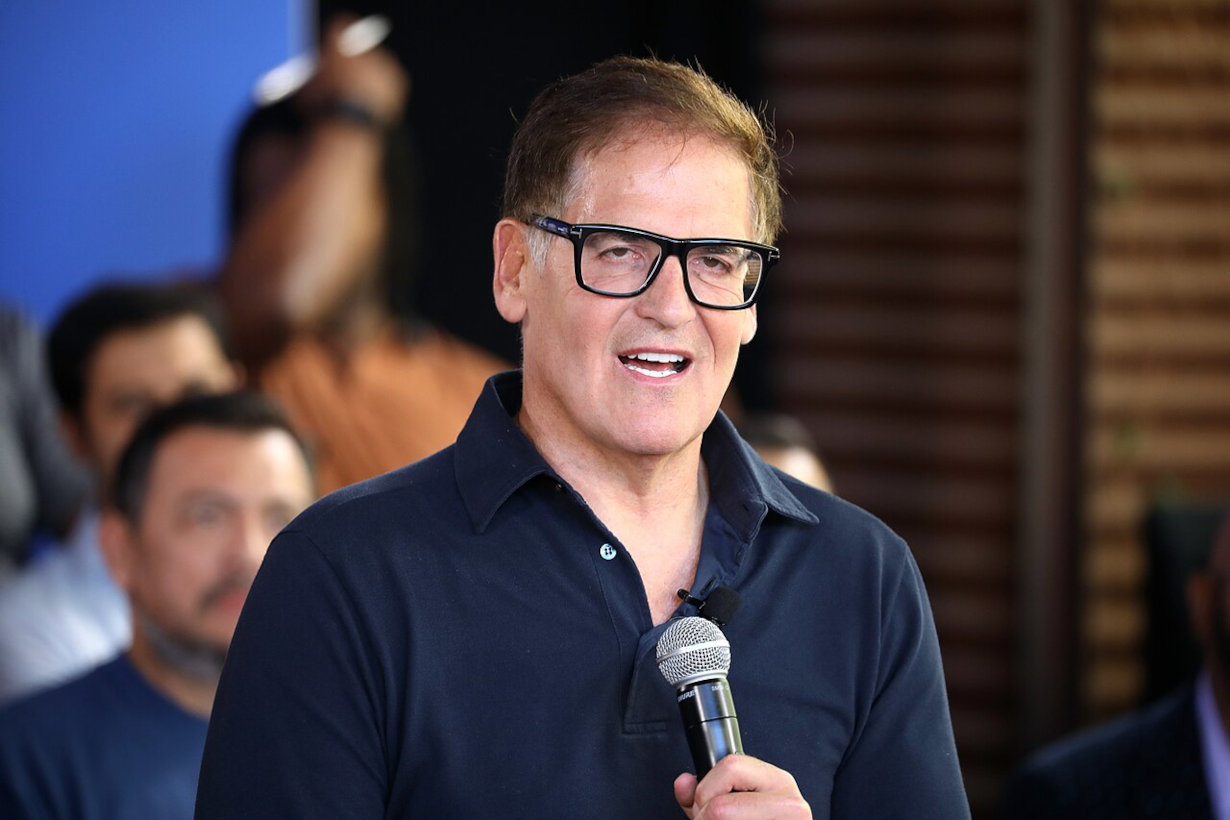
Mark Cuban built his reputation not just through billion-dollar exits, but through visible, hands-on leadership. As an entrepreneur, investor, and longtime NBA owner, he treated ownership as participation rather than oversight. Even after selling his majority stake in the Dallas Mavericks, Cuban’s operating philosophy – speed, accountability, and cultural investment – continues to offer a sharp lens on modern leadership.
Key Takeaways
- Leadership visibility, when rooted in accountability, strengthens trust and accelerates execution.
- Speed becomes a competitive advantage when leaders combine deep preparation with decisive action.
- Culture is shaped less by messaging and more by how leaders allocate resources.
- Proximity to operations reduces blind spots and sharpens strategic judgment.
- Ownership is not symbolic – it is an ongoing responsibility to engage, respond, and improve.
In modern business, leadership is often filtered through press releases and curated interviews. Mark Cuban built his reputation differently – by operating in full view. As a serial entrepreneur, investor, and longtime NBA owner, Cuban made leadership visible, immediate, and unapologetically personal.
Although he is no longer the majority owner of the Dallas Mavericks, his decades of active ownership remain one of the clearest case studies in participatory leadership.
His career offers insight into what happens when an owner refuses to stay in the owner’s box.
Visibility as a Leadership Strategy
Most executives are trained to reduce exposure. Speak carefully. Delegate publicly. Protect the brand by minimizing unpredictability.
Mark Cuban chose the opposite path.
From his early days building and selling Broadcast.com to Yahoo for billions, to becoming one of the most hands-on owners in the NBA, Cuban has consistently treated visibility as leverage. He sits courtside. He argues calls. He engages fans directly on social media. He answers emails from customers. He speaks bluntly – even when it costs him fines.
The premise behind his leadership is simple but unconventional: If you own it, you show up for it.
Visibility, in Cuban’s model, is not ego. It is accountability.
Rebuilding a Franchise by Rebuilding Culture
When Cuban purchased the Dallas Mavericks in 2000, the franchise was struggling – financially, competitively, and culturally. Attendance lagged. Player morale was inconsistent. Organizational energy was stale.
Cuban didn’t start with branding campaigns. He started with infrastructure.
He upgraded training facilities. Improved travel accommodations. Invested in staff support. He made it clear that performance standards would rise – not through slogans, but through operational upgrades.
Over more than two decades of ownership – before selling his majority stake in 2023 – the Mavericks transformed into a consistently competitive franchise, highlighted by their 2011 NBA championship.
Today, while Cuban no longer holds controlling ownership, the operating philosophy he embedded during his tenure remains part of the organization’s cultural DNA.
The lesson was never simply about owning a basketball team. It was about shortening the distance between capital and culture.
Leadership Under the Spotlight
For over a decade on Shark Tank, Mark Cuban has demonstrated his leadership philosophy in compressed form. Entrepreneurs pitch. Stakes are real. Time is limited. Decisions are public.
Unlike private boardrooms, Shark Tank exposes his thinking process in real time. Cuban asks sharp operational questions. He challenges assumptions. He walks away quickly when fundamentals do not align. And when he commits, he commits decisively.
The show reveals a consistent pattern: preparation enables speed. Cuban rarely hesitates because he studies industries deeply before entering them. He understands margins, distribution risks, and scalability thresholds. This allows him to evaluate opportunities without paralysis.
More importantly, Shark Tank highlights his bias toward founder integrity. He often invests less in ideas than in execution discipline. For Cuban, character and coachability are leading indicators of return.
The lesson extends beyond television: leadership is clearest when capital is on the line. Public decision-making forces clarity of values. Cuban’s presence on Shark Tank reinforces the same principle seen in his sports ownership – visibility paired with accountability.
Insight 1: Leadership Is a Participation Sport
Cuban rejects passive ownership. He believes leaders cannot demand excellence from a distance.
Participation does not mean micromanagement. It means involvement in critical systems – culture, customer experience, and talent development. Cuban stays close enough to understand friction points before they become failures.
In business, distance often breeds blind spots. Cuban’s model argues the opposite: proximity sharpens judgment.
For leaders, the takeaway is clear: Visibility is not about being loud; it is about being present where outcomes are shaped.
Insight 2: Speed Is a Competitive Advantage
One of Cuban’s defining traits is decisiveness. He moves quickly – on trades, investments, and partnerships.
Speed reduces organizational drag. It signals confidence. It prevents small issues from metastasizing.
But speed only works when paired with preparation. Cuban studies industries deeply before entering them. Whether in tech startups, pharmaceuticals, media, or sports, he commits to understanding the mechanics before acting.
This combination – research intensity plus execution velocity – creates leverage.
In corporate environments, decisions often stall under layers of approval. Cuban’s leadership philosophy suggests that clarity at the top accelerates the entire organization.
Insight 3: Culture Starts With How Leaders Spend Money
Cuban’s early investments in player amenities were not cosmetic. They were cultural signals.
Better travel. Better healthcare. Better facilities.
These investments communicated a message: performance deserves support. Standards are mutual.
Too often, companies demand productivity without improving the environment in which productivity must happen. Cuban reversed that equation.
Spending, when aligned with values, becomes leadership communication.
Leaders reveal priorities not through speeches – but through budgets.
Insight 4: Transparency Builds Trust – Even When It’s Messy
Cuban’s public persona is not always polished. He has been fined. Criticized. Challenged.
Yet transparency has built credibility. Fans believe he cares because he shows it. Employees understand his expectations because he states them directly.
In an era of over-managed messaging, authenticity can be a differentiator.
That does not mean recklessness. It means consistency between private intent and public stance.
Cuban’s leadership illustrates that trust compounds when stakeholders know where you stand – even if they disagree.
Closing: Ownership as Responsibility
Cuban’s model may not suit every organization. Not every leader should argue referees or respond to customers at midnight. And while his role with the Mavericks has evolved, the principles he demonstrated during his ownership tenure still offer enduring leadership lessons.
Leadership is not a title – it is active stewardship.
When leaders show up, systems tighten. Culture clarifies. Accountability strengthens.
Ownership stops being symbolic.
It becomes operational.
FAQs
What makes Mark Cuban’s leadership style different from traditional sports owners?
Unlike many passive owners, Mark Cuban operates with visible, hands-on engagement, staying closely involved in team culture, infrastructure decisions, and fan interaction rather than delegating public presence entirely to executives.
How did Mark Cuban transform the Dallas Mavericks?
After acquiring the Dallas Mavericks in 2000, Cuban invested heavily in operational improvements – training facilities, travel conditions, and staff support – while maintaining direct engagement with players and management, helping drive the franchise toward sustained competitiveness and a 2011 championship.
Is Mark Cuban’s leadership style scalable in corporate environments?
While not every organization benefits from high public visibility, Cuban’s principles – decisiveness, accountability, and cultural alignment through investment – translate effectively to business leadership beyond sports.
What role does speed play in Mark Cuban’s leadership philosophy?
Cuban treats speed as a strategic advantage, emphasizing fast decision-making backed by deep research to reduce bureaucratic friction and maintain organizational momentum.
What is the broader leadership lesson from Mark Cuban’s ownership model?
The core lesson is that ownership requires active stewardship – leaders must stay close to execution, signal priorities through action, and accept visible responsibility for outcomes.
Sources:
- https://en.wikipedia.org/wiki/Mark_Cuban
- https://www.linkedin.com/in/mark-cuban-06a0755b
- https://www.forbes.com/profile/mark-cuban/
Photo credit: Gage Skidmore / Wikimedia Commons / CC BY-SA 2.0 (link)