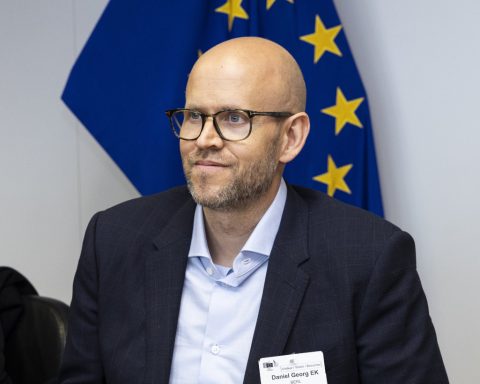



The modern economy is powered less by visible brands than by invisible systems. Few leaders understand this better than Patrick Collison, whose work at Stripe has quietly become part of the internet’s economic backbone. This article explores how Collison’s leadership philosophy – built on long-term thinking, intellectual ambition, and trust – offers a blueprint for building companies that outlast their founders.
Key Takeaways
- Infrastructure leadership is about compounding reliability, not short-term visibility.
- Long-term thinking must be embedded into daily operations, not just strategy decks.
- Talent density and intellectual standards matter more than organizational complexity.
- Great leaders build systems of thinking, not just systems of execution.
- In foundational companies, trust is the most important product of all.
The Most Important Companies Are Often the Quietest
The modern economy runs not on apps, but on infrastructure. Payments, identity, data, logistics, and trust are the invisible systems that determine what businesses can exist at all. Patrick Collison, co-founder and CEO of Stripe, has spent more than a decade building one of these invisible empires – and in doing so, has quietly modeled a form of leadership that looks less like startup mythology and more like civilizational engineering.
Stripe is not famous because consumers love it. It is indispensable because millions of businesses depend on it. And that distinction explains Collison’s leadership philosophy: the most consequential work is often the least visible, and the most durable leadership is rarely performative.
Leadership in the Age of Infrastructure and Compounding Systems
Most leadership narratives celebrate visibility: the charismatic founder, the visionary product launch, the viral moment. Infrastructure companies operate in a different universe. When they work, nobody notices. When they fail, everything breaks.
Leading such a company requires a different mental model. The work is not about persuasion but about reliability. Not about growth spurts but about compounding. Not about storytelling but about systems.
Patrick Collison’s leadership sits squarely in this tradition. Stripe is not merely a fintech company; it is economic plumbing for the internet. It abstracts away the complexity of payments, compliance, taxation, and financial operations so that millions of entrepreneurs can build businesses without reinventing the wheel. The more the internet economy grows, the more Stripe disappears into it – and the more important it becomes.
This kind of leadership is not optimized for applause. It is optimized for durability.
Stripe and the API-ification of the Global Economy
When Collison and his brother John founded Stripe, accepting payments online was still a painful, fragmented, and deeply technical process. Setting up merchant accounts, dealing with banks, navigating compliance – it could take months and significant legal overhead before a startup could accept its first dollar.
Stripe reframed the problem. Instead of treating payments as a financial product, it treated them as a software abstraction. A few lines of code could suddenly connect a business to the global financial system.
This was not just a product improvement; it was an economic unlock. Entire generations of internet businesses – from SaaS platforms to marketplaces to AI startups – exist because Stripe lowered the friction of participation in the economy.
Today, Stripe is not just a payments company. It is an infrastructure layer for money, identity, billing, tax, fraud prevention, and financial operations. It sits quietly underneath enormous swaths of the digital economy, compounding in importance as more economic activity moves online.
And that positioning has shaped how Collison thinks about leadership itself.
4 Lessons in Patrick Collison’s Infrastructure Leadership
Patrick Collison’s leadership style doesn’t come from management trends or startup folklore. It emerges from the unusual demands of building systems that millions of businesses depend on every day. Taken together, these four principles reveal a coherent philosophy: leadership not as performance, but as the patient, disciplined design of organizations that compound in usefulness, trust, and intellectual depth.
Insight 1: Long-Term Thinking Is a Daily Operational Discipline
Many leaders claim to think long-term. Few design their organizations around it.
Collison has repeatedly argued that the biggest opportunities are often those that take the longest to mature. Infrastructure, by definition, is not built for quick wins. It requires years of patient compounding, deep trust, and relentless incremental improvement.
At Stripe, this shows up not as a slogan but as a management practice. The company invests in foundational capabilities – global regulatory coverage, financial primitives, developer tooling – that may not produce immediate revenue spikes but dramatically expand the surface area of what customers can build over decades.
Long-term thinking, in this model, is not a strategy. It is a constraint system. It shapes hiring, product roadmaps, technical architecture, and even how decisions are documented.
Collison understands something many leaders don’t: you cannot declare long-termism while running a short-term organization. The time horizon must be embedded into the operating system.
Insight 2: Talent Density Beats Process and Hierarchy
Stripe is famous not just for what it builds, but for who it hires.
Collison has consistently emphasized talent density over organizational sprawl. Rather than scaling through layers of management and rigid process, Stripe aims to remain an unusually high-trust, high-caliber environment where small teams can tackle enormous problems.
This is not accidental. Infrastructure problems are not solved by committees. They are solved by small groups of exceptional people thinking deeply, iterating carefully, and compounding their understanding over time.
In such environments, the leader’s job shifts. It is not to micromanage execution but to curate the intellectual environment:
- What problems are worth working on?
- What standards are non-negotiable?
- What kinds of thinking are rewarded?
Collison’s leadership reflects a belief that organizational quality is primarily a function of who you put in the room – and what you expect of them once they’re there.
Insight 3: Intellectual Ambition as a Management System
Stripe is unusual among large technology companies in how explicitly intellectual it is.
The company publishes long essays on economic progress, technical design, and historical lessons. It runs internal and external research programs. It treats reading, writing, and thinking as core parts of the job – not extracurricular activities.
This is not branding. It is management philosophy.
Collison believes that many organizational failures are ultimately failures of thinking: shallow models, borrowed assumptions, or unexamined defaults. By raising the intellectual ambition of the organization, he raises the ceiling of what it can build.
In this sense, leadership is not just about decision-making. It is about model-building. The best leaders don’t just choose between options; they improve the quality of the options that exist.
Stripe’s culture of documentation, writing, and rigorous internal debate reflects this. The company is designed to think in public internally – and to make thinking itself a first-class asset.
Insight 4: Trust Is the Real Product of Infrastructure Companies
When you run critical infrastructure, your real product is not software. It is trust.
Stripe handles money for millions of businesses across nearly every country. A failure is not just a bug; it is a potential economic disruption for thousands of companies at once.
This reality shapes Collison’s approach to governance, risk, and ethics. Neutrality, reliability, and predictability are not marketing values. They are existential requirements.
Stripe invests heavily in security, compliance, and operational resilience – not because these are glamorous, but because they are the moral obligation of any system others depend on.
In infrastructure leadership, success is measured less by what you enable and more by what you never allow to break.
The Leaders Who Shape the Future Rarely Seek to Be Seen
Patrick Collison does not fit the popular image of a tech CEO. He is not a hype merchant. He does not sell personal mythology. He does not optimize for attention.
Instead, he is building something quieter and more enduring: a system that makes other systems possible.
His leadership offers a different model for the next generation of founders and executives – not one centered on visibility or charisma, but on compounding, standards, and civilizational contribution.
In the long run, the most important leaders may not be those who build the most famous companies – but those who build what everyone else stands on.
FAQs
Who is Patrick Collison?
Patrick Collison is the co-founder and CEO of Stripe, one of the world’s most important financial infrastructure companies powering online commerce. He founded Stripe with his brother John Collison to simplify how businesses accept and manage money on the internet.
Beyond product-building, Collison is known for his deep interest in economic progress, institutional quality, and how organizations can be designed to compound their impact over decades.
What is Stripe best known for?
Stripe is best known for making online payments and financial operations dramatically easier for businesses of all sizes, from startups to global enterprises. Over time, it has expanded far beyond payments into billing, tax, fraud prevention, identity, and financial tooling, effectively becoming a core operating layer for the internet economy.
Many modern digital businesses could not exist in their current form without Stripe’s infrastructure.
What makes Patrick Collison’s leadership style different?
Collison leads less like a public-facing tech CEO and more like a systems architect. He emphasizes long-term thinking, intellectual rigor, and high talent density over short-term metrics or personal visibility.
Instead of optimizing for speed alone, he focuses on building institutions that can remain reliable, trusted, and adaptable over many decades.
Why is Stripe considered “infrastructure” rather than just a fintech company?
Stripe is considered infrastructure because it operates behind the scenes as foundational economic plumbing rather than as a consumer-facing product. Its systems handle mission-critical functions – moving money, managing compliance, preventing fraud – that other businesses depend on to operate at all.
Like roads or power grids, its success is measured not by attention, but by reliability and ubiquity.
What can leaders learn from Patrick Collison?
Leaders can learn that the most enduring organizations are built by focusing on standards, trust, and compounding systems rather than visibility or hype. Collison’s approach shows that leadership is less about charisma and more about designing environments where good decisions are made consistently over long periods of time.
In a world obsessed with speed, his model argues for patience, depth, and institutional quality as competitive advantages.
Sources:
- https://en.wikipedia.org/wiki/Patrick_Collison
- https://www.forbes.com/profile/patrick-collison/
- https://www.theguardian.com/commentisfree/2021/mar/20/how-two-irish-brothers-started-a-70bn-company-stripe-john-patrick-collison
- https://workjoy.co/blog/why-good-fast-cheap-chooose-two-is-false-according-to-patrick-collison
- https://medium.com/notes-essays-cs183c-technology-enabled-blitzscalin/class-11-notes-essay-reid-hoffman-john-lilly-chris-yeh-and-allen-blue-s-cs183c-technology-ebf34cebae26
Photo credit: Village Global / Wikimedia Commons / CC BY 2.0 (link) – cropped