

Key Takeaways
- Consistency builds confidence – calm is a form of control.
- Tim Cook leads with discipline, not charisma.
- Quiet leadership outlasts loud leadership.
- Systems and values are stronger than personality.
- True power lies in restraint, not reaction.
The Power of Steady Leadership in a Turbulent World
When Steve Jobs passed away in 2011, Apple didn’t just lose its founder – it lost its voice. The question wasn’t whether Apple could keep innovating; it was whether anyone could fill the silence.
Enter Tim Cook, a man whose defining trait was the opposite of his predecessor’s: composure.
He didn’t try to imitate Jobs. He didn’t chase headlines. He led with calm.
In a business culture obsessed with disruption and drama, Cook’s quiet steadiness became Apple’s greatest innovation – consistency as strategy.
From Operations Chief to Moral Compass
Before he was CEO, Cook was Apple’s operations architect – the man who transformed supply chain chaos into symphonic precision. Where Jobs dreamed in pixels, Cook delivered in process.
When he took over, expectations were brutal. Wall Street doubted his creativity. The public doubted his charisma. Yet he never wavered.
Instead, he doubled down on his strengths: discipline, data, and ethics.
He systemized Apple’s excellence, expanded its market reach, and made the company the most valuable in the world – not by chasing hype, but by staying true to focus.
And in doing so, he redefined what leadership looks like in the post-visionary era.
“We have to make sure, at Apple, that we stay true to focus, laser focus – we know we can only do great things a few times, only on a few products.”
Cook’s quiet conviction became Apple’s compass.
4 Leadership Lessons from Tim Cook’s Playbook
1. Calm is a Competitive Advantage
Tim Cook doesn’t react – he responds.
In crises, his stillness stabilizes teams. When product controversies arise, he doesn’t rush to posture; he listens, assesses, and decides. His demeanor signals control, which builds confidence across an organization of hundreds of thousands.
That ethos has shaped Apple’s boardroom culture. Meetings aren’t battlegrounds; they’re problem-solving labs. Calmness isn’t weakness – it’s discipline.
Lesson: When a leader stays calm, others stay capable.
2. Discipline Outperforms Charisma
Tim Cook’s leadership is methodical, even surgical. Every decision goes through layers of precision: data, ethics, sustainability, and execution.
Where Jobs led with vision, Cook leads with structure. He replaced volatility with predictability – and Apple didn’t just survive; it soared.
Under Cook, Apple expanded into wearables, services, and environmental initiatives, growing its valuation more than 10x since his tenure began.
His leadership proves that discipline – not charisma – sustains performance.
Lesson: Charisma inspires moments; discipline builds legacies.
3. Values Create Alignment When Vision isn’t Enough
Cook is one of the few Fortune 500 CEOs who regularly speaks about values in operational terms.
Under his leadership, Apple has taken public stands on privacy, sustainability, and equality – not as PR moves, but as operating principles.
In doing so, he turned Apple’s internal alignment into an external differentiator. Customers don’t just buy products; they buy trust.
Lesson: Values aren’t soft power – they’re strategic infrastructure.
4. Restraint is Strength
Tim Cook leads with a principle few modern executives follow: the courage to say less.
He doesn’t overshare strategy. He doesn’t promise what isn’t ready. When asked about upcoming products, he famously replies, “We don’t talk about future plans.”
This quiet discipline isn’t secrecy; it’s focus. By refusing to chase the narrative, Cook controls it.
He teaches that leadership isn’t about constant visibility – it’s about consistent direction.
Lesson: The less you react, the more control you have.
Quiet Leadership in a Noisy Age
In a world of personal brands and performative CEOs, Tim Cook’s style is almost radical. He doesn’t dominate the room – he centers it.
His power lies not in volume, but in trust. His confidence isn’t loud; it’s earned.
Quiet leadership isn’t about volume – it’s about responsibility. Cook’s approach shows that true influence comes from steadiness rather than spectacle: the kind of leadership that builds rather than broadcasts. He draws a clear line between those who chase credit and those who quietly take ownership, especially when it matters most.
Quiet leaders listen deeply, act deliberately, and make decisions rooted in values rather than optics. They understand that their greatest impact may unfold quietly, across years, in the people and systems they strengthen.
Under his leadership, Apple didn’t reinvent its soul – it preserved it.
He showed that quiet leadership doesn’t require visionaries shouting from the stage; sometimes, it requires operators who quietly build the stage itself.
And that’s his legacy: calm as consistency, consistency as culture, and culture as Apple’s greatest product.
FAQs
1. What is Tim Cook’s core leadership philosophy?
He leads through consistency, calm decision-making, and adherence to values over charisma.
2. How does he maintain Apple’s culture post-Steve Jobs?
By preserving Apple’s creative DNA while building systems that make excellence repeatable.
3. What role do values play in his management style?
They’re central. Cook ties decisions to ethical and environmental principles, not just profit.
4. How does his calm leadership style affect performance?
It stabilizes teams, reduces anxiety, and creates a high-trust environment that drives long-term focus.
5. What can other leaders learn from Tim Cook?
That discipline, restraint, and empathy can achieve what charisma alone cannot – lasting impact.
Sources:
- https://en.wikipedia.org/wiki/Tim_Cook
- https://graciousquotes.com/tim-cook/
- https://www.inc.com/carmine-gallo/the-1-crucial-trait-steve-jobs-taught-apple-ceo-tim-cook.html
- https://www.youtube.com/watch?v=2C2VJwGBRRw
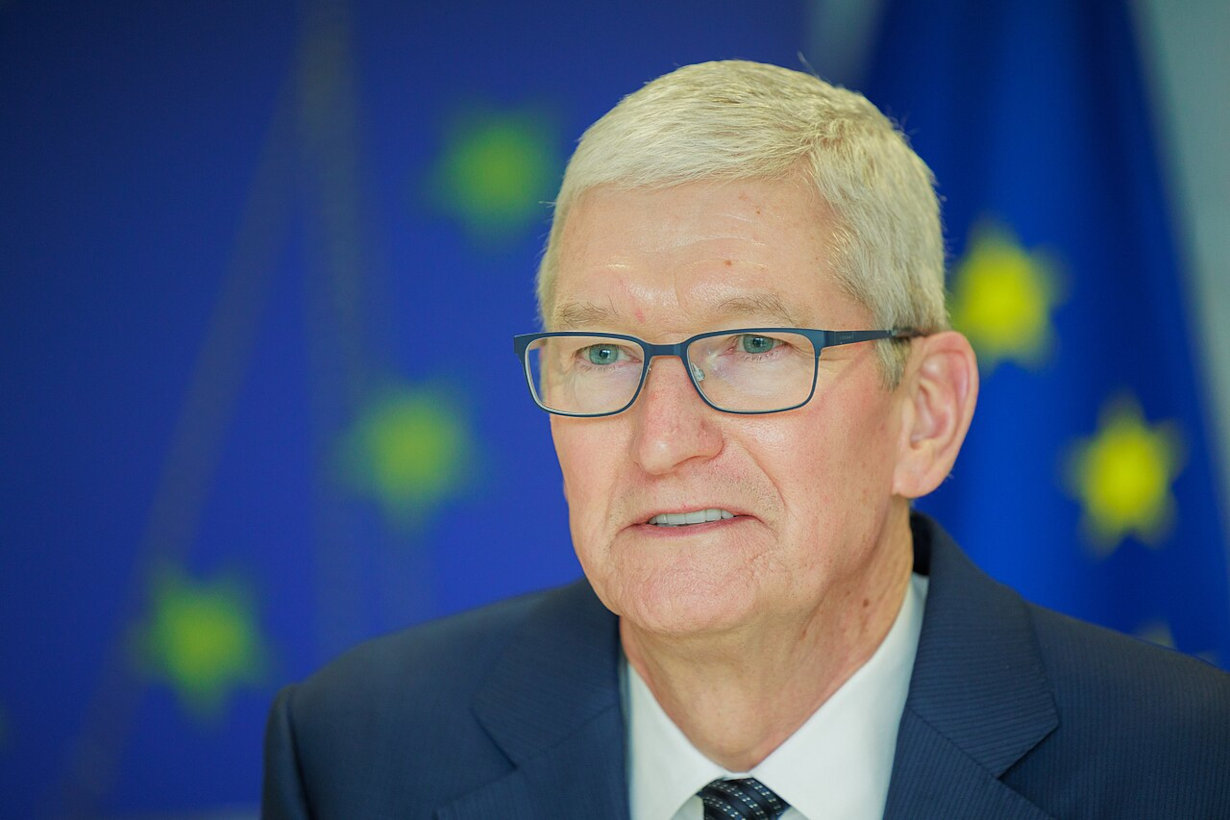
Photo credit: European Commission – Photographer: Christophe Licoppe / Wikimedia Commons / CC BY 4.0 (link)