

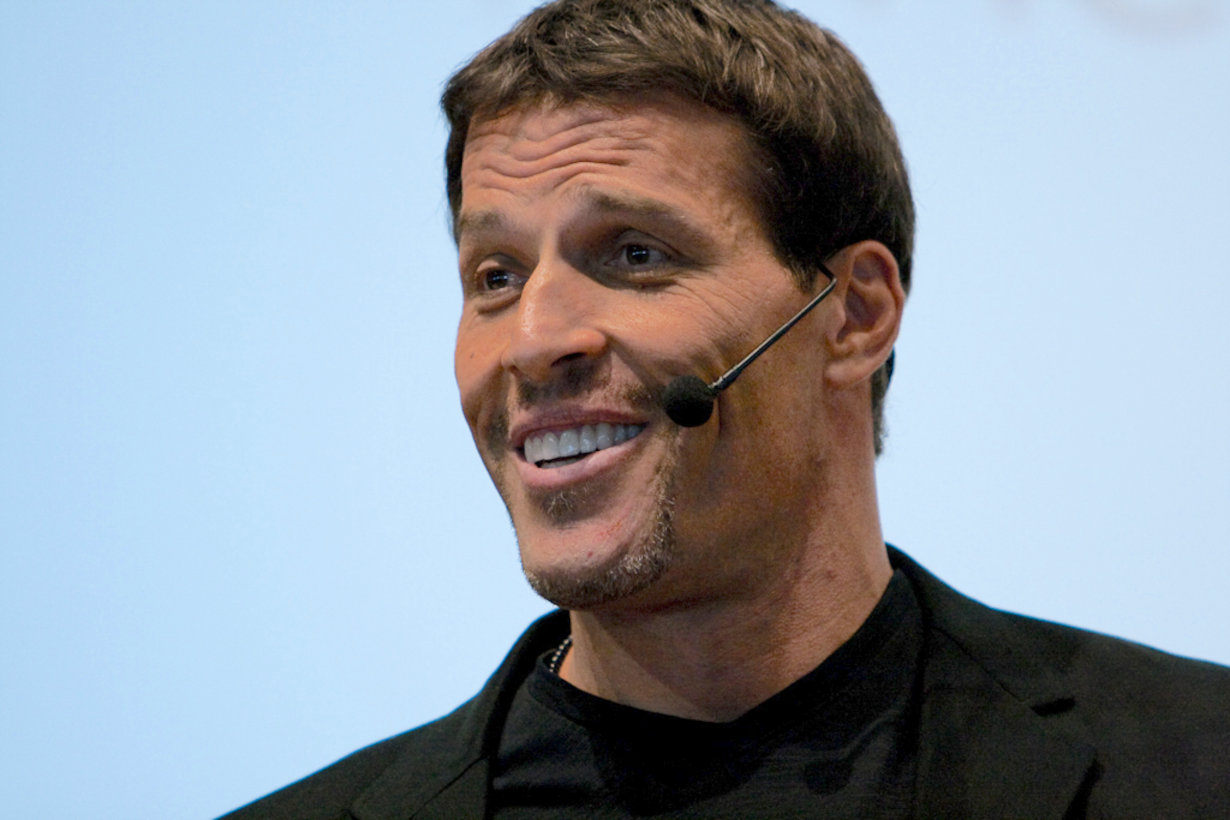
Most leadership failures don’t begin with bad strategy. They begin with bad decisions made under pressure, emotional fatigue, or loss of clarity. For more than four decades, Tony Robbins has built a career not by leading companies or holding office, but by helping the people in power perform when the stakes are highest.
Leadership Breaks Down Long Before Strategy Does
When organizations fail, we usually blame execution, competition, or market shifts. But in practice, leadership breakdowns almost always begin earlier and deeper: with energy, identity, emotional state, and decision quality.
Boards don’t collapse because spreadsheets are wrong. Companies don’t implode because strategy frameworks are missing. They collapse because leaders freeze under uncertainty, drift into reactive decision-making, lose clarity under pressure, or operate from fear, ego, or exhaustion.
Tony Robbins‘ core thesis is simple but uncomfortable: the leader’s internal state is the real operating system of the organization.
If that state is unstable, no amount of intelligence, experience, or strategic brilliance will save the outcomes.
This is why Robbins’ work has always sat in a strange category. He is not a management consultant. He is not a therapist. He is not a motivational speaker in the modern sense. He is, more accurately, a performance systems engineer for human decision-makers.
Why Power Creates Blind Spots
Leadership creates a unique psychological environment.
The higher you rise, the more people filter bad news, the more consequences of mistakes multiply, the more identity becomes fused with outcomes, and the more isolation quietly increases.
Most leaders are surrounded by competence but starved of honest mirrors.
They have advisors for finance, legal, operations, and strategy. But very few have someone who is tasked with monitoring and strengthening their own cognitive and emotional performance under pressure.
Robbins’ relevance comes from operating precisely in this gap.
Over the years, his client list has included CEOs, founders, athletes, entertainers, and political leaders – not because he has better ideas than they do, but because he helps them access their best thinking when it matters most.
In high-stakes environments, the bottleneck is almost never knowledge. It is state.
Insight 1: State Comes Before Strategy
One of Robbins’ most consistent ideas is that psychological and physiological state determines the quality of decisions.
Two leaders can look at the same data and make radically different choices depending on their stress level, emotional framing, sense of identity and control, and energy and focus.
From this perspective, leadership is less about thinking harder and more about entering the right state before thinking at all.
This is why Robbins emphasizes physical energy and conditioning, emotional regulation, pattern interruption, and deliberate priming rituals before major decisions.
In elite performance environments, these are force multipliers. Strategy executed in a compromised state becomes bad strategy.
Insight 2: Identity Drives Behavior More Than Goals
Most leadership literature focuses on goals. Robbins focuses on identity.
His argument is that people do not consistently act in alignment with their goals – they act in alignment with who they believe they are.
If a leader unconsciously identifies as a firefighter instead of a builder, a control freak instead of a systems architect, or a perfectionist instead of a delegator, no strategy deck will change their behavior.
Lasting leadership change happens when self-concept changes first.
This is why Robbins’ interventions often look less like coaching sessions and more like identity-level rewiring.
Insight 3: Emotional Mastery Is a Leadership Skill, Not a Personality Trait
In business culture, emotional control is often treated as temperament. Robbins treats it as a trainable system.
He breaks emotional patterns into triggers, interpretations, physiological responses, and habitual meaning-making loops.
Once these are visible, they can be redesigned.
Leaders do not just make decisions – they broadcast emotional tone into entire organizations. Anxiety, calm, confidence, and urgency are contagious.
In this sense, emotional regulation is not personal hygiene. It is organizational infrastructure.
Insight 4: The Highest Leverage Work Is Removing Internal Friction
Many high performers are not limited by skill or intelligence. They are limited by conflicting values, unresolved internal conflicts, identity contradictions, or subconscious fear loops.
These create invisible drag.
Robbins’ work often focuses on eliminating internal friction before adding external capability.
Once that friction is removed, performance often jumps without any new strategy, tools, or resources.
Why Leaders, Not Organizations, Are His Real Product
Tony Robbins has never built a company that looks like McKinsey or a traditional consulting firm. His real product has always been transformed decision-makers.
He does not compete on frameworks. He competes on human operating systems.
In a world where complexity is rising, decision cycles are shrinking, and psychological pressure is compounding, that may be one of the most durable forms of leverage there is.
Leadership Is a Performance Art
Modern business culture likes to pretend leadership is mostly analytical.
In reality, it is emotional, psychological, physiological, and deeply identity-driven.
Tony Robbins’ career is essentially a long argument that the inner game of leadership is not a side topic – it is the main event.
The Invisible Work Behind Visible Power
Tony Robbins builds the people who build everything else.
In an age obsessed with tools, technology, and tactics, his work is a reminder of a more uncomfortable truth: the ultimate bottleneck in every organization is still the human being at the top.
FAQs
Who is Tony Robbins?
Tony Robbins is a performance strategist, author, and coach known for working with CEOs, founders, athletes, and political leaders on decision-making and personal performance.
Unlike traditional consultants, Robbins focuses less on business models and more on the psychological and emotional operating systems of leaders.
Why do so many leaders work with him?
Because at high levels, the bottleneck is rarely knowledge or intelligence – it is clarity, emotional control, and decision quality under stress.
He helps leaders improve how they function in critical moments, not what they know.
Is Tony Robbins a motivational speaker or a performance coach?
While he is publicly known as a speaker, his core work is closer to performance engineering than motivation.
His methods focus on identity, emotional regulation, physiological state, and decision patterns.
What is his main leadership philosophy?
That state precedes strategy, and identity precedes behavior.
How a leader thinks and perceives themselves determines decision quality long before any framework is applied.
Is this approach relevant for business leaders?
Yes, because leaders shape organizational culture, tempo, and emotional climate.
Improving leaders’ internal performance often creates cascading effects across teams and execution quality.
Sources:
- https://en.wikipedia.org/wiki/Tony_Robbins
- https://www.linkedin.com/in/officialtonyrobbins
- https://fortune.com/2014/10/30/tony-robbins-best-advice-executive-coach/
- https://www.businessinsider.com/tony-robbins-personality-2017-11
- https://www.forbes.com/sites/danschawbel/2016/04/07/tony-robbins-most-leaders-do-whats-popular-not-whats-right/
Photo credit: Randy Stewart / Wikimedia Commons / CC BY-SA 2.0 (link)