

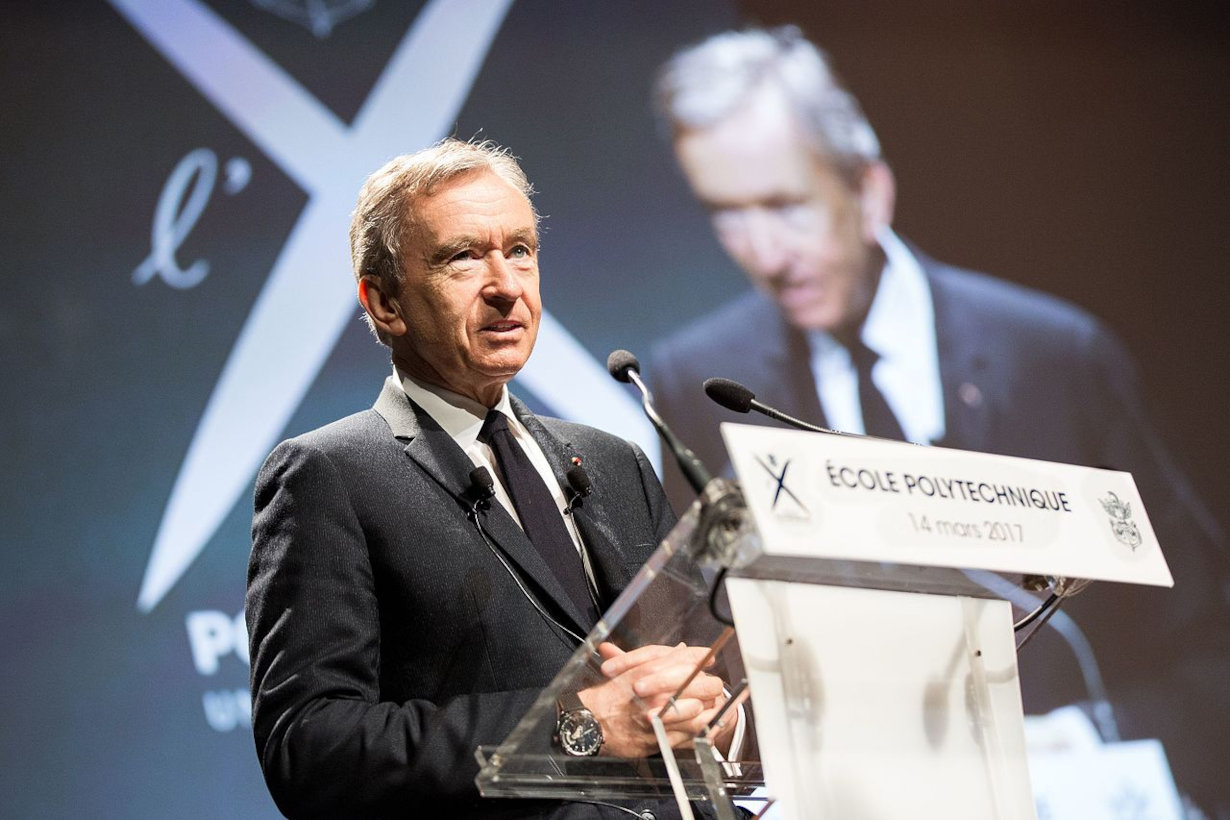
In global business, few leaders operate at the intersection of culture, capital, and craftsmanship as effectively as Bernard Arnault. As the architect behind the world’s largest luxury conglomerate, his leadership extends beyond management into the deliberate construction of brand ecosystems. His approach demonstrates that in industries built on perception and identity, leadership is as much about stewardship as it is about strategy.
Key Takeaways
- Bernard Arnault demonstrates that brands should be managed as long-term assets rather than short-term commercial tools.
- Balancing creative autonomy with centralized financial discipline enables both innovation and performance at scale.
- A long-term orientation allows organizations to build durable value and maintain pricing power.
- Ownership and governance structures play a critical role in enabling strategic consistency.
- Scarcity and restraint can be more powerful growth strategies than rapid expansion.
Brands Are Assets, Not Products
Many companies treat brands as extensions of products – tools to support sales and differentiation. Bernard Arnault approaches brands differently.
For Bernard Arnault, brands are enduring assets that require long-term investment, protection, and positioning. Under his leadership, LVMH has been built not as a single company, but as a portfolio of independent “maisons,” each with its own identity, heritage, and creative direction.
This philosophy shifts the role of leadership from operator to steward. The objective is not to maximize short-term output, but to preserve and enhance brand equity over decades.
In luxury, perception defines value. Unlike commoditized industries, pricing power and demand are closely tied to brand narrative, exclusivity, and consistency. Arnault’s model recognizes that these elements cannot be accelerated without risk. They must be cultivated with discipline, patience, and strategic restraint.
From Acquisition to Global Empire
Bernard Arnault’s rise began with a calculated acquisition. In 1984, he acquired the struggling textile group Boussac Saint-Frères, which included the fashion house Christian Dior. Rather than attempting to revive the entire conglomerate, he focused on its most valuable asset – Dior – while divesting non-core operations.
This move established a pattern that would define his career:
identify undervalued assets, isolate their core value, and build around it.
By 1989, Arnault had taken control of LVMH following the merger of Louis Vuitton and Moët Hennessy. Over the following decades, he expanded the group into a portfolio of more than 75 brands, including Louis Vuitton, Dior, Tiffany & Co., Fendi, and Sephora.
The scale of this expansion reflects a disciplined acquisition strategy. Rather than pursuing growth for its own sake, Arnault focused on brands with strong heritage and global potential. Once integrated, these brands were given creative autonomy while benefiting from centralized financial and operational support.
This dual structure – decentralized creativity with centralized discipline – became a defining feature of LVMH’s operating model. It allowed the group to scale without diluting the distinct identity of each brand.
Insight 1: Decentralization with Financial Discipline
One of Arnault’s most significant leadership contributions is the balance between autonomy and control.
At LVMH, individual brands operate independently in terms of creative direction and brand strategy. Designers and brand leaders are given the freedom to shape collections, campaigns, and identity.
However, this autonomy exists within a framework of strict financial oversight.
This structure enables innovation at the brand level while maintaining performance at the group level. It reduces the risk of homogenization – a common challenge in large organizations – while ensuring accountability.
The model reflects a broader leadership principle: centralize what must be controlled, decentralize what must remain distinctive.
In practice, this requires clear boundaries. Creative teams focus on brand expression, while group leadership ensures capital allocation, operational efficiency, and long-term consistency.
Insight 2: Long-Term Orientation in a Short-Term World
Arnault’s leadership is defined by patience.
In contrast to companies driven by quarterly performance, LVMH operates with a long-term perspective. Investments in brand equity, retail presence, and craftsmanship are made with multi-decade horizons.
This approach is particularly important in luxury, where brand value accumulates slowly and can be damaged quickly.
By resisting short-term pressures, Arnault has been able to maintain pricing power and exclusivity across the portfolio.
This long-term orientation also shapes acquisition strategy. Rather than aggressively integrating brands, LVMH allows them to evolve over time, preserving their identity while gradually enhancing their global reach.
The result is a portfolio that grows in value not just through expansion, but through sustained brand strengthening.
Insight 3: Control Enables Continuity
Unlike many public companies, LVMH is structured to maintain significant family control.
Bernard Arnault and his family control a substantial portion of the company through holding structures. In addition, his children hold key roles across the organization, contributing to long-term continuity.
This level of control allows for strategic consistency. Decisions can be made with long-term implications in mind, without being constrained by short-term market expectations.
It also facilitates succession planning. By integrating the next generation into leadership roles early, Arnault is building continuity into the organization’s future.
While this model is not universally applicable, it highlights an important principle:
ownership structure influences leadership behavior.
Organizations with stable control are often better positioned to pursue long-term strategies.
Insight 4: Scarcity Is a Strategic Choice
In many industries, growth is pursued through scale and accessibility. Arnault takes a different approach.
Luxury depends on scarcity – both real and perceived.
By carefully managing distribution, pricing, and production, LVMH maintains exclusivity across its brands. This creates a sense of desirability that supports premium positioning.
Scarcity, in this context, is not a limitation. It is a deliberate strategy.
Expanding too quickly or broadly risks diluting brand value. Arnault’s leadership reflects an understanding that growth must be balanced with restraint.
This principle extends beyond products to brand experiences, retail environments, and collaborations. Every touchpoint is designed to reinforce exclusivity and consistency.
Leadership as Portfolio Stewardship
Bernard Arnault’s leadership model is defined by stewardship rather than direct control.
By treating brands as long-term assets, balancing autonomy with discipline, and maintaining a clear strategic framework, he has built one of the most valuable portfolios in global business.
His approach demonstrates that leadership at scale is not about managing every detail. It is about designing systems that preserve identity while enabling growth.
In industries where perception drives value, this balance becomes critical. Arnault’s success reflects a deep understanding that brands, once diluted, are difficult to rebuild – but when carefully managed, they can compound in value over generations.
FAQs
Who is Bernard Arnault?
Bernard Arnault is the chairman and CEO of LVMH, the world’s largest luxury conglomerate. He is widely regarded as one of the most influential figures in global business and the luxury industry.
What is LVMH?
LVMH is a multinational luxury group that owns more than 75 brands across fashion, jewelry, cosmetics, wines, and spirits. Its portfolio includes brands such as Louis Vuitton, Dior, and Tiffany & Co.
How did Bernard Arnault build his business empire?
Arnault began by acquiring the distressed Boussac group and focusing on Christian Dior as its core asset. He later took control of LVMH and expanded it through strategic acquisitions and disciplined portfolio management.
What is Bernard Arnault’s leadership style?
His leadership style combines long-term strategic thinking, financial discipline, and respect for creative autonomy within brands. He focuses on preserving brand identity while enabling growth through structured oversight.
Why is Bernard Arnault so influential in business?
Arnault’s influence comes from his ability to build and manage a portfolio of globally recognized luxury brands. His approach to brand stewardship and capital allocation has shaped the modern luxury industry.
Sources:
- https://en.wikipedia.org/wiki/Bernard_Arnault
- https://people.com/all-about-bernard-arnault-children-8385121
- https://www.britannica.com/money/Bernard-Arnault
- https://www.forbes.com/profile/bernard-arnault/
Photo credit: Jérémy Barande / Ecole polytechnique Université Paris-Saclay / Wikimedia Commons / CC BY-SA 2.0 (link)