

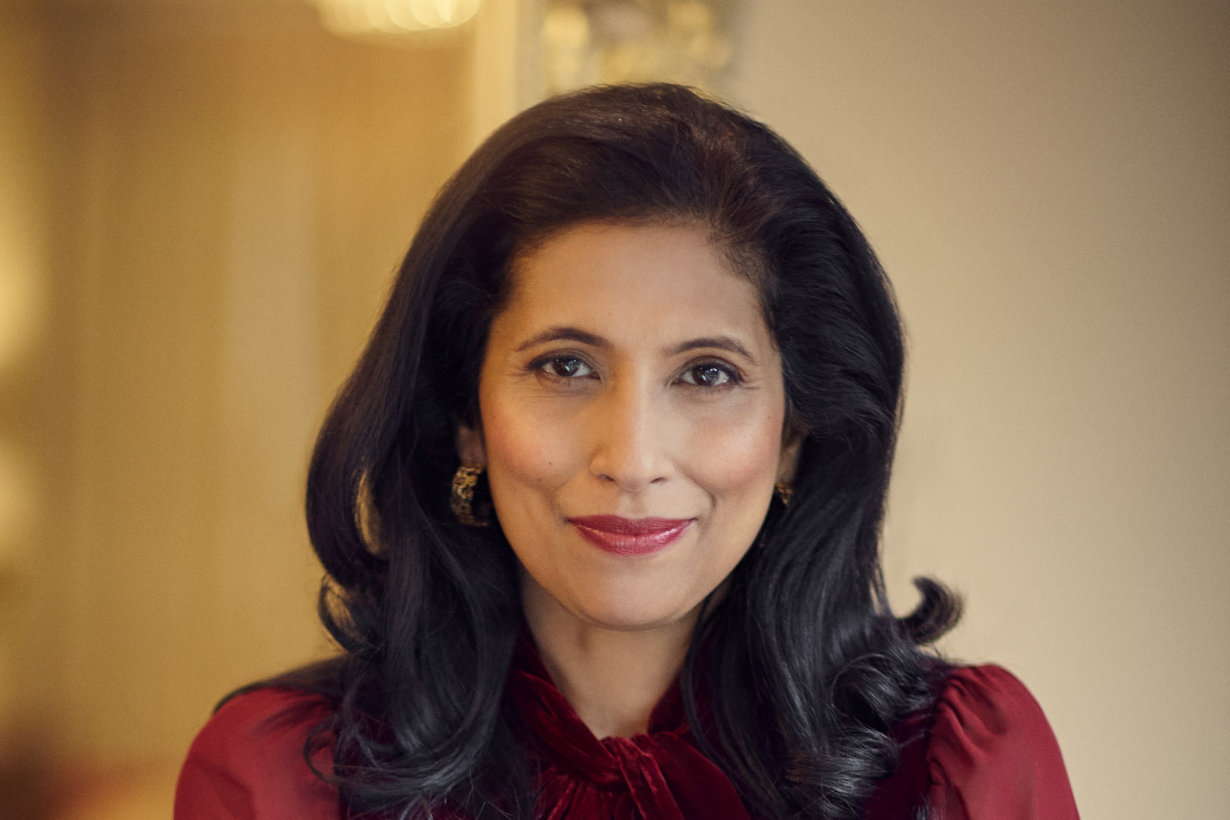
In global organizations, leadership is often defined by strategy, scale, and financial performance. Leena Nair represents a different model – one that places people, culture, and human potential at the center of business success. Her leadership demonstrates that in complex, brand-driven organizations, culture is not a soft asset, but a strategic one.
Key Takeaways
- Leena Nair demonstrates that intentionally designed culture can serve as a primary driver of consistent and scalable performance.
- Prioritizing people as a source of value enables organizations to strengthen execution through engagement and capability development.
- Purpose acts as a unifying mechanism that aligns decentralized teams while maintaining strategic coherence.
- Inclusive environments improve decision-making quality and enhance long-term innovation capacity.
- Leadership extends beyond strategy to shaping the emotional and cultural conditions that influence performance.
Culture Is a Strategic Asset
Many organizations treat culture as an outcome – something that emerges from strategy and operations. In practice, culture often determines whether strategy succeeds.
Leena Nair approaches leadership with a different premise: culture is not secondary to performance – it is foundational to it.
As CEO of Chanel and former Chief Human Resources Officer at Unilever, she has consistently emphasized the role of people in driving organizational outcomes.
The premise is clear:
When culture is intentionally designed, performance becomes more consistent and scalable.
This reframing shifts leadership priorities. Instead of focusing solely on financial or operational levers, leaders invest in behaviors, values, and environments that enable people to perform at their best. Culture becomes a system that shapes decision-making, collaboration, and execution across the organization.
In highly creative and brand-driven industries like luxury, culture also directly influences output quality. Craftsmanship, storytelling, and brand consistency depend not just on processes, but on the mindset and alignment of the people delivering them. This makes culture not only a performance driver, but also a protector of brand integrity over time.
From HR Leadership to Global CEO
Leena Nair’s career trajectory is notable for its progression through human resources into top executive leadership – a path that remains relatively uncommon at the global CEO level.
At Unilever, she spent nearly three decades in various roles across geographies, ultimately becoming Chief Human Resources Officer. In that role, she led large-scale initiatives focused on leadership development, diversity, inclusion, and organizational transformation.
Her work extended beyond traditional HR functions. She helped shape Unilever’s leadership pipeline, embedding purpose and values into the company’s operating model. This experience positioned her not just as a functional leader, but as a steward of organizational culture at scale.
In 2022, she was appointed CEO of Chanel, marking a transition from consumer goods to luxury. This move highlighted a broader shift in how leadership is valued – recognizing that managing culture and people is critical even in brand-driven, creative industries.
At Chanel, Nair operates in a different context: one where brand identity, craftsmanship, and exclusivity are central. Yet her core principles remain consistent – aligning people, culture, and purpose to sustain long-term value.
Her transition also reflects a broader evolution in executive leadership. Organizations are increasingly recognizing that operational excellence alone is insufficient in complex environments. The ability to manage talent, culture, and organizational energy has become a defining capability for modern CEOs, particularly in global and creative industries.
Insight 1: People Are the Primary Source of Value
In many organizations, value is associated with products, services, or intellectual property. Nair emphasizes a more fundamental driver: people.
By investing in employee development, engagement, and well-being, organizations can unlock higher levels of performance. This perspective shifts leadership focus from control to enablement.
When people are supported and aligned, they are more likely to contribute meaningfully to organizational goals.
This approach also recognizes that in knowledge-driven and creative industries, output quality is directly linked to human capability and motivation. Leaders who prioritize people are not sacrificing performance – they are strengthening its foundation.
In practice, this often requires rethinking traditional management systems. Performance reviews, leadership development programs, and internal mobility structures must be designed to support growth rather than simply evaluate outcomes. Over time, this creates a more adaptive and resilient organization, capable of responding to change through its people.
Insight 2: Purpose Creates Alignment at Scale
Large organizations often struggle to maintain alignment across geographies, functions, and hierarchies.
Nair uses purpose as a unifying mechanism. By clearly articulating why the organization exists, she aligns teams around a shared mission.
At Unilever, this was reflected in purpose-driven brands and leadership development initiatives. At Chanel, it translates into preserving brand heritage while evolving for modern audiences.
Purpose, in this context, is not abstract – it guides decisions and behaviors.
When employees understand the broader mission, they can operate with greater autonomy while remaining aligned with organizational priorities.
This alignment becomes increasingly important as organizations scale. With more teams and greater geographic spread, centralized control becomes less effective. Purpose provides a decentralized mechanism for consistency, allowing decisions to be made locally while maintaining global coherence.
Insight 3: Inclusion Strengthens Performance
Diversity and inclusion are often framed as ethical imperatives. Nair extends this perspective by emphasizing their impact on performance.
Inclusive organizations benefit from a wider range of perspectives, leading to better decision-making and innovation.
Her leadership at Unilever included initiatives to improve representation and create more equitable workplaces.
This reflects a broader principle: Inclusion is not separate from performance – it enhances it.
By creating environments where individuals feel valued and heard, organizations can access a broader range of ideas and capabilities, improving both adaptability and resilience.
Beyond representation, inclusion also affects how ideas are evaluated and implemented. Organizations that actively encourage diverse viewpoints are better equipped to challenge assumptions and avoid groupthink. This leads to more robust strategies and a higher capacity for innovation over time.
Insight 4: Leadership Is About Energy and Environment
Beyond strategy and structure, Nair emphasizes the importance of energy – how people feel within an organization.
Leaders influence not only what employees do, but how they experience their work. By creating positive, supportive environments, leaders can improve engagement and productivity.
This perspective expands the scope of leadership. It is not limited to decision-making – it includes shaping the emotional and cultural environment in which decisions are executed.
Over time, this focus on energy and environment contributes to sustained performance, as employees are more likely to remain engaged and committed.
In high-performance environments, energy becomes a differentiator. Teams that feel supported and motivated are more likely to sustain effort, collaborate effectively, and navigate challenges. Leaders who manage energy effectively create organizations that are not only productive, but also resilient under pressure.
Leadership as Cultural Architecture
Leena Nair’s leadership model positions culture as a core driver of organizational success.
Rather than treating people and performance as separate domains, she integrates them into a unified approach. Culture becomes the mechanism through which strategy is executed and sustained.
This perspective is particularly relevant in complex, global organizations, where alignment cannot be achieved through control alone.
It requires shared values, clear purpose, and environments that enable people to perform.
Her approach demonstrates that leadership is not just about directing outcomes.
It is about designing the conditions in which those outcomes become possible.
In an increasingly complex and interconnected business environment, this model offers durability. Organizations that invest in culture as infrastructure – not just as identity – are better positioned to adapt, scale, and sustain performance over time. Leadership, in this sense, becomes less about individual authority and more about systemic influence.
FAQs
Who is Leena Nair?
Leena Nair is the CEO of Chanel and former Chief Human Resources Officer at Unilever. She is known for her people-centered leadership approach and focus on culture as a driver of performance.
What makes Leena Nair’s leadership approach unique?
Her approach emphasizes culture, purpose, and human potential as core business drivers rather than secondary considerations. This perspective integrates people strategy directly into organizational performance and long-term value creation.
Why is culture important in leadership?
Culture shapes how decisions are made, how teams collaborate, and how consistently strategies are executed. Strong cultures enable organizations to scale performance while maintaining alignment across complex structures.
How does Leena Nair approach inclusion?
She views inclusion as a performance driver rather than solely a social objective, emphasizing its role in improving decision-making and innovation. Her initiatives focus on creating environments where diverse perspectives are actively valued and utilized.
What can leaders learn from Leena Nair?
Leaders can learn to treat culture as a strategic system, invest in people development, and align organizations through purpose. Her approach highlights the importance of designing environments that enable sustained performance.
Sources:
- https://en.wikipedia.org/wiki/Leena_Nair
- https://time.com/6962053/leena-nair-chanel-interview/
- https://finance.yahoo.com/news/chanel-leena-nair-went-fashion-145559816.html
- https://www.gsb.stanford.edu/insights/leena-nair-leading-empathy-compassion
Photo credit: Shinykatie / Wikimedia Commons / CC BY-SA 4.0 – cropped (link)