

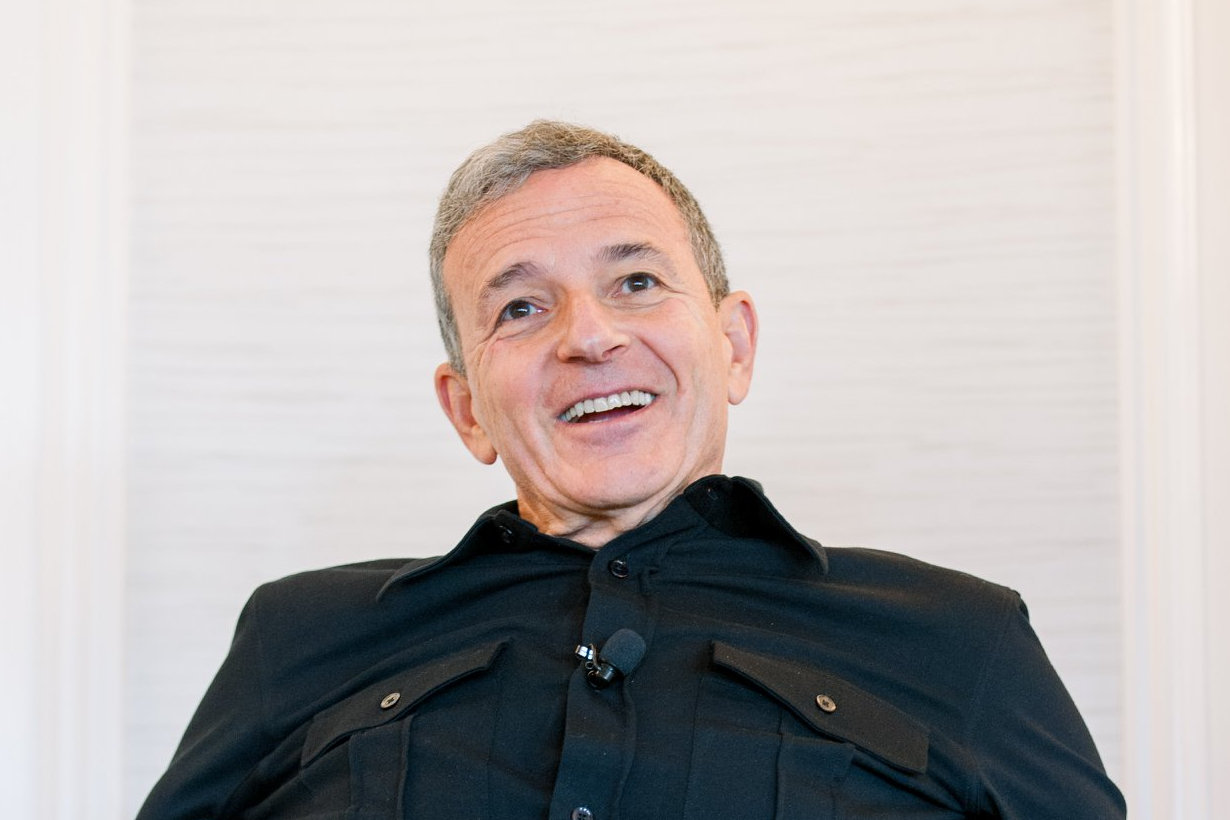
Leading an iconic company requires more than preserving legacy – it requires the ability to evolve without weakening the identity that made the organization valuable in the first place. Few executives illustrate this balance more clearly than Bob Iger, whose leadership at Disney combined strategic expansion with disciplined creative stewardship.
Key Takeaways
- Bob Iger demonstrates that strategic acquisitions create value when they reinforce a company’s core identity and strengths.
- Creative organizations perform best when leadership protects trust and autonomy within high-performing teams.
- Long-term relevance depends on adapting distribution and business models without weakening core assets.
- Effective leadership balances optimism with decisive action during periods of uncertainty and disruption.
- Stewardship of legacy brands requires both preservation and continuous reinvention.
In Creative Industries, Leadership Is About Stewardship
Creative companies operate differently from traditional industrial organizations.
Their value is tied not only to assets and infrastructure, but also to intellectual property, storytelling, talent relationships, and audience trust. These elements are difficult to standardize and easy to damage through short-term decision-making.
For Bob Iger, leadership meant protecting and expanding Disney’s creative ecosystem while positioning the company for structural changes in media consumption.
The premise underlying his tenure was clear:
Sustained growth in media comes from strengthening creative assets while adapting distribution models to changing technology.
This required balancing continuity with reinvention.
Disney’s legacy could not remain static, yet rapid change risked weakening the identity that differentiated the company globally. Iger’s leadership focused on navigating this tension through selective expansion and strategic discipline.
Transforming Disney for the Modern Media Era
When Iger became CEO in 2005, Disney faced strategic uncertainty.
Traditional television economics remained strong, but digital disruption was accelerating. Consumer behavior was shifting toward streaming, franchises were becoming increasingly important in entertainment economics, and technology companies were beginning to compete directly with media incumbents.
Rather than relying solely on Disney’s existing assets, Iger pursued expansion through acquisitions.
Disney acquired Pixar in 2006, Marvel in 2009, Lucasfilm in 2012, and later most of 21st Century Fox in 2019. These deals fundamentally reshaped Disney’s intellectual property portfolio, giving the company control over some of the most commercially valuable franchises in entertainment.
The strategy extended beyond content ownership.
Under Iger, Disney expanded internationally through initiatives such as Shanghai Disney Resort while also investing heavily in streaming through Disney+. This positioned the company to compete directly in the emerging direct-to-consumer media landscape.
Collectively, these moves transformed Disney from a traditional entertainment company into a globally integrated content ecosystem.
Insight 1: Acquisitions Are Strategic Architecture
Many acquisitions fail because they prioritize scale over strategic coherence. Iger approached acquisitions differently.
Each major deal under his leadership strengthened Disney’s core capability: storytelling built around durable intellectual property.
Pixar enhanced Disney’s animation capabilities and creative culture. Marvel expanded its franchise engine. Lucasfilm added one of the world’s most recognizable entertainment brands. Fox deepened Disney’s content library and streaming position.
These acquisitions were not isolated transactions. They functioned as interconnected components of a broader strategic architecture.
The leadership lesson is significant:
Acquisitions create lasting value when they reinforce a company’s foundational strengths rather than distract from them.
This requires clarity about organizational identity. Companies that lack strategic focus often accumulate disconnected assets. Iger’s Disney maintained coherence because every acquisition supported a larger narrative ecosystem.
Insight 2: Creativity Requires Organizational Trust
Creative organizations depend heavily on talent relationships. Writers, directors, animators, and producers perform best in environments where creative quality is protected from excessive bureaucracy or short-term financial pressure.
Iger understood this dynamic.
One reason the Pixar acquisition succeeded was his willingness to preserve its culture rather than fully absorb it into Disney’s existing systems. Leaders such as Steve Jobs, John Lasseter, and Ed Catmull were given influence over Disney Animation itself, reflecting a broader commitment to creative autonomy.
This approach reflected an important leadership principle:
High-performing creative cultures require trust, not over-centralization.
While financial discipline remained essential, Iger recognized that excessive control could weaken the very creative capabilities Disney was acquiring.
His leadership balanced operational scale with creative independence.
Insight 3: Legacy Brands Must Continuously Reinvent Distribution
One of the defining challenges of Iger’s tenure was technological disruption.
Traditional media companies historically controlled distribution through television networks and theaters. Streaming disrupted this structure by shifting power toward direct consumer relationships.
Rather than resisting this transition, Iger repositioned Disney around streaming through Disney+.
This move carried substantial risk. It required significant investment while potentially weakening existing cable revenues. However, failing to adapt would have created even greater long-term vulnerability.
The broader lesson is that leadership requires distinguishing between preserving a business model and preserving organizational relevance.
Iger protected Disney’s core assets – its brands and storytelling capabilities – while changing how those assets reached audiences.
This distinction enabled Disney to evolve without abandoning its identity.
Insight 4: Optimism Must Be Paired with Decisiveness
Iger frequently emphasized optimism as a leadership principle, but his version of optimism was operational rather than passive. It involved making difficult decisions while maintaining long-term confidence in the organization’s direction.
His tenure included large-scale acquisitions, restructuring efforts, leadership transitions, and strategic pivots during periods of uncertainty. Not every initiative succeeded, and his later return as CEO during industry turbulence illustrated the ongoing pressures facing modern media companies.
However, Iger consistently demonstrated decisiveness under complexity.
This reflects a broader leadership insight:
Optimism without action becomes rhetoric; optimism paired with decisive execution becomes strategy.
Leaders operating in volatile industries must often make high-stakes decisions without complete certainty. Iger’s leadership style emphasized moving forward despite ambiguity rather than waiting for perfect conditions.
Leadership Beyond Disney: Bob Iger’s Post-Retirement Chapter
Bob Iger first served as CEO of Disney from 2005 to 2020, a period defined by major acquisitions, global expansion, and the transformation of Disney into a franchise-driven entertainment powerhouse. After stepping down in 2020, he was succeeded by Bob Chapek, but returned as CEO in 2022 amid operational and strategic challenges tied to streaming, organizational restructuring, and broader industry disruption.
Iger’s second tenure focused on stabilizing Disney during a volatile media transition before he retired again in early 2026, concluding more than two decades as one of the defining leaders in modern entertainment. By the time of his retirement, he had already repositioned Disney around global franchises, streaming, and long-term strategic integration, leaving behind an organization fundamentally transformed from the one he inherited in 2005.
Following retirement, Iger transitioned from day-to-day operator to broader institutional figure within business and media. His post-Disney chapter has focused on advisory work, leadership mentorship, public commentary, and sharing insights on creativity, technology, and organizational leadership.
His continued influence reflects a broader leadership reality: major executives increasingly shape industries even after leaving formal executive roles. For Iger, retirement became less an endpoint and more a transition from corporate stewardship to long-term institutional influence.
Leadership as Strategic Stewardship
Bob Iger’s leadership demonstrates that enduring organizations require both protection and reinvention. By strengthening Disney’s intellectual property portfolio, preserving creative cultures, and adapting distribution models for the digital era, he positioned the company to remain influential during a period of massive industry change.
His tenure illustrates that leadership in creative industries is not simply about managing operations. It is about stewarding ecosystems of talent, brands, technology, and audience relationships simultaneously. This requires balancing long-term vision with practical execution, as well as understanding when continuity creates strength and when reinvention becomes necessary.
In that sense, Iger’s legacy extends beyond entertainment. It offers a broader framework for leading legacy institutions through structural transformation without losing the qualities that made them valuable in the first place.
FAQs
Who is Bob Iger?
Bob Iger is a longtime executive and former CEO of Disney known for transforming the company through major acquisitions and digital expansion. His leadership reshaped Disney into one of the world’s most powerful entertainment ecosystems. He is widely regarded as one of the most influential media executives of the modern era.
What companies did Disney acquire under Bob Iger?
Under Iger’s leadership, Disney acquired Pixar, Marvel, Lucasfilm, and much of 21st Century Fox. These acquisitions significantly expanded Disney’s intellectual property portfolio and strengthened its global market position. They also helped Disney build a franchise-driven content strategy across film, television, streaming, and theme parks.
What is Bob Iger’s leadership style?
Iger’s leadership style combines long-term strategic thinking with decisiveness and creative stewardship. He emphasizes optimism, strong relationships, and protecting creative talent while driving organizational transformation. His approach reflects a balance between operational discipline and creative flexibility.
Why was Disney+ important to Disney’s strategy?
Disney+ allowed Disney to compete directly in the streaming era by building direct relationships with consumers. The platform also helped Disney leverage its extensive content library and franchise portfolio globally. Its launch marked one of the company’s most significant shifts away from traditional media distribution models.
What can leaders learn from Bob Iger?
Leaders can learn the importance of strategic clarity, adaptability, and balancing innovation with institutional identity. His tenure also highlights how acquisitions and culture management can reinforce long-term competitive advantage. It further demonstrates the value of making bold decisions during periods of industry disruption.
Sources:
- https://en.wikipedia.org/wiki/Bob_Iger
- https://www.leadersleague.com/en/news/disney-s-robert-iger-ten-principles-for-leadership
- https://ilconservatory.org/bob-iger-disney-ceo-leadership/
- https://insights.som.yale.edu/insights/what-bob-igers-critics-get-wrong-about-his-performance-at-disney
- https://time.com/6960321/bob-iger-disney-track-record-essay/
- https://fortune.com/2026/03/18/bob-igers-leaving-retirement-josh-damaro-new-ceo-disney-transition-last-day/
- https://www.wsj.com/business/media/bob-iger-returning-to-joshua-kushners-thrive-in-post-disney-move-525d2d8e
Photo credit: Village Global / Wikimedia Commons / CC BY 2.0 – cropped (link)