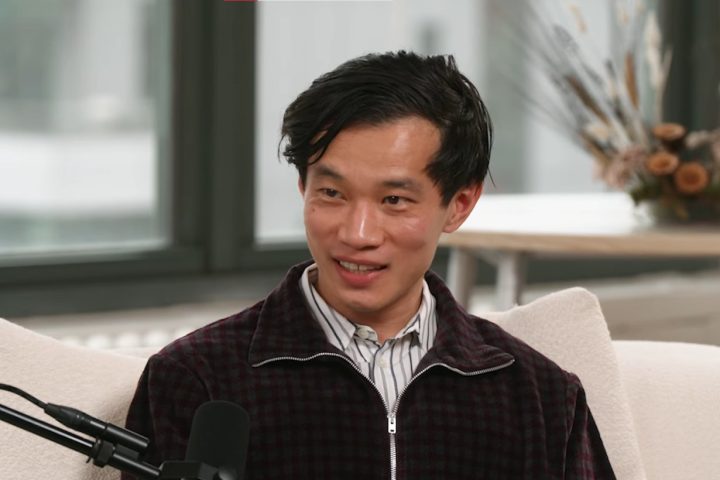


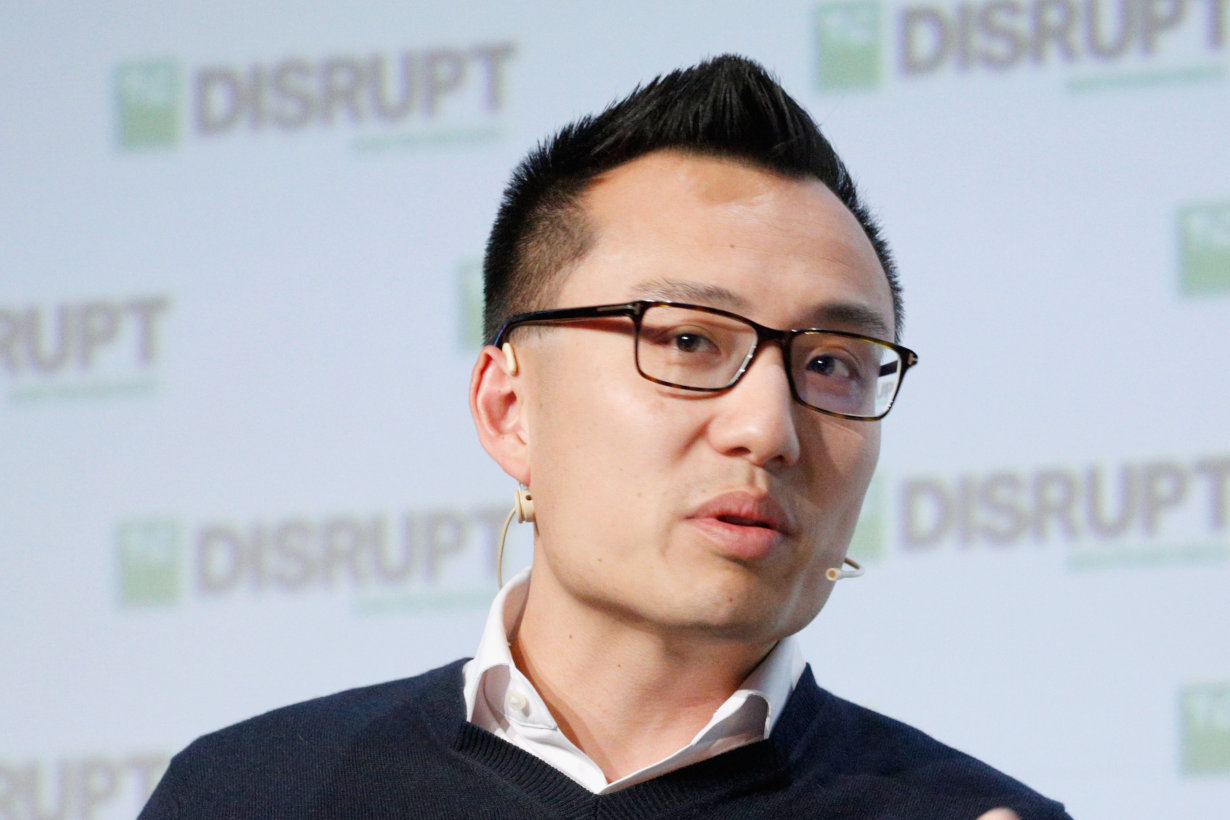
Tony Xu’s path to building DoorDash began long before the company became a major name in food delivery. As a child, he helped his mother at a restaurant, where he saw firsthand how much work goes into serving customers and keeping a small business running. Those experiences helped shape his understanding of local businesses and the challenges they face.
Years later, Xu turned those observations into a technology company designed to connect customers with restaurants and other local merchants. His story shows how personal experience, careful execution, and a willingness to solve practical problems can become the foundation of a large business.
Key Takeaways
- Tony Xu’s childhood experience helping at his mother’s restaurant gave him an early understanding of the challenges small businesses face.
- He co-founded DoorDash with Stanford classmates Andy Fang, Stanley Tang, and Evan Moore to improve local delivery services.
- DoorDash began with a simple website and hands-on deliveries before developing into a large technology platform.
- Xu’s leadership emphasizes operational details, experimentation, and learning directly from customers and merchants.
- DoorDash’s evolution from restaurant delivery into broader local commerce reflects Xu’s ambition to help businesses reach more customers.
From Nanjing to the United States
Tony Xu was born in Nanjing, China, and moved to the United States with his family in 1989, when he was around five years old. His parents arrived with limited resources and had to rebuild their lives in a new country. Like many immigrant families, they faced the challenge of adapting to a different culture while working toward greater economic stability.
His mother had been a doctor in China, but her qualifications did not immediately translate into an equivalent career in the United States. She worked in a Chinese restaurant while pursuing the education and training needed to return to medicine. The effort required to rebuild her career left a lasting impression on Xu.
As a child, he helped out at the restaurant, washing dishes and clearing tables. He also took on other jobs, including mowing lawns. These were ordinary responsibilities, but they exposed him to the practical realities of earning money, serving customers, and keeping operations moving.
Xu’s early experiences would later become relevant to DoorDash’s mission. Rather than viewing restaurants only as places where customers bought meals, he understood that they were businesses dealing with staffing, customer service, costs, and the daily pressure of staying afloat.
Education, Ambition, and the Road to Stanford
Xu pursued an education that combined technical problem-solving with business knowledge. He studied industrial engineering and operations research at the University of California, Berkeley, a field that focuses on improving systems, allocating resources, and making complex operations more efficient.
After graduating, he gained experience in the business world, including roles connected to consulting and technology. He later attended Stanford Graduate School of Business, where he earned his MBA in 2013. Stanford exposed him to entrepreneurial thinking and put him in contact with classmates who would become his future co-founders.
His background gave him a useful combination of perspectives. Engineering encouraged him to think about how systems could work better, while his business education helped him consider how a practical solution might become a sustainable company. His childhood experiences also gave him a personal understanding of the merchants such a company might serve.
Xu did not begin with a grand vision of transforming every neighborhood business. Instead, the opportunity emerged from observing a familiar problem and testing whether technology could make a meaningful difference.
The Problem Behind DoorDash
While at Stanford, Xu and his classmates explored the challenges faced by small businesses. They spoke with local merchants and learned that many restaurants wanted to reach more customers but lacked the resources and infrastructure to manage delivery efficiently.
For a small restaurant, adding delivery can mean coordinating orders, finding drivers, handling customer inquiries, and keeping food quality consistent during transport. These tasks can become difficult when the business is already operating with limited staff and tight margins.
Xu, Andy Fang, Stanley Tang, and Evan Moore decided to test whether technology and a delivery service could help restaurants serve customers beyond those who visited in person. Their first version was deliberately simple. The business operated as PaloAltoDelivery.com (website inactive), using restaurant menus and a basic website to accept orders.
The founders initially handled much of the work themselves, including making deliveries. They were not simply building software and assuming the rest would work. By participating in the actual process, they could see where orders broke down, what customers expected, and what merchants needed from the service.
This early approach helped the team learn from real transactions rather than relying entirely on assumptions. It also made the limitations of the first version visible, providing practical lessons that could guide future improvements.
Learning the Business From the Ground Up
DoorDash’s early progress came through experimentation. The founders did not start with the sophisticated technology platform the company operates today. They began with a basic service, learned from its use, and gradually developed a better understanding of the operational challenges involved in local delivery.
That approach reflects one of Xu’s recurring leadership themes: attention to detail matters. A delivery platform depends on many small decisions working together, from how quickly an order reaches a restaurant to whether a driver can complete a delivery efficiently. A weakness in any part of the process can affect the experience for customers, merchants, and delivery workers.
The founders’ hands-on work also helped them understand that delivery was not merely a technology problem. It involved people, timing, transportation, restaurant workflows, and customer expectations. Software could coordinate these moving parts, but the business still had to make the overall experience reliable.
DoorDash joined Y Combinator in 2013, giving the young company access to a startup accelerator and a broader entrepreneurial network. As it developed, the company expanded its technology and delivery operations, working to make the service more useful to restaurants and customers.
The early years illustrate a practical lesson for founders: a simple first version can be valuable when it helps a team learn what customers actually need. The goal is not to launch with every feature in place, but to identify a real problem and build a service that improves through use.
From Restaurant Delivery to Local Commerce
DoorDash became widely known for restaurant delivery, but its ambitions extended beyond bringing meals to customers. Xu increasingly positioned the company as a platform for local commerce, helping people order from a wider range of businesses and giving merchants additional ways to reach customers.
The company expanded into categories such as grocery, convenience, and retail. This broader strategy built on the same basic infrastructure: customers place orders through a digital platform, merchants prepare or supply the goods, and delivery operations connect the two.
Expanding into new categories also introduced new challenges. Grocery orders, for example, can involve product substitutions and inventory availability, while retail deliveries may require different handling and fulfillment processes. A company cannot assume that a system designed for restaurant meals will work perfectly for every other category.
DoorDash’s acquisition of Wolt in 2022 expanded its international reach and strengthened its position in local delivery. The deal reflected the broader ambition to build a service that could support merchants and customers across different markets.
The shift toward local commerce is important because it changes how DoorDash can be understood. Rather than depending on a single category, the company can seek opportunities wherever digital ordering and delivery help connect local businesses with customers. Whether that strategy succeeds in each market depends on competition, operating costs, consumer demand, and the company’s ability to deliver consistently.
Becoming a Public Company
DoorDash went public in December 2020, marking a major milestone in its development from a startup built by four founders into a publicly traded company. The listing gave the business access to public capital markets and increased the scrutiny placed on its financial performance, growth strategy, and long-term prospects.
Operating at that scale requires a different kind of management. A founder must think beyond product development and early customer acquisition, considering issues such as organizational structure, regulatory expectations, competition, and the demands of public-market investors.
Xu continued as DoorDash’s co-founder and chief executive officer and became chair of its board. He also joined Meta’s board of directors in January 2022, adding another major corporate responsibility to his leadership role.
Public-company status does not eliminate the practical problems that shaped DoorDash’s early days. Restaurants still need profitable ways to reach customers, delivery workers need workable conditions, and customers expect convenience at a reasonable price. The challenge is to serve those groups while maintaining a viable business.
The Challenge of Balancing Growth With Merchant Success
DoorDash’s growth has brought it into a complicated position. The company must create value for customers, merchants, and delivery workers while generating enough revenue to support its technology, operations, and expansion. These interests overlap, but they do not always align.
Customers may want low fees and fast deliveries. Restaurants want more orders without surrendering too much of their margins. Delivery workers need compensation that makes the work worthwhile, while the platform must manage its costs and remain competitive. Changes that benefit one group can create pressure for another.
For Xu, this makes operational execution and ongoing learning especially important. A platform cannot rely on its initial success indefinitely. It must keep examining how its service works, where friction occurs, and whether its decisions are improving the experience for the people who depend on it.
DoorDash’s scale gives it the ability to invest in technology and reach large numbers of customers, but size alone does not guarantee that every merchant or delivery worker benefits equally. Long-term performance depends in part on whether the company can make its services useful and economically sustainable for the businesses and people who use them.
This tension is also a reminder that a strong business model is not just about solving a problem once. It must continue to create value as the market changes and as the company grows more complex.
The Founder Lesson From Tony Xu
Xu’s story offers a useful lesson for aspiring entrepreneurs: a business opportunity can emerge from an everyday experience. Helping at his mother’s restaurant did not automatically point toward building a delivery platform, but it gave him a perspective on the difficulties small businesses face. Later, his education and startup experience helped him connect that understanding to a practical service.
Another lesson is the value of learning through direct involvement. DoorDash’s founders made deliveries and dealt with the mechanics of the service themselves. That work exposed problems that might have remained hidden if they had focused only on the website or the business plan.
Xu’s emphasis on detail is equally relevant. Many businesses are built around an appealing central idea, but their success depends on whether the everyday experience reliably delivers on that promise. In delivery, a customer may judge the service by one late order or a missing item, even when the technology behind it is complex.
Finally, the company’s expansion shows the importance of thinking beyond the first product without losing sight of the original customer problem. DoorDash began by helping restaurants handle delivery and gradually pursued a broader role in local commerce. That evolution created new opportunities, but it also required the company to adapt its operations to different types of businesses and orders.
Xu’s journey is not a formula that every founder can copy. Market conditions, competition, timing, and execution all influence the outcome. Still, his experience demonstrates how personal insight, hands-on experimentation, and persistent attention to operational details can help turn a small test into a much larger enterprise.
Conclusion
Tony Xu helped build DoorDash by connecting a problem he understood personally with a service that local businesses needed. His experience in his mother’s restaurant gave him an appreciation for the effort behind small-business operations, while his education and co-founders helped turn that understanding into a technology-driven delivery company.
DoorDash’s evolution from a basic website into a public company operating across multiple categories shows the value of starting with a real problem and learning through execution. Xu’s story ultimately highlights a practical principle for business builders: lasting growth depends not only on the original idea, but also on how well a company understands its customers and improves the details that shape their experience.
FAQs
Who is Tony Xu?
Tony Xu is the co-founder, CEO, and board chair of DoorDash, a company best known for its restaurant delivery platform. Born in Nanjing, China, he moved to the United States as a child and later studied at UC Berkeley and Stanford Graduate School of Business.
Why did Tony Xu start DoorDash?
Xu and his co-founders saw that many local restaurants wanted to reach more customers but lacked a convenient way to manage delivery. They developed a service intended to help connect restaurants with customers through online ordering and delivery.
How did DoorDash begin?
DoorDash started as PaloAltoDelivery.com, a simple website that listed restaurant menus and accepted delivery orders. The founders initially handled deliveries themselves, allowing them to learn about the practical challenges of the service before expanding the business.
What is distinctive about Tony Xu’s leadership approach?
Xu has emphasized attention to detail, operational execution, and learning directly from customers and merchants. These principles are especially relevant to a delivery business, where the quality of the experience depends on many connected steps working reliably.
Is DoorDash only a food delivery company?
No. Although restaurant delivery remains central to its identity, DoorDash has expanded into categories such as grocery, convenience, and retail. The broader strategy is to help customers access local businesses through digital ordering and delivery.
Sources:
- https://en.wikipedia.org/wiki/Tony_Xu
- https://ceo.wiki/wiki/Tony_Xu
- https://www.forbes.com/profile/tony-xu/
- https://www.ycombinator.com/companies/doordash
- https://www.bbntimes.com/technology/tony-xu-tech-genius-visionary-and-co-founder-and-chief-executive-officer-of-doordash
- https://ir.doordash.com/news/news-details/2022/DoorDash-Completes-Acquisition-of-Wolt/default.aspx
- https://about.fb.com/news/2022/01/tony-xu-joins-meta-board-of-directors/
Photo credit: TechCrunch / Wikimedia Commons / CC BY 2.0 – cropped (link)