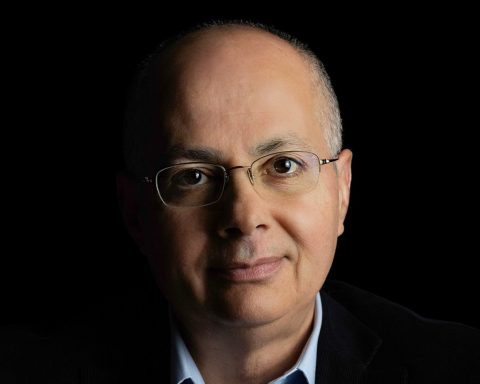


Nithin Kamath did not start Zerodha because he wanted to build a conventional technology startup. He started it after years of trading, losing money, working in a call center, and seeing firsthand how much traditional brokerage could cost active traders. With his younger brother Nikhil Kamath, he eventually turned that experience into Zerodha, one of India’s most prominent discount brokers.
The story is less about a sudden breakthrough than about turning personal frustration into a business model. Zerodha’s growth also offers a different version of the technology-founder story: no venture capital, little emphasis on advertising, and a preference for building a profitable private company rather than pursuing an IPO simply because the market offered the opportunity.
Key Takeaways
- Nithin Kamath’s path to entrepreneurship began with trading, failure, and several years working in a call center.
- He and his brother Nikhil founded Zerodha in 2010 to reduce the cost and complexity of stock broking in India.
- Zerodha grew without traditional venture capital by focusing on technology, low costs, customer experience, and profitability.
- Kamath’s experience as a trader helped him identify inefficiencies in traditional brokerage and design a model around active investors.
- His founder story has evolved beyond Zerodha into startup investing, financial education, and initiatives focused on health and the environment.
The Trader Who Became a Founder
Nithin Kamath‘s relationship with financial markets began unusually early. He has said that he started trading stocks at around 17 after being introduced to the markets by people in his neighborhood. Trading eventually became more than a side interest; it became the central skill around which he would build his career.
But his early experience with markets was not a straightforward success story. During the market downturn around the dot-com crash, Kamath lost the money he had accumulated through trading and found himself needing to work to repay what he owed. He took a job at a call center, working nights so he could continue trading during the day. He has described the period from roughly 2001 to 2005 as a combination of employment and continued market activity.
That experience would become important later. Kamath was not approaching brokerage as an outsider looking for a technology opportunity. He had spent years as a customer of brokers, understood the costs traders faced, and had experienced both the rewards and frustrations of the market himself.
From Call Center to Managing Other People’s Money
Kamath’s transition into entrepreneurship was gradual. While working at the call center, he met people who eventually asked him to manage their investments. One early client was a retired man who approached him about managing a stock portfolio. Referrals followed, and Kamath eventually moved into portfolio management and brokerage-related work.
He and Nikhil later operated Kamath Associates, advising friends and family and working more directly within the financial markets. The brothers also developed complementary roles: Nikhil focused heavily on trading, while Nithin increasingly became interested in building the infrastructure and business around trading.
That distinction would matter when they created Zerodha. Kamath eventually realized that actively trading himself was not necessarily the best long-term business opportunity. His years in the market had shown him that there were structural problems in the brokerage industry that could potentially be solved through technology and a different cost model.
Why Zerodha Was Different
Zerodha was founded in Bengaluru in August 2010 by Nithin and Nikhil Kamath. The name combines “zero” with the Sanskrit word rodha, meaning barrier, reflecting the founders’ ambition to reduce barriers to investing and trading.
The fundamental idea was straightforward. Traditional brokers had historically depended on branches, relationship managers, sub-brokers, and percentage-based brokerage. But customers were increasingly moving online. Kamath believed there was little reason for an online trader to continue paying the costs associated with an offline brokerage model.
Zerodha therefore built its proposition around online execution and low-cost trading. Its flat brokerage model, famously centered on a ₹20-per-order charge for relevant trades (~USD 0.21), gave active traders a way to reduce the impact of brokerage on their returns. In 2013, when Zerodha was still relatively young, the company already had tens of thousands of clients and was processing substantial trading volumes.
The significance was not simply that Zerodha was cheaper. Kamath was designing a company around the behavior of the customer he understood best: the trader who already knew what they wanted and did not necessarily need a traditional broker constantly trying to sell products or provide relationship-based services.
Building Without Venture Capital
Zerodha’s growth also took place outside the dominant Silicon Valley startup playbook. The company did not depend on a large venture-capital round to finance rapid expansion. Moreover, the Kamath family has retained ownership rather than using outside investors as the primary engine of growth.
Kamath has repeatedly argued that raising capital should serve a specific business purpose rather than become an objective in itself. In a 2022 interview, he said Zerodha had remained debt-free and externally unfunded because he disliked the obligations that could accompany outside money. His position was not that founders should never raise capital, but that funding should solve a genuine problem rather than simply provide validation or accelerate growth for its own sake.
That philosophy shaped Zerodha’s culture. Instead of spending heavily on customer acquisition, the company focused on product development, technology, support, and word-of-mouth growth. The approach was particularly suited to a business where customers could experience the product directly and recommend it to other investors.
Technology Became the Advantage
For a technology company, Zerodha’s most important decision was not simply offering low prices. It was investing in its own technology infrastructure.
Dr. Kailash Nadh joined Zerodha as CTO in 2013 and became central to the company’s technology and product development. The company developed products including Kite, its trading platform, and Coin, which provides direct mutual-fund investing. Zerodha also created Varsity, an extensive investor-education platform designed to explain financial markets in accessible terms.
This combination became important to the company’s identity. Zerodha was not trying to compete only by being a cheaper broker. It was building an ecosystem around investors, technology, education, and financial participation.
That is an important distinction in Kamath’s founder story. His competitive advantage did not come from inventing a completely new financial product. It came from recognizing that an established service could be rebuilt around a different cost structure and a different customer experience.
From Brokerage to a Broader Ecosystem
As Zerodha matured, Kamath began thinking about another limitation in India’s financial system: not enough products and companies were being built to expand participation in the country’s capital markets.
That thinking led to Rainmatter, which began investing in startups and eventually expanded beyond fintech into areas such as health, climate, and financial education. Rainmatter says its purpose is to support entrepreneurs building products that can contribute to broader wealth creation and participation in India.
The initiative also reflects a recurring theme in Kamath’s approach to business. Rather than trying to build every product himself, he has increasingly used capital and infrastructure to help other founders build around Zerodha’s ecosystem.
In a recent discussion published by Zerodha, Kamath said Rainmatter had invested roughly ₹1,500-1,600 crore (~USD 155-166M) across about 150 startups. Earlier Rainmatter updates show how quickly the initiative expanded from its initial focus on fintech into health, climate, and other areas.
The Business Had to Adapt
Zerodha’s success has not insulated it from changes in India’s financial markets. In 2024, India’s securities regulator introduced a series of measures intended to reduce excessive speculation in futures and options trading, including changes to weekly expiries, margins, contract sizes, and other aspects of derivatives trading.
Those changes mattered because active derivatives traders had historically been an important part of Zerodha’s customer base. Zerodha itself reported that F&O activity across exchanges fell significantly following the regulatory changes, creating a different operating environment for brokers.
The impact became visible in Zerodha’s financial results. Moneycontrol reported that the company’s FY2025 revenue and profit declined after regulatory changes affected the business, while its FY2026 results showed revenue and profit broadly flat at roughly ₹8,500 crore (~USD 878K) and ₹4,300 crore (~USD 444K) respectively.
At the same time, Zerodha has faced stronger competition for active clients from newer platforms such as Groww. Forbes notes that Zerodha remains one of India’s largest brokerage firms, with more than seven million clients, while the competitive landscape has continued to change.
This is an important part of the founder story because it shows what happens after disruption succeeds. A company that helped change an industry eventually has to operate within the new industry it helped create.
The Founder Who Didn’t Need an Exit
Kamath’s attitude toward growth has remained closely connected to his views on ownership. Zerodha’s success made an IPO financially possible, but Kamath has repeatedly questioned whether becoming a public company would necessarily improve the business.
For a founder, that is a significant distinction. The traditional startup journey often treats venture funding, rapid valuation increases, and an eventual exit as milestones. Kamath’s career demonstrates another route: build a profitable company, retain control, and let the economics of the underlying business determine how far it grows.
That approach does not eliminate risk. A private company’s wealth can be heavily concentrated in a single business, and changing regulations or customer behavior can have a meaningful effect. But it does give the founders considerably more freedom over the pace and direction of the company.
What Nithin Kamath’s Founder Story Shows
Perhaps the most interesting lesson from Kamath’s career is that Zerodha did not begin with a grand vision to transform Indian finance. It began with a person who understood an existing problem unusually well.
Kamath had been the customer. He had traded through traditional brokers, seen how brokerage costs affected active traders, and experienced what happens when a trader gets the market wrong. That combination gave him a practical perspective that was difficult to reproduce through market research alone.
His path also demonstrates the value of turning setbacks into information. Losing money during the dot-com crash did not make trading disappear from his career. Working nights in a call center did not either. Instead, those experiences gradually moved him toward a different question: if trading itself was not the ultimate business, what part of the financial system could he improve?
The answer became Zerodha.
Beyond Zerodha
Today, Kamath’s role extends well beyond running a brokerage. Through Rainmatter, he and the Zerodha team support other founders. Through Varsity, they have built an extensive public resource for financial education. Other ventures and initiatives associated with the Kamath brothers have expanded into wealth management and other areas.
That evolution is significant because it shows how a founder’s influence can change over time. Kamath began as a trader, became a broker, then became a technology entrepreneur and eventually a capital allocator supporting other entrepreneurs.
The common thread is still the same: find a system that does not work as well as it could, understand the problem from the user’s perspective, and look for a simpler way to build around it.
Conclusion
Nithin Kamath’s journey from teenage trader to Zerodha co-founder is not a story about getting everything right the first time. It is a story about surviving early mistakes, learning from years spent on the customer side of an industry, and eventually recognizing an opportunity to rebuild that industry around technology and lower costs.
Zerodha’s bootstrapped path also challenges the assumption that every successful technology company needs venture capital, hypergrowth, or a public-market exit. Kamath built a business large enough to reshape Indian brokerage while retaining control, and his next chapter is increasingly about what founders can build – and enable others to build – with that independence.
FAQs
Who is Nithin Kamath?
Nithin Kamath is the co-founder and CEO of Zerodha, an Indian discount brokerage founded in 2010 with his younger brother, Nikhil Kamath. He began his career as a trader and later built Zerodha around lower-cost online brokerage and technology.
How did Nithin Kamath start Zerodha?
Kamath founded Zerodha in Bengaluru in 2010 after years of trading and working in financial services. His experience with traditional brokers convinced him that online investors could be served more efficiently through technology and a lower-cost brokerage model.
Did Nithin Kamath raise venture capital for Zerodha?
No. Zerodha was bootstrapped by the Kamath brothers and did not follow the conventional venture-backed startup model. Kamath has said that he prefers raising outside capital only when it serves a clear business purpose.
What is Rainmatter?
Rainmatter is the startup-investing initiative associated with Zerodha and the Kamath family. It began with a focus on fintech and later expanded into areas including health, climate, education, and other businesses that the organization believes can contribute to broader participation and wealth creation.
What is Nithin Kamath’s biggest business lesson?
One recurring lesson from his career is the value of understanding a problem from the customer’s perspective before building a solution. His experience as a trader helped him identify inefficiencies in brokerage and turn those frustrations into the foundation for Zerodha.
Sources:
- https://en.wikipedia.org/wiki/Nithin_Kamath
- https://www.thehindubusinessline.com/blchangemakers/the-billionaire-brokers/article65865885.ece
- https://www.forbes.com/sites/anuraghunathan/2024/11/07/two-billionaire-brothers-zerodha-kamath-built-indias-largest-discount-brokerage-now-face-reality-check-nithin-kamath-nikhil/
- https://www.outlookbusiness.com/markets/interview/we-are-no-longer-a-broking-business-we-are-a-tech-business-who-is-doing-broking-6187
- https://www.forbes.com/profile/nithin-kamath/
- https://en.wikipedia.org/wiki/Zerodha
- https://kuvera.in/blog/zerodha-business-model-how-low-cost-investing-changed-indias-retail-participation/
- https://economictimes.com/markets/stocks/earnings/zerodhas-fy26-net-profit-rises-1-2-to-4283-crore-amid-revenue-slowdown/articleshow/133553571.cms