

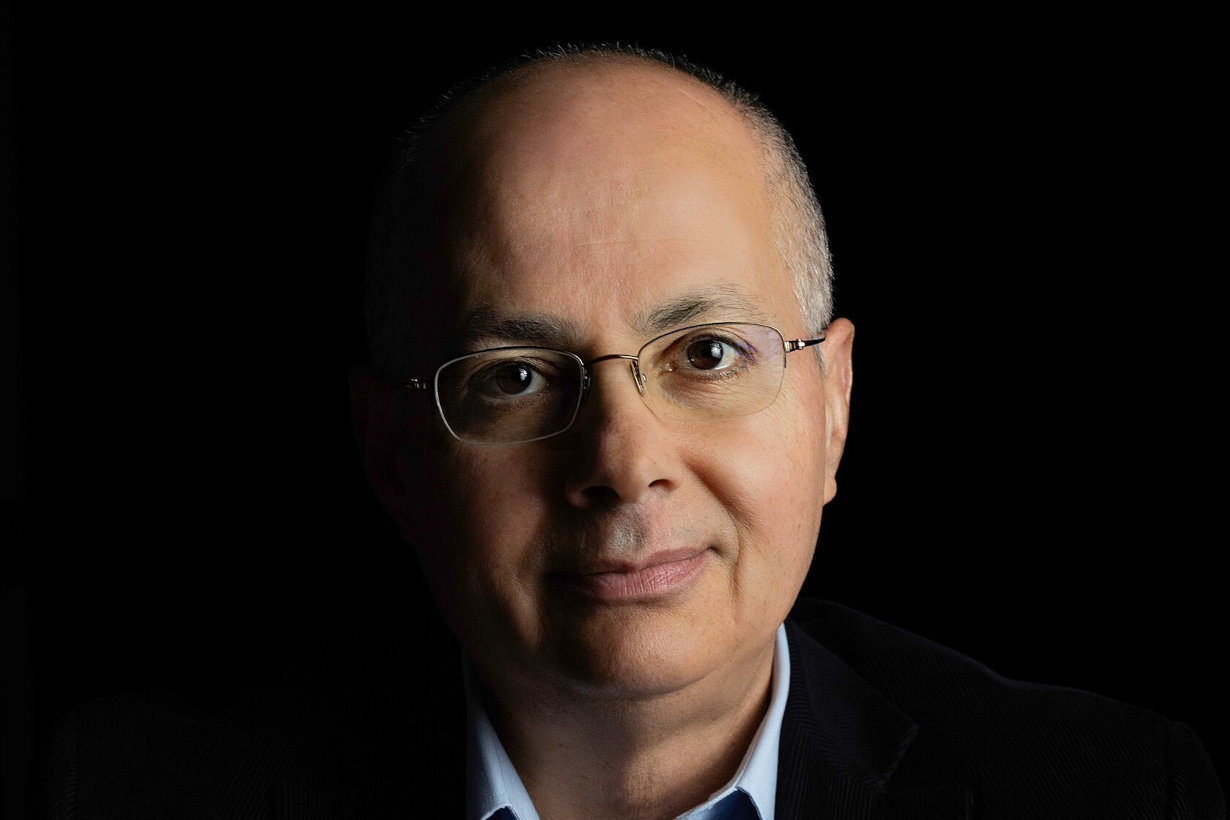
Omar Yaghi’s work begins at a scale too small to see but large enough to influence some of the world’s biggest challenges. By developing materials with carefully designed molecular structures, the chemist has helped create new possibilities for harvesting water from air, capturing carbon dioxide, and storing gases more efficiently.
Key Takeaways
- Omar Yaghi pioneered reticular chemistry, enabling scientists to design porous materials with specific properties for applications in water harvesting, carbon capture, and energy storage.
- His work on metal-organic frameworks (MOFs) and covalent organic frameworks (COFs) helped establish a new approach to building materials at the molecular level.
- Yaghi shared the 2025 Nobel Prize in Chemistry with Susumu Kitagawa and Richard Robson for the development of metal-organic frameworks.
- Through ventures such as Atoco and H2MOF, Yaghi is helping translate advanced materials research into potential commercial solutions for water scarcity, carbon management, and hydrogen storage.
- His work at Tsinghua University’s AI Chemistry and Materials Research Institute highlights how artificial intelligence could accelerate materials discovery, although commercial success still depends on cost, reliability, and real-world performance.
The Innovation: Building Materials With Molecular Precision
Most materials are selected for what they can do. Omar Yaghi helped advance an approach in which scientists can design the structure of a material to give it specific functions.
His work centers on reticular chemistry, a field that involves connecting molecular building blocks through strong chemical bonds to create extended, ordered structures. Instead of relying entirely on naturally occurring materials or modifying existing substances, researchers can assemble structures with carefully selected components and predictable architectures.
One of the most important results is the development of metal-organic frameworks, commonly known as MOFs. These crystalline materials combine metal-containing units with organic molecules to form networks containing numerous microscopic pores.
Imagine a solid that looks unremarkable from the outside but contains an enormous internal surface area. Depending on its composition and structure, that material can selectively capture particular gases or molecules, hold them within its pores, and release them under suitable conditions.
This is not simply a matter of making a material more porous. The real innovation is the ability to tune its properties by changing the molecular building blocks.
In 2025, Yaghi shared the Nobel Prize in Chemistry with Susumu Kitagawa and Richard Robson for the development of MOFs. The award recognized a scientific field built through multiple contributions: Robson demonstrated early molecular frameworks, while Kitagawa and Yaghi helped establish more stable and functional structures.
For business and technology, the significance is straightforward. If materials can be designed for specific tasks, the same underlying scientific approach could support applications across energy, manufacturing, environmental technology, and healthcare.
From a Childhood in Jordan to Scientific Discovery
Yaghi was born in Amman, Jordan, in 1965 to a Palestinian refugee family. His childhood was shaped by limited resources, including unreliable access to water and electricity. His family lived in crowded conditions, and daily life involved practical constraints that many people in wealthier environments rarely encounter.
At 15, encouraged by his father, Yaghi moved to the United States to continue his education. He initially attended Hudson Valley Community College, then earned a bachelor’s degree in chemistry from the State University of New York at Albany in 1985.
He completed his Ph.D. in inorganic chemistry at the University of Illinois Urbana-Champaign in 1990 and subsequently undertook postdoctoral research at Harvard University.
His academic career included appointments at Arizona State University, the University of Michigan, UCLA, and the University of California, Berkeley, where he became a leading figure in materials chemistry.
The connection between his early experiences and his scientific interests is especially relevant to his later work on atmospheric water harvesting. Access to water was not an abstract sustainability issue in his childhood. It was a practical concern.
That background helps explain the appeal of technologies that could eventually extract useful water from air in dry environments. It does not mean the technology emerged from personal experience alone; the scientific breakthroughs required decades of research, collaboration, and experimentation.
The broader lesson is that innovation can begin with a question about a real-world problem, but turning that question into a useful technology requires the tools and discipline of science.
Metal-Organic Frameworks: A New Kind of Material Platform
MOFs are central to understanding why Yaghi’s work attracted attention beyond academic chemistry.
A conventional material may have a fixed set of properties. A MOF, by contrast, can be designed using different metal-containing units and organic linkers, allowing researchers to influence its pore size, internal surface, chemical interactions, and stability.
These characteristics make MOFs useful candidates for separating, storing, or capturing selected substances.
Yaghi’s research helped demonstrate that stable frameworks could be deliberately constructed and modified rather than treated as unpredictable molecular arrangements. His landmark work on MOF-5 in the late 1990s illustrated how carefully selected building blocks could produce a robust, highly porous crystalline material.
The approach subsequently expanded into many thousands of framework structures developed by research groups around the world.
Another important development was covalent organic frameworks, or COFs. These are porous crystalline networks constructed from organic building blocks linked through covalent bonds rather than the metal-organic architecture used in MOFs. Yaghi and his collaborators reported early COF structures in 2005.
MOFs and COFs are not interchangeable, but both demonstrate the broader potential of constructing materials from modular molecular components.
The commercial opportunity comes from this versatility. Instead of developing an entirely unrelated material for every application, scientists can draw on a growing design toolkit and tailor structures to specific technical requirements.
However, designing a promising structure is only the first step. A commercially useful material must also be manufacturable, durable, selective, and affordable under real operating conditions.
Turning Atmospheric Water Into a Potential Resource
Water harvesting is one of the clearest examples of how Yaghi’s research could move from the laboratory into everyday applications.
Air contains water vapor even in places that receive little rainfall. The difficulty is collecting that moisture efficiently, particularly in hot and arid environments where conventional water infrastructure may be expensive or difficult to extend.
Certain MOFs can attract and adsorb water molecules within their pores. Under suitable conditions, the captured water can then be released and collected.
This creates a potential alternative to transporting water over long distances, drilling new wells, or relying exclusively on conventional desalination and treatment systems.
Yaghi founded Atoco in 2020 to commercialize technologies based on reticular materials, including atmospheric water harvesting and carbon capture. The company is developing systems designed to collect water from air, with some approaches using ambient conditions or low-grade heat to reduce energy requirements.
In 2026, Atoco demonstrated an atmospheric water-harvesting prototype and discussed plans for larger systems. The company has also explored integrating its technology with industrial waste heat, including heat generated by data centers.
The connection is particularly interesting. Data centers require substantial infrastructure to manage heat, while water-stressed communities and industrial facilities face growing pressure to secure reliable water supplies. A system that could use otherwise wasted heat to help extract water from air offers a possible way to address two resource challenges together.
But a promising prototype is not the same as a widely deployed water supply.
Actual performance depends on humidity, temperature, water quality, heat availability, maintenance, equipment costs, and the amount of water produced over time. Systems intended for remote communities must also be reliable and economical without requiring specialized support that is difficult to access.
The innovation is real, but its ultimate value will depend on whether these systems can provide water at a competitive cost in the environments where they are most needed.
Carbon Capture and the Search for Better Materials
Carbon capture presents another potential application for reticular chemistry.
Carbon dioxide is present in industrial exhaust streams and, at much lower concentrations, in ambient air. Separating it from those mixtures can require substantial energy, depending on the concentration of the gas and the technology being used.
MOFs can be engineered to interact selectively with carbon dioxide, making them candidates for capture and separation systems.
Their tunable pore structures offer opportunities to improve selectivity and adsorption capacity. In principle, a carefully designed framework could capture a target gas while allowing other components to pass through.
Atoco is developing solid-state materials and systems for carbon capture, including applications involving atmospheric carbon dioxide and industrial emissions.
The important business question is not simply how much carbon a material can capture under laboratory conditions. It is how much it can capture across repeated operating cycles, how much energy is required to release that carbon, and what the entire process costs.
Industrial deployment introduces additional demands. Materials must withstand moisture, contaminants, temperature changes, and repeated use. Equipment must integrate with existing processes, and captured carbon must have a credible destination, whether that involves storage or further use.
This is why material innovation matters but cannot solve climate change on its own. Better capture materials need to be paired with efficient processes, appropriate infrastructure, viable economics, and sound lifecycle assessments.
From Scientific Discovery to Commercial Ventures
Yaghi’s innovation story extends beyond his academic research. He has helped create companies intended to translate reticular chemistry into commercial technologies.
Atoco focuses on atmospheric water harvesting and carbon capture. H2MOF, which he co-founded with chemist Fraser Stoddart, has pursued solid-state hydrogen storage based on reticular materials.
These ventures illustrate an important feature of deep-tech entrepreneurship: the company is often built around a scientific platform rather than a single finished product.
The same class of materials may offer several potential applications, but each application has its own technical requirements, customer base, regulatory considerations, and commercialization timeline.
Hydrogen storage, for example, requires materials and systems that can hold useful quantities of hydrogen and release it under practical conditions. A promising laboratory result must ultimately be evaluated against competing storage technologies, safety requirements, operating conditions, and total system costs.
Atmospheric water harvesting faces a different set of constraints, while carbon capture involves its own engineering and economic challenges.
A scientific platform can create multiple opportunities, but that does not guarantee that every application will succeed. Each business must demonstrate a compelling advantage over alternatives.
For Yaghi, entrepreneurship provides a route for testing whether decades of materials research can produce practical systems beyond the university laboratory.
The Commercialization Gap: Why Breakthroughs Take Time
The distance between a scientific breakthrough and a successful business is especially large in advanced materials.
A new framework may demonstrate impressive performance in a laboratory, but industrial customers evaluate more than a single measurement. They need consistent manufacturing quality, long operating life, predictable performance, and a clear economic benefit.
Production is a major consideration. Materials that require complex synthesis, expensive ingredients, or difficult processing may be challenging to manufacture at the scale required for water infrastructure, energy systems, or industrial plants.
There is also the question of system integration. A high-performing material must be incorporated into equipment that can operate reliably in the field. Pumps, heat exchangers, controls, maintenance requirements, and other components all affect the final economics.
For water harvesting, the relevant benchmark is the cost and reliability of delivering usable water. For carbon capture, it is the cost and environmental impact of capturing and managing carbon. For hydrogen storage, it is the amount of usable hydrogen a complete system can hold and deliver under practical conditions.
These are demanding tests, but they are essential.
The Nobel Prize validates the importance of the scientific field; it does not certify the commercial success of every product based on that field. Yaghi’s ventures still have to prove their individual technologies in real-world settings.
For entrepreneurs and investors in deep technology, this is a crucial distinction. Scientific excellence creates opportunity, while commercialization determines whether that opportunity becomes a sustainable business.
Combining Artificial Intelligence With Materials Science
In July 2026, Yaghi joined Tsinghua University in Beijing full-time to lead the establishment of its AI Chemistry and Materials Research Institute, known as AIMATRY.
The initiative aims to combine artificial intelligence, chemistry, materials science, and engineering to accelerate the discovery and development of new materials.
Traditional materials research can involve repeated cycles of hypothesis, synthesis, testing, and refinement. AI-enabled methods could help researchers screen candidate structures, predict material properties, identify promising combinations, and prioritize experiments.
The goal is not to remove experimentation from science. Materials must still be synthesized and tested to establish whether predicted properties hold in practice.
Instead, computational methods can help researchers narrow the search space and focus laboratory resources on more promising candidates.
This is especially relevant to reticular chemistry, where researchers can vary molecular building blocks to create structures with different characteristics. The number of possible combinations can become enormous, making intelligent screening valuable.
Tsinghua’s initiative aims to connect theory and computation with experimental research and production. If successful, this could shorten parts of the development cycle and improve the efficiency with which new materials move toward application.
There are limitations. AI predictions depend on the quality of available data and the assumptions built into models. Real-world performance may be affected by manufacturing constraints or environmental conditions that are difficult to capture computationally.
Nevertheless, the combination of AI and materials science could extend the impact of Yaghi’s earlier work. The first phase of reticular chemistry established that useful materials could be designed. The next phase may increasingly use computational tools to determine which materials are worth building in the first place.
What Business Leaders Can Learn From Yaghi’s Approach
Yaghi’s career offers several lessons for organizations developing complex technologies.
First, build a platform rather than betting everything on one application. Reticular chemistry has produced opportunities in water harvesting, gas separation, carbon capture, and storage. A common scientific foundation can support multiple markets, provided each application meets its own performance and economic requirements.
Second, connect fundamental research to specific problems. A new material is more compelling when its properties address a clearly defined need. Water scarcity, industrial emissions, and energy storage provide practical contexts in which the value of advanced materials can be assessed.
Third, treat commercialization as part of the innovation process. A scientific breakthrough does not automatically become a product. Manufacturing, partnerships, reliability, financing, and customer adoption need to be considered early enough to shape development decisions.
Finally, combine disciplines without confusing their roles. Chemistry can establish a material’s properties, AI can help identify promising designs, and engineering can translate those designs into systems. Commercial teams then have to establish whether customers will adopt and pay for the result.
The broader lesson is that innovation is not a straight line from discovery to market. It is a continuing process of design, testing, integration, and adjustment.
The Future of Molecularly Designed Materials
Yaghi’s work points toward a future in which materials can be designed for increasingly specific functions.
Water harvesting could provide another option for selected water-stressed environments. Improved capture materials could make certain industrial processes more efficient. Better gas-storage materials could support new energy systems, while related research may create opportunities in sensing, catalysis, and environmental treatment.
The scale of those opportunities should not obscure the uncertainty. Not every promising material will become commercially viable, and no single technology will eliminate the need for water infrastructure, emissions reduction, or investment in clean energy.
The next phase of progress will depend on several developments: more efficient synthesis, reliable performance outside laboratory conditions, competitive manufacturing costs, and clear evidence of environmental benefits.
Yaghi’s move to Tsinghua adds another dimension by connecting materials research with AI-enabled discovery. If this approach produces better candidates more quickly, it could improve the rate at which scientific ideas become testable technologies.
For Atoco and H2MOF, the more immediate test is whether their respective water-harvesting and hydrogen-storage approaches can meet the practical requirements of customers.
The ultimate measure of success will not be the number of materials scientists can design. It will be the number that can deliver measurable value in the real world.
Conclusion
Omar Yaghi helped establish a new way of thinking about materials: rather than accepting their properties as fixed, scientists can assemble molecular building blocks into structures designed for specific tasks.
That achievement earned him a share of the 2025 Nobel Prize in Chemistry and helped establish the scientific foundation for technologies that could influence water security, carbon management, and energy storage.
His entrepreneurial ventures and new work at Tsinghua show how the next challenge extends beyond discovery. It involves building reliable products, making them affordable, and connecting scientific capability to genuine market needs.
Yaghi’s story is ultimately about the relationship between precision and possibility. Designing materials one molecule at a time opens new doors, but the real innovation occurs when those carefully constructed materials become useful solutions at scale.
FAQs
Who is Omar Yaghi?
Omar Yaghi is a Jordanian-born chemist known for pioneering reticular chemistry and advancing metal-organic frameworks. He shared the 2025 Nobel Prize in Chemistry with Susumu Kitagawa and Richard Robson for the development of MOFs.
What is reticular chemistry?
Reticular chemistry is the design and construction of extended structures by connecting molecular building blocks through strong chemical bonds. It enables researchers to create materials with tailored pores and other properties for applications such as gas capture, separation, and storage.
What are metal-organic frameworks used for?
MOFs are porous materials that can be designed to capture, separate, or store particular molecules. Potential applications include carbon capture, atmospheric water harvesting, gas storage, catalysis, and environmental treatment, although commercial readiness varies by application.
What is Omar Yaghi’s company Atoco developing?
Atoco is developing technologies based on reticular materials for atmospheric water harvesting and carbon capture. Its water-harvesting systems aim to collect moisture from air, with some designs intended to use ambient conditions or low-grade heat to reduce energy requirements.
Why is Omar Yaghi joining Tsinghua University significant?
Yaghi joined Tsinghua University full-time in 2026 to lead the establishment of its AI Chemistry and Materials Research Institute. The initiative aims to combine AI, computation, chemistry, and experimental research to accelerate materials discovery and development.
Sources:
- https://en.wikipedia.org/wiki/Omar_M._Yaghi
- https://www.britannica.com/biography/Omar-M-Yaghi
- https://vcresearch.berkeley.edu/faculty/omar-yaghi
- https://www.nobelprize.org/prizes/chemistry/2025/press-release/?gsid=bbb66e8a-80d7-4f9d-9342-c8507afd9b83
- https://www.wired.com/story/startup-atoco-makes-water-from-air-using-data-centers/
- https://www.tsinghua.edu.cn/en/info/1244/14984.htm
- https://www.timeshighereducation.com/news/visa-rules-making-scientists-despair-says-china-bound-nobelist
- https://newscenter.lbl.gov/2026/01/06/from-nano-to-nobel-national-lab-researchers-use-mofs-to-solve-big-problems/
- https://uiaa.org/2026/07/14/alumni-interview-omar-yaghi/
Photo credit: Christopher Michel / Wikimedia Commons / CC BY-SA 4.0 – cropped (link)