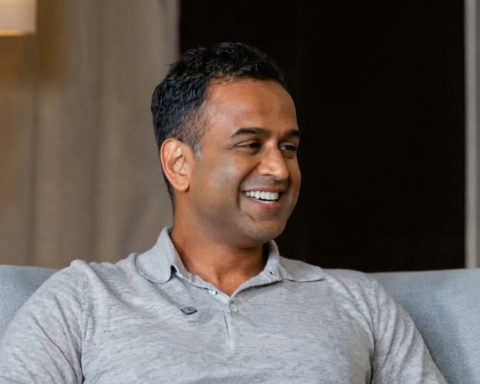


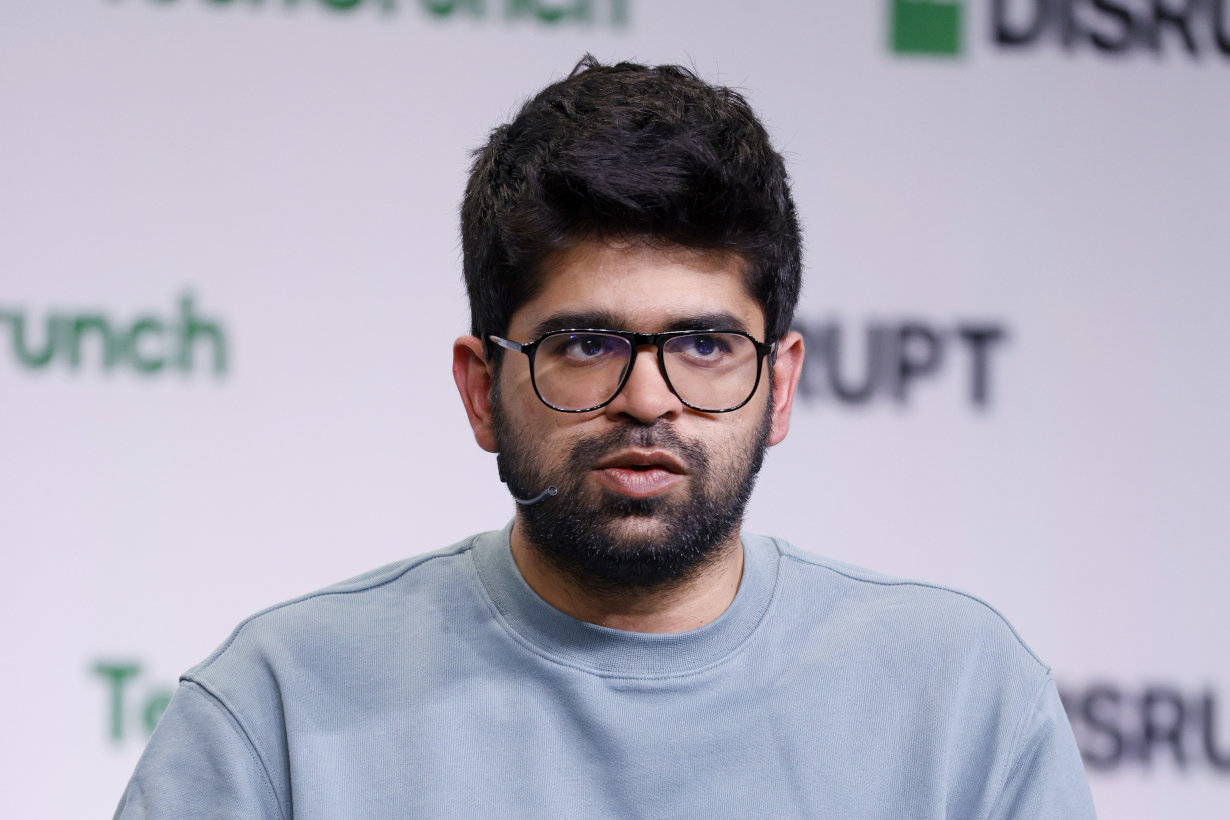
For decades, searching the internet followed a familiar pattern. People entered a few keywords, scanned pages of links, and pieced together information from multiple websites. While that approach transformed how the world accessed knowledge, it often required users to spend valuable time finding answers rather than receiving them.
Aravind Srinivas believed artificial intelligence could fundamentally improve that experience. Drawing on years of research at some of the world’s leading AI institutions, he co-founded Perplexity AI with the vision of creating an answer engine that delivers direct, trustworthy, and cited responses. His journey from a curious engineering student in India to the founder of one of the fastest-growing AI companies illustrates how deep technical expertise, relentless curiosity, and bold execution can challenge even the most established industries.
Key Takeaways
- Deep technical expertise can become a powerful foundation for entrepreneurship.
- Missing an early goal does not prevent long-term success.
- Rapid execution often creates advantages over waiting for perfection.
- Challenging industry leaders requires both innovation and persistence.
- Curiosity and continuous learning remain essential traits for every founder.
From Chennai to the Frontiers of Artificial Intelligence
Aravind Srinivas grew up in Chennai, India, in a middle-class family that valued education above almost everything else. His parents encouraged curiosity from an early age, and conversations at home often revolved around learning, mathematics, and the importance of pursuing ambitious goals. His mother, who had once hoped to study at the prestigious Indian Institute of Technology (IIT) herself, became one of his earliest inspirations and encouraged him to aim high.
Like countless aspiring engineers across India, Srinivas devoted years to preparing for the highly competitive IIT entrance examination. Admission to one of the country’s leading engineering schools is considered a life-changing achievement, with only a small percentage of applicants earning a place each year.
When the results arrived, Srinivas secured admission to IIT Madras—but not to his preferred Computer Science program. He narrowly missed the cutoff and instead entered the Electrical Engineering department.
For many students, such a disappointment could have altered their confidence. Srinivas chose a different response. Rather than focusing on what he had missed, he embraced the opportunity to broaden his knowledge. He taught himself programming, explored Python, and immersed himself in machine learning after being introduced to Kaggle competitions by fellow students.
That willingness to adapt would become one of the defining characteristics of his career. Instead of allowing circumstances to dictate his future, he consistently sought new ways to learn and improve.
During his years at IIT Madras, Srinivas developed a strong interest in artificial intelligence, particularly reinforcement learning and deep learning. He published research, collaborated with professors, and even taught reinforcement learning courses, demonstrating not only technical ability but also a passion for sharing knowledge. By graduation, he had established himself as one of the university’s promising young AI researchers.
From Elite Researcher to Entrepreneur
Srinivas’ academic achievements opened the door to one of the world’s leading centers for artificial intelligence research: the University of California, Berkeley.
At Berkeley, he pursued a PhD in Computer Science under renowned AI researcher Pieter Abbeel, focusing on representation learning, reinforcement learning, and generative models. These fields would later become foundational technologies behind today’s AI revolution.
His research extended beyond the classroom.
During his doctoral studies, Srinivas worked at OpenAI, DeepMind, and Google through internships and research positions. Each experience exposed him to different perspectives on building intelligent systems and solving complex machine learning problems.
Few researchers have the opportunity to learn from three of the world’s most influential AI organizations before the age of thirty. Srinivas not only gained technical expertise but also developed a unique understanding of where artificial intelligence was heading and where existing products still fell short.
After completing his doctorate, he joined OpenAI as a Research Scientist, contributing to work involving large language models and generative AI. At the time, artificial intelligence was advancing at an extraordinary pace, and many researchers viewed these developments primarily through an academic lens.
Srinivas saw something more.
He recognized that breakthrough research would have the greatest impact only if it could be transformed into products that millions of people actually used. Rather than spending his career publishing papers, he wanted to build technology that changed everyday experiences.
That realization marked the transition from researcher to entrepreneur.
Reinventing Search with Perplexity AI
In 2022, large language models were rapidly capturing global attention. AI systems had become remarkably capable of generating text, summarizing information, and answering questions, yet many still struggled with reliability and transparency. Users often received convincing responses without knowing where the information originated.
Srinivas believed there was an opportunity to bridge that gap.
Together with Denis Yarats, Johnny Ho, and Andy Konwinski, he co-founded Perplexity AI in August 2022. Their objective was ambitious but straightforward: create an AI-powered answer engine that combines conversational responses with clearly cited sources.
Instead of forcing users to sift through countless search results, Perplexity aimed to provide concise, well-organized answers while allowing readers to verify the underlying information themselves. The approach represented a significant shift from the traditional search experience that had dominated the internet for decades.
The timing proved ideal.
As generative AI entered mainstream awareness, millions of users began exploring new ways to find information online. Perplexity quickly distinguished itself through its clean interface, speed, and emphasis on source attribution. Rather than positioning itself as just another chatbot, the company focused on becoming a trusted research companion capable of answering complex questions across a wide range of topics.
Srinivas also established a culture centered on rapid experimentation. Instead of waiting for products to become perfect before releasing them, the company embraced continuous improvement through user feedback. This philosophy allowed Perplexity to introduce new capabilities quickly while refining existing features at an impressive pace.
Investors soon recognized the company’s potential.
Within only a few years, Perplexity attracted backing from some of the technology industry’s most respected investors and entrepreneurs, including Jeff Bezos, Nvidia, Databricks, Nat Friedman, and Shopify CEO Tobias Lütke. Successive funding rounds propelled the company’s valuation into the tens of billions of dollars, making it one of the fastest-growing AI startups in the world.
The remarkable pace of growth demonstrated that users were ready for a new approach to online search. More importantly, it showed that even one of technology’s most mature markets could still be reimagined by founders willing to question long-standing assumptions.
For Srinivas, the mission extends beyond building another successful startup. His broader vision is to create an information platform where artificial intelligence helps people understand the world’s knowledge more efficiently while maintaining transparency about where that knowledge comes from.
In an era increasingly shaped by AI-generated content, that commitment to trustworthy information may prove to be one of Perplexity’s most important differentiators.
Building at Startup Speed
One characteristic quickly set Aravind Srinivas apart from many founders in the AI industry: his bias toward execution.
While some companies spent months refining products behind closed doors, Perplexity adopted a philosophy of releasing features quickly, learning from users, and continuously improving. Srinivas has often described this mindset as shipping products when they are “about 80 percent ready” rather than waiting for perfection. The approach reflects a belief shared by many successful entrepreneurs—that real-world feedback is more valuable than endless internal debates.
This culture of rapid iteration enabled Perplexity to expand far beyond its original answer engine. The company introduced Perplexity Pro, enterprise solutions, developer APIs, shopping capabilities, financial research tools, internal knowledge search, and eventually the Comet AI browser. Each product built upon the company’s central mission of making information easier to discover, understand, and verify.
Behind the scenes, Perplexity remained relatively lean compared with many technology companies of similar valuation. Srinivas emphasized hiring exceptional talent, empowering small teams, and maintaining a high pace of innovation. Rather than relying on large organizational structures, the company sought to move quickly while staying closely connected to user needs.
His leadership style reflects lessons learned during years in research laboratories: test assumptions, learn continuously, and allow evidence—not opinions—to guide decisions. That mindset has helped Perplexity remain one of the fastest-moving companies in an increasingly competitive AI landscape.
Taking on Google and the Future of Search
Every generation of entrepreneurs identifies an industry that appears impossible to disrupt.
For Aravind Srinivas, that industry was internet search.
For more than two decades, Google defined how billions of people discovered information online. Its search engine became so dominant that the company’s name evolved into a verb used around the world. Challenging such an established platform would traditionally have seemed unrealistic.
Artificial intelligence changed the equation.
Rather than presenting users with pages of hyperlinks, Perplexity focused on delivering direct, conversational answers supported by citations. The goal was not simply to organize information but to help users understand it more efficiently.
This represented more than a product improvement. It reflected a broader shift in how people interact with knowledge. As large language models became increasingly capable, many users began expecting answers instead of search results.
Srinivas has never suggested that traditional search will disappear overnight. Instead, he argues that AI can fundamentally improve how people research, learn, and make decisions by reducing the time required to locate reliable information.
Whether Perplexity ultimately becomes the dominant AI search platform remains to be seen. Regardless of the outcome, the company has already influenced the direction of the industry, encouraging established technology firms to rethink how search should function in the age of artificial intelligence.
For founders, the lesson is equally important. Markets that appear mature are not necessarily finished. New technologies often create opportunities to rethink products that billions of people use every day.
Navigating the Challenges of AI Innovation
Building transformative technology inevitably attracts scrutiny.
As Perplexity expanded, it faced criticism and legal challenges surrounding copyright, publisher content, and data usage. Several media organizations questioned how AI-powered search engines gathered information and whether existing copyright frameworks adequately addressed generative AI.
These debates extend well beyond Perplexity.
Nearly every major AI company has faced similar questions as governments, publishers, technology companies, and creators work to establish new rules for the AI era. The discussions reflect the broader challenge of balancing innovation with intellectual property rights and sustainable content creation.
Srinivas has generally advocated for collaboration rather than confrontation. Perplexity has introduced publisher partnerships, licensing discussions, and revenue-sharing initiatives designed to create stronger relationships with content creators while continuing to improve its products.
He has also spoken openly about AI’s broader societal impact, emphasizing that technological progress will reshape many industries. While some of his comments regarding automation and employment have generated debate, they also highlight one of the defining responsibilities facing today’s technology founders: building transformative products while thoughtfully addressing their wider implications.
Navigating these challenges has become part of Perplexity’s journey. Success in artificial intelligence increasingly depends not only on technical excellence, but also on earning the trust of users, partners, and the broader public.
Curiosity as a Competitive Advantage
In just a few years, Aravind Srinivas transformed an ambitious idea into one of the world’s most closely watched artificial intelligence companies.
His journey from Chennai to IIT Madras, UC Berkeley, OpenAI, and ultimately Perplexity AI demonstrates that exceptional research can become the foundation for exceptional entrepreneurship. More importantly, it illustrates how curiosity, adaptability, and disciplined execution can create opportunities to challenge even the largest technology companies.
Although Perplexity’s long-term story is still being written, its influence on AI-powered search is already significant. The company has helped accelerate the shift toward conversational information retrieval while encouraging greater emphasis on transparency through cited answers.
For aspiring founders, Srinivas’ story offers several enduring lessons. Early setbacks do not define future success. Deep expertise becomes far more valuable when paired with decisive action. And perhaps most importantly, industries that appear untouchable can still be reinvented by entrepreneurs willing to question long-held assumptions.
The future of search will undoubtedly continue to evolve alongside artificial intelligence. Whatever direction it takes, Aravind Srinivas has established himself as one of the founders helping shape that future.
FAQs
Who is Aravind Srinivas?
Aravind Srinivas is the co-founder and CEO of Perplexity AI, an AI-powered answer engine designed to provide conversational responses supported by cited sources. Before launching the company, he conducted artificial intelligence research at OpenAI, DeepMind, Google, and UC Berkeley. His combination of academic expertise and entrepreneurial ambition has made him one of the most prominent AI founders of his generation.
What is Perplexity AI?
Perplexity AI is an AI-powered search and answer platform that combines large language models with real-time web information to deliver concise, cited responses. Unlike traditional search engines that primarily display lists of links, Perplexity aims to answer questions directly while allowing users to verify its sources. The platform has rapidly grown into one of the leading AI search products worldwide.
What makes Aravind Srinivas different from other AI founders?
Unlike many startup founders, Srinivas built his company after years of research at some of the world’s most respected AI institutions. His background in machine learning, reinforcement learning, and generative AI gave him deep technical expertise before entering entrepreneurship. He also emphasizes rapid product iteration and continuous learning rather than waiting for perfect solutions.
What challenges has Perplexity AI faced?
As the company has grown, Perplexity has encountered copyright and publisher-related disputes concerning the use of online content for AI-generated answers. These issues mirror broader debates affecting the entire AI industry rather than Perplexity alone. The company has responded by pursuing publisher partnerships, licensing discussions, and initiatives designed to improve transparency and collaboration.
What can entrepreneurs learn from Aravind Srinivas?
Srinivas’ journey demonstrates that technical excellence becomes even more powerful when combined with adaptability and decisive execution. His willingness to challenge one of technology’s most established industries shows the importance of questioning conventional thinking. Above all, his story highlights curiosity as one of the most valuable qualities any founder can possess.
Sources:
- https://www.forbes.com/profile/aravind-srinivas/
- https://scholar.google.com/citations?user=GhrKC1gAAAAJ&hl=en
- https://en.wikipedia.org/wiki/Perplexity_AI
- https://timesofindia.indiatimes.com/technology/tech-news/perplexity-ceo-aravind-srinivas-the-boy-who-turned-his-mothers-iit-dream-into-a-billiondollar-ai-company/articleshow/122865092.cms
- https://www.etnownews.com/news/prove-the-world-wrong-inspiring-journey-of-silicon-valley-ceo-who-was-depressed-for-not-getting-into-iit-madras-article-108144227
- https://askiitm.com/insightful-reads/how-did-perplexity-ai-founder-aravind-srinivas-study-ai-in-iitm-despite-being-an-electrical-engineering-student/
- https://scet.berkeley.edu/aravind-srinivas-lessons-from-building-perplexity-ai/
- https://fortune.com/article/perplexity-ceo-aravind-srinivas-ai/
- https://medium.com/@kanishks772/from-iit-classroom-to-an-18-billion-ai-empire-the-aravind-srinivas-story-9efd6e3be549
- https://observer.com/2025/03/perplexity-ai-ceo-aravind-srinivas/
- https://finance.yahoo.com/news/perplexity-ai-unveils-42-5m-203004966.html
Photo credit: TechCrunch / Wikimedia Commons / CC BY 2.0 – cropped (link)