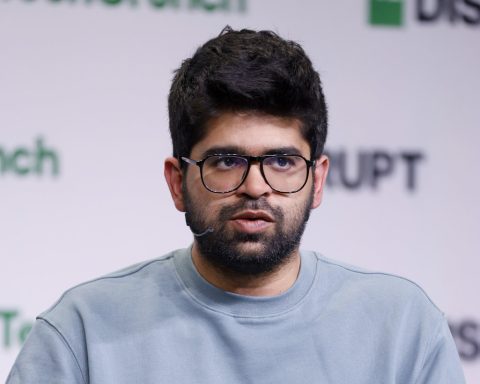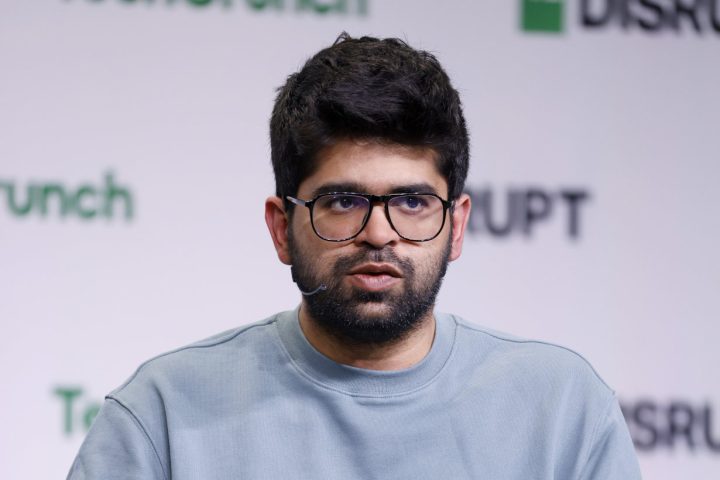


Most startup founders are taught to chase rapid growth, massive funding rounds, and billion-dollar valuations. Sahil Lavingia chose a different path. As the founder of Gumroad, he transformed a struggling venture-backed startup into a profitable creator platform, proving that long-term sustainability, customer focus, and independent thinking can be just as powerful as building a unicorn.
Key Takeaways
- Startup success should be measured by sustainability, not valuation alone.
- Early failures often become the foundation for long-term resilience.
- Building for customers creates stronger businesses than building for investors.
- Small, profitable teams can outperform larger organizations.
- Transparency builds credibility, even during difficult moments.
For years, Silicon Valley promoted a single definition of startup success: raise venture capital, grow as quickly as possible, and become a billion-dollar company. Founders who failed to follow that path were often viewed as having fallen short.
Sahil Lavingia experienced both sides of that narrative. After becoming Pinterest’s second employee and launching Gumroad at just 19 years old, he seemed destined to build the next tech unicorn. Instead, his company struggled, funding slowed, layoffs followed, and many observers considered Gumroad a failure. Rather than giving up, Lavingia rebuilt the business around profitability, simplicity, and creators – ultimately proving that sustainable entrepreneurship can be just as meaningful as explosive growth.
A Young Builder With Big Ambitions
Born in New York in 1992 to Indian immigrant parents, Sahil Lavingia spent much of his childhood in Singapore after his family relocated overseas. From an early age, he developed an unusual fascination with technology and design.
While many teenagers were learning basic computer skills, Lavingia was teaching himself Photoshop, designing websites, and building mobile applications. By his mid-teens, his freelance work and software projects had already generated more than $100,000 in income, giving him financial independence before he graduated from high school.
After returning to the United States, he briefly enrolled at the University of Southern California to study computer science. The classroom, however, couldn’t match the pace of the technology industry.
Within months, he dropped out to pursue entrepreneurship full-time.
That decision quickly changed his life.
Becoming Pinterest’s Second Employee
In 2010, Lavingia joined Pinterest as one of its earliest employees.
Working alongside founder Ben Silbermann, he helped shape the young company’s design and contributed to its early iPhone application. Pinterest would eventually become one of the world’s largest social media platforms.
Ironically, Lavingia left before most of his equity had vested.
On paper, it appeared to be an expensive mistake. In reality, the experience gave him something even more valuable: confidence that he could build products himself.
Rather than helping someone else’s company grow, he wanted to create his own.
A Weekend Project Called Gumroad
The idea behind Gumroad emerged from a personal frustration.
Lavingia wanted to sell a digital icon he had created online. Existing payment systems felt unnecessarily complicated for creators selling simple digital products. He wondered why selling an ebook, piece of artwork, music file, or software download couldn’t be as easy as sharing a link.
Over a single weekend in 2011, he built the first version of Gumroad. After posting it on Hacker News, demand exploded almost immediately.
Creators loved the simplicity. Investors noticed as well.
Within months, Gumroad had raised funding from prominent Silicon Valley investors, including Accel, Kleiner Perkins, Chris Sacca, Naval Ravikant, and Max Levchin.
Everything appeared to be following the classic startup success story. Until it wasn’t.
When Hypergrowth Didn’t Happen
Like many venture-backed startups of the era, Gumroad pursued rapid expansion. The company hired aggressively and invested heavily in future growth.
Unfortunately, customer growth failed to match investor expectations. By 2015, fundraising became increasingly difficult.
Lavingia made one of the hardest decisions any founder can face. He laid off roughly three-quarters of his team.
The experience was deeply personal, especially because many affected employees were friends.
For many entrepreneurs, that moment would have marked the end. For Lavingia, it became a turning point.
Instead of shutting the company down, he asked a different question.
What if Gumroad didn’t need to become a unicorn?
Choosing Sustainability Over Hype
Rather than continuing to chase venture capital, Lavingia rebuilt Gumroad around profitability. He dramatically reduced operating costs.
The company embraced remote work long before it became mainstream. Meetings were minimized.
Small teams gained more responsibility. Product development focused almost entirely on what creators actually wanted.
Instead of measuring success through funding rounds, Gumroad measured success through creator earnings.
That shift transformed the business.
Over time, Gumroad became consistently profitable while helping hundreds of thousands of creators sell ebooks, music, software, courses, templates, artwork, and other digital products directly to their audiences. The company remained relatively small but increasingly sustainable.
Its story challenged one of Silicon Valley’s biggest assumptions – that every successful startup must pursue endless growth.
Building in Public
One characteristic that distinguishes Lavingia from many founders is his remarkable transparency. He openly shares revenue numbers, product decisions, hiring philosophy, investor relationships, and even personal mistakes.
In 2019, his essay Reflecting on My Failure to Build a Billion-Dollar Company resonated with entrepreneurs around the world.
Rather than presenting a polished success story, he explained how unrealistic expectations had shaped many of his decisions. Ironically, acknowledging what many considered failure made him even more influential.
Founders appreciated his honesty.
His experience reminded entrepreneurs that building a healthy business matters far more than chasing headlines.
Beyond Gumroad
Lavingia’s influence has expanded well beyond his role as the founder of Gumroad. While he built the company and continues to be closely associated with its mission, he is no longer serving as the company’s CEO. His transition away from day-to-day leadership reflects his broader focus on investing, writing, creative pursuits, and supporting the next generation of entrepreneurs.
His book, The Minimalist Entrepreneur, encourages founders to start with communities rather than venture capital, prioritize profitability, and build businesses that support fulfilling lives instead of endless fundraising cycles.
Beyond writing and entrepreneurship, Lavingia has also become an active early-stage investor through SHL Capital, his investment vehicle focused on supporting ambitious founders building the next generation of technology companies.
Through SHL Capital, Lavingia invests primarily in areas he understands deeply, including software infrastructure, developer tools, artificial intelligence, future of work, and B2B technology. His portfolio includes investments in companies such as Figma, Notion, Vercel, Mercury, and other emerging startups that have gone on to achieve significant growth.
His investment philosophy closely reflects the principles he applies to his own entrepreneurial journey: support exceptional founders, focus on long-term value creation, and avoid being distracted by short-term market expectations.
In 2025, Lavingia took an unusual detour from the traditional startup world by joining the Department of Government Efficiency (DOGE) as a technology-focused advisor and software engineer. The short-term role allowed him to apply his experience building lean software companies to improving government processes, analyzing systems, and exploring how artificial intelligence could help increase operational efficiency.
During his time with DOGE, Lavingia worked on projects involving data analysis, contract reviews, and identifying opportunities where technology could reduce inefficiencies. The experience gave him a firsthand look at the challenges of applying startup-style experimentation and rapid iteration within a large government organization.
After leaving the role, Lavingia reflected publicly on the difficulties of introducing technology-driven change in complex institutions. He noted that government systems operate differently from startups, where founders can quickly make decisions, ship products, and iterate based on customer feedback.
While his involvement generated debate due to the political nature of DOGE, the experience aligned with a broader theme throughout his career: using technology, transparency, and entrepreneurial thinking to challenge established systems.
Outside technology, he continues exploring creative pursuits through painting and writing, reflecting his belief that entrepreneurship should complement life rather than consume it.
Meanwhile, Gumroad continues evolving under new leadership while maintaining its creator-first mission. The company has increasingly incorporated artificial intelligence into customer support, creator tools, and internal operations while preserving the lean operating model that has defined its identity.
Today, Lavingia continues balancing multiple roles as an entrepreneur, investor, writer, and creative. Whether through Gumroad, SHL Capital, or experiments outside the traditional startup world, he remains focused on building simpler systems, empowering individuals, and questioning conventional approaches to technology and business.
The Outcome
Sahil Lavingia transformed Gumroad from a simple weekend project into one of the creator economy’s most recognizable platforms. More importantly, he transformed his own definition of entrepreneurial success.
Instead of measuring achievement through valuations, headlines, or funding rounds, he demonstrated that profitable businesses, loyal customers, and meaningful work can create equally lasting impact.
As artificial intelligence lowers the barriers to creating software, art, writing, and digital products, Gumroad’s mission becomes even more relevant. By making it easier for creators to earn directly from their audiences, Lavingia continues to champion an entrepreneurial model built on independence, sustainability, and long-term value rather than short-term hype.
FAQs
Who is Sahil Lavingia?
Sahil Lavingia is the founder of Gumroad, an e-commerce platform that enables creators to sell digital products directly to customers. He was also Pinterest’s second employee, an angel investor, author, and advocate for sustainable entrepreneurship. His transparent approach to building companies has made him one of the most respected voices in the creator economy and independent startup community.
What is Gumroad?
Gumroad is a creator-focused e-commerce platform that allows individuals to sell digital products such as ebooks, online courses, music, software, templates, and artwork directly to their audiences. Its simple checkout experience and creator-first philosophy have helped hundreds of thousands of independent creators monetize their work online.
Why is Sahil Lavingia influential?
He challenged Silicon Valley’s growth-at-all-costs philosophy by rebuilding Gumroad into a profitable company while openly sharing his entrepreneurial journey. His willingness to discuss failures as openly as successes has inspired founders to rethink how they define long-term business success.
What is The Minimalist Entrepreneur?
The Minimalist Entrepreneur is Lavingia’s book that encourages founders to build sustainable businesses through community, simplicity, profitability, and customer focus. The book argues that solving real customer problems is often more valuable than pursuing rapid growth fueled by venture capital.
What can entrepreneurs learn from Sahil Lavingia?
His journey shows that resilience, transparency, and serving customers consistently often lead to more enduring businesses than chasing valuations alone. His story demonstrates that founders can build meaningful, profitable companies by staying true to their values and focusing on long-term sustainability rather than short-term hype.
Sources:
- https://leaderbiography.com/sahil-lavingia-biography/
- https://www.businessinsider.com/the-most-interesting-teenager-in-silicon-valley-2012-4
- https://www.startupgrind.com/blog/pinterest-2010-2011-the-true-inside-startup-story/
- https://www.yahoo.com/news/pencil-inspired-19-old-quit-201846850.html
- https://www.cnbc.com/2019/04/22/early-pinterest-employee-on-decision-to-quit-before-equity-vested.html
- https://techcrunch.com/2012/02/08/gumroad-gets-1-1-million-from-chris-sacca-max-levchin-and-others-to-turn-any-link-into-a-payment-system/
- https://en.wikipedia.org/wiki/Gumroad
- https://techcrunch.com/2025/05/28/founder-sahil-lavingia-says-he-was-booted-from-doge-after-just-55-days/