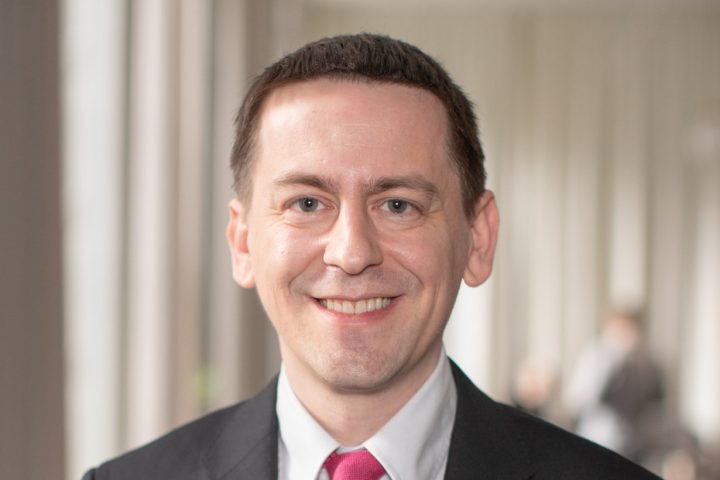


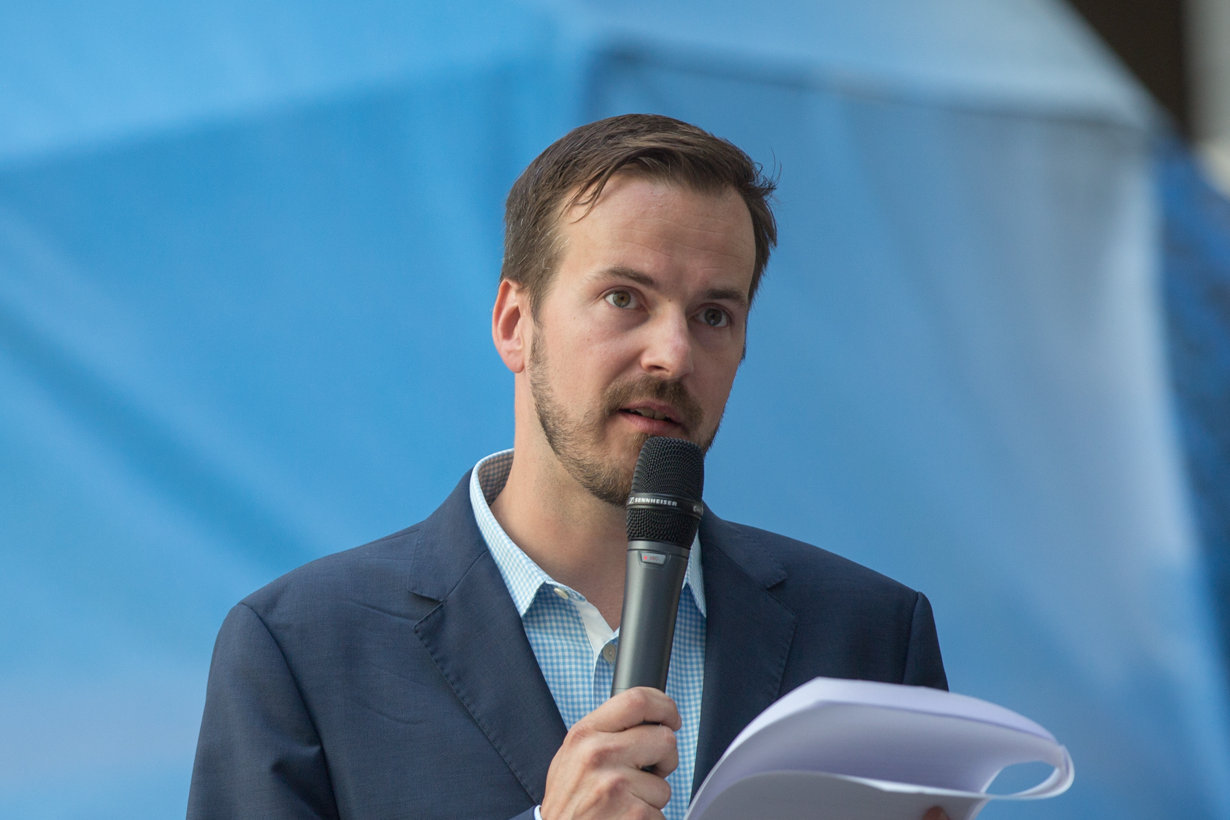
Taavet Hinrikus turned a frustration with expensive international money transfers into TransferWise, now Wise, one of Europe’s most successful fintech companies. After his early experience at Skype, he went on to become a founder, investor, and ecosystem builder, helping shape the next generation of European technology companies.
Key Takeaways
- Taavet Hinrikus built Wise by addressing the costly and opaque process of moving money across borders.
- His entrepreneurial journey demonstrates how personally experienced frustrations can reveal opportunities for meaningful innovation.
- Wise used transparency and simplicity to differentiate itself in a financial services industry known for complexity.
- Hinrikus’s career shows how founders can evolve from operating a company to investing in entrepreneurs and strengthening an entire technology ecosystem.
- His continued involvement in education, investment, and technology highlights the importance of building talent and infrastructure alongside successful companies.
Before Taavet Hinrikus became one of Europe’s best-known technology entrepreneurs and investors, he encountered a problem that millions of people accepted as simply part of banking: sending money across borders was expensive, complicated, and unnecessarily opaque.
His solution, co-founded with Kristo Käärmann, became TransferWise, now Wise – one of Europe’s most successful fintech companies. But Hinrikus’s entrepreneurial story goes beyond building a billion-dollar company. It is also a story about recognizing friction, challenging established systems, thinking globally from the beginning, and eventually using entrepreneurial capital to help shape Estonia’s technology ecosystem.
From Estonia to Skype
Born in Tartu, Estonia, in 1981, Hinrikus developed an interest in technology at a young age. He began building websites while still in high school and eventually joined the emerging technology company Skype in 2002.
The timing was significant.
Skype was one of the early European technology companies capable of becoming a global consumer technology phenomenon. Hinrikus became its first employee and eventually served as Director of Strategy.
Working at Skype exposed him to the mechanics of scaling technology internationally. He saw how software could cross borders almost instantly and how a company founded in a relatively small European country could compete on a global stage.
That experience would become important later.
Hinrikus eventually left Skype in 2008 and later completed an MBA at INSEAD. By then, he had already experienced what it meant to build and operate inside a technology company with global ambitions.
But his next major company would come from a much more personal frustration.
The Problem That Became TransferWise
While working in London, Hinrikus needed to move money between the United Kingdom and Estonia. His frustration was familiar to anyone who has transferred money internationally.
Banks charged fees. Exchange rates were opaque. The process was slow. And the amount received by the person on the other side could be significantly lower than expected.
Hinrikus discovered that his colleague Kristo Käärmann was experiencing essentially the same problem. Instead of accepting the system, they started looking for a better one.
In 2010–2011, the pair founded TransferWise.
Their insight was deceptively simple: international money transfers did not necessarily need to involve traditional banks moving money across borders in the conventional way.
Instead, TransferWise could match customers moving money in opposite directions and use local transfers wherever possible, while offering a transparent exchange rate and clearly disclosed fee.
The product addressed an important psychological problem as well as a financial one.
Customers could finally understand what they were paying.
Challenging an Entrenched Industry
Financial services are notoriously difficult to disrupt.
Banks possess enormous infrastructure, regulatory expertise, customer relationships, and established distribution networks. A startup trying to compete against them needs more than a clever app. Hinrikus and Käärmann had to persuade customers that a relatively young technology company could be trusted with their money.
That required simplicity.
TransferWise focused heavily on transparency and the customer experience. Rather than hiding costs inside unfavorable exchange rates, the company emphasized showing customers what the transaction actually cost.
The philosophy became part of the company’s identity. It also reflected a broader entrepreneurial principle:
When an industry has trained customers to accept unnecessary complexity, simplifying the experience can become a powerful competitive advantage.
Thinking Globally From Day One
One of Wise’s most important characteristics was its international orientation. The company was not built simply as an Estonian startup serving Estonians. It was created around a problem that inherently crossed borders.
That shaped the company’s ambitions from the beginning.
Wise expanded into multiple currencies and markets, eventually becoming a global financial technology platform serving millions of customers. This is an important lesson for founders in smaller countries.
A company does not necessarily have to be constrained by the size of its home market. Estonia has a population of only around 1.3 million people, yet its technology ecosystem has produced globally recognized companies including Skype, Wise, Bolt, and others.
Hinrikus’s career demonstrates the advantage of thinking beyond domestic demand.
From Founder to Chairman
Hinrikus initially served as CEO of TransferWise before becoming chairman. Under his leadership, the company raised backing from prominent investors including Peter Thiel and Richard Branson and developed into one of Europe’s most valuable fintech businesses.
In 2021, TransferWise rebranded as Wise and completed a direct listing on the London Stock Exchange. The listing was notable because Wise chose a direct listing rather than a conventional IPO.
It valued the company at roughly £8 billion at the time and helped make Hinrikus and Käärmann Estonia’s first billionaires.
But Hinrikus did not remain in operational leadership indefinitely. He stepped back from Wise’s board around late 2021, with Käärmann continuing as CEO.
That transition represents an important but often overlooked part of entrepreneurship.
Founders do not necessarily have to remain operators forever. Sometimes their greatest contribution comes from building the company, establishing its culture and direction, and then moving into a different role.
What Taavet Hinrikus Teaches Entrepreneurs
Solve a Problem You Personally Understand
Wise began with a problem Hinrikus and Käärmann experienced themselves. They did not begin with a theoretical thesis about disrupting financial services. They were simply frustrated customers.
That distinction matters.
Founders who experience a problem personally often have a much deeper understanding of the customer’s frustration than entrepreneurs who identify an opportunity solely through market research.
The lesson is not that every startup must solve a founder’s personal problem. It is that genuine frustration can be an extraordinarily powerful source of entrepreneurial insight.
Attack Friction, Not Just Competitors
Wise did not need to convince customers that banks were evil. It needed to show that international transfers could be easier and cheaper.
That is a much more constructive competitive strategy.
Instead of obsessing over incumbents, founders can look for friction in the customer journey: unnecessary fees, confusing interfaces, slow processes, repetitive paperwork, or information asymmetry.
Removing those obstacles can create enormous value.
Transparency Can Become a Brand
Wise’s transparent pricing was more than a product feature. It became part of the company’s identity.
In industries where customers are accustomed to hidden fees and complicated pricing, radical transparency can itself become a differentiator.
The broader lesson applies well beyond fintech: trust can be designed into a product.
Build for a Global Market
Hinrikus’s Skype experience likely reinforced an important idea: technology allows companies from relatively small countries to build for the world. Wise was born in Europe but designed around international financial flows.
For entrepreneurs today, the opportunity is even greater.
Cloud infrastructure, remote teams, digital distribution, and global payment systems make it possible for startups to reach international customers much earlier than previous generations could.
Know When to Move Into a New Chapter
Hinrikus eventually moved away from day-to-day Wise leadership. Rather than treating that transition as stepping away from entrepreneurship, he expanded his role within the broader technology ecosystem.
Today, his activities include venture investing, education, technology development, and other entrepreneurial projects. The founder’s job can change as the company changes.
That is not necessarily a loss of influence. It can be an evolution.
Building Europe’s Next Generation of Startups
After Wise, Hinrikus increasingly focused on investing in other founders. He became a partner at Plural, a European early-stage venture firm focused on backing ambitious technology companies. He also became involved with Skaala, an investment organization with a broader portfolio spanning technology, private assets, impact, and other investments.
His investment activities have included exposure to companies such as Anthropic, Bolt, Groq, and Veriff.
This creates an interesting second act.
Hinrikus is no longer simply building one company. He is helping finance and support the people attempting to build the next generation of European technology companies.
Investing in Estonia’s Future
Perhaps the most distinctive aspect of Hinrikus’s post-Wise career is his continued commitment to Estonia. He co-founded kood/Jõhvi, a coding school designed to expand access to technology education.
He has also been involved in Certific, urban development projects such as Tallinn’s Krulli Kvartal, and other initiatives connected to Estonia’s economic and technological development.
His interest in education reflects a belief that technology ecosystems cannot be built solely through venture capital.
They require talent.
They require education.
They require entrepreneurs.
And they require an environment where ambitious people can build globally relevant companies.
For a small country like Estonia, investing in those foundations can have an outsized impact.
The Governance Question
Hinrikus’s story also demonstrates that successful founders can disagree about what comes next. In 2025, he publicly opposed a bundled Wise shareholder proposal concerning dual-class voting rights as the company considered potential U.S. listing options. His position was that the governance issues should be voted on separately.
The episode provides a useful reminder that entrepreneurship does not end when a company becomes successful.
Questions about control, governance, shareholder rights, and long-term strategy can become increasingly important as privately built companies mature into public institutions.
For founders, success creates a new category of problems.
The Bigger Lesson From Taavet Hinrikus
Taavet Hinrikus’s entrepreneurial journey began with a simple observation: moving money between countries should not be this difficult.
That observation became TransferWise.
TransferWise became Wise.
And Wise became one of Europe’s most important fintech success stories.
But perhaps the most interesting part of Hinrikus’s story is what happened afterward. Rather than simply stepping away after creating substantial wealth, he became increasingly involved in investing, education, technology, and the development of Estonia’s entrepreneurial ecosystem.
His career therefore offers two lessons.
The first is familiar but powerful:
some of the biggest businesses begin by fixing an irritating problem that everyone else has learned to tolerate.
The second is more unusual:
entrepreneurship can evolve from building your own company to helping an entire ecosystem produce more companies.
Hinrikus has done both.
He helped demonstrate that a technology company from Estonia could compete globally. Now, through investing, education, and civic projects, he is helping create the conditions for the next generation to do the same.
And that may ultimately be his most enduring contribution to European entrepreneurship.
FAQs
Who is Taavet Hinrikus?
Taavet Hinrikus is an Estonian technology entrepreneur and investor best known as the co-founder of TransferWise, now Wise. He previously became Skype’s first employee and later focused on investing, education, and technology initiatives.
How did Taavet Hinrikus come up with the idea for Wise?
While working in London, Hinrikus experienced the high fees, opaque exchange rates, and slow processes involved in moving money between the United Kingdom and Estonia. He and Kristo Käärmann experienced the same problem and created TransferWise as a simpler alternative to traditional international transfers.
What entrepreneurial lessons can be learned from Taavet Hinrikus?
His story highlights the value of solving problems founders understand personally, removing friction from customer experiences, and building transparency into products. It also demonstrates the potential of thinking globally from the beginning rather than limiting a technology company to its domestic market.
What did Taavet Hinrikus do after Wise?
After moving away from day-to-day leadership at Wise, Hinrikus expanded his activities into venture investing, education, technology, and other entrepreneurial projects. He became involved in backing European technology companies and initiatives designed to strengthen Estonia’s technology ecosystem.
Why is Taavet Hinrikus important to Estonia’s technology ecosystem?
Beyond building a globally successful fintech company, Hinrikus has invested in initiatives involving technology education, entrepreneurship, and economic development in Estonia. His work reflects a broader effort to develop the talent, education, and environment needed to produce future technology companies.
Sources:
- https://et.wikipedia.org/wiki/Taavet_Hinrikus
- https://www.forbes.com/profile/taavet-hinrikus/
- https://www.ft.com/content/34f0a836-14f7-11e9-a168-d45595ad076d
- https://techround.co.uk/startups/transferwises-taavet-hinrikus-and-kristo-kaarmann-everything-you-need-to-know/
- https://www.forbes.com/sites/robertolsen-1/2025/07/21/fintech-giants-billionaire-cofounders-spar-over-us-listing-plan/
- https://arileht.delfi.ee/artikkel/120391968/aktsionaride-vaidlus-taavet-hinrikuse-firma-kutsub-ules-haaletama-wise-i-plaanide-vastu
Photo credit: Tauno Tõhk / Flickr / Wikimedia Commons / CC BY 2.0 – cropped (link)