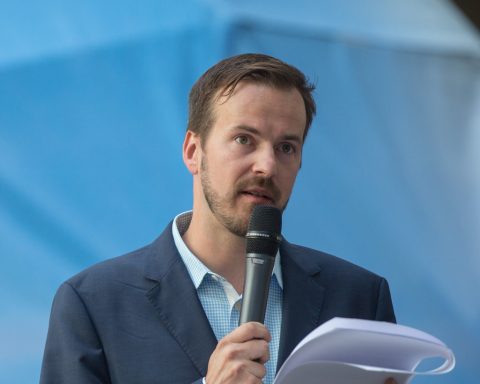


In an era when quarterly results often dominate executive decision-making, Ken Frazier built a reputation for leading with a longer horizon. As Former Executive Chairman and Former CEO of Merck, he demonstrated that integrity, innovation, and purpose are not competing priorities but mutually reinforcing foundations of enduring leadership.
Key Takeaways
- Integrity becomes most valuable when organizations face uncertainty.
- Long-term innovation requires patience and conviction.
- Leadership responsibilities extend beyond company walls.
- Purpose and performance can reinforce one another.
- Great leaders create opportunities for future generations.
Leadership Is Tested Most When There Is No Easy Answer
Many executives are evaluated by their ability to grow revenue, increase profitability, or satisfy shareholders. Throughout his career, Ken Frazier suggests that the true measure of leadership often emerges during moments of uncertainty, controversy, and difficult trade-offs.
Whether defending Merck during the massive Vioxx litigation, investing heavily in research despite market pressures, or taking public positions on issues of principle, Frazier repeatedly demonstrated a willingness to prioritize long-term trust over short-term convenience.
His leadership philosophy was grounded in a simple but demanding belief: businesses create lasting value when they remain committed to their purpose, even when doing so carries risk.
This mindset would shape one of the most respected leadership tenures in modern corporate America.
From North Philadelphia to the Corner Office
Ken Frazier’s journey began far from the boardrooms of global corporations.
Raised in a working-class neighborhood in North Philadelphia, he was the son of a janitor and the grandson of a sharecropper. His family emphasized education, discipline, and perseverance as pathways to opportunity.
Those early experiences shaped his understanding of economic mobility and social responsibility. Throughout his career, Frazier frequently spoke about the importance of creating opportunities for people whose talents might otherwise be overlooked.
After graduating with highest honors from Pennsylvania State University, he earned his law degree from Harvard Law School in 1978. Rather than beginning his career in healthcare, he built his reputation as an attorney, eventually becoming a partner at the Philadelphia law firm Drinker Biddle & Reath.
His legal work brought him into contact with Merck, which recruited him in 1992.
Few could have predicted that the lawyer joining Merck’s public affairs division would eventually become the first African American CEO of a major pharmaceutical company.
Yet Frazier’s rise reflected a combination of intellectual rigor, strategic thinking, and an ability to earn trust across diverse stakeholders – qualities that would later define his leadership style.
Insight 1: Integrity Becomes Most Valuable During Crisis
One of the defining episodes of Frazier’s career occurred long before he became CEO.
Following the withdrawal of Vioxx in 2004, Merck faced one of the largest litigation challenges in pharmaceutical history. Thousands of lawsuits threatened the company’s financial stability, with potential liabilities estimated in the tens of billions of dollars.
As General Counsel, Frazier faced enormous pressure to seek quick settlements.
Instead, he helped develop a legal strategy focused on defending cases individually while maintaining confidence in the company’s broader position. The approach was controversial and carried significant risk.
Ultimately, Merck negotiated a settlement that was substantially lower than many worst-case projections, helping stabilize the company and preserve its future.
The episode demonstrated an important leadership lesson:
When organizations face crisis, integrity and conviction often matter more than short-term optics.
Frazier’s approach reinforced a reputation that would follow him throughout his executive career – someone willing to make difficult decisions while remaining anchored in principle.
Insight 2: Long-Term Innovation Requires Leadership Patience
When Frazier became CEO in 2011, the pharmaceutical industry faced growing pressure to produce short-term financial results while navigating increasingly complex research pipelines.
Rather than reducing investment in research and development, Frazier doubled down on scientific innovation.
One of the most consequential outcomes of that strategy was the continued development of Keytruda, an immunotherapy treatment that would eventually become one of the most important cancer medicines in the world.
At the time, success was far from guaranteed.
Drug development requires enormous capital, years of uncertainty, and the acceptance that many promising programs will fail. Investors often push for faster returns, creating tension between innovation and financial performance.
Frazier consistently argued that pharmaceutical companies exist first and foremost to improve human health. Financial success, he believed, follows when companies remain committed to that mission.
Under his leadership, Merck’s investment in research helped produce breakthrough therapies while creating significant shareholder value. During his tenure, the company’s stock more than doubled, demonstrating that long-term thinking and business performance can reinforce one another.
The broader lesson is clear:
Leaders who prioritize sustainable innovation often outperform those focused exclusively on immediate gains.
Insight 3: Leadership Extends Beyond the Organization
Frazier became widely known beyond healthcare circles in 2017 when he resigned from the Presidential American Manufacturing Council following the Charlottesville events.
The decision attracted national attention.
Supporters praised his willingness to act on principle despite potential political backlash. Critics questioned whether corporate leaders should engage in public debates.
For Frazier, the issue was less political than moral.
He believed leadership carries responsibilities that extend beyond organizational boundaries. Companies operate within communities, influence social outcomes, and shape opportunities for future generations.
This philosophy was evident throughout his career.
Whether advocating for healthcare access, mentoring diverse talent, or speaking about economic mobility, Frazier consistently viewed leadership as a platform for service rather than personal visibility.
His actions reinforced an increasingly important idea in modern management:
Employees, customers, and investors increasingly expect leaders to demonstrate values through action rather than statements alone.
Insight 4: Success Creates an Obligation to Expand Opportunity
One of the most distinctive aspects of Frazier’s leadership emerged after his retirement from Merck.
Rather than stepping away from public life, he redirected his attention toward addressing structural barriers to economic opportunity.
He became co-founder and co-chair of OneTen, an initiative bringing together major corporations to help create one million family-sustaining jobs for Black Americans without requiring four-year degrees.
The initiative reflects a belief shaped by his own life story.
Frazier understands firsthand how talent can be overlooked when opportunity is limited. Through OneTen, he seeks to encourage skills-based hiring practices that focus on capability rather than credentials alone.
He has also become Chairman of Health Assurance Initiatives at General Catalyst, where he works on improving healthcare outcomes through innovation and technology partnerships.
These efforts reveal another dimension of leadership:
The greatest legacy often comes not from personal success, but from expanding opportunity for others.
Leadership Beyond Merck: A New Chapter of Impact
After stepping down as Executive Chairman in 2022, Frazier entered a new phase of leadership focused on systemic change.
His work at General Catalyst allows him to support emerging healthcare innovations aimed at improving patient outcomes and transforming healthcare delivery. Rather than operating inside a single corporation, he now helps shape broader industry ecosystems.
At the same time, Frazier is involved as the Co-chair of SkillsRight (formerly OneTen, co-founded by Frazier) has become one of the most visible workforce-development initiatives in the United States, bringing together hundreds of major employers committed to skills-based hiring and economic mobility.
The transition reflects a natural evolution of his leadership philosophy.
Throughout his career, Frazier focused on creating value through science, people, and purpose. In retirement, he continues pursuing those same goals on a larger societal scale.
Leadership Built on Character
Ken Frazier’s career demonstrates that leadership is not simply about authority, performance metrics, or corporate titles.
It is about making difficult decisions with integrity, maintaining long-term conviction amid uncertainty, and remembering that organizations ultimately exist to serve people.
From navigating one of the largest legal crises in pharmaceutical history to championing breakthrough medical innovation and expanding economic opportunity, Frazier consistently led through principle rather than popularity.
His story offers an important reminder for today’s leaders.
In a world increasingly defined by disruption and complexity, character remains one of the most durable competitive advantages a leader can possess.
FAQs
Who is Ken Frazier?
Ken Frazier is the former Chairman and CEO of Merck and the first African American CEO of a major pharmaceutical company. He is widely recognized for his principled leadership, commitment to innovation, and advocacy for economic opportunity.
What is Ken Frazier best known for?
Frazier is best known for leading Merck during a period of significant innovation and growth, including the rise of Keytruda as a leading cancer therapy. He is also respected for his values-based leadership and public commitment to ethical decision-making.
What leadership style does Ken Frazier use?
Frazier’s leadership style emphasizes integrity, long-term thinking, accountability, and service. He believes leaders should balance business performance with a broader responsibility to society.
What is OneTen?
OneTen, which has since been rebranded as SkillsRight, is a coalition co-founded by Ken Frazier that seeks to create one million family-sustaining jobs for Black Americans through skills-based hiring practices. The initiative encourages employers to focus on capabilities and experience rather than educational credentials alone.
What can business leaders learn from Ken Frazier?
Leaders can learn the importance of principled decision-making, investing for the long term, and using positions of influence to expand opportunities for others. His career demonstrates that strong values and strong performance are not mutually exclusive.
Sources:
- https://en.wikipedia.org/wiki/Kenneth_Frazier
- https://www.thehistorymakers.org/biography/kenneth-c-frazier
- https://hls.harvard.edu/today/the-new-ceo-of-pharmaceutical-giant-merck-kenneth-frazier-78-is-driven-by-high-hopes-for-the-company-and-what-it-can-do/
- https://www.nytimes.com/2005/08/26/business/maker-of-vioxx-reports-progress-of-suits.html
- https://www.blackventures.org/blackleaders/kenneth-frazier-former-ceo-of-merck-co
- https://www.conference-board.org/bio/kenneth-frazier
- https://www.generalcatalyst.com/team/ken-frazier
- https://www.prnewswire.com/news-releases/oneten-evolves-into-skillsright-to-help-companies-compete-in-a-skills-first-economy-302738394.html