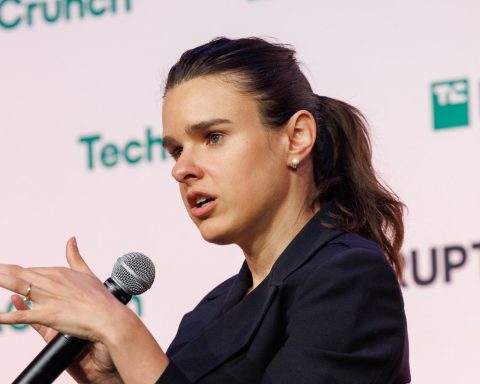


Some of the most important technologies in the world are also some of the hardest to explain. Dara Treseder has built her career around solving that problem, bringing consumer-style storytelling, cultural marketing, and commercial discipline to companies whose products are often used long before the public ever hears their names.
Key Takeaways
- Dara Treseder has built a career translating complex technology into stories that customers, businesses, and broader culture can understand.
- Her Autodesk strategy applies consumer-brand principles to B2B software without losing sight of commercial outcomes and professional credibility.
- Treseder’s cross-industry career demonstrates how transferable skills in growth, customer experience, storytelling, and strategy can become more valuable than narrow specialization.
- Her work shows that marketing can become an innovation function when it helps a technical company define a category, expand its audience, and connect technology to real-world outcomes.
- By connecting Autodesk with culture, education, sports, AI, and major physical projects, Treseder is helping turn an often-invisible technology company into a visible participant in how the world is designed and made.
Innovation Can Be a Marketing Problem
When people think about innovation, they often picture the inventor, engineer, scientist, or founder behind a new technology. They are less likely to think about the person who figures out how to make that technology matter to millions of people.
Dara Treseder has made that challenge her specialty.
As Chief Marketing Officer of Autodesk, Treseder operates in a world dominated by architects, engineers, manufacturers, construction professionals, designers, and media creators. These are highly sophisticated customers, but the technologies they use are rarely consumer-famous.
That creates an unusual marketing challenge.
Autodesk can help design a building, manufacture a product, produce a film, or support the infrastructure of an Olympic Games without the average person ever thinking about Autodesk itself. Treseder’s job is to change that equation.
Her philosophy can be summarized in a simple idea: make the invisible unignorable.
Rather than turning Autodesk into something it is not, she has sought to make the company’s existing role in the physical and creative world easier to see, understand, and remember.
A Career Built Across Industries
Treseder’s career is unusual even by C-suite standards.
She began at Goldman Sachs, moved into marketing and growth roles at Apple, became CMO of GE Business Innovations and GE Ventures, led marketing at 3D-printing company Carbon, became a senior marketing leader at Peloton, and then moved into Autodesk.
Each company exposed her to a different type of customer and business model.
Finance taught her commercial discipline. Apple exposed her to one of the world’s most powerful consumer brands. GE gave her experience with industrial innovation. Carbon placed her inside an emerging manufacturing technology. Peloton demonstrated how technology, community, membership, and lifestyle could be combined into a consumer brand.
Autodesk brought those experiences together.
Her appointment as Autodesk’s CMO became effective in October 2022. The role encompassed global marketing, brand and communications, demand generation, education, and eventually the company’s global e-commerce operation, including product, commercial, and customer-experience teams.
The Finance-to-Marketing Pivot
The beginning of Treseder’s career is particularly revealing because marketing was not originally the obvious destination.
After graduating from Harvard with highest honors, she entered Goldman Sachs. Her experience there gave her exposure to financial strategy and the commercial mechanics of large organizations, but she eventually realized that her strengths were better suited to a different kind of problem.
That realization helped shape the career that followed.
Rather than becoming a lifelong specialist in finance, Treseder moved toward the intersection of strategy, growth, technology, and communication.
That willingness to change disciplines became one of her most valuable professional advantages.
Her career demonstrates that an executive does not necessarily have to accumulate expertise in one narrow industry. Sometimes the greater advantage comes from carrying a repeatable way of thinking from one industry to another.
Learning Consumer Marketing at Apple
At Apple, Treseder gained experience in one of the world’s most sophisticated consumer marketing environments.
That experience would become particularly useful later because her eventual challenge at Autodesk was almost the opposite of Apple’s.
Apple sells products that consumers actively desire and discuss. Autodesk sells professional software that helps other people create the products, buildings, entertainment, and infrastructure that consumers ultimately experience.
The technology may be enormously important, but the brand often remains in the background.
Treseder learned at Apple that technology does not have to be marketed as technology. It can be marketed through what people want to accomplish with it.
That distinction became central to her Autodesk strategy.
Carbon Taught Her to Market the Future
Her time as CMO of Carbon added another important dimension.
Carbon was developing advanced 3D-printing technology, placing Treseder in a category where the technology itself could easily dominate the story.
That is a familiar problem for deep-tech companies. Executives can become so focused on explaining what a technology does that they forget to explain why anyone should care.
Treseder’s role required translating advanced manufacturing into a story that could resonate with customers, partners, and the broader market.
It also exposed her to a particularly important principle: the strongest technology story is often not about the technology itself, but about what becomes possible because the technology exists.
Peloton Demonstrated the Power of Cultural Relevance
Peloton provided perhaps the clearest demonstration of Treseder’s ability to turn technology into culture.
As Global Head of Marketing, Communications and Membership, she helped build a brand that went well beyond exercise equipment.
Peloton became associated with instructors, entertainment, music, community, identity, and lifestyle. According to Treseder’s own biography, Peloton rose from No. 35 to No. 2 in Prophet’s Brand Relevance Index during her tenure, behind only Apple.
The lesson was not simply that marketing could make a fitness product famous.
It was that technology becomes more powerful commercially when customers understand the larger experience surrounding it.
That insight would become important when Treseder moved to Autodesk.
Autodesk Had a Different Problem
Autodesk did not need to become Peloton.
It needed to become more visible without losing the credibility that made its products valuable to professionals.
Autodesk’s software sits behind an enormous range of physical and digital creation. Its platform serves architecture, engineering, construction, manufacturing, product design, and media and entertainment. The company’s current positioning increasingly centers on its connected Design and Make Platform, which links digital workflows to real-world outcomes.
The marketing challenge, therefore, was not simply awareness.
It was category creation.
Instead of allowing Autodesk to be perceived merely as the company behind familiar software such as AutoCAD, Treseder has helped tell a broader story about the people and industries using Autodesk technology to design and make the world.
That is a much larger narrative.
Turning B2B Marketing Into Culture
Treseder’s approach is particularly interesting because she has imported techniques normally associated with consumer brands into a highly technical B2B environment.
One example came through Autodesk’s entertainment marketing.
Rather than simply explaining software features, Autodesk has used major cultural moments and entertainment partnerships to demonstrate the company’s relevance. Campaigns around the Oscars, Hollywood production, and popular entertainment have helped make the company visible in places where a traditional enterprise-software advertisement might never reach.
The strategy is subtle.
Autodesk does not need everyone watching the Oscars to become an Autodesk customer. The objective is to make the brand understandable and memorable by showing the extraordinary things its customers can create.
That is consumer marketing logic applied to a B2B technology company.
The Notre-Dame Story Is Bigger Than Software
Another powerful approach is to tell stories about the real-world consequences of Autodesk technology.
The reconstruction of Notre-Dame after the 2019 fire provided a natural example.
Instead of leading with software specifications, Autodesk could tell a story about preservation, engineering, architecture, history, and human achievement.
The technology remains important, but it moves into the background.
The customer, the challenge, and the outcome become the story.
This is one of Treseder’s most important marketing innovations: the product does not always have to be the protagonist.
Sometimes the best way to sell sophisticated technology is to show what talented people can accomplish with it.
From Advertising to the Olympic Games
The LA28 Olympic and Paralympic Games provide an even larger example of this strategy.
Autodesk became the Official Design and Make Platform of the LA28 Games and Team USA. The partnership is tied to a more than $1 billion temporary overlay and construction plan and a strategy centered on adapting existing venues or creating temporary infrastructure rather than building new permanent venues. Autodesk says its technology will support the design and delivery of more than 40 venues across Southern California.
For Autodesk, this is not simply a sponsorship.
It is a giant demonstration of the company’s category.
Architecture, construction, manufacturing, product design, sports equipment, infrastructure, and entertainment all converge around the Games. That makes the Olympics an unusually powerful stage on which to demonstrate what “Design and Make” means in practice.
Treseder has also used Team USA athletes as examples of the same creative mindset Autodesk wants associated with its customers: people who design, iterate, solve problems, and turn ideas into physical outcomes.
Once again, the technology sits behind the story.
AI Does Not Have to Mean Replacing People
Treseder’s current messaging around artificial intelligence provides another window into her approach to innovation.
As AI becomes increasingly embedded in Autodesk’s products and the industries it serves, the marketing challenge is not simply to announce that AI exists. Customers need to understand what the technology changes about their work.
Treseder has argued that technology should amplify human capability rather than eliminate human agency. In a 2025 Autodesk discussion, she framed the idea by saying that technology is not in the driver’s seat and that human ingenuity remains responsible for raising the ceiling of what technology can accomplish.
That is strategically important.
For architects, engineers, designers, and manufacturers, AI is valuable because it can accelerate exploration, automate repetitive work, surface insights, and expand the range of possible solutions. But the value ultimately depends on what people choose to create with those capabilities.
For Autodesk, that creates a compelling marketing message: AI is not the destination. It is another tool for people who design and make.
The Real Innovation Is Connecting Brand to Business
One reason Treseder stands out among technology CMOs is that her work is not limited to advertising.
Autodesk’s current executive biography says she leads global e-commerce, including product, commercial, and customer-experience teams, alongside marketing, brand, communications, demand generation, digital, and education. She also leads Autodesk for Small Business.
That broader remit matters because modern marketing is increasingly difficult to separate from the customer journey itself.
If marketing creates demand but the buying experience is difficult, the marketing has failed. If customers purchase but struggle to adopt the product, the commercial engine has a problem. If the company attracts attention but cannot demonstrate value, awareness becomes an expensive vanity metric.
Treseder’s model connects those pieces.
Brand creates interest. Content explains value. Digital commerce reduces friction. Customer experience reinforces the promise. Education expands adoption.
Marketing becomes part of the business system rather than simply the department responsible for promotion.
Why Her Cross-Industry Career Matters
Treseder’s career also challenges the conventional idea that executives need to spend decades inside one industry to become credible leaders.
Her experience crosses banking, consumer technology, industrial technology, 3D printing, connected fitness, and enterprise software.
On the surface, these industries have little in common.
But the underlying problems are remarkably similar: How do you explain a complicated product? How do you create demand? How do you understand customers? How do you turn technology into an experience? How do you build a brand that means something beyond its features?
Treseder has effectively treated those questions as portable skills.
That may be one of the most valuable lessons for ambitious executives: industry knowledge matters, but problem-solving frameworks can travel.
Innovation Also Means Expanding Who Gets to Build
Treseder’s work also extends beyond marketing.
She has been involved with education and access initiatives, including Autodesk’s relationships with institutions such as Howard University. In 2026, Autodesk highlighted the opening of a new makerspace at Howard’s College of Engineering and Architecture, designed around AI-powered design and digital fabrication. Treseder described the partnership as an effort to turn talent and opportunity into economic possibility.
This matters because the future of design-and-make industries depends on who has access to the tools.
AI, digital fabrication, cloud software, and advanced design systems can dramatically expand what individuals and small teams are capable of producing. But that potential only matters if people can access the technology, develop the necessary skills, and participate in the industries being transformed.
For a company like Autodesk, education is therefore more than corporate philanthropy.
It can become part of the long-term market ecosystem.
What Dara Treseder Is Really Innovating
It would be easy to describe Treseder as an exceptionally successful marketer.
That would be accurate, but incomplete.
Her more interesting contribution is the way she is changing the boundary between marketing, technology, culture, and business strategy.
She takes a technical B2B company and asks consumer-brand questions: What does the company stand for? What cultural conversations can it participate in? How can its customers become the heroes? How can the product become part of a larger story?
At the same time, she brings commercial questions back into marketing: Does this create demand? Does it improve the customer journey? Does it support growth? Does the brand help the company enter a larger category?
The combination is what makes the approach distinctive.
She is not simply making B2B marketing look more like B2C marketing.
She is arguing that the distinction itself is becoming less useful.
The Future of B2B May Look More Like Culture
The line between technology companies and cultural brands continues to blur.
Enterprise software companies increasingly compete for attention in the same environment as consumer companies. Engineers use social media. Developers build personal brands. Business buyers watch YouTube, follow creators, attend sporting events, and respond to stories just like everyone else.
The difference is that the products they buy may be vastly more complicated.
Treseder’s career suggests that complexity does not mean marketing has to become complicated.
The technology can remain sophisticated while the story becomes simple.
Show the building. Show the movie. Show the Olympic venue. Show the product. Show the person solving the problem.
Then explain the technology that made it possible.
That may be the real meaning of making the invisible unignorable.
FAQs
Who is Dara Treseder?
Dara Treseder is the Chief Marketing Officer of Autodesk and a technology executive whose career has included senior marketing roles at Goldman Sachs, Apple, GE, Carbon, and Peloton. She is known for combining brand building, growth, customer experience, and commercial strategy across both B2B and consumer businesses.
What makes Dara Treseder’s marketing approach innovative?
Treseder brings consumer-style storytelling and cultural marketing techniques to highly technical B2B businesses. Rather than focusing only on product features, she often makes the customer, the project, or the real-world outcome the hero of the story.
Why is Dara Treseder important to Autodesk?
Treseder is helping Autodesk communicate a broader vision around its Design and Make Platform rather than allowing the company to be defined solely by individual software products. Her responsibilities also extend into e-commerce, customer experience, education, and Autodesk for Small Business, giving her influence beyond traditional brand advertising.
What is Autodesk’s Design and Make Platform?
Autodesk’s Design and Make Platform connects cloud-based software, data, workflows, and AI-powered capabilities across industries such as architecture, engineering, construction, manufacturing, and media and entertainment. The goal is to connect the process of designing something with the physical or digital process of making and delivering it.
What can business leaders learn from Dara Treseder?
One major lesson is that complex products do not require complicated stories. Treseder’s career also demonstrates the value of carrying strategic frameworks between industries and treating marketing as part of the broader customer and commercial experience rather than as a communications function alone.
Sources:
- https://en.wikipedia.org/wiki/Dara_Treseder
- https://investors.robinhood.com/board-member/dara-treseder/
- https://thenewera.chief.com/winners/dara-treseder/
- https://www.prnewswire.com/news-releases/autodesk-appoints-dara-treseder-as-chief-marketing-officer-301632604.html
- https://www.forbes.com/sites/sethmatlins/2024/06/20/introducing-the-2024-forbes-cmo-hall-of-fame-inductees/
- https://www.cnbc.com/2025/02/24/dara-treseder-2025-cnbc-changemaker.html
- https://www.autodesk.com/company/newsroom/corporate-info/executive-bios/dara-treseder
- https://www.autodesk.com/campaigns/make-anything/notre-dame
- https://www.autodesk.com/blogs/construction/digital-builder-ep-126-how-ai-sustainability-and-talent-are-shaping-the-next-era-of-construction/