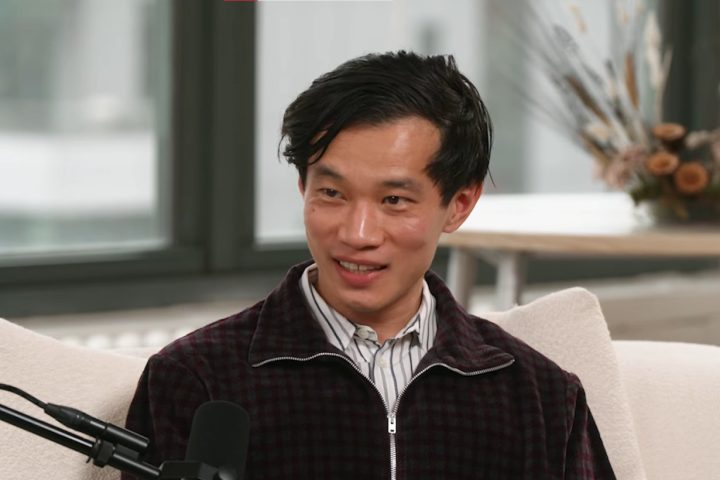


Many startup founders begin with an idea. Jessica Wu began with frustration. Before co-founding Sola, Wu worked inside elite finance and technology environments where repetitive workflows, brittle automation tools, and inefficient legacy systems consumed enormous amounts of time and human effort. Rather than accepting those inefficiencies as unavoidable, she transformed them into the foundation of one of the most closely watched AI automation startups of her generation.
Key Takeaways
- Deep technical expertise can become a major entrepreneurial advantage when combined with real-world operational pain points.
- The next generation of enterprise software is increasingly AI-native rather than workflow-template driven.
- Young founders can compete with incumbents when they solve expensive enterprise problems with speed and clarity.
- Quantitative thinking and product intuition are becoming increasingly connected in modern AI startups.
- Enterprise AI adoption often accelerates when solutions integrate with legacy systems instead of replacing them entirely.
From Young Quant to AI Founder
At an age when many graduates are still exploring career paths, Jessica Wu had already built experience across some of the most demanding environments in finance and technology.
She studied mathematics and computer science at MIT, worked in quantitative finance, spent time in venture capital and startup product leadership, and became known as one of the youngest quant researchers at a billion-dollar hedge fund. Yet despite those impressive credentials, what ultimately pushed her toward entrepreneurship was not prestige – it was inefficiency.
Inside finance and enterprise operations, Wu repeatedly encountered the same problem: highly paid employees spending countless hours on repetitive workflows because existing automation systems were too rigid, expensive, or difficult to deploy.
Traditional robotic process automation tools often required complicated integrations, heavy implementation work, and constant maintenance whenever enterprise systems changed. For organizations operating across legacy infrastructure, automation frequently created new problems instead of eliminating them.
Rather than accepting those limitations, Wu saw an opportunity to rethink automation from the ground up using artificial intelligence.
That insight would eventually become Sola.
Journey: MIT, Quant Finance, and Discovering the Enterprise Problem
Jessica Wu’s path reflects a growing trend among elite young founders: blending deep technical training with firsthand operational experience.
At MIT, she focused on mathematics and computer science, developing the analytical foundation that later shaped her approach to enterprise AI systems. But unlike many technically gifted students who remained in purely academic environments, Wu moved quickly into high-performance financial institutions where speed, precision, and automation directly affected business outcomes.
Her early experience included roles at:
- Citadel
- GoldenTree Asset Management
- Thrive Capital
At Citadel, she reportedly became one of the youngest quant researchers at the firm, exposing her to large-scale data systems and operational complexity at an unusually early stage in her career.
These experiences proved valuable because they exposed a recurring enterprise problem that many outside large organizations rarely see.
Despite massive technological advances, countless business processes inside finance, logistics, healthcare, and compliance operations still depended on repetitive manual work. Employees copied data between systems, reviewed documents, updated records, and handled tasks that consumed time without creating strategic value.
Wu also observed that existing automation tools often failed in real-world enterprise settings because they relied too heavily on predefined workflows and fragile integrations.
The gap between what automation promised and what enterprises actually experienced became increasingly obvious.
Founding Sola: Building AI-Native Enterprise Automation
In 2023, Wu co-founded Sola alongside her MIT classmate and longtime friend Neil Deshmukh.
The company entered Y Combinator through the YC S23 batch and positioned itself around a clear thesis:
Enterprise automation should adapt to humans and workflows – not force enterprises to redesign their operations around software limitations.
Rather than relying on traditional robotic process automation systems that require structured APIs and complicated engineering work, Sola focused on AI agents capable of observing and automating workflows directly inside existing enterprise systems.
This distinction matters.
Many enterprises still operate on fragmented infrastructure involving spreadsheets, internal tools, legacy software, PDFs, email workflows, and customized databases built over many years. Replacing those systems entirely is often unrealistic.
Sola instead developed AI-native agents designed to work across those environments with minimal setup.
The company’s focus quickly attracted attention from investors and enterprise customers alike.
Within a relatively short period, Sola raised approximately $21 million across seed and Series A funding rounds, backed by firms including:
- Andreessen Horowitz
- Conviction
- Y Combinator
The startup also reported strong early growth and began working with enterprise customers handling high-volume operational workflows.
Why AI-Native Automation Matters
One reason Jessica Wu’s story resonates is that it reflects a broader shift occurring across enterprise software.
For years, automation tools operated largely through rigid instructions and predefined rules. They worked effectively only when processes remained highly structured and predictable.
Modern enterprises, however, are messy.
Employees interact with emails, documents, spreadsheets, dashboards, chat systems, PDFs, and constantly changing workflows. Traditional automation tools frequently break when small changes occur.
AI-native systems change that equation.
Instead of requiring exact instructions for every scenario, AI agents can interpret context, adapt to changing interfaces, and handle more ambiguous workflows.
This is the core strategic insight behind Sola.
The company is not simply automating tasks. It is attempting to build software capable of functioning more like adaptive digital operators inside enterprise systems.
That vision places Sola within one of the fastest-growing areas of modern enterprise AI.
Why Young Founders Are Winning in AI
Jessica Wu also represents a larger generational shift in technology entrepreneurship.
Historically, enterprise software founders often spent decades inside large corporations before launching companies. Today’s AI founders increasingly emerge much earlier because modern tools dramatically reduce development speed while access to technical education and startup ecosystems has expanded.
Young founders now benefit from:
- Open-source AI infrastructure
- Faster prototyping cycles
- Cloud computing scalability
- Strong startup networks
- AI research accessibility
At the same time, younger technical founders often possess an intuitive understanding of how AI systems can integrate into workflows because they grew up alongside modern software ecosystems.
Wu’s background reflects this intersection particularly well.
She combines quantitative rigor from finance, technical expertise from MIT, and product-oriented thinking shaped by startup experience. That combination helps explain why investors quickly viewed Sola as more than another automation startup.
Founder Identity: The Quant Founder with Product Instincts
One of the most compelling aspects of Jessica Wu’s story is the balance between analytical precision and product intuition.
Quantitative finance backgrounds are often associated with mathematical optimization, algorithms, and trading systems. Yet successful enterprise startups also require empathy for users, operational understanding, and strong product judgment.
Wu appears to operate at that intersection.
Rather than building purely theoretical AI systems, she focused on solving highly practical operational problems experienced by real enterprises. This orientation toward usability may ultimately become one of Sola’s competitive advantages.
Her journey also reflects how modern founders increasingly move fluidly across disciplines:
- mathematics,
- finance,
- engineering,
- design,
- venture capital,
- and product development.
That cross-functional adaptability is becoming increasingly important in AI entrepreneurship, where technical capability alone rarely guarantees commercial success.
The Bigger Picture: AI Agents and the Future of Work
The rise of companies like Sola signals a larger transformation in enterprise operations.
Rather than replacing entire organizations, AI systems are increasingly being deployed to automate repetitive tasks that consume employee time and reduce operational efficiency.
This creates both opportunities and tensions.
Supporters argue that AI agents allow workers to focus on higher-value strategic and creative work instead of repetitive administrative processes. Critics worry about workforce disruption and the long-term implications of large-scale automation.
Wu’s approach appears focused on augmentation rather than wholesale replacement. By targeting repetitive workflows inside complex enterprise systems, Sola positions AI as a productivity multiplier for organizations struggling with operational inefficiency.
That framing may become increasingly important as enterprises adopt AI more aggressively over the coming decade.
The Next Generation of Founders Is Already Here
The story of Jessica Wu reflects more than individual success. It illustrates how the next generation of founders is emerging earlier, moving faster, and combining technical depth with operational insight in ways that previous startup eras rarely required.
From MIT mathematics and quantitative finance to building an AI-native enterprise automation company backed by top-tier investors, Wu’s journey demonstrates how expertise compounds across disciplines.
At the same time, her story highlights an important entrepreneurial truth: some of the most valuable startup opportunities emerge not from abstract ideas, but from persistent frustrations experienced firsthand inside real industries.
For aspiring founders, the lesson is clear: understanding painful operational problems deeply can become a powerful competitive advantage – especially in the age of AI.
FAQs
Who is Jessica Wu?
Jessica Wu is the co-founder and CEO of Sola, an AI-native enterprise automation startup focused on building adaptive AI agents for repetitive workflows. She previously studied mathematics and computer science at MIT and worked in quantitative finance and venture capital.
What is Sola?
Sola is an enterprise AI automation platform that develops AI agents capable of automating repetitive workflows across legacy systems and enterprise software environments. The company focuses on industries such as logistics, finance, healthcare, and compliance operations.
Why is Jessica Wu considered notable in AI entrepreneurship?
Wu gained attention as one of the youngest quant researchers at a major hedge fund before transitioning into AI entrepreneurship. Her technical background, combined with rapid fundraising success and enterprise traction at Sola, positioned her as one of the rising young founders in enterprise AI.
What makes Sola different from traditional RPA companies?
Unlike traditional robotic process automation tools that rely heavily on rigid workflows and APIs, Sola focuses on AI-native agents that can adapt dynamically to changing enterprise environments. This allows automation across more complex and fragmented systems with less manual setup.
What can founders learn from Jessica Wu?
Founders can learn the importance of solving real operational problems through firsthand experience and technical insight. Wu’s journey also demonstrates how cross-disciplinary expertise can become a major advantage in emerging industries like AI.
Sources:
- https://fortune.com/2025/08/14/sola-solutions-ai-startup-raised-21-million-andreessen-sarah-guo/
- https://www.ycombinator.com/companies/sola
- https://medium.com/@tarifabeach/from-quant-to-founder-how-jessica-wu-built-sola-into-a-fast-growing-ai-platform-building-27e880fc3de0
- https://www.eomag.io/article/sola-jessica-wu