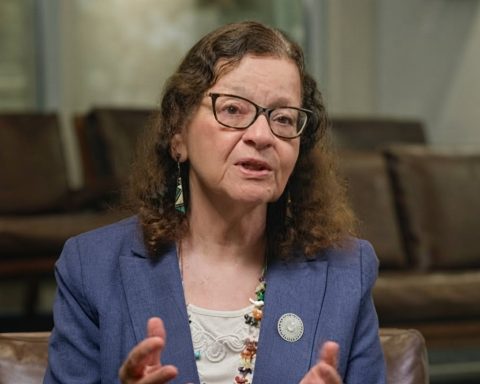


Some leaders build new companies. Others reinvent iconic brands that must evolve without losing the trust they’ve earned over generations. Denise Morrison proved that even a 140-year-old company could embrace innovation by putting changing consumer needs at the center of every strategic decision.
Key Takeaways
- Great leaders modernize legacy businesses without abandoning their core identity.
- Customer insight should drive strategy more than internal tradition.
- Cultural transformation begins with leadership courage and organizational trust.
- Innovation succeeds when it builds upon, rather than replaces, existing strengths.
- Long-term leadership balances operational discipline with a willingness to adapt.
Reinvention Without Reinvention for Its Own Sake
When Denise Morrison became CEO of Campbell Soup Company in 2011, she inherited one of America’s most recognizable brands – but also one facing significant headwinds.
Consumers were changing. Demand for healthier, fresher, and more convenient food options was accelerating, while traditional packaged food companies struggled to remain relevant.
Many organizations respond to disruption by chasing every emerging trend. Morrison chose a more disciplined approach.
Rather than abandoning Campbell’s heritage, she sought to modernize it. Her leadership philosophy centered on understanding evolving consumer behavior while preserving the trust that iconic brands had built over generations.
That balance became the defining characteristic of her tenure.
Four Decades of Consumer Expertise
Unlike leaders who arrive from finance or consulting, Morrison spent her entire career learning how consumers make purchasing decisions.
Beginning in sales at Procter & Gamble before holding leadership positions at Pepsi-Cola, Nestlé, Nabisco, and Kraft Foods, she accumulated decades of experience across virtually every aspect of consumer packaged goods.
When she joined Campbell Soup in 2003, she brought not only operational expertise but also a deep understanding of retailers, brands, and shoppers.
Over the next eight years, she progressed through increasingly senior leadership positions before becoming President and CEO in 2011.
This gradual rise gave her intimate knowledge of both Campbell’s strengths and the structural challenges facing the broader food industry.
It also reinforced an important leadership principle: meaningful transformation begins with understanding the business from the inside out.
Leadership Insights
1. Listen to Consumers Before Markets
Throughout her career, Morrison consistently emphasized one priority: the consumer comes first.
Rather than allowing internal processes or historical success to dictate strategy, she encouraged Campbell to study how eating habits, health priorities, and shopping behaviors were changing.
This led to investments beyond traditional canned soup, including refrigerated beverages, organic baby food, and healthier snack categories.
Her approach demonstrated that customer insight is often a more reliable guide than short-term market trends.
Leaders who remain closest to their customers are usually better positioned to anticipate change before competitors do.
2. Courage Is a Cultural Advantage
One of Morrison’s most notable leadership decisions was adding courage to Campbell’s corporate values.
For a company with more than a century of history, encouraging employees to take calculated risks represented a significant cultural shift.
Innovation rarely flourishes inside organizations where employees fear failure.
By making courage an explicit expectation, Morrison sought to create an environment where experimentation could coexist with operational excellence.
Strong cultures don’t emerge by accident – they are intentionally shaped by the behaviors leaders choose to reward.
3. Modernize Without Losing Identity
Many established companies struggle because they either resist change or pursue it too aggressively.
Morrison rejected both extremes.
She believed Campbell’s iconic brands remained valuable assets, but they needed to evolve alongside consumer expectations.
Instead of replacing the company’s heritage, she expanded its portfolio while strengthening existing brands through healthier ingredients, innovation, and clearer consumer positioning.
This balanced strategy illustrates one of leadership’s most difficult challenges: protecting legacy while embracing progress.
4. Leadership Is About People as Much as Products
Although Morrison oversaw significant strategic initiatives, colleagues frequently described her leadership as collaborative and people-centered.
She invested heavily in employee engagement, wellness, diversity, and ethical leadership.
Her belief was straightforward: organizations perform better when employees understand both the company’s purpose and their role within it.
Business transformation ultimately depends on people embracing change – not simply management announcing it.
Outcome: A More Adaptive Campbell
During Morrison’s leadership, Campbell expanded beyond its traditional soup business into higher-growth categories including fresh foods, organic products, and healthier snacks.
The company strengthened several of its flagship brands while broadening its portfolio to better reflect changing consumer preferences.
Although the packaged food industry remained highly competitive and growth pressures persisted, Morrison helped reposition Campbell for a marketplace increasingly focused on health, convenience, and wellness.
Perhaps more importantly, she demonstrated that even century-old companies can continue evolving without abandoning the qualities that made them successful.
Her leadership became a case study in balancing innovation with brand stewardship.
Leadership Beyond Campbell
After retiring in 2018, Morrison shifted from operating executive to advisor, board member, and mentor.
She founded Denise Morrison & Associates, advising organizations on leadership, culture, and strategic transformation.
She has also served on the boards of major companies including MetLife, Visa, and Quest Diagnostics, while remaining active in organizations promoting ethical leadership and women’s advancement in business.
Rather than stepping away from leadership, Morrison expanded her influence by helping other organizations navigate change and develop future leaders.
Closing Reflection
Denise Morrison’s career reminds us that leadership is not always about creating something entirely new.
Sometimes it means preserving what already works while having the courage to evolve where necessary.
For today’s executives, her story offers an enduring lesson: companies remain relevant not by protecting the past, but by continually earning the trust of the next generation of customers.
FAQs
Who is Denise Morrison?
Denise Morrison is the former President and CEO of Campbell Soup Company and the first woman to lead the company in its long history. She is widely recognized for modernizing one of America’s most iconic food brands while maintaining its heritage.
What is Denise Morrison known for?
She is best known for leading Campbell Soup through a period of consumer-driven transformation, expanding into healthier foods and encouraging a more innovative corporate culture. Her leadership emphasized adapting to changing consumer preferences without abandoning the company’s core identity.
What was Denise Morrison’s leadership style?
Her leadership style combined collaboration, customer focus, and strategic discipline. She believed that empowering employees and fostering courage were essential to driving sustainable innovation.
What leadership lessons can executives learn from Denise Morrison?
Executives can learn the importance of listening to customers, balancing innovation with tradition, and building cultures that encourage thoughtful risk-taking. Her career also demonstrates that meaningful transformation requires patience and consistent execution.
What did Denise Morrison do after leaving Campbell Soup?
After retiring, Morrison founded a leadership consulting firm and joined several corporate boards, including MetLife, Visa, and Quest Diagnostics. She continues to mentor executives and advocate for ethical leadership, corporate governance, and women in business.
Sources:
- https://en.wikipedia.org/wiki/Denise_Morrison
- https://fortune.com/2015/11/03/campbell-soup-ceo-leadership/
- https://sites.udmercy.edu/alumni/2020/02/05/former-head-of-campbell-soup-to-discuss-ethical-leadership-feb-26/
- https://www.forbes.com/sites/danschawbel/2017/11/06/denise-morrison-how-she-became-the-first-woman-ceo-at-campbell-soup-company/
- https://leadershipcenter.wharton.upenn.edu/interview/knowledgewharton-campbell-soups-denise-morrison/
- https://www.fastcompany.com/3068634/how-denise-morrison-took-processed-food-icon-campbells-on-a-fresh-food-bu