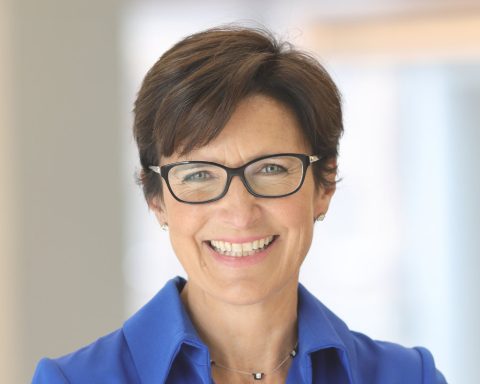



Some leaders become famous for bold public speeches or charismatic personalities. Safra Catz earned her reputation through disciplined execution, strategic acquisitions, and an unwavering focus on long-term value creation.
Key Takeaways
- Strategic acquisitions can become powerful tools for long-term business transformation.
- Strong execution and operational discipline are essential for turning ambitious strategies into results.
- Financial expertise can help leaders make better decisions about innovation and growth.
- Adaptability allows established companies to remain competitive during major industry shifts.
- Leadership success comes from results, credibility, and the ability to navigate complexity.
Many business leaders are celebrated for launching startups or introducing groundbreaking inventions. Safra Catz built her legacy differently – by mastering execution, driving strategic acquisitions, and ensuring one of the world’s largest technology companies continued evolving through multiple generations of innovation.
Her leadership journey took her from Wall Street investment banking to the executive offices of Oracle, where she became one of the most influential women in global technology. Along the way, she proved that disciplined financial management and strategic vision can be just as transformative as product innovation.
Today, Catz is widely recognized as one of the architects behind Oracle’s remarkable expansion into cloud computing and artificial intelligence.
1. From Wall Street to Silicon Valley
Safra Ada Catz was born on December 1, 1961, in Holon, Israel, before immigrating with her family to Brookline, Massachusetts, at the age of six. Her father was a physicist, while her mother, a Holocaust survivor, worked as a speech therapist. Growing up in an academically focused household helped cultivate the discipline and resilience that would later define her leadership style.
After graduating from the Wharton School of the University of Pennsylvania with a bachelor’s degree in 1983, Catz earned her Juris Doctor from the University of Pennsylvania Law School in 1986.
Instead of practicing law, she pursued a career in investment banking, joining Donaldson, Lufkin & Jenrette (DLJ), where she specialized in software companies and mergers and acquisitions.
Over thirteen years at DLJ, Catz developed deep expertise in corporate finance, valuation, and deal-making – skills that would later become central to Oracle’s expansion strategy.
2. Becoming Oracle’s Strategic Architect
In 1999, Larry Ellison recruited Catz to Oracle as Senior Vice President. While Oracle was already a dominant force in enterprise database software, the company sought leaders capable of driving long-term expansion beyond its traditional business.
Catz quickly established herself as one of Oracle’s most trusted executives.
She joined the Board of Directors in 2001 and steadily assumed greater responsibilities, serving as President, Chief Financial Officer, and eventually Co-Chief Executive Officer alongside Mark Hurd in 2014.
Following Hurd’s passing in 2019, Catz became Oracle’s sole CEO, leading the company through one of the most significant technological transitions in its history.
In 2025, Oracle announced a planned leadership transition, with Catz becoming Executive Vice Chair while continuing to play an active role in shaping the company’s long-term strategy.
3. Building Growth Through Strategic Acquisitions
One of Safra Catz’s defining achievements has been her leadership of Oracle’s acquisition strategy.
Unlike companies that pursue acquisitions simply to increase size, Oracle focused on acquiring technologies, customers, and capabilities that strengthened its long-term competitive position.
Throughout her career, Catz helped oversee more than 130 acquisitions.
Among the most notable were:
- PeopleSoft, one of Oracle’s most significant enterprise software acquisitions.
- Cerner, a landmark healthcare technology acquisition valued at approximately $28 billion.
- Numerous cloud infrastructure, security, enterprise applications, and AI-related companies that expanded Oracle’s ecosystem.
Each acquisition required complex negotiations, financial discipline, and careful integration planning.
Rather than pursuing growth for its own sake, Catz consistently evaluated whether acquisitions would strengthen Oracle’s long-term competitive advantage.
This disciplined approach helped Oracle evolve from a traditional database company into a diversified enterprise technology leader.
4. Leading Oracle’s Cloud and AI Transformation
As enterprise technology shifted toward cloud computing, Oracle faced growing competition from companies such as Amazon Web Services, Microsoft Azure, and Google Cloud.
Many industry observers questioned whether Oracle could successfully reinvent itself.
Under Catz’s leadership, Oracle invested heavily in cloud infrastructure, enterprise applications, healthcare technology, and artificial intelligence.
Rather than abandoning Oracle’s strengths, she focused on integrating cloud capabilities into the company’s existing enterprise ecosystem.
The strategy gradually positioned Oracle as a major provider of cloud services for governments, financial institutions, healthcare organizations, and global enterprises.
More recently, Oracle expanded its AI capabilities through strategic partnerships and infrastructure investments that positioned the company as an important player in the rapidly evolving artificial intelligence landscape.
5. Financial Discipline as a Leadership Advantage
One of Safra Catz’s greatest strengths as a leader has been her ability to combine ambitious growth strategies with financial discipline.
During her years as Oracle’s CFO and President, she developed a reputation for carefully evaluating investments, managing costs, and maintaining strong shareholder value.
Her investment banking background shaped a leadership philosophy centered on data, analysis, and measurable outcomes.
While some technology leaders focus primarily on vision and innovation, Catz emphasizes execution – the ability to turn strategy into sustainable business results.
This approach became particularly valuable during periods of technological disruption, when Oracle needed to balance innovation with profitability.
6. Leading Through a Male-Dominated Technology Industry
Safra Catz’s rise represents a significant milestone for women in technology leadership.
For decades, enterprise technology companies were largely dominated by male executives, particularly in senior operational and financial roles.
Catz became one of the highest-ranking female executives in global technology and consistently appeared on lists of the world’s most powerful women in business.
Her leadership style challenged traditional assumptions about what effective executives should look like.
Rather than relying on charisma or public visibility, she built influence through expertise, preparation, strategic thinking, and consistent execution.
Her career demonstrates that leadership credibility is earned through results and the ability to navigate complex challenges.
7. Creating a Culture of Accountability and Performance
Unlike some technology executives known for visionary storytelling, Catz is recognized for her direct and analytical management approach.
She emphasizes accountability, operational excellence, and clear decision-making.
At Oracle, this culture helped create an organization capable of executing large-scale transformations while maintaining financial strength.
Her approach reflects a broader leadership principle: companies do not succeed through ideas alone – they succeed when leaders build systems that consistently turn ideas into reality.
Catz’s career highlights the importance of execution as a competitive advantage.
8. Leadership Lessons from Safra Catz
Strategic Discipline Creates Long-Term Advantage
Great leaders understand that growth requires more than ambition – it requires disciplined choices about where to invest resources and how to create sustainable value. Catz’s acquisition strategy at Oracle demonstrates how carefully selected investments can reshape an organization over decades.
Successful leaders avoid chasing every opportunity and instead focus on decisions that strengthen their core competitive advantages.
Execution Is as Important as Vision
Ideas and strategies only create value when organizations can execute them effectively. Catz’s career shows that operational excellence, financial discipline, and attention to detail are essential leadership capabilities.
Visionary goals become meaningful only when leaders build the systems and processes needed to achieve them.
Adaptability Keeps Companies Relevant
Oracle’s transition from database software to cloud computing and AI demonstrates the importance of adapting before disruption becomes unavoidable.
Strong leaders continuously evaluate changing markets and position their organizations for future opportunities.
Financial Expertise Can Drive Innovation
Finance is often viewed as a supporting business function, but Catz demonstrated that financial expertise can become a strategic advantage.
Understanding capital allocation, acquisitions, and investment decisions allowed her to guide Oracle’s transformation at scale.
Leadership Does Not Require a Traditional Style
Catz’s career challenges the idea that successful leaders must be charismatic public figures.
Her analytical, disciplined, and results-focused approach shows that different leadership styles can succeed when supported by competence and trust.
Women Can Shape the Future of Technology
Catz’s journey from Wall Street analyst to one of the world’s most influential technology executives highlights the expanding role of women in shaping global industries.
Her success provides an example for future generations seeking leadership positions in traditionally male-dominated fields.
Conclusion
Safra Catz’s leadership story is built on transformation, discipline, and strategic execution.
From her early career in investment banking to becoming one of Oracle’s most influential executives, she demonstrated how financial expertise and operational leadership can reshape a global technology company.
Her role in Oracle’s acquisitions, cloud transformation, and AI strategy reflects a leadership philosophy centered on long-term value creation rather than short-term recognition.
As technology continues to evolve rapidly, Catz’s career offers an important lesson: successful leaders are not only those who predict the future – they are those who build organizations capable of adapting to it.
FAQs
Who is Safra Catz?
Safra Catz is an Israeli-American business executive best known for her leadership at Oracle, where she served as CEO and helped transform the company into a major cloud and enterprise technology provider. She is widely recognized for combining financial expertise, strategic decision-making, and operational discipline throughout her career.
What is Safra Catz known for at Oracle?
Catz is known for leading Oracle’s acquisition strategy, financial management, and transition from traditional database software toward cloud computing and artificial intelligence. Her leadership helped Oracle expand its technology portfolio while maintaining strong profitability and shareholder value.
How many companies has Oracle acquired under Safra Catz’s leadership?
Safra Catz helped oversee more than 130 acquisitions during her Oracle career, including major deals such as PeopleSoft and Cerner. These acquisitions played a major role in expanding Oracle’s capabilities across enterprise software, healthcare technology, cloud infrastructure, and emerging technologies.
What is Safra Catz’s leadership style?
Catz is known for a disciplined, analytical, and results-focused leadership style centered on accountability, strategic planning, and operational excellence. She emphasizes data-driven decisions and execution, believing that strong management systems are essential for achieving ambitious business goals.
Why is Safra Catz considered an influential female business leader?
Catz is considered one of the most influential female executives in technology due to her role in leading Oracle, her impact on enterprise software, and her success in a traditionally male-dominated industry. Her career serves as an example of how expertise, resilience, and strategic thinking can help women reach the highest levels of corporate leadership.
Sources:
- https://en.wikipedia.org/wiki/Safra_Catz
- https://www.forbes.com/profile/safra-catz/
- https://www.womentech.net/how-to/safra-catz-oracles-trailblazing-leader
- https://www.theverge.com/news/782585/oracle-ceo-safra-catz-steps-down
Photo credit: Oracle / Wikimedia Commons / CC BY 4.0 – cropped (link)