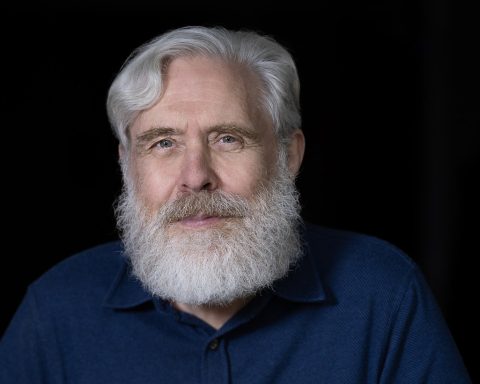


Key Takeaways
- Pieter Levels built his entrepreneurial career around small, profitable internet businesses rather than conventional venture-backed startups.
- His 2014 “12 Startups in 12 Months” challenge taught him to prioritize launching and learning over perfecting a single idea.
- Nomad List and Remote OK emerged from his own experience as a digital nomad and became the foundation of his independent business portfolio.
- Levels turned building in public into a distribution strategy, sharing products, failures, revenue and lessons with a large online audience.
- His later AI businesses demonstrate how the one-person company model can evolve as automation and AI reduce the amount of infrastructure needed to operate software businesses.
Pieter Levels took a very different route to entrepreneurship. Instead of raising venture capital, assembling a large team, and spending years developing one product, the Dutch self-taught developer built a portfolio of internet businesses largely by himself, in public, and with an unusual willingness to let ideas fail quickly.
His best-known products, Nomad List and Remote OK, grew from experiments during his life as a digital nomad. Later, products such as Photo AI and Interior AI showed that the same philosophy could be applied to artificial intelligence. Levels’ story is ultimately less about becoming a billionaire startup founder and more about asking a different question: what if a business did not need to become big in order to become successful?
The Founder Who Didn’t Want a Traditional Startup
Pieter Levels was not the obvious candidate to become a technology entrepreneur.
Born in the Netherlands in 1987, he studied music production at the Conservatorium van Amsterdam and spent part of his early career producing electronic music and DJing. He also pursued business studies at several institutions, including the Vrije Universiteit Amsterdam and Rotterdam School of Management.
What he did not do was earn a computer-science degree.
Instead, Levels taught himself to build software.
That distinction became important because his approach to technology would eventually reject many of the assumptions surrounding professional software companies. He did not believe that building a product necessarily required a large engineering department. He became interested in what one person could accomplish with a laptop, inexpensive infrastructure and the willingness to learn whatever was necessary.
Before Nomad List existed, however, Levels had to figure out what kind of entrepreneur he wanted to be.
Leaving the Netherlands With a Laptop
In 2013, Levels sold most of his possessions and left for Asia, beginning a lifestyle that would eventually become central to his business identity.
He was drawn to the idea of becoming a digital nomad: someone who could work remotely while moving between countries rather than being tied to one office or city.
The lifestyle was influenced in part by books such as The 4-Hour Workweek and by independent internet entrepreneurs who were building businesses outside the traditional Silicon Valley model.
But the reality was less glamorous than the concept.
Levels needed to make money.
Rather than spending years trying to invent the perfect startup, he decided to impose a constraint on himself.
In March 2014, he announced that he would launch 12 startups in 12 months.
The objective was simple: build and launch something new every month and find out whether anyone actually wanted it.
The experiment became one of the defining moments of his career. Many of the projects failed or remained small. But failure was built into the system.
The goal was not to produce 12 successful companies.
The goal was to become better at building.
Levels has since discussed the experiment extensively, including in his 2024 interview with Lex Fridman, where he described the philosophy behind rapidly launching products and learning from the market.
Nomad List Emerges From the Experiment
One of those experiments became much more important than the others.
Nomad List began with a relatively simple idea: create a useful way for digital nomads to compare cities.
Levels initially assembled information about cities into a crowdsourced spreadsheet and shared it online. The project attracted attention because it addressed a very practical problem for people who wanted to work remotely while traveling.
- Where should you live?
- How expensive is it?
- How fast is the internet?
- What is the quality of life?
- How safe is the city?
- What is the weather like?
These were questions Levels was asking himself anyway.
Instead of simply answering them for himself, he turned the information into a product.
The project spread through online communities including Twitter, Product Hunt and Hacker News. Nomad List eventually developed into a broader community and data platform for remote workers and travelers.
The important part of the story is that Levels did not discover the idea through a conventional market-research exercise.
He was the customer.
He experienced the problem personally, built something to solve it, and then discovered that thousands of other people had the same problem.
That pattern would become central to his entrepreneurial philosophy.
From Nomad List to Remote OK
The next logical problem was employment.
Finding a place to live was one challenge for digital nomads. Finding a job that allowed them to live that way was another.
Levels built Remote OK around that problem.
The product began as a remote-job board and grew into another durable business in his portfolio. The idea was straightforward: make remote work easier to discover by creating a dedicated marketplace rather than forcing workers to search through traditional job boards.
Levels’ own account of building Remote OK illustrates his broader approach. He identified a specific problem among a community he already understood, built a relatively simple solution, and launched it quickly rather than waiting for a perfect product.
The two businesses complemented each other.
Nomad List helped people figure out where they could live.
Remote OK helped them figure out how they could work.
Together, they represented something more interesting than two successful side projects. They demonstrated that a solo founder could build businesses around a narrowly defined audience without necessarily turning them into conventional startups.
The Build-in-Public Founder
Levels’ products were only part of what he was building.
He was also building an audience.
From the beginning, he documented his work online. He shared launches, experiments, failures, technical decisions and eventually revenue figures.
That openness became part of his competitive advantage.
Most entrepreneurs hide unfinished products until they believe they are ready. Levels often did the opposite. He showed people what he was making while he was still making it.
The audience could then provide feedback, identify problems, share the product and occasionally become customers.
This created a feedback loop:
Build something > Publish it > Get reactions > Change it > Launch again > Repeat.
His 2024 conversation with Lex Fridman provides an unusually detailed look at this philosophy, including his views on automation, solo development, shipping quickly and deciding when a product has enough traction to justify continuing.
The model also changes the relationship between marketing and product development.
For Levels, posting about the product is not necessarily separate from building the product.
The audience becomes part of the development process.
Why He Didn’t Need Venture Capital
The traditional startup model often assumes that a technology company needs capital before it can scale.
Levels built around almost the opposite assumption.
His businesses were designed to generate revenue early. Instead of raising money to hire employees and develop a product before finding customers, he generally tried to find customers while the product was still extremely small.
That meant his businesses could remain small.
And remaining small was not necessarily a problem.
A business with low operating costs does not need enormous revenue to support its founder. A software product with automated payments, customer support, marketing and infrastructure can potentially serve thousands of customers without requiring hundreds of employees.
That changes the economics of entrepreneurship.
Levels has repeatedly emphasized that he does not follow the conventional VC-funded startup path and prefers to build businesses himself. His public interviews and writing also show a strong preference for automation and minimal overhead.
The model has an important limitation, however.
A business that is designed to remain small may not be appropriate for every market.
Levels’ approach works particularly well when software can be distributed globally, customers can pay online, infrastructure can be automated, and one founder can maintain a manageable product portfolio.
It is not a universal replacement for teams.
It is an alternative to assuming that every company needs one.
The AI Chapter
Levels’ philosophy became particularly relevant when generative AI dramatically reduced the cost and time required to build certain software products.
He moved into AI products including Photo AI and Interior AI, applying the same principles he had developed through Nomad List and Remote OK.
The technology had changed, but the underlying process had not:
- Find an interesting problem.
- Build something quickly.
- Put it in front of people.
- Charge for it.
- Listen to what happens.
- Improve it or move on.
Photo AI became one of his more prominent AI businesses and helped demonstrate why his one-person-company philosophy could become even more viable as software development and operational tasks became increasingly automated.
His 2024 Lex Fridman interview devoted substantial attention to Photo AI, AI development and the practicalities of building AI products as a solo entrepreneur.
This is where Levels’ story becomes more than an interesting example of digital nomad entrepreneurship.
He may have accidentally been preparing for the AI era for a decade.
The Economics of One Person
One of the most fascinating parts of Levels’ business model is not how much revenue his products generate.
It is how little infrastructure he believes he needs to generate it.
His businesses can operate with extremely small teams – or, in some cases, effectively without conventional teams.
That eliminates many expenses associated with traditional companies: offices, layers of management, recruiting departments, large engineering organizations and the coordination costs that come with them.
It also eliminates something else.
Waiting.
A solo founder does not need a meeting to decide whether a button should move.
There is no product committee to approve a small feature.
There is no executive hierarchy between the founder and the code.
That can produce enormous speed.
It can also produce enormous risk.
Everything depends on the founder.
If the founder stops working, the organization does not simply continue as normal. If the founder makes a bad decision, there may be nobody else in the room to challenge it.
Levels has embraced that trade-off.
What “12 Startups in 12 Months” Really Taught Him
The most important lesson from Levels’ famous experiment may not be about launching quickly.
It is about reducing the emotional cost of failure.
If an entrepreneur spends three years developing one product, abandoning it can feel devastating. The investment of time creates an incentive to keep going even when the market is signaling that the idea is weak.
Levels’ system created the opposite incentive.
One month.
One launch.
One experiment.
If it failed, he could move on.
The result was a portfolio mentality.
Instead of betting everything on one idea, he created many opportunities for something to work.
Nomad List worked.
Remote OK worked.
Other projects did not.
Later, AI products opened another set of possibilities.
The strategy was not to predict which idea would become successful before building it.
It was to build enough ideas that the market could help make the decision.
Building a Career Instead of a Startup
Perhaps the most interesting way to understand Pieter Levels is to stop thinking of him as the founder of a particular company.
He is better understood as the builder of a personal business system.
Nomad List became part of it.
Remote OK became part of it.
Photo AI became part of it.
Interior AI and other experiments became part of it.
His websites, writing, social-media audience and public revenue reporting became part of it too.
Each project can potentially create money, knowledge, audience or distribution for the next project.
That is fundamentally different from the standard startup journey.
The traditional model often asks:
How do we build this company as large as possible?
Levels’ model asks a different question:
How can I build a business that is useful, profitable and small enough for me to control?
Neither model is automatically right for every entrepreneur.
But the second question is increasingly relevant in a world where software, AI and automation allow individuals to accomplish work that once required entire departments.
The Founder Lesson From Pieter Levels
Levels’ greatest contribution may not be Nomad List, Remote OK or any individual product.
It may be the demonstration that entrepreneurship can be designed around personal freedom rather than organizational growth.
He has shown that a founder can choose not to raise venture capital.
A founder can choose not to build a large team.
A founder can choose to publish unfinished work.
A founder can choose to abandon products that do not work.
And a founder can choose profitability over the pursuit of a billion-dollar valuation.
That does not mean the model is effortless.
Quite the opposite.
Levels’ lifestyle, technical ability, audience and years of experimentation are difficult to reproduce. His self-reported revenue figures also should not be interpreted as independently audited financial results.
But the principles behind his approach are easier to understand.
Start small.
Launch early.
Charge early.
Listen carefully.
Automate aggressively.
Keep costs under control.
And do not confuse company size with business quality.
The One-Person Company Becomes a Real Business Model
Pieter Levels began his entrepreneurial journey by leaving behind possessions, traveling through Asia and experimenting with internet businesses.
More than a decade later, he remains an unusually visible example of what can happen when a founder treats business-building as an ongoing experiment rather than a single grand project.
His 12-startup challenge produced plenty of failures.
But it also produced Nomad List and Remote OK.
Those businesses created an audience.
That audience created distribution.
The distribution made later launches easier.
And new technologies, particularly AI, have given Levels even more tools with which to continue the cycle.
His story therefore isn’t really about being a “solopreneur.”
It is about leverage.
One person with software can reach a global market. One website can serve customers around the clock. One public post can attract users, feedback and potential customers. And one small product can become the foundation for the next one.
That is the idea Pieter Levels has been testing for more than a decade.
He did not build a giant company and then figure out how to make it efficient.
He started with almost nothing and built the business around staying small.
In an era increasingly fascinated by startups that need hundreds of millions of dollars to reach scale, Levels offers a very different entrepreneurial question:
What if you don’t need to scale the company when you can scale what one person can do?
FAQs
Who is Pieter Levels?
Pieter Levels is a Dutch self-taught developer and entrepreneur best known for creating Nomad List and Remote OK. He is also known for building and launching numerous internet products while publicly documenting his work and entrepreneurial experiments.
What is Pieter Levels’ 12 Startups in 12 Months challenge?
In 2014, Levels challenged himself to launch 12 startups in 12 months. Most did not become significant businesses, but Nomad List and Remote OK emerged from this period and became his best-known products.
What is Nomad List?
Nomad List is a platform built around information and community for digital nomads, including data that helps people compare cities and decide where to live and work. The project grew from Levels’ own experience as a location-independent worker.
What is Remote OK?
Remote OK is a remote-work job board created by Levels. It grew from his observation that people who wanted to work remotely had difficulty discovering suitable jobs on conventional employment platforms.
Does Pieter Levels use venture capital?
Levels has built his best-known businesses without following the conventional venture-capital model. He has repeatedly described a preference for bootstrapping, operating with minimal overhead and retaining control of his businesses rather than raising outside funding.
Conclusion
Pieter Levels represents a very different kind of technology founder. His ambition was never simply to build the biggest possible company; it was to discover how much one person could accomplish with software, distribution, automation and a willingness to experiment.
That philosophy produced failures, but it also produced durable businesses and a model that has become increasingly relevant as AI reduces the cost of building and operating software.
For founders, the lesson is not necessarily to copy Levels and become a one-person company. It is to question the assumptions behind the traditional startup model.
A company does not automatically become better because it has more employees, more funding or a larger office.
Sometimes the most interesting business is the one that stays deliberately small – and works.
Sources:
- https://businessinspection.net/journey-of-pieter-levels/
- https://yespress.io/pieter-levels
- https://goldpenguin.org/blog/the-story-of-pieter-levels/
- https://lexfridman.com/pieter-levels/
- https://sg.finance.yahoo.com/news/12-startups-12-months-digital-053909234.html
- https://www.linkedin.com/videos/noemikis_he-makes-3-million-a-year-with-no-employees-activity-7489296393195597824-qzhy