

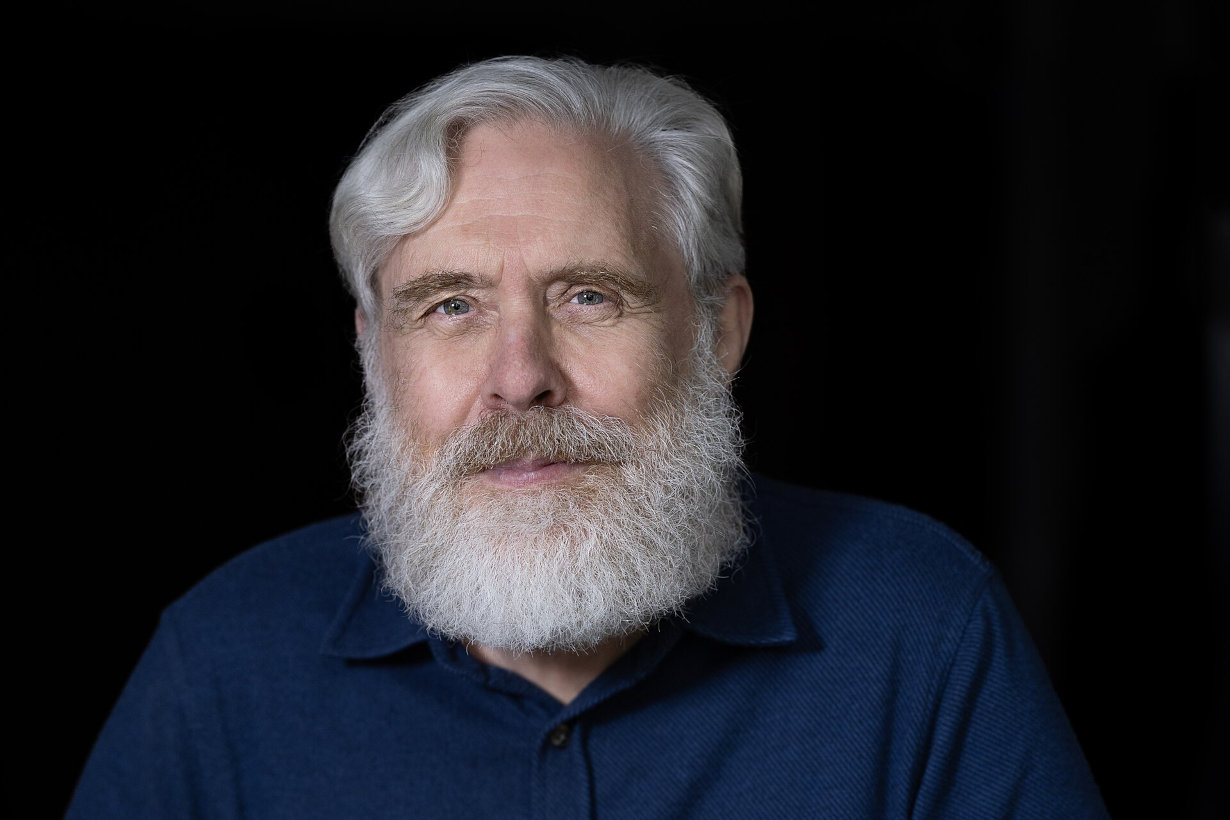
For most of human history, biology was something people observed, studied, and tried to understand. George Church has spent his career pursuing a more radical possibility: what if biology could be engineered with the same systematic precision that software and machines can be designed?
Key Takeaways
- George Church helped pioneer genomic sequencing and has spent decades turning biology into an increasingly measurable and engineerable discipline.
- His laboratory has generated technologies and companies spanning sequencing, synthetic biology, gene editing, personal genomics, therapeutics, longevity, and conservation.
- AGENTEX demonstrates how his current research is pushing beyond genome editing toward programmable genetic codes and proteins built with expanded biological vocabularies.
- His move into AI-for-science reflects a broader effort to combine computational intelligence with automated experimentation and accelerate the scientific discovery cycle.
- Church’s career shows how fundamental research can become an innovation engine when scientific capabilities are systematically translated into platforms, companies, and new industries.
The Scientist Who Turned Biology Into an Engineering Problem
George Church sits at an unusual intersection of science and entrepreneurship.
He is the Robert Winthrop Professor of Genetics at Harvard Medical School, a professor of Health Sciences and Technology at Harvard and MIT, a founding core faculty member of the Wyss Institute, the founder of the Personal Genome Project, a co-founder and lead genetics advisor to Colossal Biosciences, and Chief Scientist at AI-for-science company Lila Sciences. Harvard’s current faculty records show that he remains active in research, with publications in 2026 spanning genetic engineering, synthetic biology, aging, and genomics.
But titles only explain part of Church’s influence.
His deeper contribution has been to help transform genomics from a field largely dependent on painstaking biological experimentation into one increasingly shaped by automation, computation, synthesis, and engineering.
That transformation began with something deceptively simple: finding faster ways to read DNA.
The Sequencing Problem
DNA contains the biological instructions used by living organisms, but knowing that information is useful only if scientists can actually read it.
When Church entered the field, sequencing DNA was slow, expensive, and technically difficult. His doctoral work at Harvard with Nobel laureate Walter Gilbert contributed to methods for direct genome sequencing, molecular multiplexing, and barcoding.
In 1984, Church and Gilbert published work describing a direct genomic sequencing method. Church’s later work helped advance automation and multiplexing, contributing to the technological foundation underlying subsequent generations of sequencing. The Wyss Institute credits him with pioneering direct genomic sequencing, molecular multiplexing, and related technologies that became foundational to genomic research.
The significance was not simply that scientists gained another laboratory technique.
It was that sequencing could increasingly be treated as an engineering problem.
Make it faster.
Make it cheaper.
Run more samples simultaneously.
Automate the process.
Reduce the amount of biological material required.
Turn an artisanal laboratory procedure into something that could eventually operate at industrial scale.
That mindset would become a recurring theme throughout Church’s career.
From Reading DNA to Programming Biology
Once scientists can read DNA at scale, another possibility emerges: writing it.
Church became deeply involved in technologies for DNA synthesis, genome engineering, homologous recombination, and the construction of increasingly complex genetic systems.
This distinction between reading biology and writing biology is central to understanding his work.
Sequencing tells researchers what a biological system contains. Synthesis and genome engineering provide ways to change what that system contains.
Together, they create the basic architecture of an engineering discipline.
Read the system.
Model it.
Design a change.
Build it.
Test the result.
Measure what happened.
Then iterate.
That cycle looks remarkably similar to the development loop used in software and advanced engineering.
The Personal Genome Project Made Church’s Own DNA Part of the Experiment
Church did not limit his interest in genomics to laboratory technology.
In 2005, he initiated the Personal Genome Project, an unusually ambitious attempt to create a public resource combining genomic information with environmental and trait data. The project explicitly rejected the idea that genetic information could always be made anonymous, instead using informed consent to enable participants to make highly identifiable genomic information available for research.
Church volunteered himself as the project’s first participant.
That was more than publicity.
It illustrated the philosophy behind the project: if personal genomics was going to become a major scientific and medical field, researchers needed to confront its privacy and ethical challenges directly.
The conventional approach to sensitive medical information was to protect identity through confidentiality and de-identification.
The Personal Genome Project asked a different question:
What if some people knowingly chose openness instead?
That experiment helped turn genomic privacy into an explicit design problem rather than simply a policy afterthought.
Church Helped Create the Lab-to-Startup Pipeline
Church’s laboratory has also become famous for producing companies.
His research has contributed to ventures spanning genomic sequencing, synthetic DNA, gene editing, diagnostics, personal genomics, therapeutics, longevity, and organ transplantation.
Among the companies associated with his work are Editas Medicine, Gen9, Veritas Genetics, and eGenesis, among many others. The Wyss Institute describes technologies from Church’s research as providing foundations for companies including Editas, Gen9bio, and Veritas Genetics.
This is where Church becomes particularly interesting from a business perspective.
His laboratory does not operate simply as a place where papers are produced.
It functions more like an innovation engine.
A scientific discovery creates a new capability. The capability reveals a potential application. The application becomes a platform. The platform can become a company. The company then develops the technology beyond what an academic laboratory could normally accomplish.
It is a continuous loop between basic science and commercialization.
CRISPR Was Part of a Much Larger Engineering Revolution
Church’s name is frequently associated with CRISPR, although his broader contribution to genome engineering predates the CRISPR era.
His laboratory worked on genome engineering, homologous recombination, synthetic biology, and methods for manipulating genetic systems before CRISPR became one of biotechnology’s defining technologies.
When CRISPR-Cas9 emerged as a powerful genome-editing mechanism, Church was among the researchers who helped demonstrate and develop its potential for mammalian and human-cell applications.
The importance of CRISPR is that it dramatically lowered the barrier to making targeted genetic changes.
But Church’s larger vision goes beyond editing one gene at a time.
He has worked on multiplex genome engineering, genome recoding, large-scale DNA synthesis, and approaches that treat entire genomes as programmable systems.
That is a different scale of ambition.
Instead of asking, “Can we fix this particular genetic defect?” the engineering question becomes, “How much of a biological system can we deliberately redesign?”
MAGE and the Idea of Parallel Biological Engineering
One of the important technologies associated with Church’s laboratory is Multiplex Automated Genome Engineering, or MAGE.
The basic idea is to perform many genetic changes in parallel rather than making one modification at a time.
This matters because biological engineering can otherwise become painfully slow.
If researchers want to test one genetic variation, they can make one change and observe what happens. But if they want to explore a huge design space, sequential experimentation quickly becomes impractical.
Automation changes the economics of that process.
Instead of asking scientists to manually perform thousands of individual experiments, machines can help generate and test many genetic variants systematically.
The underlying philosophy is similar to high-throughput computing: when the number of possibilities becomes enormous, scale the experimental process rather than relying exclusively on human effort.
The Genome Becomes a Design Medium
Church’s work on genome writing pushes this philosophy even further.
Traditional genetic engineering often modifies existing biological systems. Genome writing asks whether scientists can design larger portions of genetic information deliberately and synthesize them from scratch.
Church became involved in Genome Project-write, an international effort exploring the synthesis and engineering of genomes and large genomic components.
The implications are enormous.
Engineered cells could potentially be designed to resist viruses, manufacture useful molecules, produce therapeutics, or perform biological tasks that natural organisms do not perform efficiently.
But the engineering challenge also becomes much more complex as the scale increases.
Changing one gene is not the same as redesigning an entire biological system.
Living systems contain interactions, feedback loops, evolutionary pressures, and failure modes that are difficult to predict.
That is why Church’s work increasingly combines biology with computation and automation.
2026: Church’s Lab Expands the Genetic Alphabet
Church’s current research demonstrates that this engineering mindset is far from finished.
In 2026, researchers in his Harvard laboratory reported AGENTEX, or automated genetic tRNA expansion, a platform for designing custom genetic codes in cell-free systems.
Nature reported that the system can work with compressed genetic codes involving up to 34 aminoacyl-tRNA synthetases for 34 codons, while the standard genetic code uses 20 amino acids. The researchers demonstrated the incorporation and reassignment of non-standard amino acids in cell-free translation systems.
Harvard and the Wyss Institute describe AGENTEX as a way to design proteins using up to 34 amino acids rather than the 20 used by ordinary biological systems, without having to recode an entire living organism.
That is a striking example of Church’s broader philosophy.
Nature provides a biological system.
Scientists identify its constraints.
Engineering creates a way around those constraints.
Automation makes the process repeatable.
Computation expands the number of possibilities that can be explored.
Eventually, biology becomes something closer to a programmable platform.
Why Custom Genetic Codes Matter
The significance of AGENTEX is not simply the number 34.
The deeper opportunity is to expand the chemical vocabulary available to biological systems.
Proteins are built from amino acids. Nature predominantly uses 20 standard amino acids, but scientists have identified and developed many additional non-standard amino acids with potentially useful chemical properties.
If researchers can reliably assign new amino acids to genetic codes, they gain additional building blocks for constructing proteins and other biological materials.
That could eventually influence areas such as therapeutics, biomaterials, industrial biocatalysis, and synthetic biology.
It also demonstrates an important shift in biotechnology.
Scientists are no longer merely trying to understand the genetic code.
They are experimenting with how the code itself can be redesigned.
From Genomics to De-Extinction
Perhaps no project associated with Church has attracted more public attention than Colossal Biosciences.
Founded by entrepreneur Ben Lamm and Church, Colossal is pursuing technologies intended to restore extinct species and develop tools for conservation biology. Church serves as co-founder and lead genetics advisor.
The company’s most famous target has been the woolly mammoth.
But the science is more complicated than simply “bringing back” an extinct animal.
Ancient DNA is incomplete and damaged. A reconstructed genome still has to be converted into viable biological material. Embryology, cellular engineering, reproductive biology, genetics, and animal development all become part of the problem.
That is precisely why the project fits Church’s approach.
De-extinction is not one technology.
It is a systems-engineering problem spanning genomics, genome editing, stem cells, embryology, reproductive technology, computational biology, and conservation science.
Colossal’s partnership with Church’s Harvard laboratory includes work in areas such as genome engineering, computational biology, stem-cell reprogramming, and embryology.
The Bigger Idea Behind De-Extinction
Whether extinct species can actually be restored to their historical ecological roles remains a subject of scientific and ethical debate.
But the technologies developed while pursuing that goal could have applications far beyond extinct animals.
Genomic engineering can potentially help endangered species. Reproductive technologies can support conservation. Genetic tools can be used to investigate disease resistance and adaptation. Computational biology can improve our understanding of how organisms respond to environmental change.
That creates an important innovation principle:
A moonshot does not have to succeed exactly as originally imagined to produce useful technology.
The engineering capabilities developed along the way can become valuable independently of the headline objective.
Longevity Is Another Engineering Problem
Church has also been involved in research and companies focused on aging and longevity.
His work has included gene therapies, cellular engineering, and efforts to identify biological mechanisms associated with aging.
One example is Rejuvenate Bio, which has explored gene therapies intended to address age-related decline in animals and eventually human disease.
But longevity is another area where enthusiasm needs to be separated from demonstrated clinical outcomes.
Extending lifespan is not the same as reversing aging. Improving one biological marker is not the same as improving human healthspan. A result in mice is not evidence of a successful therapy in people.
Church’s broader contribution here is less about promising immortality and more about treating aging as a biological system that can be measured, modeled, and potentially manipulated.
The AI-for-Science Pivot
Church’s move into AI-for-science may be the most important clue to where his career is heading next.
In 2025, he became Chief Scientist of Lila Sciences, a company developing AI systems and autonomous laboratories for life sciences, chemistry, and materials science. Lila describes its mission as building a scientific superintelligence platform that combines AI with physical laboratory infrastructure.
The combination is significant.
AI can generate hypotheses, analyze data, identify patterns, and explore enormous design spaces. But science ultimately requires experiments.
A model can predict that a molecule might work.
A laboratory has to test it.
Lila’s approach is therefore not simply “AI for scientists.” It aims to connect computational intelligence with automated experimentation.
That is almost a perfect extension of Church’s career.
Sequencing automated the reading of biology.
Synthetic biology automated parts of biological construction.
MAGE automated genetic experimentation.
AGENTEX automates aspects of genetic-code design.
AI and autonomous laboratories could potentially automate portions of the entire discovery loop.
The Autonomous Science Laboratory
This is where Church’s vision starts to intersect with a much larger transformation in scientific research.
The traditional research model is human-driven: scientists formulate hypotheses, design experiments, operate equipment, analyze results, and decide what to test next.
An autonomous laboratory can potentially move some of those steps into a computational loop.
AI proposes an experiment.
Robotic systems execute it.
Sensors collect the results.
The model analyzes the data.
A new experiment is selected.
The cycle repeats.
If this works reliably, scientific discovery could become dramatically more iterative.
The bottleneck would shift from how quickly scientists can perform experiments to how intelligently machines can select the experiments worth performing.
That is a profound change in the economics of research.
Church’s Real Innovation May Be the Innovation Machine
Looking across Church’s career, individual discoveries can make the story seem fragmented.
Sequencing.
Personal genomics.
CRISPR.
Synthetic biology.
Genome writing.
Longevity.
Xenotransplantation.
De-extinction.
AI.
But there is a common thread.
Church repeatedly looks for ways to turn biological complexity into something that can be measured, modeled, manipulated, automated, and eventually scaled.
That is the innovation.
He is helping move biology from a predominantly observational science toward an increasingly engineering-oriented discipline.
And engineering disciplines tend to generate industries.
The Lab as a Company Factory
Church’s entrepreneurial output illustrates another important change in the relationship between universities and business.
In the traditional academic model, a researcher publishes a paper and perhaps licenses an invention.
The Church model is more aggressive.
A research program can produce multiple technologies. Each technology can create a new commercial opportunity. Different entrepreneurs can build companies around different applications while the academic laboratory continues working on the underlying science.
This creates a portfolio effect.
Most experiments will not become major companies.
Some may fail commercially.
Others may be acquired.
A few can become important platforms.
For a scientist working at the frontier, this can provide multiple pathways for research to reach the market.
It also creates significant governance challenges because academic research, intellectual property, commercial interests, investors, and scientific publication can overlap.
The Ethics Become More Important as the Tools Improve
Church’s willingness to push technological boundaries has also made ethics an unavoidable part of his work.
He has publicly discussed subjects including human genetic enhancement, germline editing, genetic selection, privacy, synthetic biology, and the risks associated with emerging biological technologies.
His position has generally favored continued experimentation and careful monitoring rather than assuming that controversial technologies should automatically be prohibited.
Critics have raised concerns about the implications of genetic enhancement and some of the ways such technologies could intersect with historical ideas about eugenics.
Those debates are not peripheral to Church’s work.
They are part of the central question created by increasingly powerful biological engineering:
Just because we can change biology, what should we change?
The more powerful the tools become, the more important governance, transparency, informed consent, and public participation become.
The Epstein Controversy Requires Its Own Context
Any current profile of Church also needs to address his documented association with Jeffrey Epstein.
Church received funding connected to Epstein and maintained contact with him after Epstein’s 2008 conviction. Epstein also became a participant in the Personal Genome Project, and 2026 reporting based on newly released documents examined how his samples and relationship with the project were handled. STAT reported that Epstein’s biological samples were stored in Church’s laboratory and that a 2013 request to prioritize them caused significant concern among laboratory staff.
Church has previously apologized for his judgment concerning Epstein, saying he failed to appreciate the seriousness of Epstein’s conduct at the time and referring to what he called “nerd tunnel vision.”
The episode is particularly relevant to a profile of Church because his career has repeatedly emphasized openness, experimentation, and pushing scientific boundaries. Scientific ambition does not remove the need for institutional judgment and ethical scrutiny.
The appropriate conclusion is therefore neither to ignore the history nor to allow it to replace the scientific record. It is part of the due-diligence picture surrounding a highly influential scientist.
A Scientific Retraction Is Also Part of the Record
There is another reason to distinguish scientific accomplishment from scientific certainty.
In August 2025, a 2022 PNAS paper co-authored by Church on a CMV-based gene-therapy approach related to aging was retracted following an institutional review at Rutgers that identified data discrepancies in two figures. Retraction Watch reported that Church agreed with the retraction, while other co-authors disagreed. Church characterized the problems as potentially arising from inadequate data backup and said they did not necessarily change the study’s conclusions.
The retraction does not invalidate Church’s broader body of research.
But it is a useful reminder of something particularly important in frontier science: extraordinary claims require extraordinary levels of reproducibility, documentation, and independent verification.
That standard becomes even more important when research is connected to commercial ventures and potentially transformative medical applications.
Why Church Matters to Business Innovation
Church’s story offers an unusually clear example of how fundamental science can become an entrepreneurial platform.
The first innovation may be a laboratory technique.
Then comes a tool.
Then a platform.
Then a company.
Then an industry.
Genomic sequencing followed this trajectory. Synthetic DNA followed it. Gene editing is following it. AI-driven biological discovery may be entering the same cycle.
For entrepreneurs, there is an important lesson here: some of the biggest businesses of the future may begin as seemingly obscure scientific capabilities that initially have no obvious consumer application.
The commercial opportunity emerges when someone recognizes what the capability makes possible.
The Next Frontier Is the Discovery Process Itself
Church’s career began by making biological information easier to read.
It moved toward making DNA easier to write.
Then biology became something researchers could engineer at increasing scale.
Now AI and automation offer the possibility of accelerating the process of discovering what biology can do.
That progression is important.
The next revolution in biotechnology may not be one particular gene-editing technology or one new drug.
It may be a new discovery infrastructure.
Machines could generate biological designs. AI could identify promising candidates. Robotic laboratories could test them. Data could flow back into the models. New experiments could be generated automatically.
If that loop becomes reliable, the speed of biological innovation could increase dramatically.
And George Church is positioned unusually close to that transition because his career has already crossed nearly every major stage of it.
From Reading Life to Programming Life
George Church’s career can ultimately be understood as a progression through three questions.
First: How do we read biology?
His sequencing work helped make genomes increasingly accessible to measurement.
Second: How do we write and modify biology?
His work in synthetic biology, genome engineering, and genome synthesis helped develop tools for changing biological systems.
Third: How do we accelerate the process of discovering what biology can become?
His current work with AI, autonomous science, and platforms such as AGENTEX points toward that next question.
That is why Church remains relevant decades after his earliest sequencing work.
The technologies have changed.
The underlying ambition has not.
He continues to treat biology not merely as something to observe, but as a system that can increasingly be understood, engineered, automated, and redesigned.
FAQs
Who is George Church?
George Church is a Harvard Medical School geneticist, synthetic-biology researcher, entrepreneur, and professor associated with Harvard and MIT. He is known for pioneering work in genome sequencing, genome engineering, synthetic biology, personal genomics, and biotechnology commercialization.
What is George Church best known for?
Church is particularly known for his early contributions to direct genomic sequencing, molecular multiplexing, synthetic biology, genome engineering, and the Personal Genome Project. He has also become widely known for his involvement with CRISPR, de-extinction through Colossal Biosciences, and emerging AI-for-science research.
What is AGENTEX?
AGENTEX is an automated genetic tRNA expansion platform developed by researchers in Church’s Harvard laboratory. Reported in Nature in 2026, it enables researchers to design custom genetic codes in cell-free systems and work with genetic codes involving up to 34 amino acids rather than the 20 used by standard biological systems.
What is George Church’s connection to Colossal Biosciences?
Church is a co-founder and lead genetics advisor to Colossal Biosciences, a company developing technologies related to species restoration, conservation, and de-extinction. Its research combines genome engineering with areas including computational biology, embryology, and cellular engineering.
Why is George Church important to biotechnology innovation?
Church’s importance extends beyond individual discoveries because his laboratory has repeatedly translated scientific capabilities into technologies and companies. His career illustrates a model in which academic research, automation, computation, synthetic biology, and entrepreneurship reinforce one another.
Sources:
- https://en.wikipedia.org/wiki/George_Church_(geneticist)
- https://arep.med.harvard.edu/gmc/
- https://digital.sciencehistory.org/works/1e76gek
- https://www.science.org/content/author/george-m-church-ph-d
- https://cen.acs.org/biological-chemistry/biochemistry/custom-genetic-codes-george-church/104/web/2026/09
- https://healthcarediscovery.ai/george-church-supercentenarian-genome-longevity-feature/
- https://genetics.hms.harvard.edu/faculty-staff/george-church
- https://www.statnews.com/2026/02/24/epstein-cell-line-george-church-harvard-personal-genome-project/
- https://www.genome.gov/genetics-glossary/CRISPR
- https://www.bizjournals.com/boston/news/2025/05/28/lila-sciences-george-church.html
- https://pmc.ncbi.nlm.nih.gov/articles/PMC4590770/
Photo credit: Christopher Michel / Wikimedia Commons / CC BY-SA 4.0 – cropped (link)