


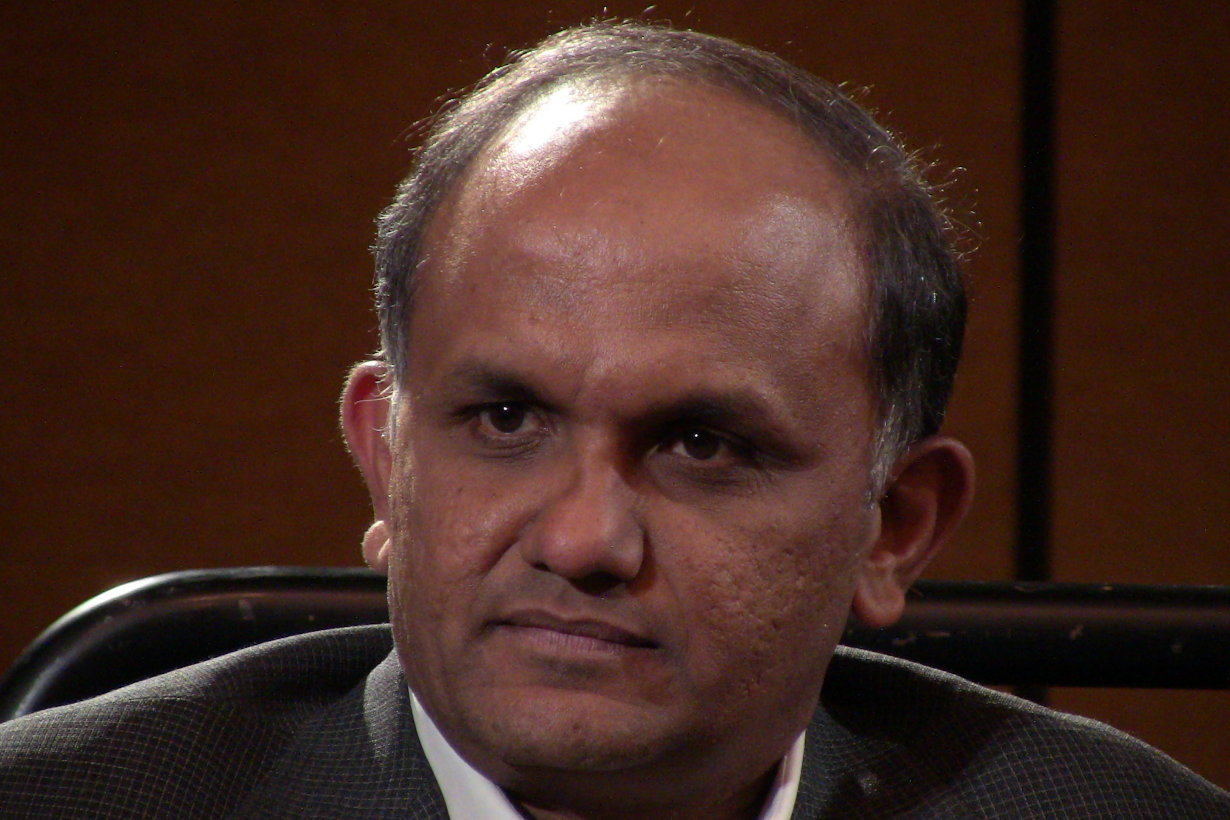
Some CEOs inherit a company that needs fixing. Others inherit a successful company that needs to become something different before the market forces the issue. Shantanu Narayen belongs to the second group, having spent nearly two decades leading Adobe through one of the most consequential business-model transformations in modern software.
When Narayen became CEO in 2007, Adobe was best known for software that customers purchased as traditional licenses. Today, the company operates around cloud subscriptions, digital experiences, artificial intelligence and increasingly agentic workflows. His tenure now enters its final chapter as Anil Chakravarthy is scheduled to become Adobe’s president and CEO on December 1, 2026, with Narayen moving to executive chair.
Key Takeaways
- Shantanu Narayen transformed Adobe by moving its core software business from perpetual licenses toward cloud subscriptions.
- His tenure demonstrates how established companies can expand into adjacent markets without abandoning their strongest capabilities.
- Adobe’s experience with Figma and AI shows that major strategic bets require flexibility as markets, technology and regulation change.
- Customer trust becomes especially important when technology companies change pricing, licensing, data practices and product capabilities.
- Narayen’s transition to executive chair in December 2026 makes succession itself an important part of his leadership story.
Learning to Change Before the Business Forces You
The most important leadership and career decision of Shantanu Narayen was not simply launching a new product. It was recognizing that Adobe’s existing business model could eventually become a constraint.
Adobe‘s creative software had become deeply embedded in professional workflows, but the traditional model of selling perpetual licenses was increasingly out of step with the way software was being delivered. Under Narayen, Adobe moved its major creative products toward a cloud-based subscription model through Creative Cloud.
The transition was controversial at first. Customers accustomed to purchasing software outright were being asked to think about Photoshop, Illustrator and other tools as ongoing services rather than permanent products.
That made the change particularly difficult from a leadership perspective. A CEO was effectively asking a large and profitable installed customer base to accept a fundamentally different relationship with the company.
Narayen’s lesson is not that every established business should abandon its existing model. It is that leaders need to distinguish between protecting what currently works and protecting what will continue to work.
Transform the Business Without Abandoning Its Identity
One of the risks of transformation is that a company can become so focused on becoming something new that it loses sight of what made customers trust it in the first place.
Narayen approached Adobe’s transformation around capabilities that were already central to the company’s identity. Creativity remained the foundation, but Adobe increasingly connected creativity with documents, marketing, customer experience and digital workflows.
The acquisition of Omniture in 2009 was an important part of that expansion. Adobe subsequently built out its digital experience business through acquisitions including Marketo, Magento and Workfront.
The result was a broader company that could participate in more of the digital economy without completely abandoning its original creative franchise.
That distinction matters for leaders. Reinvention does not necessarily mean starting over. Sometimes it means taking an organization’s strongest capability and finding new markets, customers and use cases around it.
Think Beyond the Product
Narayen’s leadership also illustrates the difference between managing products and managing an ecosystem.
Adobe’s traditional strength was individual software applications. Its larger opportunity became the relationship between those applications, cloud infrastructure, customer data, documents, creative workflows and enterprise marketing.
This broader perspective helped Adobe move from being primarily a provider of creative tools toward becoming a much more diversified software platform.
For leaders, the practical lesson is to ask a bigger question than, “How do we improve our product?” The more useful question can be, “What larger workflow is our product already part of, and what else could we help customers accomplish?”
Listen to Ideas That Do Not Fit the Original Plan
A long-tenured CEO can easily become trapped by the company’s original definition of itself. Narayen’s leadership has often been described as collaborative and product-oriented, with an emphasis on listening to people inside the organization.
That matters because major strategic opportunities frequently begin as ideas that do not fit neatly into the existing structure.
Adobe’s expansion into digital experience is an example of how the company moved beyond the boundaries of its traditional creative-software identity. Instead of treating its existing customer base and capabilities as a fixed boundary, it looked for adjacent problems where its technology and expertise could be useful.
For leaders, listening is not passive. It is a mechanism for discovering opportunities that the formal strategy may not yet have articulated.
Accept That Strategic Bets Will Not All Work
Narayen’s record also contains an important reminder that successful leadership does not mean getting every major decision right.
Adobe announced plans in 2022 to acquire Figma in a transaction valued at approximately $20 billion. Regulators in the United States, United Kingdom and European Union raised competition concerns, and Adobe ultimately abandoned the acquisition in December 2023 and paid a $1 billion termination fee.
The episode demonstrated the limits of corporate strategy when regulators, competitors and changing market dynamics enter the equation.
There is a useful leadership distinction here. A failed strategic initiative should not automatically be treated as evidence of poor leadership, just as a successful outcome does not automatically prove that every decision behind it was correct.
Leaders have to evaluate major bets according to the information available when the decision was made, while remaining willing to change course when circumstances change.
Treat Disruption as a Leadership Problem, Not Just a Technology Problem
Adobe’s next major challenge is artificial intelligence.
Generative AI has changed the economics and expectations surrounding creative software. Tools that once required specialized knowledge can increasingly produce images, designs, video and other content through natural-language prompts.
Adobe responded with Firefly and has continued expanding AI capabilities across its creative, productivity and customer-experience products. In 2026, Adobe also announced a partnership with NVIDIA to develop next-generation Firefly models and AI-powered creative, marketing and agentic workflows.
The leadership challenge is bigger than adding an AI button to existing products. Adobe has to determine which parts of its existing value proposition become more valuable because of AI and which parts become easier for competitors to replicate.
Narayen’s approach has been to position AI as an extension of Adobe’s broader ecosystem rather than simply treating it as a standalone product category.
That is an important distinction for any established company facing technological disruption. The question is not simply, “How do we use the new technology?” It is also, “How does the technology change the reason customers choose us?”
Protect Trust While Changing the Product
Transformation inevitably creates friction with customers. Adobe has faced criticism over subscription pricing, cancellation policies and changes in how customers interact with its products. The company’s evolving AI strategy has added another layer of concern among some creators who worry about how their work is handled and used.
These issues highlight a leadership responsibility that can be easy to underestimate: technological transformation has to be accompanied by a clear explanation of what customers are agreeing to.
For a company whose reputation depends heavily on creative professionals, trust is not an abstract cultural value. It is part of the product.
The lesson extends well beyond Adobe. When a company changes pricing, licensing, data practices or product capabilities, executives have to consider not only what is legally or technically possible but also what customers believe the relationship should look like.
Long Tenure Can Be an Advantage – and a Responsibility
Narayen became Adobe CEO in 2007 and has spent more than 18 years in the role. Adobe says that during his tenure the company grew from roughly 3,000 employees to more than 30,000 and from less than $1 billion in revenue to more than $25 billion.
Such longevity can create enormous institutional knowledge. A leader who has watched multiple technology cycles unfold can make decisions with a historical perspective that a newly appointed executive simply cannot possess.
But longevity can also create a different risk: the company can become too closely associated with one leader.
Narayen’s upcoming transition therefore becomes part of his leadership record. In September 2026, Adobe announced that Anil Chakravarthy will become president and CEO on December 1, while Narayen moves into the executive chair role.
The transition is particularly notable because Chakravarthy is an internal leader who has been with Adobe since 2020 and currently leads its Customer Experience Orchestration business and worldwide field operations.
That creates continuity while still allowing the company to put a different executive in charge of its next phase.
Know When the Next Chapter Requires a Different Leader
Succession is often treated as an administrative event. In reality, it can be one of the clearest expressions of leadership philosophy.
Narayen announced in March 2026 that he would transition from the CEO role after a successor was identified. At the time, he said his focus was on helping the company identify the right leader and ensuring a smooth transition.
The eventual selection of Chakravarthy provides Adobe with an internally experienced successor at a moment when the company’s competitive environment is changing rapidly.
This is particularly relevant because the skills required to transform an established software company are not necessarily identical to those required to lead it through the next technology cycle.
A leader’s responsibility is therefore not simply to maximize the current chapter. It is to leave the organization capable of succeeding in the chapter that follows.
Keep the Company Moving While Preparing for the Future
One of Narayen’s most interesting leadership characteristics is the coexistence of long-term transformation and short-term execution.
Adobe has continued operating and developing its core businesses while simultaneously investing in cloud infrastructure, digital experience, AI, agentic workflows and new customer segments.
That balance is difficult because transformation projects can consume management attention while the existing business still has to deliver results every quarter.
The best strategic vision therefore has to coexist with operational discipline. A company cannot simply announce what it intends to become; it has to keep serving today’s customers while building what those customers may need tomorrow.
Leadership Lessons From Shantanu Narayen
1. Reinvention should begin before reinvention becomes an emergency
The strongest time to reconsider a successful business model is often while the existing model is still working.
2. Change the business without losing its core identity
Adobe expanded into subscriptions, digital experience and AI while continuing to build around creativity, productivity and digital content.
3. Listen for opportunities inside the organization
Employees working closest to customers and products can see emerging opportunities before they become obvious strategic priorities.
4. Treat failed bets as information
The collapse of the Figma acquisition demonstrates that even ambitious strategic plans can encounter external constraints that require leaders to adapt.
5. Technology strategy is ultimately customer strategy
AI matters not because it is fashionable but because it changes what customers can do, what they expect and what they are willing to pay for.
6. Trust is part of transformation
Pricing, licensing, data policies and AI practices can influence customer relationships as much as product features do.
7. Succession is part of the job
A leader who builds an organization that can continue without them creates a different kind of legacy than one who simply remains indispensable.
Conclusion
Shantanu Narayen’s leadership story is ultimately about managing change without confusing change with reinvention for its own sake.
He inherited a highly successful software company and helped turn it into a subscription-driven cloud business, expanded it into digital experience, and now leaves Adobe facing perhaps its most consequential technological transition yet: the rise of generative and agentic AI.
His record is not without difficult episodes. The Figma acquisition failed, customers have challenged aspects of Adobe’s subscription and AI policies, and the company now faces competitors capable of changing the economics of creative software. Those realities make the leadership lessons more useful, not less.
Narayen’s most enduring lesson may be that leadership is not about preserving the company exactly as it was when you arrived. It is about understanding what should remain, recognizing what must change, and eventually giving someone else the opportunity to lead the organization into circumstances you cannot fully predict.
FAQs
Who is Shantanu Narayen?
Shantanu Narayen is an Indian-American technology executive who joined Adobe in 1998 and became its CEO in 2007. He has led the company through its transition to cloud subscriptions, expansion into digital experience and development of its AI strategy.
What was Shantanu Narayen’s biggest leadership decision at Adobe?
One of his defining decisions was shifting Adobe’s major creative products from traditional perpetual software licenses toward a cloud-based subscription model. The transition changed Adobe’s relationship with customers and became a foundation of its subsequent business model.
Why did Adobe abandon the Figma acquisition?
Adobe announced the approximately $20 billion Figma acquisition in 2022, but regulators in the United States, United Kingdom and European Union raised competition concerns. Adobe abandoned the transaction in December 2023 and paid a $1 billion termination fee.
What is Shantanu Narayen doing after leaving the CEO role?
Adobe announced in September 2026 that Narayen will become executive chair on December 1, 2026, while Anil Chakravarthy becomes president and CEO. Narayen is expected to work with Chakravarthy to support the leadership transition and Adobe’s ongoing transformation.
What can business leaders learn from Shantanu Narayen?
Narayen’s career highlights the value of changing a successful business before its existing model becomes a liability. It also demonstrates the importance of listening to internal ideas, protecting customer trust, accepting that some strategic bets will fail and preparing the organization for leadership beyond your own tenure.
Sources:
- https://en.wikipedia.org/wiki/Shantanu_Narayen
- https://timesofindia.indiatimes.com/world/us/who-is-shantanu-narayen-indian-origin-ceo-of-adobe-career-net-worth-family-all-you-need-to-know/articleshow/128778586.cms
- https://www.bloomberg.com/news/newsletters/2026-03-16/adobe-faces-ai-threat-ceo-transition-with-faith-customers-will-pay
- https://www.adobe.com/cc-shared/assets/investor-relations/pdfs/adbe-2026-proxy.pdf
- https://www.hindustantimes.com/opinion/teambuilders-better-for-business-than-tyrants-101724342254901.html
- https://www.nytimes.com/2023/12/18/business/adobe-figma-takeover.html
- https://www.linkedin.com/news/story/adobe-ceo-shantanu-narayen-stepping-down-amid-ai-concerns-7082460/
Photo credit: Jolie O’Dell / Wikimedia Commons / CC BY 2.0 – cropped (link)