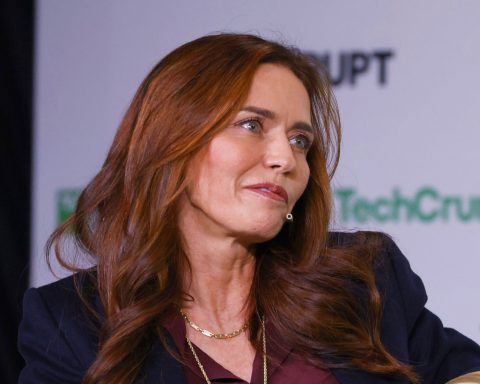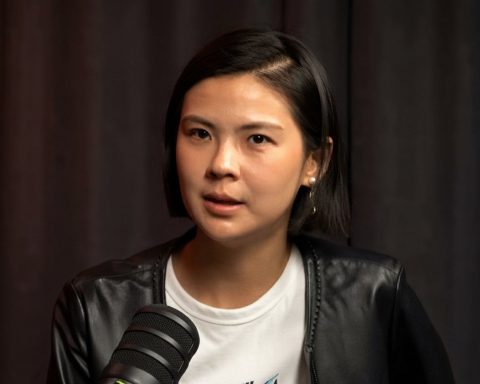


Some founders build companies. Others build ecosystems that help shape entire generations of entrepreneurship. That distinction defines Theresia Gouw, the Indonesian-born venture capitalist and entrepreneur whose journey from immigrant beginnings to becoming one of Silicon Valley’s most influential investors reflects resilience, long-term thinking, and a commitment to backing transformational founders.
Key Takeaways
- Resilience and adaptability can become foundational entrepreneurial advantages.
- Venture capital firms are themselves entrepreneurial ventures built through trust, networks, and strategic conviction.
- Long-term success in technology often comes from identifying people and trends early rather than chasing hype.
- Representation and diversity can shape investment strategy and startup ecosystems alike.
- The most influential builders are sometimes those who empower other founders to succeed.
From Immigrant Beginnings to Silicon Valley Influence
Born in Indonesia to parents of Chinese descent, Theresia Gouw arrived in the United States as a refugee at the age of three. Her parents – both trained medical professionals in Indonesia – took modest service jobs in Buffalo, New York, while rebuilding their careers and adapting to a new environment.
Watching her family work through uncertainty and sacrifice helped shape Gouw’s perspective on resilience, opportunity, and long-term ambition.
Years later, she would become one of the most influential women in venture capital, helping back major technology companies and eventually launching her own investment firms focused on supporting ambitious founders tackling complex problems.
Her story reflects not only entrepreneurial achievement, but also the broader role venture capital plays in shaping innovation itself.
Journey: Engineering, Business, and the Path Into Venture Capital
The rise of Theresia Gouw did not begin inside elite Silicon Valley circles.
Growing up in Buffalo, she developed an early interest in numbers, business, and technology while watching her parents rebuild their lives through persistence and hard work. She eventually became the first student from her high school to attend Brown University, where she graduated magna cum laude in engineering.
Later, she earned an MBA from Stanford Graduate School of Business, placing her closer to the emerging technology ecosystem that would define her career.
Rather than entering venture capital immediately, Gouw first gained operational experience inside startups. She became the founding vice president of business development and sales at Release Software, a venture-backed SaaS company during the early growth era of enterprise software.
This operating background became important.
Unlike investors who entered finance directly, Gouw experienced firsthand the uncertainty, pressure, and execution challenges founders face while scaling businesses.
Her transition into venture capital eventually led her to Accel, where she became the firm’s first female partner. During her time there, she participated in several landmark investments, including an early investment in Facebook alongside Jim Breyer.
She also worked on investments involving companies such as:
- Trulia
- Imperva
These experiences established her as one of Silicon Valley’s most respected venture investors.
Building Firms Around Long-Term Conviction
After years at Accel, Theresia Gouw took a more entrepreneurial path within venture capital itself.
In 2014, she co-founded Aspect Ventures, one of Silicon Valley’s pioneering female-led venture firms. The launch reflected a broader shift occurring within technology investing, where new firms increasingly differentiated themselves through sector expertise, founder support, and long-term strategic focus rather than simply financial capital.
Later, in 2019, Gouw launched Acrew Capital, a thesis-driven investment firm built around deep specialization and collaborative networks.
The firm focuses on areas including:
- data infrastructure,
- cybersecurity,
- fintech,
- healthcare,
- and community-driven businesses.
Over time, Acrew grew into a multibillion-dollar platform managing roughly $1.7 billion in assets.
Importantly, Gouw’s approach reflects a long-term philosophy rather than trend chasing.
Rather than pursuing every short-term market narrative, Acrew emphasizes enduring technological shifts and strong founder relationships. This strategy mirrors broader changes in modern venture capital, where network quality and operational guidance increasingly matter alongside financing.
Her influence also extends beyond capital allocation.
As one of the most prominent Asian-American women in venture capital, Gouw became an important figure in conversations surrounding representation, diversity, and access within Silicon Valley leadership.
Strategic Lesson: Venture Capital as Entrepreneurship
One of the most interesting aspects of Theresia Gouw’s story is that venture capital itself can function as an entrepreneurial journey.
Launching an investment firm requires many of the same skills associated with startups:
- fundraising,
- team-building,
- strategic positioning,
- reputation development,
- and long-term execution.
In this sense, firms like Aspect Ventures and Acrew Capital were themselves startup ventures operating inside the financial ecosystem.
This perspective helps explain why many successful venture capitalists often possess founder-like qualities. They are not simply allocating capital; they are building organizations, networks, and investment cultures designed to attract exceptional entrepreneurs.
Gouw’s career also highlights the importance of conviction investing.
Backing companies like Facebook before they became dominant required recognizing long-term behavioral and technological shifts ahead of mainstream consensus.
This ability to identify transformative patterns early became one of the defining characteristics of her investing career.
Acrew Capital vs. Traditional Venture Capital Firms
| Dimension | Acrew Capital | Traditional VC Model |
|---|---|---|
| Investment Style | Thesis-driven specialization | Broad portfolio approach |
| Founder Relationships | Long-term partnership focus | Transaction-oriented funding |
| Strategic Focus | Data, security, community sectors | Generalized technology investing |
| Firm Identity | Collaborative network model | Traditional partnership structure |
| Value Proposition | Operational expertise + networks | Primarily capital access |
This distinction reflects how modern venture capital firms increasingly compete through expertise, ecosystems, and founder support rather than financial resources alone.
Theresia Gouw: The Ecosystem Builder
What distinguishes Theresia Gouw is that her influence comes largely through enabling other entrepreneurs to succeed.
Unlike founders who become public faces of consumer brands, Gouw built her reputation through pattern recognition, relationship-building, and long-term ecosystem development.
Her engineering and operational background gave her credibility with technical founders, while her immigrant experience shaped her understanding of resilience and opportunity.
That perspective influenced both her investment philosophy and her advocacy for broader representation within technology.
Importantly, Gouw’s career also demonstrates how entrepreneurship extends beyond launching products.
Building firms, investment platforms, and startup ecosystems can have equally significant long-term impact because they shape which technologies and founders receive support in the first place.
Her story reflects a quieter but deeply influential form of entrepreneurship – one rooted in enabling innovation at scale.
The Broader Impact: Representation in Venture Capital
For decades, venture capital remained one of Silicon Valley’s least diverse sectors, particularly at senior leadership levels. The rise of Theresia Gouw therefore carried significance beyond individual financial success.
As one of the first highly visible Asian-American female billionaires in venture capital, she helped demonstrate that leadership within the technology investment ecosystem could evolve beyond its historically narrow demographic patterns.
Her presence also mattered symbolically for immigrant families, women in technology, and underrepresented founders seeking examples of long-term success within Silicon Valley. At the same time, Gouw consistently emphasized performance, operational expertise, and founder support rather than identity alone.
This balance helped her maintain credibility both as a leading investor and as a broader advocate for inclusion within entrepreneurship.
Beyond Silicon Valley: A Return to Buffalo
For all of her success in Silicon Valley, Theresia Gouw has never completely lost sight of where her American story began.
In 2024, she joined the ownership group of the Buffalo Bills, one of the NFL’s most storied franchises. The investment was more than a financial opportunity. Buffalo was the city where her family rebuilt their lives after arriving in America, and becoming part-owner of one of the region’s most beloved institutions represented a meaningful full-circle moment.
The move also reflects Gouw’s broader philosophy about investing. Throughout her career, she has focused on organizations with deep communities, strong cultures, and the potential for long-term value creation. In many ways, the Bills ownership stake mirrors the same principles that guided her venture career: back enduring institutions, support talented leaders, and think in decades rather than quarters.
The Most Powerful Founders Sometimes Build Platforms for Others
The story of Theresia Gouw expands the traditional definition of entrepreneurship.
Rather than building a single consumer-facing company, she helped shape the broader startup ecosystem through investing, mentorship, and institution-building.
From modest immigrant beginnings to becoming one of venture capital’s most influential figures, her journey reflects resilience, strategic thinking, and long-term conviction.
At the same time, her career illustrates how modern venture capital increasingly rewards operational understanding and founder empathy alongside financial expertise.
For entrepreneurs, the lesson is significant: sometimes the greatest long-term impact comes not only from building products, but also from helping other builders succeed.
FAQs
Who is Theresia Gouw?
Theresia Gouw is an entrepreneur and venture capitalist best known as the founding partner of Acrew Capital and co-founder of Aspect Ventures. She is widely recognized as one of Silicon Valley’s most influential female investors.
What is Acrew Capital?
Acrew Capital is a venture capital firm focused on long-term investments in areas such as data infrastructure, cybersecurity, fintech, and healthcare. The firm emphasizes thesis-driven investing and collaborative founder support.
What companies did Theresia Gouw help invest in?
During her career, Gouw participated in major investments including Facebook, Trulia, and Imperva. These investments helped establish her reputation as a leading technology investor with strong long-term strategic insight.
Why is Theresia Gouw important in venture capital?
Gouw became one of the first highly visible Asian-American female billionaires in venture capital while helping shape modern investment strategies around specialization and founder partnership. Her success also contributed to broader conversations about diversity and representation within Silicon Valley.
What can founders learn from Theresia Gouw?
Founders can learn the importance of resilience, long-term thinking, and relationship-building. Her career also demonstrates that entrepreneurship can include building ecosystems and investment platforms that empower other innovators to succeed.
Sources:
- https://en.wikipedia.org/wiki/Theresia_Gouw
- https://www.forbes.com/profile/theresia-gouw/
- https://www.forbes.com/sites/phoebeliu/2025/06/08/meet-venture-capitals-first-woman-billionaire/
- https://finance.yahoo.com/news/acrew-capital-hits-five-years-195606525.html
- https://www.facebook.com/Jarpmedia1/posts/theresia-gouws-journey-is-a-powerful-story-of-resilience-and-determination-start/966866382994943/
- https://www.buffalobills.com/news/buffalo-bills-welcome-10-new-limited-partners-to-ownership-group