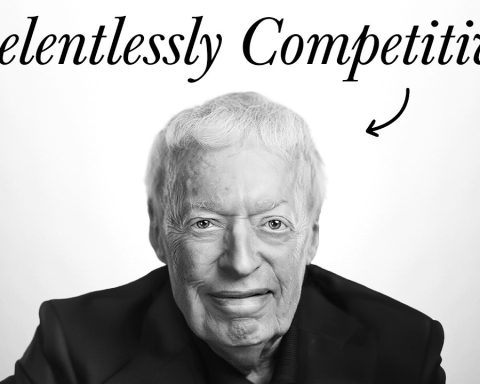



Some leaders build products. Howard Schultz built an experience that reshaped global coffee culture and transformed a small Seattle retailer into one of the world’s most recognizable consumer brands. His leadership journey demonstrates how culture, emotional connection, and long-term brand identity can become powerful competitive advantages when combined with operational discipline and ambitious vision.
Key Takeaways
- Howard Schultz transformed Starbucks by focusing on emotional experience as much as product quality.
- Strong organizational culture can become a long-term competitive advantage.
- Emotional branding often creates deeper customer loyalty than transactional value alone.
- Successful scaling requires balancing visionary storytelling with operational discipline.
- Great leaders often revisit core principles when organizations lose strategic clarity.
Great Brands Often Begin With a Human Problem
Many successful companies start by solving a practical need.
Howard Schultz recognized something deeper: people were searching not only for coffee, but also for connection, familiarity, and community in increasingly fragmented urban lives.
That insight became the foundation of Starbucks’ identity as a “third place” between home and work.
Rather than positioning Starbucks purely as a beverage retailer, Schultz envisioned an environment centered around atmosphere, consistency, and emotional experience. Inspired by Italian espresso bars during a 1983 trip to Milan, he saw how cafés could function as social spaces woven into daily routines rather than simply transactional businesses.
At the time, Starbucks primarily sold coffee beans and equipment rather than café experiences. Schultz believed the larger opportunity involved creating a scalable lifestyle and hospitality brand built around human interaction.
This perspective helped Starbucks differentiate itself from traditional diners, convenience stores, and fast-food chains.
More importantly, it demonstrated a leadership principle that would define Schultz’s career:
Strong businesses often emerge from understanding emotional needs as deeply as functional ones.
From Brooklyn Housing Projects to Starbucks
Howard Schultz’s early life shaped many of his later leadership priorities.
Born in Brooklyn, New York, to a working-class family, Schultz grew up in federally subsidized housing in Canarsie. His father worked a series of physically demanding jobs without healthcare, job security, or meaningful benefits. Schultz has frequently described a workplace injury suffered by his father as a formative moment that exposed the fragility of financial survival for many working-class families.
That experience deeply influenced his later views on employee treatment and corporate responsibility.
Schultz became the first person in his family to graduate college, earning a communications degree from Northern Michigan University in 1975. After early sales roles at Xerox and Hammarplast, he encountered Starbucks while selling coffee equipment to the small Seattle company in the early 1980s.
He joined Starbucks in 1982 as director of marketing and retail operations.
A pivotal turning point came after his trip to Italy in 1983. Inspired by Milan’s café culture, Schultz proposed transforming Starbucks into an espresso bar experience. When the founders rejected the concept, he left to start his own café company, Il Giornale.
In 1987, Schultz acquired Starbucks for roughly $3.8 – 4 million and merged it into his broader vision.
That decision marked the beginning of one of the most influential consumer-brand expansions in modern business history.
Under Schultz’s leadership, Starbucks expanded globally, went public in 1992, and helped normalize premium coffee culture worldwide. The company’s stores became social spaces as much as retail locations, reinforcing Schultz’s belief that customer experience could become a strategic moat.
Insight 1: Culture Can Become a Scalable Competitive Advantage
One of Schultz’s most important leadership contributions was treating company culture as a strategic asset rather than a secondary HR concern.
Long before many large retailers emphasized employee experience publicly, Starbucks introduced benefits including healthcare eligibility for part-time workers and stock ownership programs for employees.
Schultz believed employees who felt respected and valued would create stronger customer experiences.
This philosophy aligned closely with Starbucks’ broader identity. The company was not simply selling coffee; it was selling consistency, hospitality, and emotional familiarity.
Importantly, Schultz understood that culture scales through systems and repetition.
Store layouts, customer interactions, employee training, product presentation, and even music selection were carefully designed to reinforce the Starbucks experience globally.
The broader leadership lesson is significant:
Strong organizational cultures can become operational advantages that competitors struggle to replicate.
At the same time, Schultz’s leadership also faced criticism, particularly regarding Starbucks’ unionization battles in the 2020s. Critics accused the company of anti-union tactics, while Schultz argued that Starbucks’ direct employee relationship model already provided strong benefits and engagement opportunities.
These tensions illustrate a broader reality of leadership at scale: maintaining a people-centered reputation becomes increasingly complex as organizations grow larger and stakeholder expectations evolve.
Insight 2: Emotional Branding Often Creates Stronger Loyalty Than Products Alone
Starbucks succeeded not only because of coffee quality, but because of emotional positioning.
Schultz consistently framed Starbucks as part of customers’ lifestyles and daily rituals. The stores offered predictability, comfort, and routine during increasingly fast-paced modern life.
This emotional resonance helped transform Starbucks into a cultural institution rather than a commodity retailer.
Customers developed strong attachments to:
- the store atmosphere
- personalized orders
- barista familiarity
- the consistency of the experience across locations
Schultz recognized that emotional familiarity could generate long-term loyalty more effectively than price competition alone.
This became particularly important as Starbucks expanded internationally.
Rather than competing solely on convenience or cost, Starbucks positioned itself as an aspirational yet accessible premium experience. The brand maintained strong identity consistency while adapting selectively to local markets.
The leadership insight extends beyond retail:
Organizations that create emotional relevance often build deeper resilience than businesses competing only on transactional value.
Insight 3: Leaders Sometimes Need to Return to Core Principles
One of the defining moments of Schultz’s leadership came during his return as CEO in 2008 amid the financial crisis.
Starbucks had expanded aggressively, but critics argued that the company was losing focus on product quality, customer experience, and operational discipline. The business faced slowing growth, economic pressure, and declining investor confidence.
Schultz responded by making highly visible decisions designed to reset the company’s identity.
Starbucks temporarily closed thousands of stores across the United States to retrain baristas on espresso preparation standards. The move carried financial costs and attracted skepticism, but it reinforced the message that quality and experience mattered more than short-term optics.
He also renewed focus on ethical sourcing, operational simplification, and customer engagement.
The turnaround highlighted an important leadership principle:
Growth can weaken organizations when expansion outpaces identity and operational clarity.
Strong leaders often recognize when businesses need not additional complexity, but renewed commitment to foundational values.
Insight 4: Visionary Leadership Still Requires Operational Discipline
Although Schultz is frequently associated with branding and culture, Starbucks’ growth also required enormous operational sophistication.
The company scaled globally while maintaining remarkably consistent customer experiences across thousands of locations.
This required:
- supply-chain coordination
- real estate strategy
- training systems
- international operations management
- product standardization
- technology integration
Schultz understood that vision alone is insufficient without disciplined execution.
One reason Starbucks became so influential was the combination of emotional storytelling and operational reliability. Customers trusted the experience because the systems supporting the brand were highly structured and repeatable.
This balance between inspiration and execution remains one of the most important lessons from Schultz’s leadership career.
Many organizations excel at branding but struggle operationally. Others operate efficiently but fail to create emotional differentiation.
Starbucks succeeded because it combined both dimensions at global scale.
Leadership That Built More Than a Coffee Company
Howard Schultz did not simply build a successful retailer.
He helped redefine how modern consumers experience coffee, hospitality, and brand identity in everyday life. Through Starbucks, he demonstrated how emotional connection, culture, and operational consistency can transform ordinary products into global experiences.
His leadership journey also reflects broader themes in modern business: the growing importance of purpose-driven branding, employee engagement, and customer experience as competitive differentiators.
At the same time, Schultz’s story illustrates the complexities that emerge when mission-driven organizations scale globally. Leadership at that level inevitably attracts scrutiny, criticism, and evolving stakeholder expectations.
Still, Schultz’s influence on retail, branding, and consumer culture remains undeniable.
Ultimately, his career demonstrates that some of the world’s most powerful businesses are built not only around products, but around how people feel when they interact with them.
Howard Schultz Beyond Starbucks
Following multiple leadership tenures at Starbucks, Howard Schultz transitioned into a more active philanthropic and advisory role. He remains Chairman Emeritus of Starbucks while focusing on initiatives through the Schultz Family Foundation, which supports youth opportunity, veterans, and economic mobility programs.
In recent years, Schultz has also remained publicly engaged in discussions surrounding business leadership, urban policy, labor relations, and corporate responsibility. Although officially retired from day-to-day operations, his influence continues to shape conversations around modern consumer branding and stakeholder-driven leadership.
FAQs
Who is Howard Schultz?
Howard Schultz is the businessman best known for transforming Starbucks from a small Seattle coffee retailer into a global café and lifestyle brand. His leadership helped popularize premium coffee culture and the concept of Starbucks as a “third place” between home and work.
What made Howard Schultz successful?
Schultz combined emotional branding, customer experience, and operational discipline to differentiate Starbucks from traditional coffee retailers. He also focused heavily on company culture and employee engagement as part of the brand’s long-term strategy.
Why did Howard Schultz return to Starbucks in 2008?
Schultz returned during the financial crisis because Starbucks was facing slowing growth, operational complexity, and declining customer experience standards. His return focused on restoring product quality, simplifying operations, and reconnecting the company with its original identity.
What is Howard Schultz’s leadership style?
His leadership style emphasizes culture, storytelling, customer experience, and long-term brand identity. Schultz also believes strongly in employee engagement and creating emotional connections between businesses and consumers.
What controversies has Howard Schultz faced?
Schultz and Starbucks have faced criticism over labor relations and opposition to unionization efforts during the 2020s. Some critics also challenged various social and political initiatives associated with Starbucks, illustrating the complexities of leading highly visible consumer brands.
Sources:
- https://en.wikipedia.org/wiki/Howard_Schultz
- https://www.britannica.com/money/Howard-Schultz
- https://www.forbes.com/profile/howard-schultz/
- https://www.franchiseba.com/the-story-behind-starbucks/
- https://www.washingtonpost.com/politics/howard-schultz-says-he-grew-up-in-a-poor-rough-place-those-who-lived-there-called-it-the-country-club-of-projects/2019/03/13/4f26b800-39e9-11e9-a06c-3ec8ed509d15_story.html
- https://www.wsj.com/articles/SB120408358439295953
- https://www.cnn.com/2024/10/03/business/howard-schultz-starbucks-labor-law
Photo credit: Gage Skidmore / Wikimedia Commons / CC BY-SA 2.0 – cropped (link)