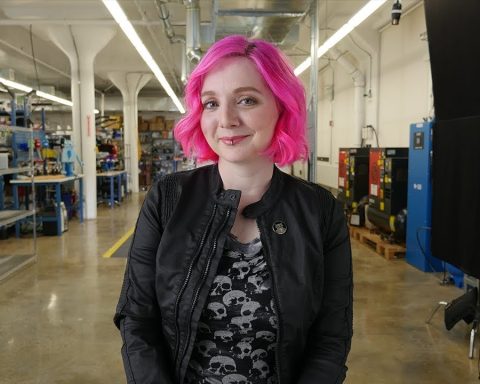



Aisha Bowe’s career has taken her from aerospace engineering at NASA to the leadership of two technology-focused businesses and, eventually, a seat aboard a Blue Origin spacecraft. Her journey is notable not simply because she entered the space industry, but because she turned her technical experience into commercial ventures with a broader educational purpose.
Through STEMBoard and LINGO, Bowe has pursued two connected ambitions: solving practical technology problems and helping more people develop the skills to participate in the industries shaping the future.
Key Takeaways
- Aisha Bowe moved from aerospace engineering at NASA into entrepreneurship, building businesses that connect technical expertise with practical opportunities.
- Her company, STEMBoard, applies engineering and technology capabilities to challenges faced by government and commercial clients.
- Through LINGO, Bowe has extended her interest in engineering into hands-on STEM education and accessible coding tools.
- Her participation in Blue Origin’s 2025 NS-31 mission brought greater attention to her work and her advocacy for broader access to science and technology.
- Bowe’s career demonstrates how technical knowledge, a clear purpose, and an understanding of unmet needs can become the foundation for entrepreneurial innovation.
From Community College to NASA
In her interest in engineering, Aisha Bowe did not follow an especially conventional path. A community college mathematics course helped spark her interest in science and technology, eventually leading her to the University of Michigan. There, she earned a bachelor’s degree in aerospace engineering and a master’s degree in space systems engineering.
Her academic progress opened the door to a career at NASA’s Ames Research Center. Working as an aerospace engineer, she contributed to projects involving aviation systems, flight trajectory optimization, and nanosatellite technology. The experience gave her exposure to complex technical challenges and the collaborative environment required to develop solutions in a highly specialized industry.
NASA also offered an opportunity to see how engineering knowledge could serve a wider community. Bowe participated in educational outreach, including activities connected to the Mathematics, Engineering, Science Achievement program. These experiences helped connect her professional work with a longer-standing interest in making technical education more accessible.
Her time at NASA was an important foundation, but it was not the final destination. Bowe began to see an opportunity to apply her engineering experience in a different setting: building a company that could deliver technical solutions to clients while creating a platform for her own entrepreneurial ambitions.
The Innovation: Building Businesses Around Technical Expertise
STEMBoard: Turning Engineering Knowledge Into Business Solutions
In 2013, Bowe founded STEMBoard, an engineering and technology services company. The business works with government agencies and commercial organizations, providing technical expertise in areas such as information technology, data management, analytics, and engineering-related solutions.
The business model is different from that of a company developing a single consumer product. STEMBoard’s value comes from applying specialized knowledge to problems that clients may not have the internal resources or expertise to solve independently. This can involve helping organizations improve systems, manage complex technical projects, or develop more effective approaches to data and technology.
For Bowe, the move from NASA to entrepreneurship meant applying engineering skills in a commercial environment. The underlying discipline remained familiar, but the responsibilities expanded. Running a technology company requires more than technical competence. It also involves understanding client needs, managing people, securing contracts, controlling costs, and delivering results consistently.
STEMBoard has received recognition for its growth, including appearances on the Inc. 5000 list of fast-growing private companies. The company has also received recognition for its work and employment practices. These milestones illustrate how a specialist technical services business can develop into a commercial enterprise by combining expertise with the ability to execute.
The broader lesson is that innovation does not always require inventing an entirely new technology. Businesses can also create value by applying existing knowledge more effectively, particularly in sectors where technical requirements are complex and the cost of getting things wrong can be significant.
LINGO: Making STEM Education More Hands-On
Bowe’s second venture, LINGO, takes a different approach to the same underlying interest in technology and opportunity. The education technology company develops hands-on coding kits designed to help students learn technical concepts through practical projects.
Rather than relying entirely on abstract explanations, LINGO’s approach connects coding and engineering principles with activities that students can build and explore. The objective is to make technical learning more engaging while helping young people develop foundational skills that may support further education or future careers.
This approach addresses a persistent challenge in STEM education. Students may encounter mathematics, coding, and engineering as difficult or disconnected subjects, particularly when instruction offers limited opportunities to apply what they learn. Project-based activities can help make these concepts more tangible by allowing learners to experiment, solve problems, and see how different ideas work together.
LINGO also reflects Bowe’s belief that access matters. Talent is not limited to students who grow up in households with advanced technology resources or established connections to the science and engineering industries. Providing practical learning tools can help introduce technical subjects to a wider audience.
From a business perspective, LINGO demonstrates how an entrepreneur can apply personal experience to identify a market opportunity. Bowe had seen the importance of early exposure to mathematics and engineering in her own development. The company translates that experience into an educational product with a defined audience and purpose.
The two businesses are distinct, but they share a common theme: making technical knowledge useful, whether the customer is an organization seeking engineering support or a student learning to code.
Blue Origin and a New Perspective on Space
On April 14, 2025, Bowe joined the all-female crew of Blue Origin’s New Shepard NS-31 mission. The suborbital flight carried six women beyond the internationally recognized boundary of space and brought Bowe’s career to a new level of public visibility.
Her participation was connected to more than the symbolic achievement of spaceflight. The mission included research activities, including work involving microgravity and human responses to space travel. Bowe’s background in aerospace engineering gave her a technical perspective on the experience, while her participation also strengthened her public role as an advocate for broader engagement with science and technology.
The flight attracted substantial media attention. It also created an opportunity to discuss who participates in the space industry, how people enter technical careers, and what might make those pathways more accessible.
For Bowe, the experience reinforced a theme that runs through her businesses: opportunity can expand when people are given access to the tools, education, and experiences needed to develop their abilities.
It is worth distinguishing her role from that of a career astronaut employed by a national space agency. Bowe participated as a civilian astronaut and science payload operator on a commercial suborbital mission. Nevertheless, her engineering background and involvement in research made the flight a meaningful extension of her professional interests.
The Business and Social Impact of Her Approach
Bowe’s work sits at the intersection of several important developments: the demand for specialized technology services, the growth of commercial space activity, and the need to prepare more people for technical careers.
STEMBoard illustrates the commercial potential of specialized expertise. Government agencies and private companies increasingly depend on sophisticated technology systems, data analysis, and engineering capabilities. External providers can help these organizations address specific requirements without having to develop every capability internally.
LINGO approaches the opportunity from an earlier stage of the talent pipeline. By introducing students to coding and engineering through practical activities, the company seeks to make technical learning more approachable. Although educational products alone cannot resolve broader disparities in access to STEM careers, they can help create an entry point for students who might otherwise have limited exposure.
Together, the ventures illustrate a business strategy built around a larger professional mission. One company applies technical expertise to existing organizational needs; the other seeks to help develop the next generation of people who may eventually work in technical fields.
There is also a branding dimension to Bowe’s public profile. Her NASA experience, entrepreneurial work, and Blue Origin flight have made her a recognizable figure in conversations about engineering and access to space. That visibility can help attract attention to her businesses, but it also brings a responsibility to demonstrate that the products and services can deliver practical value beyond the founder’s personal story.
The Challenges of Turning Purpose Into Sustainable Business
Bowe’s ventures operate in markets with different but substantial challenges.
For STEMBoard, competing in technology services requires maintaining technical capabilities, attracting qualified employees, and meeting demanding client expectations. Government contracting can involve lengthy procurement processes and strict requirements. Commercial clients, meanwhile, expect reliable delivery and measurable results. A company’s reputation depends on its ability to perform consistently, not simply on the expertise of its founder.
LINGO faces a different set of pressures. Educational products must compete for the attention of schools, parents, and students. They also need to demonstrate that their learning experiences are effective, accessible, and worth the cost. Reaching a large audience may require partnerships with educators and institutions, as well as a distribution strategy that extends beyond direct consumer sales.
There is a further challenge in translating public attention into lasting business growth. A high-profile event such as a spaceflight can increase awareness, but sustained commercial success depends on customer relationships, product quality, operational discipline, and the ability to respond to changing market needs.
These challenges make Bowe’s story relevant to entrepreneurs beyond the aerospace and education sectors. A compelling mission can open doors, but a durable business still needs a sound operating model.
What’s Next for Aisha Bowe?
Bowe continues to lead STEMBoard and LINGO while using her public platform to encourage greater participation in science, technology, engineering, and mathematics. Her work has also included international speaking and educational engagement, extending her influence beyond the companies she founded.
The next stage of her entrepreneurial journey will involve strengthening the businesses behind that public profile. For STEMBoard, this means continuing to deliver technical solutions and compete in demanding markets. For LINGO, it means expanding the reach and effectiveness of its educational products while helping more students develop practical technical skills.
Her experience in commercial spaceflight also gives her a distinctive position in discussions about the future of the space economy. As private companies take on a larger role in space transportation, research, and related services, the industry will need engineers, entrepreneurs, educators, and a broader technical workforce.
Bowe’s career connects these areas. She has worked as an engineer, built companies, developed educational products, and participated in a commercial space mission. Whether these activities ultimately create a larger impact will depend on the long-term performance of her businesses and the opportunities they help create.
Conclusion
Aisha Bowe’s innovation story is about applying technical knowledge beyond the laboratory or engineering workplace. Through STEMBoard, she turned aerospace and technology expertise into a business serving organizational clients. Through LINGO, she brought that interest in technology to students who may be discovering engineering and coding for the first time. Her Blue Origin flight added another dimension to a career already centered on science, entrepreneurship, and access to opportunity.
For aspiring entrepreneurs, one of the most useful lessons from Bowe’s journey is that specialized knowledge can become the starting point for more than one business idea. Understanding a technical field can reveal problems worth solving, while personal experience can help identify audiences whose needs are not being adequately addressed. The challenge is turning those insights into products and services that deliver lasting value.
FAQs
Who is Aisha Bowe?
Aisha Bowe is an aerospace engineer, entrepreneur, and former NASA engineer. She founded STEMBoard, a technology and engineering services company, and LINGO, an education technology business focused on hands-on STEM learning.
What is STEMBoard?
STEMBoard is an engineering and technology services company founded by Bowe in 2013. It works with government and commercial clients on technical needs involving areas such as information technology, data management, analytics, and engineering solutions.
What is LINGO?
LINGO is an education technology company that develops hands-on coding kits and learning experiences. Its products are designed to help students understand technical concepts through practical projects.
Did Aisha Bowe go to space?
Yes. Bowe flew on Blue Origin’s New Shepard NS-31 mission on April 14, 2025, as part of an all-female crew. The suborbital flight included research activities involving microgravity and human responses to spaceflight.
What can entrepreneurs learn from Aisha Bowe?
Her career illustrates how professional expertise can be turned into a business that solves practical problems. It also shows how an entrepreneur can build separate ventures around a shared purpose, provided each business has a clear market, a useful offering, and a sustainable operating model.
Sources:
- https://www.lemelson.org/aisha-bowe/
- https://www.un.org/youthaffairs/en/aisha-bowe-0
- https://www.uschamber.com/diversity/former-nasa-engineer-builds-stem-business-set-making-impact
- https://www.uschamber.com/workforce/talking-business-with-aisha-bowe-entrepreneur-former-nasa-rocket-scientist
- https://www.bizjournals.com/southflorida/bizwomen/news/profiles-strategies/2026/04/artemis-blue-origin-jeff-bezos-aisha-bowe.html
- https://en.wikipedia.org/wiki/Aisha_Bowe
Photo credit: Aisha Bowe / Wikimedia Commons, CC BY-SA 4.0 – cropped.