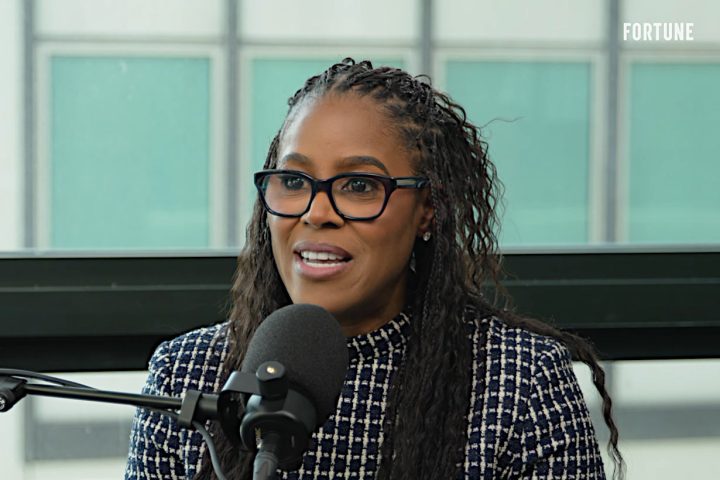


Leadership in a complex industry is rarely about making one dramatic decision. It is more often about managing thousands of interconnected decisions involving people, operations, technology, safety, and long-term investment. Natascha Viljoen’s career in the mining industry offers a useful example of how technical knowledge, operational experience, and a clear sense of responsibility can shape an effective business leader.
Key Takeaways
- Leaders make better strategic decisions when they understand the operational realities of their businesses.
- Safety and responsibility should be treated as essential business priorities rather than secondary obligations.
- A strategy only creates value when an organization has the discipline and resources to execute it.
- Leadership credibility develops through competence, consistency, accountability, and trust.
- Experience can prepare an executive for a demanding role, but long-term leadership success must ultimately be demonstrated through results.
Some executives build their reputations through financial strategy, marketing, or the ability to transform a company’s public image. Others develop their leadership approach much closer to the operations that keep a business running.
Natascha Viljoen belongs to the latter group. A metallurgical engineer by training, she spent much of her career working across mining operations, processing, and technical management before moving into senior executive positions. Her experience has given her an understanding of the industry that extends beyond corporate strategy and financial performance.
In January 2026, Viljoen became President and CEO of Newmont Corporation, making history as the first woman to lead the gold mining company in its more than 100-year history. The appointment also placed her at the head of one of the world’s largest gold producers, with operations and employees spread across multiple countries.
Her career provides several lessons for business leaders, particularly those responsible for organizations where operational performance, workforce safety, and long-term investment are closely connected.
From Engineering to Executive Leadership
Viljoen’s relationship with mining began early. She grew up in a mining family in South Africa, where her father worked as a winding engine driver. Her early exposure to the industry gave her an appreciation for the people and practical work behind mining operations.
She went on to study engineering at North-West University in South Africa, earning a Bachelor of Engineering degree. She later completed an Executive MBA at the University of Cape Town, combining technical expertise with formal business education.
Her professional career included roles at BHP, Anglo American, and Lonmin. At Anglo American, she held several operational and technical positions, including Group Head of Processing. At Lonmin, she served as Executive Vice President of Processing and took on wider corporate responsibilities, including sustainability.
In 2020, Viljoen became CEO of Anglo American Platinum, now known as Valterra Platinum. The position involved overseeing a large and complex business with thousands of employees, multiple mining operations, and an integrated processing value chain.
She joined Newmont in October 2023 as Executive Vice President and Chief Operating Officer. Her responsibilities included overseeing global operations and helping the company integrate acquired assets, optimize its portfolio, and develop talent across its international business.
After being promoted to President and Chief Operating Officer in 2025, she was named CEO later that year, effective January 1, 2026.
Her progression is notable because it reflects a leadership path built through operational experience rather than a rapid move from one executive position to another. She understands the technical and organizational challenges of the industry because she spent decades working within it.
The Challenge of Managing a Diversified Conglomerate
Viljoen’s career provides a useful perspective on managing a large and complex organization. Newmont operates across different countries, regulatory environments, labor markets, and geological conditions. Its business involves substantial capital commitments, long development timelines, and operational risks that require careful coordination.
Each mining operation has its own production requirements, workforce considerations, infrastructure, and operating conditions. Decisions made at the corporate level must account for these differences while maintaining consistent standards across the organization.
The challenge is not simply to increase production. It is to determine where investment will create the greatest value, how individual operations can improve efficiency, and how the company can maintain responsible practices while meeting financial expectations.
Viljoen’s background is relevant because she has worked across several parts of the mining value chain. Her experience in processing, technical management, and executive operations gives her an understanding of how decisions in one area can affect the performance of the wider business.
This distinction is central to her leadership approach. Managing complexity requires more than setting corporate targets. It means understanding how different parts of the organization work together and ensuring that priorities are supported by practical execution.
A Leadership Philosophy Built Around Focus and Accountability
Viljoen’s career reflects a management approach grounded in operational knowledge, safety, and organizational accountability. In mining, leadership decisions must account for both immediate operating requirements and the long-term consequences of investment, maintenance, and workforce development.
Her responsibilities at Newmont have included global operations, health and safety, operational performance, and the integration of acquired assets. These areas require a balance between setting strategic direction and giving operational teams the resources and authority to deliver.
Large mining companies cannot be managed effectively through centralized decision-making alone. Leaders need to establish clear expectations, develop capable management teams, and create systems that allow individual operations to respond to their specific conditions.
This balance between strategic direction and operational accountability provides a useful framework for understanding Viljoen’s leadership experience.
Four Leadership Lessons From Natascha Viljoen
1. Understand the Business Beyond the Executive Office
A leader cannot make consistently good strategic decisions without understanding how the business actually operates.
Viljoen’s career demonstrates the value of developing that understanding before taking responsibility for an entire organization. Her background in metallurgy and processing gave her direct exposure to important parts of the mining value chain. She worked in technical and operational roles before becoming responsible for major business units.
This matters because operational problems rarely remain confined to one department. A processing bottleneck can affect production targets, costs, delivery schedules, and ultimately profitability. Decisions made at the corporate level can also have consequences for employees working in demanding conditions at individual sites.
For business owners and executives, the lesson is straightforward: understand the work that creates value before attempting to change the organization that performs it.
Leaders do not need to become experts in every technical discipline. However, they should understand the key processes, constraints, and dependencies that determine business performance. They should also make time to listen to employees who work closest to those processes.
A leader who understands the operational reality of a business is better equipped to distinguish between a strategic opportunity and an attractive idea that may not work in practice.
2. Treat Safety and Responsibility as Business Priorities
In mining, safety is not simply another item on an operational checklist. It is a fundamental responsibility that affects employees, contractors, surrounding communities, and the long-term viability of the business.
Viljoen’s leadership background has consistently emphasized safety and responsible operational delivery. At Newmont, she took responsibility for the company’s health, safety, and security functions during her time in senior operational leadership.
This provides an important lesson for businesses in other industries. Companies sometimes treat safety, employee welfare, and environmental responsibility as separate from commercial performance. In reality, these areas can influence productivity, operating continuity, reputation, employee retention, and regulatory relationships.
A business that consistently overlooks risks may achieve short-term financial results while accumulating problems that eventually become much more expensive.
Responsible leadership requires more than communicating values. It means building systems, assigning accountability, measuring performance, and making difficult decisions when commercial targets conflict with responsible practices.
For smaller businesses, the scale may be different, but the principle remains relevant. Protecting employees, maintaining reliable processes, and addressing risks early are part of building a sustainable operation.
3. Combine Strategic Direction with Operational Discipline
Large organizations often struggle with the gap between strategy and execution. A company may have a clear growth plan, but its ability to deliver depends on whether its people, systems, resources, and daily decisions support that plan.
Viljoen’s experience at Newmont is particularly relevant in this area. She joined the company in 2023 as it worked through the integration of Newcrest Mining, an acquisition that expanded Newmont’s global portfolio. Her responsibilities included integrating acquired assets, optimizing the portfolio, and developing talent across the business.
Acquisitions can create significant opportunities, but combining businesses is rarely straightforward. Different operating practices, organizational structures, systems, and workplace cultures must be brought together. Management must also determine which assets deserve additional investment and where the company needs to improve efficiency.
These challenges require more than a compelling corporate strategy. They demand operational discipline and the ability to translate broad objectives into measurable actions.
Viljoen’s career suggests a practical approach: focus on what the organization needs to execute well, understand where resources produce the greatest value, and ensure that management priorities are reflected in everyday operations.
For business leaders, this means resisting the temptation to pursue too many initiatives at once. A strategy becomes meaningful only when the organization has the capacity and discipline to carry it out.
4. Build Credibility Through Experience and Trust
Leadership authority can come from a job title, but credibility usually takes longer to establish.
Viljoen’s progression through technical, operational, and executive roles illustrates how experience can help a leader earn the confidence of different parts of an organization. She has worked with technical specialists, operational teams, senior executives, and other stakeholders across multiple countries and commodities.
That breadth matters in an industry where decisions often involve competing priorities. Financial teams may focus on costs and returns, engineers on technical performance, employees on working conditions, and communities on the local impact of mining activities. A senior leader must understand these perspectives and make decisions that account for their consequences.
Credibility does not mean agreeing with everyone. It means understanding the issues, communicating decisions clearly, and demonstrating that commitments are taken seriously.
For business owners, this is a reminder that trust should not be treated as a by-product of authority. It develops through consistency, competence, accountability, and the willingness to engage with people throughout the organization.
A leader who understands the work and respects the people doing it has a stronger foundation for building an effective team.
Leading a Traditional Industry Through Change
Viljoen’s appointment also highlights the challenges facing the mining sector. Mining companies must continue to deliver reliable production while responding to changing technology, environmental expectations, workforce needs, and demand for minerals and metals.
The industry is also under pressure to improve productivity and manage costs while investing in safer and more responsible operations. These demands can be difficult to balance because mining projects often involve substantial capital commitments and long development timelines.
Newmont’s global portfolio adds another layer of complexity. The company operates across different jurisdictions, regulatory environments, labor markets, and geological conditions. A decision that works in one location may not be suitable for another.
Viljoen’s background gives her experience across several of these challenges. However, becoming CEO is not the same as completing the work. Her leadership will ultimately be judged by how effectively Newmont manages its assets, controls costs, improves operational performance, and meets its responsibilities to employees and communities.
That distinction is important. A strong professional background can prepare someone for a demanding leadership role, but it does not guarantee future success. The real test comes through execution and results.
Conclusion
Natascha Viljoen’s career offers a useful perspective on leadership in businesses where operational complexity cannot be separated from commercial performance. Her progression from engineering and processing roles to CEO of Newmont demonstrates the value of understanding the business at a practical level before taking responsibility for its broader direction.
The lessons extend beyond mining. Leaders in manufacturing, logistics, construction, energy, and other operationally intensive industries face similar challenges: maintaining safety, managing costs, developing capable teams, and translating strategy into consistent execution.
Perhaps the most important takeaway is that effective leadership does not always begin with a grand vision. Sometimes it begins with understanding the work, respecting the people who perform it, and building the discipline to make the entire organization work better.
FAQs
Who is Natascha Viljoen?
Natascha Viljoen is a South African mining executive and the President and CEO of Newmont Corporation. She became the first woman to lead the company when she took the position on January 1, 2026.
What is Natascha Viljoen’s educational background?
She holds a Bachelor of Engineering degree from North-West University in South Africa and an Executive MBA from the University of Cape Town. Her engineering background helped establish the technical foundation for her career in mining operations and management.
Which companies has Natascha Viljoen worked for?
Her career includes senior positions at BHP, Anglo American, and Lonmin. Before joining Newmont in 2023, she was CEO of Anglo American Platinum, now known as Valterra Platinum.
What leadership qualities is Natascha Viljoen known for?
Her professional background is associated with operational discipline, safety leadership, technical expertise, and building high-performance teams. Her career also demonstrates the value of understanding a business from its operational foundations.
What can business leaders learn from Natascha Viljoen?
Business leaders can learn the importance of combining technical understanding with strategic decision-making. Her career also highlights the value of prioritizing safety, developing talent, and building trust across an organization.
Sources:
- https://en.wikipedia.org/wiki/Natascha_Viljoen
- https://investors.newmont.com/investors/news-release/news-details/2025/Newmont-Announces-Retirement-of-CEO-Tom-Palmer-Names-President–COO-Natascha-Viljoen-as-Successor/default.aspx
- https://www.sec.gov/Archives/edgar/data/1164727/000110465926035211/nem-20260512xdef14a.htm
- https://www.businessday.co.za/companies/2026-01-12-natascha-viljoen-breaks-mining-glass-ceiling-in-r2-trillion-role/
- https://www.africanmining.co.za/2026/10/20/natascha-viljoen-challenges-sa-to-know-its-mineral-wealth/