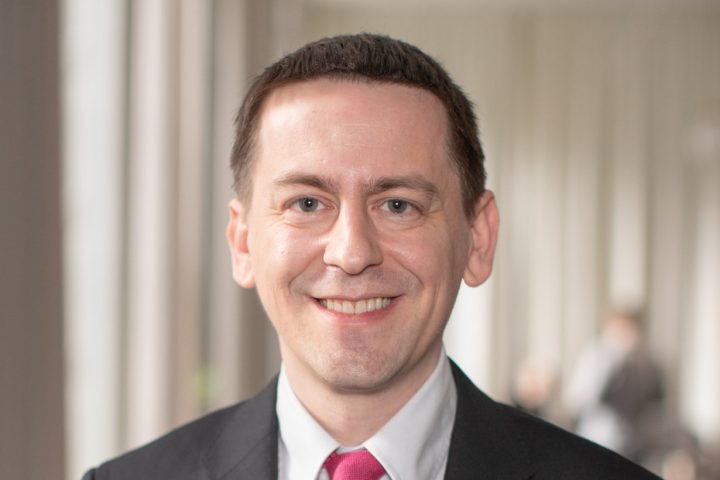


Most display technologies compete by offering sharper images, brighter colors, or faster refresh rates. David Fattal took a different path – asking whether digital screens could recreate the way humans naturally perceive depth.
That vision became Leia Inc., a company dedicated to making glasses-free 3D displays practical for consumers, businesses, and the next generation of spatial computing.
Key Takeaways
- David Fattal transformed a breakthrough in optical physics into commercially viable glasses-free 3D display technology.
- As co-founder and CTO of Leia Inc., he has helped pioneer lightfield displays for consumer electronics and automotive applications.
- Leia’s technology combines advanced optics with AI to create immersive spatial experiences without requiring headsets or special glasses.
- Fattal’s transition from research scientist to entrepreneur demonstrates how deep scientific discoveries can become market-ready innovations.
- His work is helping shape the future of spatial computing by making three-dimensional content more accessible in everyday devices.
Making Scientific Discovery Accessible to The Masses
For decades, immersive technology has promised to change how people interact with digital content, but many solutions remained limited by expensive hardware and inconvenient user experiences. David Fattal is working to change that through Leia Inc. (rebranded and redefined into Immersity,) where he transformed advanced optical research into practical glasses-free 3D technology designed for everyday devices.
From his breakthrough work in nanophotonics at HP Labs to building a company at the forefront of spatial computing, Fattal represents the journey of a deep-tech innovator turning scientific discovery into commercial impact.
The Challenge: 3D Tech Integration
For decades, 3D displays promised immersive experiences but rarely achieved mainstream success. Most solutions required special glasses, expensive hardware, or viewing angles that limited usability.
Consumers often found the experience inconvenient, while manufacturers struggled to integrate 3D technology into everyday products at an affordable scale.
David Fattal believed the problem wasn’t the concept of 3D itself – it was the technology powering it.
The Innovation: Spatial Computing
Turning Physics Into Products
Before founding Leia Inc., David Fattal spent nearly a decade at HP Labs researching nanophotonics and light manipulation. During this time, he developed Diffractive Lightfield Backlighting (DLB) – a breakthrough that enables displays to project multiple perspectives simultaneously, allowing viewers to perceive realistic depth without wearing glasses.
The technology attracted widespread attention after appearing on the cover of Nature in 2013, demonstrating its scientific significance and commercial potential.
From HP Labs to Leia Inc.
Recognizing the broader applications of the technology, Fattal co-founded Leia Inc. in 2014 to commercialize the research. The company focused on transforming laboratory innovation into scalable display solutions for smartphones, tablets, laptops, automotive dashboards, and future spatial computing devices.
By shifting from academic research to product engineering, Leia helped bridge the gap between advanced optics and consumer technology.
Combining AI with Lightfield Technology
Leia has expanded beyond display hardware by integrating artificial intelligence into its ecosystem. Its Immersity AI platform converts traditional 2D content into immersive 3D experiences, enabling developers and creators to produce spatial content without rebuilding everything from scratch.
This combination of optical engineering and AI lowers barriers to adoption while making immersive computing more practical for everyday users.
The Solution: Immersive Tech
A More Natural Way to Experience Digital Content
Instead of forcing users to wear glasses or headsets, Leia’s displays allow people to experience depth naturally using their own eyes. This creates a more comfortable and intuitive viewing experience for entertainment, education, design, healthcare, and professional visualization.
The result is immersive technology that fits seamlessly into devices people already use every day.
Building a Platform for Spatial Computing
Leia’s technology is designed not simply as another display upgrade but as infrastructure for future spatial interfaces. Partnerships with electronics manufacturers and automotive companies demonstrate how lightfield displays can support navigation, collaboration, gaming, visualization, and digital storytelling.
As spatial computing grows, the ability to display realistic depth without additional hardware could become a significant competitive advantage.
Scaling Innovation Through Intellectual Property
Fattal has contributed to hundreds of patents throughout his career, while Leia has built one of the industry’s strongest intellectual property portfolios through internal innovation and strategic acquisitions.
This extensive patent foundation provides both technological leadership and long-term commercial defensibility in a rapidly evolving market.
Impact: Accessible Tech for All
Advancing Consumer Electronics
Leia has introduced glasses-free 3D technology into commercial products including tablets, smartphones, and laptops. These products demonstrate that immersive displays can move beyond demonstrations into practical, everyday devices.
Its partnerships with global manufacturers continue expanding opportunities for wider adoption.
Expanding Beyond Entertainment
While entertainment remains an important application, lightfield technology also supports education, healthcare visualization, engineering design, e-commerce, and automotive interfaces. These industries benefit from improved depth perception and more intuitive digital interaction.
This broad applicability positions Leia as an enabling technology across multiple sectors rather than a niche display company.
Inspiring Deep-Tech Entrepreneurship
David Fattal’s career illustrates how world-class scientific research can become successful commercial innovation. Rather than remaining within academic laboratories, he translated advanced optical physics into products capable of reaching millions of users.
His journey demonstrates that deep technology often succeeds when scientific excellence is paired with entrepreneurial execution.
Innovation Lessons from David Fattal
Scientific Discovery Is Only the Beginning
Groundbreaking research creates opportunities, but commercial impact requires engineering, manufacturing, partnerships, and execution. Fattal successfully navigated each stage of that journey.
Innovation reaches its full value only when people can actually use it.
Solve the User Experience First
Many earlier 3D technologies struggled because they demanded behavioral changes from users. Leia instead focused on making immersive experiences effortless by eliminating the need for glasses.
Sometimes removing friction creates greater innovation than adding features.
Protect Innovation While Continuing to Evolve
Leia continues expanding its capabilities through patents, acquisitions, AI integration, and strategic partnerships. Rather than relying on a single invention, the company continually builds upon its technological foundation.
Long-term innovation depends on sustained improvement, not one-time breakthroughs.
FAQs
Who is David Fattal?
David Fattal is the co-founder and Chief Technology Officer of Leia Inc., a company specializing in glasses-free 3D display technology. A physicist by training, he previously worked at HP Labs before commercializing his breakthrough research through Leia. His work bridges advanced optical science with real-world consumer technology.
What makes Leia Inc.’s technology different?
Leia develops lightfield displays that create realistic depth without requiring users to wear special glasses. Unlike traditional 3D displays, the technology produces multiple viewing perspectives simultaneously for a more natural visual experience. It is designed for smartphones, tablets, laptops, automotive displays, and future spatial computing applications.
What is Diffractive Lightfield Backlighting?
Diffractive Lightfield Backlighting (DLB) is the core technology developed by David Fattal that enables switchable 2D and glasses-free 3D displays. It manipulates light using advanced optical structures to create realistic depth perception. The invention formed the technological foundation of Leia Inc.
How does AI fit into Leia’s products?
Leia combines its display technology with Immersity AI, software that converts traditional 2D images and videos into immersive 3D content. This allows creators and businesses to produce spatial experiences without completely redesigning existing media. The approach accelerates adoption while expanding practical use cases.
Why is David Fattal important in spatial computing?
David Fattal helped move lightfield technology from scientific research into commercial products. His work demonstrates how advances in optics and AI can reshape the way people interact with digital content. As spatial computing continues to evolve, his innovations provide an important foundation for future immersive devices.
Sources:
- https://www.technologyreview.com/innovator/david-fattal/
- https://www.forbes.com/sites/charliefink/2020/02/28/leia-the-display-of-the-future/
- https://ionanalytics.com/insights/mergermarket/leia-could-seek-up-to-usd-100m-this-year-for-glasses-free-3d-display-tech-ceo/
- https://www.epo.org/en/news-events/european-inventor-award/meet-the-finalists/david-fattal
- https://www.unite.ai/david-fattal-co-founder-chief-technical-officer-at-leia-interview-series/
- https://sid.onlinelibrary.wiley.com/doi/full/10.1002/msid.1410