

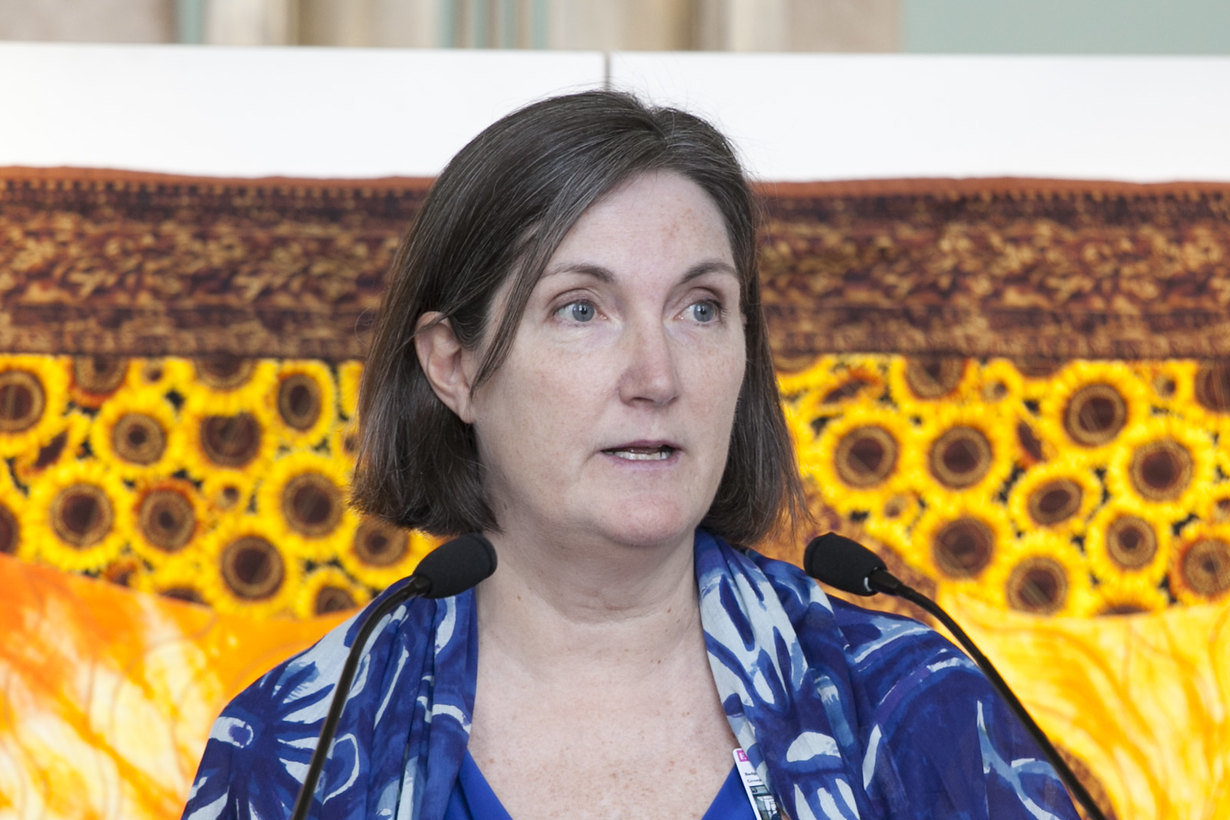
Around the world, millions of families still lack reliable access to electricity and clean cooking solutions. While technology has made renewable energy more affordable, reaching rural and underserved communities remains a significant challenge. Katherine Lucey saw an opportunity to address both energy poverty and economic inequality through a model that puts women at the center of the solution.
Key Takeaways
- Katherine Lucey founded Solar Sister to address energy poverty and women’s economic empowerment through a single integrated model.
- Solar Sister uses local women entrepreneurs to distribute clean energy products in underserved communities.
- The organization solves the “last-mile” challenge that often limits access to renewable energy technologies.
- Its model combines economic opportunity, environmental sustainability, and community development.
- The success of Solar Sister demonstrates that innovative business models can be as transformative as technological inventions.
Clean Energy Adoption Depends on Human Networks
For decades, efforts to expand energy access in developing regions focused primarily on infrastructure and technology. While these investments were important, many initiatives struggled to reach remote communities where traditional distribution channels were limited.
Katherine Lucey believed the missing piece was not simply better technology, but better access. Rather than treating rural households as passive recipients of aid, she envisioned a model where local women could become entrepreneurs, educators, and distributors of clean energy products.
Through Solar Sister, Lucey created a system that combines renewable energy with women’s economic empowerment. The result is an innovation that addresses multiple challenges simultaneously: energy access, income generation, health outcomes, and environmental sustainability.
This approach demonstrates how business models themselves can be powerful innovations when designed around local realities and community trust.
The Challenge of Energy Poverty
More than technology alone, energy access is often a distribution problem.
Millions of households across sub-Saharan Africa have historically relied on kerosene lamps, charcoal, and other traditional fuels for lighting and cooking. These solutions can be expensive, harmful to health, and environmentally damaging.
Although affordable solar products have become increasingly available, getting them into the hands of rural consumers remains difficult. Traditional retail networks often fail to reach remote communities, while aid-based approaches can struggle to create lasting economic sustainability.
At the same time, women frequently play a central role in household energy decisions but are often excluded from economic opportunities within the energy sector.
Recognizing these interconnected challenges, Lucey sought a model that could simultaneously expand clean energy access and create pathways to entrepreneurship.
The Innovation: A Women-Led Clean Energy Distribution Network
Solar Sister introduced a different way of thinking about energy deployment.
1. Women as Energy Entrepreneurs
Instead of relying on large-scale retail infrastructure, Solar Sister trains and supports local women entrepreneurs to sell clean energy products directly within their communities.
These entrepreneurs build businesses while helping families access technologies that improve daily life. Because they are trusted members of their communities, they can educate customers and provide ongoing support.
This creates a more effective and locally rooted distribution network than many traditional approaches.
2. The Last-Mile Delivery Model
One of the biggest barriers to clean energy adoption is reaching households located far from urban centers.
Solar Sister addresses this challenge through a grassroots, direct-sales model that brings products directly to customers. Women entrepreneurs act as the critical link between manufacturers and end users.
By solving the “last-mile” problem, the organization helps ensure that innovations reach the people who can benefit most from them.
3. Combining Economic Empowerment with Sustainability
Many development programs focus on either poverty reduction or environmental impact.
Solar Sister integrates both objectives into a single model. Entrepreneurs earn income while helping reduce dependence on kerosene and other polluting energy sources.
This alignment of economic incentives and social impact creates a system that can sustain itself over time.
4. Building Community-Based Leadership
Beyond product sales, Solar Sister invests heavily in training, mentorship, and leadership development.
Participants gain business skills, financial literacy, and confidence that extend beyond their energy enterprises. This creates broader social and economic benefits within communities.
The model demonstrates how entrepreneurship can become a catalyst for long-term community development.
Traditional Aid vs. Entrepreneur-Led Energy Access
| Dimension | Traditional Aid Model | Solar Sister Model |
|---|---|---|
| Distribution | Centralized programs | Local entrepreneurs |
| Community Engagement | Often limited | High trust relationships |
| Economic Impact | Short-term assistance | Ongoing income generation |
| Scalability | Dependent on funding | Market-driven growth |
| Sustainability | Program-based | Entrepreneur-led ecosystem |
What This Shift Means
Solar Sister reflects a broader shift from aid-centered development toward empowerment-centered development. Rather than focusing solely on delivering products, the organization creates opportunities for individuals to become active participants in economic growth.
This approach recognizes that lasting change often comes from strengthening local capacity rather than expanding external assistance. When people have the tools and support to build businesses, the benefits can extend well beyond a single transaction.
The model also challenges assumptions about who drives innovation. In many cases, the most effective solutions emerge not from technology alone but from understanding how communities adopt and use that technology.
As clean energy continues to expand globally, community-based distribution networks may play an increasingly important role in reaching underserved populations.
Impact: Expanding Opportunity Through Clean Energy
Katherine Lucey’s work has demonstrated that energy access and economic empowerment can reinforce one another.
Reaching Underserved Communities
Solar Sister has trained thousands of entrepreneurs who have brought clean energy products to millions of people across multiple African countries.
This reach has helped households gain access to safer, more reliable lighting and energy solutions. Many families have also reduced spending on traditional fuels.
The organization’s success highlights the importance of local relationships in scaling impact.
Creating Economic Pathways for Women
The program enables women to generate income while developing valuable business and leadership skills.
For many participants, entrepreneurship creates greater financial independence and increased influence within their communities. These benefits often extend to families and future generations.
Economic empowerment becomes both an outcome and a driver of broader social change.
Supporting Environmental Sustainability
Replacing kerosene lamps and other polluting fuels with solar-powered alternatives helps reduce emissions and improve household air quality.
The cumulative environmental impact grows as more households adopt cleaner technologies. This demonstrates how small-scale actions can contribute to larger sustainability goals.
The model aligns economic opportunity with climate and environmental objectives.
The Innovator’s Perspective: Seeing Opportunity Where Others Saw Obstacles
Before founding Solar Sister, Katherine Lucey spent more than two decades in investment banking, working on financing solutions within the energy sector.
Her perspective changed after experiences in Uganda, where she saw firsthand how access to solar energy could transform daily life. She also recognized that women were often central decision-makers within households but largely absent from the business side of energy distribution.
Rather than approaching energy poverty solely as an infrastructure challenge, Lucey saw an opportunity to create a system that leveraged entrepreneurship, trust, and community relationships.
Her innovation was not the solar lantern itself. It was designing a business model that connected technology, opportunity, and human potential.
Future Outlook: Scaling Inclusive Energy Access
The global transition to clean energy will require more than technological breakthroughs.
Reaching underserved populations will depend on distribution models that are affordable, trusted, and locally relevant. Community-based entrepreneurship may become an increasingly important component of that effort.
Solar Sister offers a blueprint for how renewable energy can be combined with economic inclusion and leadership development.
As organizations around the world search for sustainable approaches to development, Katherine Lucey’s model provides a powerful example of how innovation can create value across multiple dimensions simultaneously.
FAQs
Who is Katherine Lucey?
Katherine Lucey is the founder of Solar Sister and a former Wall Street investment banker. She transitioned from finance to social entrepreneurship after recognizing the potential of clean energy to improve lives in rural Africa. Her work focuses on women’s empowerment, renewable energy access, and sustainable development.
What is Solar Sister?
Solar Sister is a nonprofit social enterprise that trains and supports women entrepreneurs who sell clean energy products in rural communities across sub-Saharan Africa. The organization combines renewable energy distribution with economic empowerment. Its goal is to create lasting social and environmental impact through entrepreneurship.
What products do Solar Sister entrepreneurs sell?
Entrepreneurs typically distribute solar lanterns, solar lighting systems, phone chargers, radios, fans, and improved cookstoves. These products help households reduce reliance on kerosene and other traditional fuels. They also provide practical benefits such as better lighting, lower energy costs, and improved health outcomes.
Why is the Solar Sister model considered innovative?
The innovation lies in combining clean energy access with women-led entrepreneurship. Rather than relying solely on aid programs or traditional retail networks, Solar Sister builds trusted community-based distribution channels. This approach improves both adoption rates and long-term sustainability.
What impact has Solar Sister achieved?
Solar Sister has supported thousands of women entrepreneurs and helped bring clean energy solutions to millions of people. The model has generated economic opportunities while reducing dependence on polluting energy sources. Its impact spans income generation, education, health, and environmental sustainability.
Sources:
- https://www.forbes.com/profile/katherine-lucey/
- https://data.org/people/katherine-lucey/
- https://impact-investor.com/katherine-lucey-is-chasing-away-the-dark-one-solar-sister-at-a-time/
Photo credit: United States Mission Geneva / Flickr / CC BY-ND 2.0 – cropped (link)