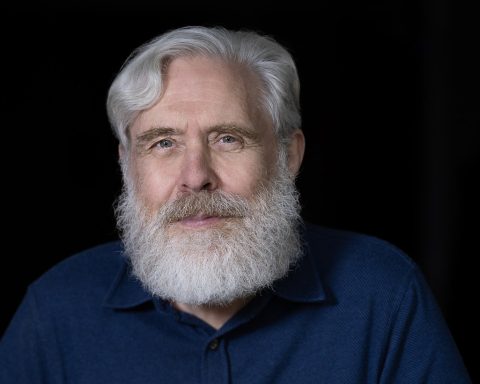


Leading a company at Walmart’s scale requires more than strategy – it demands operational discipline, adaptability, and continuous reinvention. Doug McMillon’s leadership reflects a pragmatic approach to transformation, grounded in execution rather than theory. His tenure illustrates how legacy organizations can evolve without losing their core strengths.
Key Takeaways
- Doug McMillon shows that scale can be a strategic advantage when supported by strong systems and execution.
- Omnichannel success requires deep operational integration, not just digital add-ons.
- Systems thinking enables consistent execution across large and complex organizations.
- Continuous adaptation is essential in dynamic industries like retail.
- Cost discipline creates the flexibility needed to invest in long-term growth.
Scale Is a Capability, Not a Constraint
Large organizations are often viewed as slow, rigid, and resistant to change. Scale, in this view, becomes a liability.
Doug McMillon reframes scale as a strategic advantage. At Walmart, size enables purchasing power, supply chain efficiency, and physical proximity to customers through thousands of stores.
The premise is clear: When managed effectively, scale amplifies capability rather than limiting it.
This requires a shift in leadership mindset. Instead of attempting to simplify complexity, leaders must learn to operate within it – leveraging systems, data, and infrastructure to drive performance.
In McMillon’s model, scale is not something to overcome. It is something to optimize.
Competing in the Shadow of Amazon
When McMillon became CEO in 2014, Walmart faced a defining challenge: the rapid rise of Amazon.
E-commerce was reshaping consumer expectations around convenience, speed, and price transparency. Traditional retail models, built around physical stores, appeared increasingly vulnerable.
Rather than retreat, McMillon pursued integration.
Walmart invested heavily in e-commerce capabilities, supply chain modernization, and digital infrastructure. At the same time, it leveraged its physical footprint to support services like in-store pickup and last-mile delivery.
This hybrid model – combining digital and physical assets – became a core differentiator.
The transformation required significant investment and organizational change. Walmart acquired digital-native companies, restructured teams, and reoriented its strategy toward omnichannel retail.
Over time, these efforts positioned Walmart as one of the few retailers capable of competing with Amazon at scale.
Insight 1: Omnichannel Is an Operating Model, Not a Feature
Many companies approach digital transformation as an add-on to existing operations. McMillon treated it as a fundamental redesign.
At Walmart, e-commerce and physical retail are not separate channels – they are integrated components of a single system.
Stores function as fulfillment centers. Digital platforms drive traffic to physical locations. Inventory is managed across channels to optimize availability and speed. This integration creates efficiency and improves customer experience.
The key insight is that omnichannel is not a marketing concept – it is an operational architecture.
Organizations that treat it superficially often struggle to scale. Those that embed it deeply into their systems can unlock significant advantages.
Insight 2: Execution at Scale Requires Systems Thinking
Strategy defines direction, but execution determines outcomes. McMillon’s leadership emphasizes systems – processes, data flows, and infrastructure that enable consistent performance across a large organization.
At Walmart’s scale, small inefficiencies can have significant impact. Conversely, small improvements can generate substantial value. This makes operational discipline critical.
By focusing on systems rather than isolated initiatives, McMillon ensures that improvements are repeatable and scalable.
This approach also reduces reliance on individual decision-making. Well-designed systems guide behavior, allowing the organization to operate more efficiently.
Insight 3: Adaptation Must Be Continuous
Transformation is often framed as a one-time event. McMillon treats it as an ongoing process.
Retail is highly dynamic. Consumer behavior shifts, technology evolves, and competitive pressures change rapidly.
To remain competitive, Walmart must continuously adapt. This requires a culture that supports experimentation and learning.
Under McMillon, Walmart has expanded into areas such as advertising, financial services, and marketplace platforms – extending its role beyond traditional retail.
Each of these moves reflects a willingness to evolve the business model over time.
The broader principle is clear: Adaptation is not a phase – it is a capability.
Insight 4: Cost Discipline Enables Strategic Flexibility
Walmart has long been associated with cost leadership. McMillon maintains this focus, but applies it strategically.
Cost discipline is not simply about reducing expenses – it is about creating flexibility. By managing costs effectively, Walmart can invest in growth areas such as technology, logistics, and new services. This balance between efficiency and investment is critical.
Organizations that focus only on cost-cutting may limit their ability to innovate. Those that ignore costs risk eroding margins.
McMillon’s approach integrates both, enabling sustainable growth.
Leadership Transition: From CEO to Legacy Stewardship
With the recent retirement of Doug McMillon as CEO of Walmart, his tenure can now be viewed in full – less as an ongoing transformation and more as a completed leadership chapter defined by disciplined execution and structural evolution.
McMillon leaves behind a fundamentally different organization from the one he inherited in 2014. Walmart is no longer positioned solely as a traditional retailer, but as an integrated omnichannel platform with capabilities spanning e-commerce, logistics, advertising, and digital services.
The systems, infrastructure, and operating model established under his leadership provide a foundation that extends beyond any single executive.
Leadership transitions at this scale are critical inflection points. In McMillon’s case, the emphasis shifts from transformation to continuity. The next phase for Walmart will test whether the systems and culture he embedded can sustain performance without the same level of centralized leadership influence.
His retirement also reinforces a broader leadership principle:
Enduring impact is measured not just by results achieved, but by how well an organization performs after the leader steps away.
In that sense, McMillon’s legacy will ultimately be defined by durability – whether Walmart continues to execute, adapt, and compete effectively in the years ahead.
Closing: Leadership as Operational Mastery
Doug McMillon’s leadership demonstrates that transformation at scale is less about dramatic shifts and more about disciplined execution.
By leveraging scale, integrating digital and physical systems, and maintaining continuous adaptation, he has repositioned Walmart for a new era of retail.
His approach highlights a key leadership principle:
In complex organizations, success is not driven by isolated strategies, but by the ability to execute consistently across systems.
Leadership, in this context, is not just about vision. It is about making that vision work – every day, at scale.
FAQs
Who is Doug McMillon?
Doug McMillon is the CEO of Walmart, leading one of the world’s largest retailers through digital and operational transformation. He began his career at Walmart and rose through leadership roles before becoming CEO in 2014. His long tenure within the company gives him a deep understanding of both its culture and operational complexity.
What is Doug McMillon’s leadership style?
McMillon’s leadership style focuses on execution, systems thinking, and continuous improvement. He emphasizes integrating digital and physical operations while maintaining strong cost discipline. His approach reflects a pragmatic mindset that prioritizes scalable solutions over short-term fixes.
How has Walmart adapted to e-commerce competition?
Walmart has invested heavily in e-commerce, supply chain modernization, and omnichannel capabilities. It leverages its physical store network to support services like pickup and delivery, creating a hybrid retail model. This strategy allows Walmart to compete on both convenience and cost in an increasingly digital marketplace.
What is omnichannel retail?
Omnichannel retail integrates online and offline shopping experiences into a unified system. This allows customers to interact with a brand seamlessly across different channels. It also enables companies to optimize inventory, logistics, and customer data across platforms.
What can leaders learn from Doug McMillon?
Leaders can learn the importance of execution, systems design, and adaptability in managing large organizations. His approach shows how scale can be leveraged to create competitive advantage. It also highlights the value of balancing operational efficiency with ongoing innovation.
Sources:
- https://en.wikipedia.org/wiki/Doug_McMillon
- https://hbr.org/2026/03/the-hbr-interview-with-outgoing-walmart-ceo-doug-mcmillon
- https://www.gsb.stanford.edu/insights/how-doug-mcmillon-keeps-walmart-moving-forward
- https://www.wsj.com/business/retail/walmart-ecommerce-amazon-competitor-b7fe1cd5
- https://www.thestreet.com/retail/walmart-makes-surprising-move-beyond-retail
- https://www.retaildive.com/news/walmart-ceo-doug-mcmillon-decade-leadership-change/810889/