


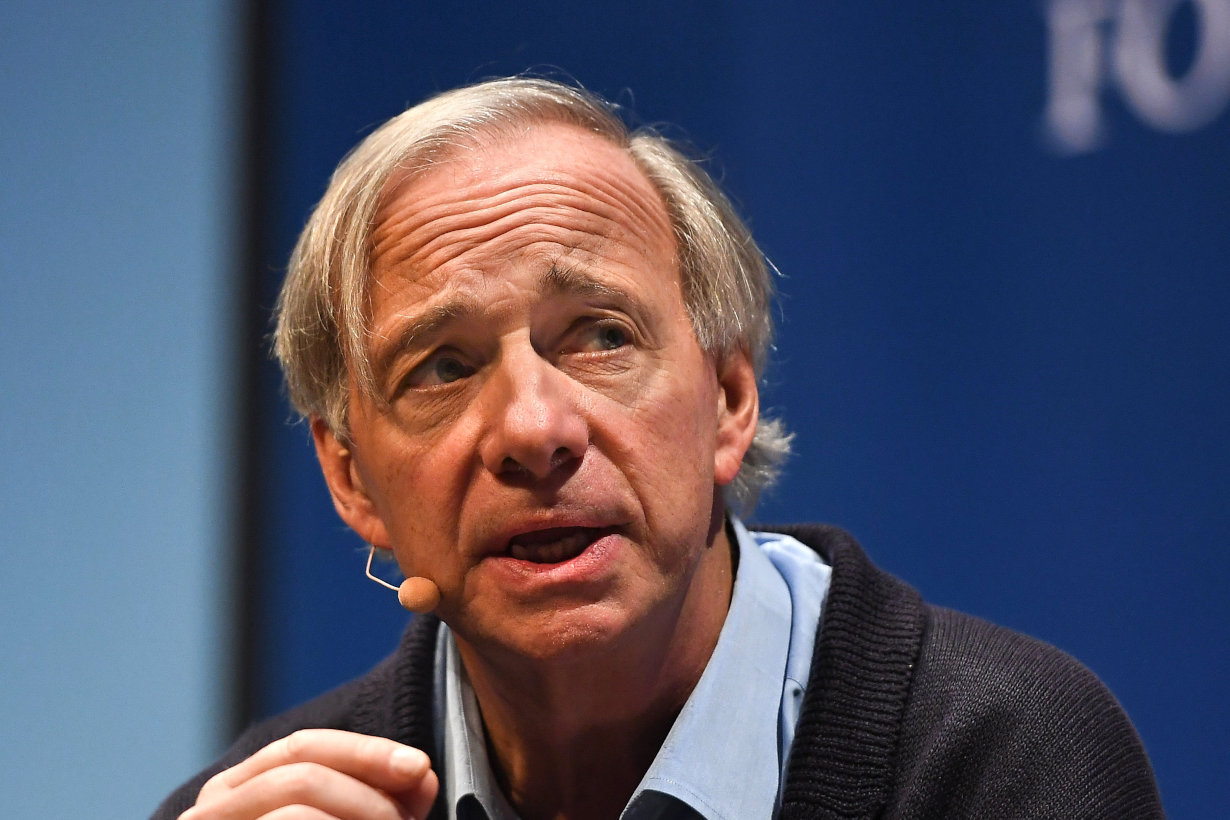
Some leaders build successful companies through instinct alone. Ray Dalio built one of the world’s most influential investment firms by creating a repeatable system of principles, radical honesty, and continuous learning.
Key Takeaways
- Strong organizations are built on clear principles rather than individual personalities.
- Mistakes become valuable assets when leaders analyze them honestly and improve their decision-making.
- Long-term success requires understanding economic cycles instead of reacting to short-term market noise.
- A culture that encourages constructive disagreement can produce better decisions than one driven by hierarchy.
- Leadership is most sustainable when knowledge can be transferred beyond the founder.
Turning Principles into Competitive Advantage
Many investors succeed by making good decisions.
Ray Dalio sought something different: a system that consistently produced good decisions regardless of who made them.
When he founded Bridgewater Associates in 1975 from his New York apartment, the firm was little more than an economic consulting business. Over the following five decades, it evolved into one of the world’s largest and most respected hedge funds, managing capital for pension funds, sovereign wealth funds, universities, and central banks.
Rather than relying on intuition, Dalio built Bridgewater around documented principles, rigorous analysis, and a culture designed to expose flawed thinking before it became costly. That philosophy became one of the firm’s greatest competitive advantages.
From Young Investor to Founder of Bridgewater
Dalio’s fascination with investing began unusually early.
At age twelve, while working as a caddie at a golf course, he invested in shares of Northeast Airlines. After the company merged with another airline, the investment tripled in value, teaching him the power of long-term investing and market opportunity.
After earning a finance degree from Long Island University and an MBA from Harvard Business School, Dalio worked briefly on Wall Street before founding Bridgewater Associates in 1975.
The firm’s early years were anything but smooth.
In 1982, Dalio incorrectly predicted a global economic depression after Mexico’s debt crisis. The forecast proved wrong, clients disappeared, and Bridgewater nearly collapsed. Dalio later described the experience as one of the most valuable failures of his career because it fundamentally changed how he approached uncertainty and decision-making.
Instead of relying solely on personal conviction, he developed systematic processes that encouraged challenging assumptions, testing ideas, and learning from mistakes.
Those lessons became the foundation for Bridgewater’s future success.
Leadership Philosophy: Radical Transparency and Idea Meritocracy
Perhaps no aspect of Ray Dalio’s leadership has attracted more attention than Bridgewater’s unique organizational culture.
Dalio believed that the best ideas should win regardless of who proposed them. He called this philosophy an “idea meritocracy.”
To support that culture, Bridgewater embraced radical transparency. Meetings were often recorded, employees were encouraged to challenge senior leaders openly, and feedback became a constant part of daily operations.
While unconventional – and sometimes controversial – Dalio believed this openness reduced blind spots and improved decision quality.
He also developed decision-making frameworks that weighted opinions according to demonstrated expertise rather than organizational rank.
Although not every organization could adopt Bridgewater’s methods wholesale, Dalio demonstrated that culture itself could become a strategic advantage when aligned with clear principles.
Investing Through Economic Cycles
Dalio’s influence extends well beyond organizational culture.
He helped popularize macroeconomic investing built around understanding long-term debt cycles, monetary policy, inflation, and global capital flows.
Bridgewater developed strategies including the widely influential All Weather Portfolio, designed to perform across varying economic conditions rather than depending on a single market outlook.
This focus on diversification and risk management helped Bridgewater navigate multiple financial crises, including the 2008 global financial crisis, when many traditional investment strategies struggled.
Rather than attempting to predict every market movement, Dalio emphasized preparing portfolios for a wide range of possible outcomes.
His systematic approach has influenced institutional investors worldwide.
Leadership Beyond Bridgewater
Dalio gradually stepped away from day-to-day leadership over several years.
He resigned as CEO in 2017, later stepped down from his investment leadership roles, and completed the transfer of ownership before fully exiting Bridgewater in 2025.
Rather than disappearing from public life, Dalio shifted his focus toward education, philanthropy, and sharing leadership principles.
Through bestselling books including Principles: Life & Work and Principles for Dealing with the Changing World Order, he has introduced millions of readers to his decision-making frameworks.
He also continues publishing research and commentary on global economics, debt cycles, artificial intelligence, and geopolitical trends while supporting education, healthcare, and ocean exploration through Dalio Philanthropies.
His post-Bridgewater career reflects a broader mission: helping leaders make better decisions by understanding systems rather than reacting emotionally.
Leadership Lessons from Ray Dalio
Ray Dalio’s career offers far more than investment insights. His leadership philosophy has influenced executives, entrepreneurs, and organizations across industries because it focuses on building better decision-making systems rather than relying on individual brilliance.
Several enduring leadership lessons emerge from his decades at Bridgewater Associates.
1. Turn Failure Into Your Greatest Teacher
One of Dalio’s defining moments came in 1982 when he made a major economic prediction that proved wrong, nearly bankrupting Bridgewater. Rather than hiding from the mistake, he studied it relentlessly and rebuilt his decision-making process around humility, data, and continuous learning.
His experience demonstrates that great leaders treat failures as valuable feedback rather than permanent setbacks. The willingness to examine mistakes honestly often creates stronger organizations over the long term.
2. Build Systems Instead of Depending on Yourself
Dalio believed that sustainable organizations cannot depend solely on the judgment of a single leader. Throughout his career, he documented principles, created structured decision-making frameworks, and encouraged repeatable processes that others could follow.
By transforming experience into systems, leaders can build organizations that continue performing even after the founder steps away. This approach also improves consistency as businesses scale.
3. Encourage Constructive Disagreement
Bridgewater became famous for its culture of radical transparency, where employees were expected to challenge ideas regardless of seniority. Dalio believed that honest disagreement often produces better decisions than unquestioned agreement.
While not every company will adopt Bridgewater’s intense feedback culture, leaders can still benefit by creating environments where respectful debate is encouraged and diverse perspectives are welcomed.
4. Focus on Long-Term Thinking
Dalio consistently emphasized understanding long-term economic cycles instead of reacting emotionally to daily market movements. This mindset helped Bridgewater remain disciplined during periods of uncertainty and volatility.
Business leaders can apply the same principle by prioritizing sustainable growth over short-term wins. Strategic patience often creates stronger competitive advantages than chasing immediate results.
5. Build a Legacy That Outlasts You
Dalio spent years preparing Bridgewater for leadership succession, gradually transferring responsibilities before fully exiting the firm. His objective was to ensure that the organization could thrive without relying on his daily involvement.
Perhaps the greatest measure of leadership is whether an organization becomes stronger, more resilient, and more capable after its founder moves on. Dalio’s succession planning reflects a commitment to building institutions rather than personal empires.
Great Leaders Build Systems, Not Just Success
Ray Dalio’s greatest achievement may not be Bridgewater’s investment performance alone.
His lasting contribution is demonstrating that leadership can be systematized through clear principles, intellectual honesty, and continuous learning.
While markets will always remain unpredictable, Dalio showed that organizations can dramatically improve their ability to navigate uncertainty by creating cultures that reward truth, disciplined thinking, and thoughtful disagreement.
For entrepreneurs and executives alike, his career offers a timeless reminder: sustainable success depends not only on making great decisions today, but also on building systems that continue making great decisions tomorrow.
FAQs
Who is Ray Dalio?
Ray Dalio is the founder of Bridgewater Associates, one of the world’s largest hedge funds. He is also a bestselling author, philanthropist, and widely recognized thought leader on leadership, investing, and macroeconomics.
What is Bridgewater Associates known for?
Bridgewater Associates is known for its macro investing strategies, institutional client base, and distinctive culture of radical transparency and idea meritocracy. The firm has influenced investment management practices around the world.
What is Ray Dalio’s leadership philosophy?
Dalio believes organizations perform best when they embrace radical honesty, continuous feedback, and merit-based decision-making. His leadership emphasizes learning from mistakes and documenting principles that guide consistent decisions.
What is the All Weather Portfolio?
The All Weather Portfolio is an investment strategy designed to perform across different economic environments by balancing risk rather than trying to predict market conditions. It has become one of Dalio’s most influential contributions to modern portfolio management.
What can business leaders learn from Ray Dalio?
Business leaders can learn the importance of building systems instead of relying solely on personal judgment. His career demonstrates how principles, transparency, and disciplined learning can create organizations capable of succeeding long after the founder steps aside.
Sources:
- https://www.forbes.com/profile/ray-dalio/
- https://en.wikipedia.org/wiki/Ray_Dalio
- https://www.csis.org/people/ray-dalio
- https://www.linkedin.com/in/raydalio/
- https://www.institutionalinvestor.com/article/behind-bridgewaters-surge
- https://www.cnbc.com/2022/06/02/ray-dalio-going-broke-was-one-of-the-best-things-to-ever-happen-to-me.html
Photo credit: Web Summit / Wikimedia Commons / CC BY 2.0 – cropped (link)