

For decades, investing in the stock market came with barriers that discouraged many first-time investors. Trading commissions, complex platforms, and high account minimums often made investing feel like an activity reserved for professionals or the wealthy. While technology had transformed countless industries, much of retail investing remained expensive and intimidating for everyday people.
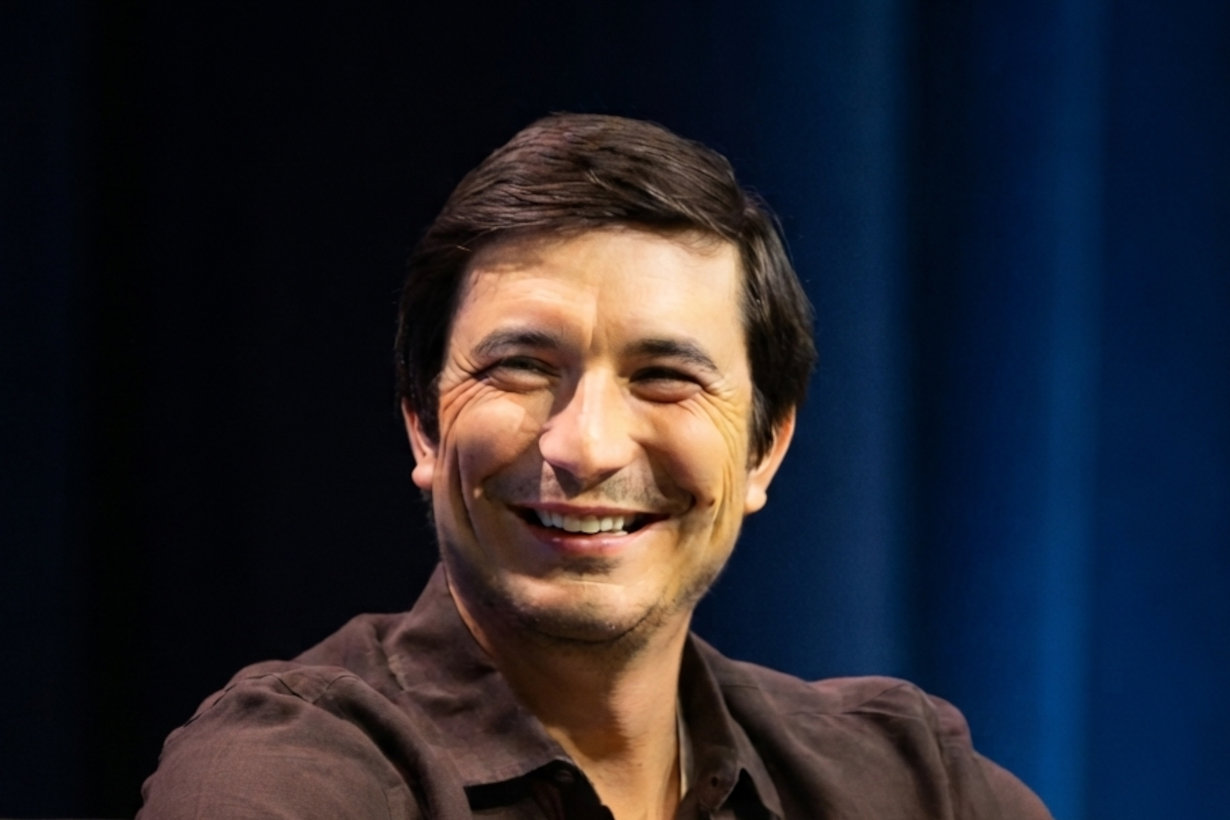
Vlad Tenev saw an opportunity to change that. As the co-founder of Robinhood, he helped pioneer commission-free stock trading and inspired a wave of innovation that reshaped the brokerage industry. Although his journey has included both remarkable success and significant challenges, Tenev’s story demonstrates how bold ideas, technical expertise, and resilience can redefine an entire market.
Key Takeaways
- Great businesses often begin by removing barriers that others accept as inevitable.
- Deep technical expertise can provide founders with a powerful competitive advantage.
- Industry disruption frequently brings intense scrutiny alongside rapid growth.
- Strong leaders learn from challenges and continue evolving their businesses.
- Innovation is most impactful when it expands access for millions of people.
From Bulgaria to Silicon Valley
Vlad Tenev was born in Varna, Bulgaria, in 1987. When he was five years old, his family immigrated to the United States following the political and economic changes that swept through Eastern Europe after the fall of communism. Like many immigrant families, his parents viewed education as the surest path toward opportunity and encouraged intellectual curiosity from an early age.
Growing up in Virginia, Tenev developed a strong aptitude for mathematics and analytical thinking. His father, an economics professor, and his mother, who also worked in economics, helped nurture his interest in solving complex problems. Their experiences living through financial uncertainty also gave him an appreciation for the importance of financial stability and disciplined decision-making.
Tenev attended the prestigious Thomas Jefferson High School for Science and Technology before earning a bachelor’s degree in Mathematics from Stanford University. It was there that he met fellow mathematics student Baiju Bhatt, who would later become his co-founder.
After Stanford, Tenev continued his studies with a master’s degree in Mathematics at UCLA and briefly pursued a PhD before deciding that entrepreneurship offered a more exciting path. Rather than remaining in academia, he wanted to apply his quantitative skills to solving real-world problems.
Together, Tenev and Bhatt founded two companies – Celeris and Chronos Research – which developed high-frequency trading software for financial institutions. Working closely with Wall Street firms gave them a unique perspective on how modern financial markets operated. They discovered that sophisticated trading technology had dramatically lowered transaction costs behind the scenes, yet everyday investors were still paying commissions every time they bought or sold stocks.
That disconnect planted the seed for a much bigger idea.
Building Robinhood to Democratize Investing
The 2008 global financial crisis changed public attitudes toward Wall Street. Millions of people questioned whether the financial system truly served ordinary investors, while advances in technology continued making financial transactions faster and cheaper.
Tenev and Bhatt believed the brokerage industry was ready for disruption.
In 2013, they launched Robinhood with a simple but ambitious mission: democratize finance for everyone. Their biggest innovation was eliminating commission fees for stock trading – something many established brokerages insisted was unsustainable.
Convincing investors proved difficult.
The founders pitched dozens of venture capital firms before securing early funding. Many doubted that a brokerage could survive without charging trading commissions. Tenev and Bhatt remained confident that advances in technology, combined with alternative revenue models, would allow them to build a profitable business while dramatically improving the customer experience.
When Robinhood launched publicly, demand exceeded expectations. A rapidly growing waiting list generated excitement, particularly among younger investors who had never owned stocks before. The app’s clean interface, mobile-first design, and zero-commission model made investing feel significantly more approachable than traditional brokerage platforms.
Robinhood did more than attract new customers – it changed customer expectations across the industry.
Within a few years, many of America’s largest brokerage firms, including Charles Schwab, Fidelity, TD Ameritrade, and E*TRADE, eliminated commission fees on stock trades. What had once been considered Robinhood’s disruptive advantage quickly became the new industry standard.
Although established firms possessed far greater resources, they could not ignore the competitive pressure created by Robinhood’s rapid growth. Tenev’s vision had effectively forced an entire industry to rethink how investing should work in the digital age.
The company’s momentum continued to accelerate. Robinhood expanded beyond stocks into options, exchange-traded funds, cryptocurrencies, retirement accounts, and cash management services. Millions of users embraced the platform, transforming Robinhood from a startup into one of the world’s most recognizable financial technology companies.
Yet rapid growth also brought greater responsibility. As Robinhood’s influence expanded, every operational decision attracted increasing public attention. That reality would become unmistakably clear during one of the most volatile periods in modern financial market history.
Scaling Through Hypergrowth
Robinhood’s early success quickly transformed it into one of the fastest-growing financial technology companies in the United States. Millions of first-time investors downloaded the app, attracted by its intuitive design and commission-free trading model. By making investing accessible through a smartphone, Robinhood helped introduce an entirely new generation to the stock market.
The company’s rapid expansion culminated in its 2021 initial public offering, which valued Robinhood at approximately $32 billion. By then, the platform had evolved far beyond a simple stock trading app, offering cryptocurrencies, retirement accounts, cash management services, and educational resources aimed at helping users become more informed investors.
Under Tenev’s leadership, Robinhood has continued expanding its vision. In recent years, the company has invested heavily in cryptocurrency services, prediction markets, tokenized real-world assets, and artificial intelligence, all with the goal of becoming a comprehensive financial platform rather than simply a brokerage app. The strategy reflects Tenev’s belief that financial services should continue becoming more accessible, efficient, and technology-driven.
Another important piece of that vision is Robinhood Chain, the company’s blockchain initiative focused on tokenized stocks, real-world assets (RWAs), and developer integrations. Tenev has positioned the project as a bridge between traditional finance and decentralized technology, encouraging developers to build applications that leverage tokenized financial assets.
Although still in its early stages, Robinhood Chain reflects his belief that blockchain technology can make investing more accessible, programmable, and globally connected. Together with Robinhood’s growing focus on crypto, prediction markets, and AI-powered financial tools, it signals his ambition to build a next-generation financial ecosystem rather than simply a brokerage platform.
The GameStop Moment: Leadership Under Pressure
No founder’s journey is without adversity, and for Vlad Tenev, the defining leadership test came during the GameStop trading frenzy in early 2021.
As unprecedented trading activity swept through so-called “meme stocks” such as GameStop and AMC Entertainment, Robinhood experienced extraordinary transaction volumes. To satisfy regulatory clearinghouse requirements, the company was required to post billions of dollars in additional collateral within an extremely short period. Faced with those constraints, Robinhood temporarily restricted purchases of several highly volatile stocks while continuing to allow customers to sell existing positions.
The decision sparked widespread public criticism. Many users believed Robinhood had favored institutional investors over retail traders, leading to lawsuits, regulatory investigations, and high-profile congressional hearings. Tenev publicly acknowledged the frustration experienced by customers while explaining that the restrictions were driven by capital and settlement requirements rather than an effort to influence the market.
Although the episode remains one of the most controversial moments in Robinhood’s history, it also became an important learning experience. The company strengthened its infrastructure, improved risk management, enhanced customer communications, and increased transparency around how financial markets operate during periods of extreme volatility.
For Tenev, the experience reinforced an important lesson shared by many successful founders: rapid innovation must be matched by operational resilience. Building a disruptive business means not only attracting millions of users but also maintaining their trust during the most challenging moments.
Beyond Robinhood: Building the Future of Finance
Rather than slowing down after Robinhood’s success, Tenev has continued exploring new frontiers in technology.
In 2023, he co-founded Harmonic, an artificial intelligence company focused on mathematical reasoning and scientific problem-solving. Harmonic aims to develop AI systems capable of producing more reliable and verifiable answers for complex technical disciplines such as mathematics, engineering, and scientific research. The venture reflects Tenev’s long-standing passion for mathematics and his belief that AI can become an essential tool for solving some of humanity’s most difficult problems.
At the same time, he remains actively involved in shaping Robinhood’s future. The company continues expanding internationally while investing in emerging technologies such as tokenized assets, blockchain infrastructure, and AI-powered financial tools. These initiatives reflect a broader vision of making financial services more accessible while adapting to the rapidly evolving digital economy.
Although Robinhood is often remembered for popularizing commission-free investing, Tenev’s ambitions extend beyond transforming brokerage services. His focus remains on building technology that simplifies complex systems and empowers more people to participate in financial markets.
The Outcome
Vlad Tenev’s entrepreneurial journey demonstrates how technical expertise, persistence, and a willingness to challenge established industries can create lasting change.
By eliminating commission fees, Robinhood fundamentally altered the economics of retail investing and prompted many of the world’s largest brokerage firms to adopt similar pricing models. In doing so, the company helped lower barriers for millions of new investors and accelerated the broader digital transformation of personal finance.
His career also illustrates that disruption often comes with intense public scrutiny. The GameStop episode showed that innovation in highly regulated industries requires not only bold ideas but also resilient systems, transparent communication, and the ability to adapt under pressure.
As Tenev continues investing in artificial intelligence while expanding Robinhood’s vision through blockchain, tokenization, and next-generation financial infrastructure, his entrepreneurial journey remains far from finished.
FAQs
Who is Vlad Tenev?
Vlad Tenev is the co-founder, Chairman, and CEO of Robinhood Markets, the financial technology company that pioneered commission-free stock trading. Born in Bulgaria and raised in the United States, he studied mathematics before launching a career in financial technology. He is widely recognized as one of the entrepreneurs who helped transform modern retail investing.
Why is Robinhood considered so influential?
Robinhood made stock trading significantly more accessible by eliminating commission fees and introducing a simple mobile-first investing experience. Its success encouraged many established brokerage firms to eliminate commissions as well, fundamentally changing industry pricing. The platform also introduced millions of first-time investors to financial markets.
What happened during the GameStop controversy?
In January 2021, Robinhood temporarily restricted purchases of several highly volatile stocks due to extraordinary clearinghouse collateral requirements during a period of unprecedented market activity. The decision triggered widespread criticism, congressional hearings, and regulatory scrutiny. Although controversial, the event prompted Robinhood to strengthen its infrastructure and risk management systems.
What is Harmonic?
Harmonic is an artificial intelligence company co-founded by Vlad Tenev in 2023. The company focuses on developing AI systems capable of advanced mathematical reasoning and producing reliable, verifiable answers for scientific and engineering applications. It reflects Tenev’s continued interest in combining mathematics with emerging technologies.
What can entrepreneurs learn from Vlad Tenev?
Tenev’s journey highlights the importance of solving meaningful problems that incumbents often overlook. His willingness to challenge long-standing industry practices demonstrates how innovation can reshape entire markets. At the same time, his experience shows that sustainable leadership requires resilience, transparency, and continuous adaptation as businesses grow.
Sources:
- https://en.wikipedia.org/wiki/Vlad_Tenev
- https://quartr.com/insights/business-philosophy/vlad-tenev-co-founder-ceo-of-robinhood
- https://www.forbes.com/profile/vlad-tenev/
- https://www.wsj.com/finance/robinhood-ceo-vlad-tenev-04e3ab28
- https://www.cnbc.com/2021/07/28/robinhood-valued-at-32-billion-after-selling-shares-in-ipo-at-38-per-share-source-says.html
- https://en.wikipedia.org/wiki/GameStop_short_squeeze
- https://www.reuters.com/business/robinhood-ceos-math-focused-ai-startup-harmonic-valued-145-billion-latest-2025-11-25/
- https://finance.yahoo.com/markets/crypto/articles/robinhood-just-launched-blockchain-heres-234700132.html
Photo credit: Pierce Larick / Wikimedia Commons / CC BY-SA 4.0 – cropped (link)