


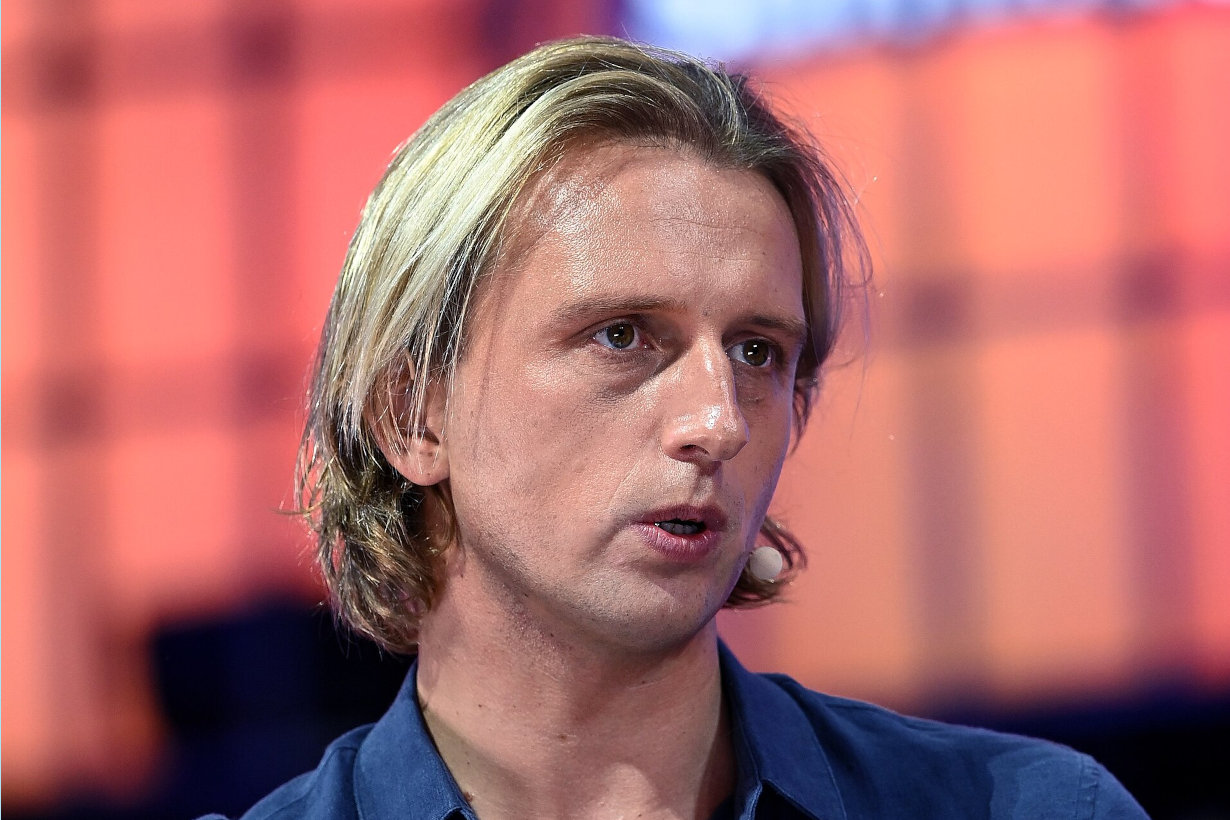
Some founders prioritize precision and steady growth. Others move quickly, scaling aggressively to capture market share before competitors can react. Nikolay Storonsky, founder and CEO of Revolut, represents the latter approach. His journey reflects the opportunities – and trade-offs – that come with building a global fintech company at speed.
Key Takeaways
- Rapid scaling can create early market leadership but often introduces operational and cultural challenges.
- Founder ambition and high standards can drive performance but may also shape intense work environments.
- Fintech innovation depends on both product development and regulatory navigation.
- Expanding globally requires balancing growth speed with compliance and infrastructure.
- Sustainable success depends on evolving from rapid expansion to operational maturity.
Building a Financial Super App at Speed
In 2015, Nikolay Storonsky co-founded Revolut with a clear goal: to simplify and modernize financial services.
At the time, traditional banks were often criticized for high fees, slow innovation, and limited user experience. Storonsky saw an opportunity to build a digital-first alternative – one that could offer faster, cheaper, and more flexible financial tools.
The initial product focused on foreign exchange and payments, addressing a common pain point for travelers and global users.
But the ambition was much larger.
Storonsky envisioned Revolut as a “financial super app,” combining banking, payments, trading, and more into a single platform. This vision required not just innovation, but rapid execution.
By setting a broad vision early, Storonsky positioned Revolut to expand aggressively across adjacent financial services. This approach allowed the company to evolve quickly beyond its initial niche and compete across multiple categories simultaneously.
Aggressive Growth and Expanding Scope
From its early days, Revolut prioritized speed. The company expanded quickly across markets, adding features such as:
- Cryptocurrency trading
- Stock investing
- Budgeting tools
- Insurance products
This rapid product expansion helped attract millions of users, positioning Revolut as one of the fastest-growing fintech companies globally.
However, speed introduced complexity.
Operating in financial services requires strict compliance with regulations across different jurisdictions. As Revolut expanded, it had to navigate licensing requirements, regulatory scrutiny, and operational risks.
At the same time, internal challenges emerged.
Reports over the years highlighted concerns around high-pressure work environments, intense performance expectations, and rapid hiring and turnover. These criticisms were not uncommon for high-growth startups, but they raised questions about sustainability.
Storonsky’s leadership style – often described as demanding and performance-driven – played a central role in shaping this culture.
To supporters, it reflected ambition and discipline. To critics, it suggested a need for balance.
As the company scaled, it also had to invest more heavily in compliance, governance, and risk management. These additions illustrate how high-growth companies must eventually build the structures that early speed often bypasses.
Scale, Influence, and Ongoing Evolution
Today, Revolut serves tens of millions of users worldwide and offers a wide range of financial services. The company has achieved multi-billion-dollar valuation status, becoming one of the most prominent fintech players globally.
Its impact lies in how it has reshaped expectations.
Consumers now expect real-time financial services, transparent pricing, and mobile-first experiences. Revolut helped accelerate this shift. At the same time, the company continues to evolve.
As it matures, the focus has increasingly shifted toward strengthening compliance and governance, improving operational processes, and building long-term sustainability. This transition reflects a broader pattern seen in high-growth startups – the need to move from rapid expansion to structured stability.
Revolut’s current phase demonstrates that long-term success in fintech is not just about innovation, but about maintaining trust, reliability, and regulatory alignment across markets.
Revolut vs. Traditional Banks
| Dimension | Revolut | Traditional Banks |
|---|---|---|
| Speed of Innovation | Fast | Slower |
| Product Scope | Multi-service app | Segmented services |
| User Experience | Mobile-first | Branch and legacy systems |
| Global Reach | Rapid expansion | Regionally structured |
| Culture | High-growth, intense | Structured, stable |
This comparison highlights how Revolut’s model prioritizes flexibility and user-centric design, while traditional banks emphasize stability and established processes. Both approaches have advantages, but they reflect fundamentally different philosophies about growth and risk.
Founder Identity: Speed as Strategy
Nikolay Storonsky is defined by his commitment to speed.
From product development to market expansion, his approach emphasizes rapid execution and continuous iteration. This strategy has allowed Revolut to capture market share and stay ahead of competitors.
However, speed is not neutral. It shapes every aspect of a company – from operations to culture.
Storonsky’s leadership reflects a belief that aggressive growth is necessary in competitive markets. This mindset has driven results, but it has also required adjustments as the company scales.
One of the key challenges in his journey is balancing ambition with sustainability.
As Revolut grows, the systems and processes that support it must evolve. This includes not only technical infrastructure, but also organizational culture and governance.
His founder identity is therefore defined by transition – from rapid builder to leader managing long-term complexity.
This evolution suggests that founder effectiveness is not static; it must adapt as the company grows. The skills required to launch a startup are not always the same as those needed to sustain it at scale.
The Trade-Off Between Speed and Sustainability
The story of Nikolay Storonsky highlights a central tension in modern entrepreneurship: speed versus sustainability.
Through Revolut, he demonstrated how rapid execution can drive growth and reshape industries. The company’s rise reflects the power of moving quickly in a competitive market.
At the same time, the journey shows that speed comes with trade-offs – including operational challenges, cultural pressures, and regulatory complexity.
For founders, the lesson is not to avoid speed, but to understand its implications. Growth can create opportunity, but long-term success depends on building systems that can sustain it.
Ultimately, the balance between speed and sustainability is not fixed. It must be continuously managed as the company evolves, requiring founders to adjust priorities without losing momentum.
FAQs
Who is Nikolay Storonsky?
Nikolay Storonsky is the founder and CEO of Revolut, a global fintech company. He is known for scaling the company rapidly and pushing innovation in digital financial services, establishing himself as a key figure in modern fintech.
What is Revolut?
Revolut is a financial super app that offers banking, payments, trading, and other services. It aims to provide a comprehensive, mobile-first alternative to traditional banking, appealing especially to globally connected users.
Why is Revolut considered successful?
Revolut has grown to serve tens of millions of users and achieved a high valuation. Its rapid expansion and product innovation have made it a key player in fintech, influencing how digital financial services are delivered.
What challenges has Revolut faced?
The company has faced regulatory scrutiny, operational complexity, and cultural criticisms. These challenges are often associated with rapid scaling in regulated industries, requiring ongoing adjustments in governance and processes.
What can founders learn from Nikolay Storonsky?
Founders can learn the importance of speed and execution in competitive markets. His journey also highlights the need to balance growth with sustainability over time, especially in industries with regulatory oversight.
Sources:
- https://uk.linkedin.com/in/nstoronsky
- https://www.forbes.com/profile/nik-storonsky/
- https://michaelgoitein.substack.com/p/why-revoluts-financial-super-app
- https://www.theguardian.com/business/2023/jan/16/fintech-revolut-psychologists-criticism-corporate-culture-uk-banking-licence
- https://www.wired.com/story/revolut-trade-unions-labour-fintech-politics-storonsky/
- https://www.businessinsider.com/interview-revolut-nikolay-storonsky-culture-rapid-growth-2017-10
- https://apoorv03.com/p/the-revolut-story-a-decade-of-compounding
Photo credit: Web Summit / Wikimedia Commons / CC BY 2.0 – cropped (link)